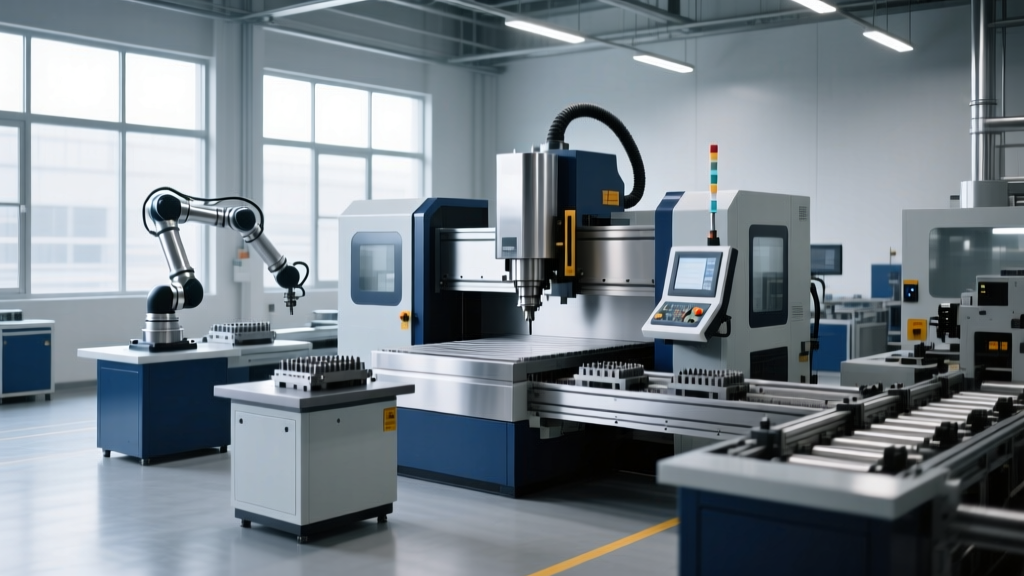
Troubleshooting Modular Lines for Kitchen Equipment Manufacturers
Diagnose and fix common faults in modular assembly lines used by kitchen equipment manufacturers to maintain flexible, high-mix production output.
The Shift to Modular Assembly in Commercial Foodservice Production
Commercial kitchen equipment manufacturers operate in a high-mix, variable-volume environment. A single facility might run heavy-duty planetary mixers in the morning and delicate induction cooktops in the afternoon. To maintain this flexibility, modern facilities rely heavily on modular manufacturing equipment—such as Bosch Rexroth TS series conveyors, item Industrietechnik workstations, and Festo modular pneumatic cells. While these systems allow for rapid reconfiguration, their plug-and-play nature introduces unique failure modes that traditional fixed-automation lines do not experience.
This guide provides advanced troubleshooting protocols for the specific modular systems utilized by kitchen equipment manufacturers in 2026, focusing on mechanical drift, network communication drops, and pneumatic inefficiencies in flexible production cells.
⚠️ CRITICAL SAFETY PROTOCOL:Before performing any mechanical or electrical diagnostics on modular workstations, personnel must adhere to OSHA's Control of Hazardous Energy (LOTO) guidelines. Modular systems often retain residual pneumatic pressure or capacitor charge in servo drives even when the main cell disconnect is thrown. Always bleed manual exhaust valves on Festo/SMC valve islands and verify zero-energy states with a calibrated multimeter.
Diagnostic Matrix: Common Modular Line Faults
The following matrix outlines the most frequent disruptions in flexible assembly cells, specifically tailored to the heavy stainless-steel fabrication and precise electronics integration common in commercial foodservice appliance manufacturing.
| Symptom | Probable Root Cause | Diagnostic Step | Corrective Action |
|---|---|---|---|
| Workpiece carrier (WT) jamming at 45° curve modules | Belt tension loss or worn polyurethane curve rollers | Measure belt deflection at mid-span; inspect roller bearings for axial play | Adjust tensioner to 15-20mm deflection; replace worn 50mm rollers |
| IO-Link sensor reporting "Short Circuit" on clamping stations | Cutting fluid/coolant ingress into M12 connectors during panel machining | Check IO-Link master port diagnostics; inspect connector O-rings | Upgrade to IP69K-rated M12 connectors; apply dielectric grease |
| Modular pneumatic clamp failing to reach full 6-bar pressure | Internal spool wear in directional control valve or micro-leaks in push-to-connect fittings | Use ultrasonic acoustic leak detector; check valve island exhaust ports | Replace SMC SY3000 spool assembly; upgrade to metal-grip fittings |
| Robot TCP (Tool Center Point) drift during welding of kitchen hoods | Wear on automatic tool changer locking pins or debris on mating plate | Measure locking pin diameter with micrometer; check for 24V proximity signal drops | Clean mating surfaces with isopropyl alcohol; replace pins if wear >0.05mm |
| Servo motor overcurrent faults on quick-change linear actuators | Misalignment of modular linear rails after workstation reconfiguration | Run laser alignment tool across the X-axis rail; check for binding | Loosen mounting bolts, re-align using dial indicator to <0.02mm, re-torque |
Deep Dive 1: Conveyor Routing and Pallet Jamming
Modular conveyors, particularly the Bosch Rexroth TS2 Plus and TS5 series, are the backbone of flexible assembly. Kitchen equipment manufacturers frequently reconfigure these lines to accommodate different chassis sizes (e.g., switching from 36-inch commercial ranges to 24-inch prep tables). This constant reconfiguration puts immense stress on curve modules and transfer gates.
Addressing Curve Module Wear
When a workpiece carrier jams specifically at a curve section, the immediate assumption is often a software routing error. However, in 85% of cases, the fault is mechanical. The continuous lateral friction in a curve module degrades the inner belt edge and the curve rollers.
- Belt Tensioning: A loose belt will slip on the drive pulley during the high-torque start-up phase of a heavy pallet (such as one carrying a commercial deep fryer vat). Measure the belt deflection. It should yield exactly 15-20mm under moderate thumb pressure at the midpoint of the straight section. If elongation exceeds 2% of the total belt length, the belt must be replaced, not just tightened.
- Roller Replacement: Inspect the 50mm polyurethane curve rollers. If the bearing exhibits any axial play, or if the polyurethane surface has developed a "flat spot" from a previous jam, replace the entire roller assembly. Attempting to lubricate a sealed, failing bearing will only attract stainless-steel grinding dust, accelerating failure.
Deep Dive 2: Pneumatic Inefficiencies in Washdown-Adjacent Zones
Because kitchen equipment manufacturers must frequently perform wet-testing on assembled appliances (like combi ovens and dishwashers), the surrounding modular assembly cells are often exposed to high humidity and aggressive cleaning chemicals. Standard pneumatic components degrade rapidly in these environments.
Diagnosing Valve Island Pressure Drops
A common issue is a modular clamping station failing to hold a stainless-steel workpiece securely during automated riveting. The PLC may not flag an alarm if the pressure drops slowly from 6.0 bar to 5.2 bar, but the mechanical holding force is compromised.
- Acoustic Detection: Utilize an ultrasonic leak detector (e.g., UE Systems UltraTrak) to scan the SMC or Festo valve island. High-frequency hissing indicates internal spool seal degradation.
- Fitting Upgrades: Standard push-to-connect pneumatic fittings rely on internal O-rings that swell and fail when exposed to alkaline floor cleaners used in foodservice equipment testing zones. Replace all modular cell fittings with stainless-steel, metal-grip fittings rated for washdown environments.
Energy Impact Insight: According to data from the Department of Energy's Industrial Assessment Centers, compressed air leaks are one of the most expensive utility wastes in manufacturing. A single 3mm leak in a modular pneumatic cell operating at 6 bar can cost a facility over $1,200 annually in wasted electricity. In a high-mix kitchen appliance plant with dozens of flexible cells, undetected micro-leaks severely impact the bottom line.
Deep Dive 3: IO-Link Communication Drops in Flexible Fixturing
Modern modular workstations rely heavily on IO-Link smart sensors for part-presence verification and clamping confirmation. When kitchen equipment manufacturers reconfigure a cell, sensors are frequently unplugged, moved, and re-plugged. This physical manipulation is the primary cause of network faults.
Resolving "Port Short Circuit" Alarms
If a Siemens S7-1500 PLC flags an IO-Link master port short circuit immediately after a line changeover, the issue is rarely the sensor itself. It is almost always the M12 connector or the drag chain cabling.
- Connector Ingress: Standard IP67 M12 connectors are insufficient if the modular cell is near the wet-test zone. Moisture wicks into the cable jacket via capillary action. Upgrade to IP69K-rated, molded connectors with integrated strain relief.
- Drag Chain Bending Radii: When reconfiguring a flexible cell, technicians often zip-tie sensor cables tightly to the aluminum extrusion (e.g., item 40x40 profiles). This violates the minimum bending radius of the IO-Link cable (typically 10x the cable diameter). Over a few hundred machine cycles, the internal 22 AWG wires fracture, causing intermittent drops that only occur when the actuator is at the end of its stroke. Always use proper strain-relief clamps and maintain a minimum 40mm bend radius for standard M12 sensor cables.
Deep Dive 4: Quick-Change Tooling Alignment Drift
Robotic cells handling heavy commercial kitchen components (like cast-iron grates or thick stainless-steel backsplashes) utilize automatic tool changers (ATCs) to switch between vacuum grippers and welding torches. The ATI Industrial Automation QC-series is an industry standard here.
Correcting TCP Drift
If the robot begins missing pick-points by 2-3mm, or if weld seams on kitchen hoods show inconsistent penetration, the Tool Center Point (TCP) has drifted. This is a mechanical issue, not a software calibration error.
- Inspect the Locking Mechanism: The ATC uses pneumatically driven locking pins to secure the tool plate. Remove the tool plate and measure the diameter of the locking pins with a digital micrometer. If the pins show wear exceeding 0.05mm, they will allow micro-movements during high-torque welding operations. Replace the pin kit immediately.
- Clean the Mating Surfaces: Stainless-steel grinding dust is highly magnetic and abrasive. If it accumulates on the flat mating surface of the master plate, the tool will not seat fully, causing a Z-axis shift. Clean the surfaces with a lint-free cloth and isopropyl alcohol before every shift.
2026 Preventative Maintenance Framework for Modular Cells
To maximize Overall Equipment Effectiveness (OEE) in flexible production environments, kitchen equipment manufacturers must shift from reactive repairs to condition-based monitoring. The National Institute of Standards and Technology (NIST) emphasizes that smart manufacturing relies on predictive data rather than fixed time-based schedules.
Cost vs. Downtime Analysis (2026 Estimates)
| Component | Preventative Replacement Cost | Cost of Unplanned Downtime (4 Hours) | Recommended Interval |
|---|---|---|---|
| TS2 Plus Curve Belt (2-meter section) | $340 - $410 | $4,800+ | Every 18 months or 2M cycles |
| SMC SY3000 Valve Spool Kit | $85 - $120 | $2,200+ | Every 12 months (washdown zones) |
| ATI QC-20 Locking Pin Kit | $210 - $260 | $6,500+ (Scrapped weldments) | Every 6 months or 500k changes |
Summary of Best Practices
Troubleshooting modular manufacturing equipment requires a paradigm shift from traditional fixed-line maintenance. For kitchen equipment manufacturers, the key to maintaining flexible production lies in respecting the mechanical tolerances of quick-disconnect components, protecting low-voltage IO-Link networks from washdown-adjacent moisture, and rigorously monitoring pneumatic efficiency. By implementing targeted condition-based replacements and adhering to strict reconfiguration protocols, facilities can eliminate the micro-stoppages that silently erode OEE in high-mix assembly environments.