Small-Scale Gear for Medical Diagnostic Equipment Manufacturers
Explore the small-scale manufacturing equipment stack for medical diagnostic equipment manufacturers scaling from prototype to ISO 13485 pilot production.
The Micro-Factory Paradigm in IVD Hardware
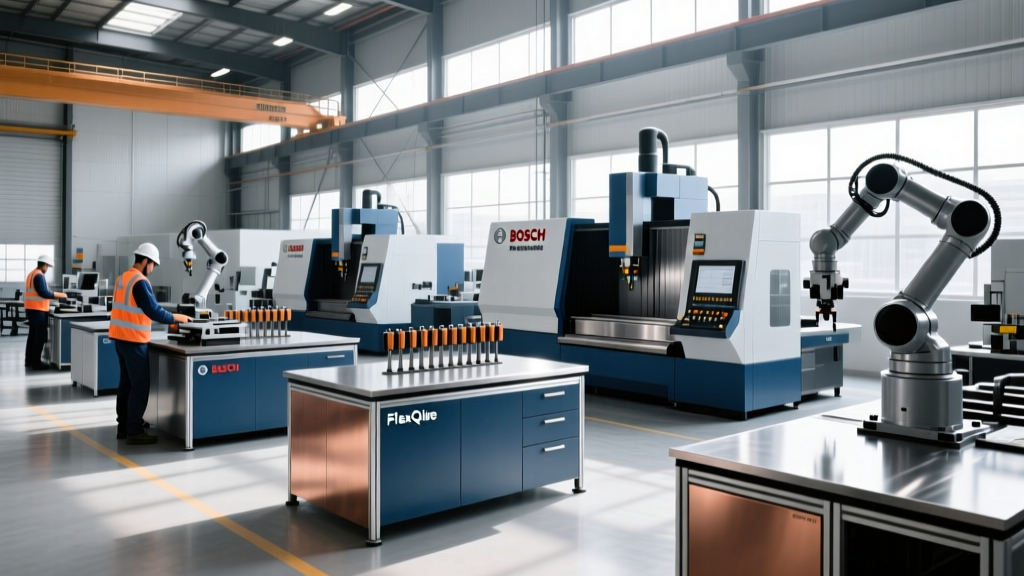
For emerging medical diagnostic equipment manufacturers, the transition from benchtop prototype to pilot-scale production presents a severe capital bottleneck. Historically, in-vitro diagnostics (IVD) startups relied on massive contract manufacturers (CMs) for tooling and assembly. However, CMs typically demand minimum order quantities (MOQs) of 50,000+ units and require upfront tooling investments exceeding $250,000. In 2026, the industry standard has shifted toward the 'micro-factory' model: highly automated, small-footprint manufacturing cells capable of producing 5,000 to 20,000 diagnostic cassettes, microfluidic chips, or lateral flow assay (LFA) housings per month while maintaining strict adherence to FDA 21 CFR Part 820 quality system regulations.
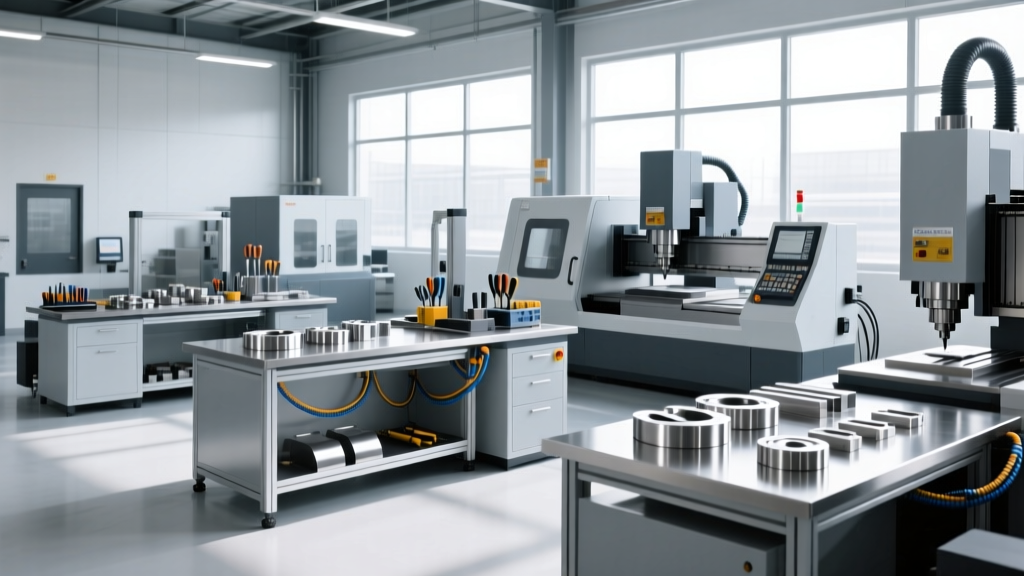
Building a compliant pilot line requires selecting equipment that bridges the gap between R&D flexibility and production-grade repeatability. Below is a technical breakdown of the small-scale manufacturing stack required to produce complex diagnostic hardware in-house.
CRITICAL COMPLIANCE WARNING: Equipment selection is secondary to environmental controls. Any machine producing fluidic pathways or reagent-contact surfaces must operate within an ISO Class 7 (Class 10,000) cleanroom. Budget $160 to $220 per square foot for modular hardwall cleanroom construction, including HEPA filtration and pass-through boxes, before purchasing a single CNC or molding press.Core Fabrication Stack: Micro-Molding and Precision CNC
Diagnostic cassettes and microfluidic chips require sub-micron tolerances to ensure proper capillary flow and reagent mixing. Standard 3D printers lack the surface finish and material properties (like optical clarity in cyclo-olefin copolymer or COC) required for commercial IVD devices.
Master Pattern Generation: Projection Micro-Stereolithography
For microfluidic chips with channel widths below 100µm, startups are deploying the Boston Micro Fabrication (BMF) microArch P150. Unlike standard SLA systems, the P150 utilizes projection micro-stereolithography (PµSL) to achieve a 10µm optical resolution and 2µm layer thickness. This allows diagnostic manufacturers to print master molds for soft lithography (PDMS) or direct sacrificial molds for COC injection molding. At approximately $145,000, the CapEx is high, but it eliminates the $40,000-per-iteration cost of outsourcing micro-mold tooling to Swiss or German machine shops.
Aluminum Mold Milling: High-Speed Micro-Machining
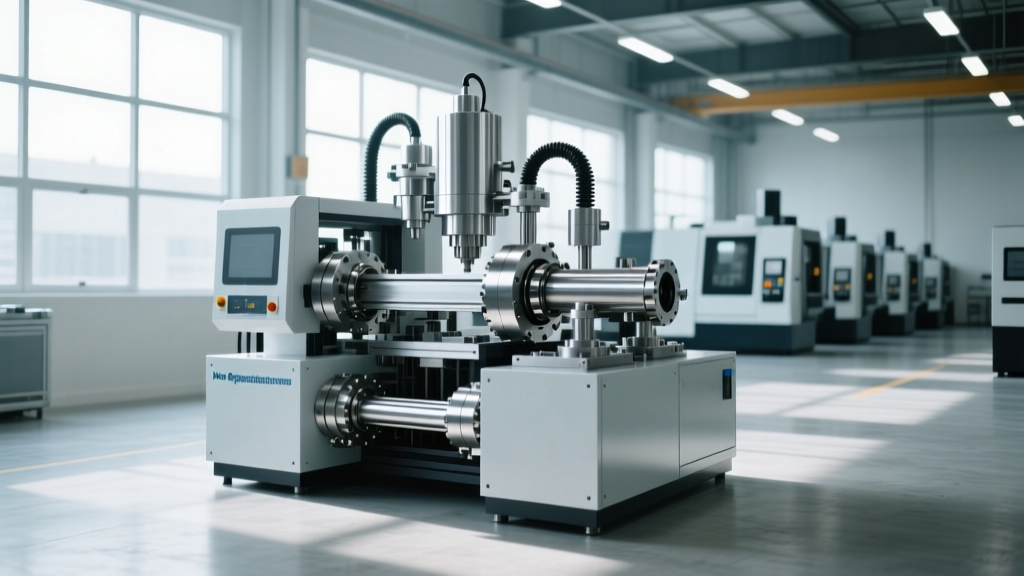
When producing LFA plastic cassettes via injection molding, aluminum (typically 6061-T6 or 7075) is the standard for pilot-run tooling due to its thermal conductivity and machinability. The Datron M8 Cubical is the benchmark small-footprint CNC for this application. Featuring a 40,000 RPM spindle and a 1.5kW high-frequency motor, it machines complex parting lines and ejector pin bores with a surface finish of Ra 0.4 µm, eliminating the need for secondary bench polishing. Priced around $98,000, the M8 occupies less than 15 square feet and runs on standard 230V single-phase power, making it ideal for startup lab environments.
Automated Assembly and Reagent Dispensing
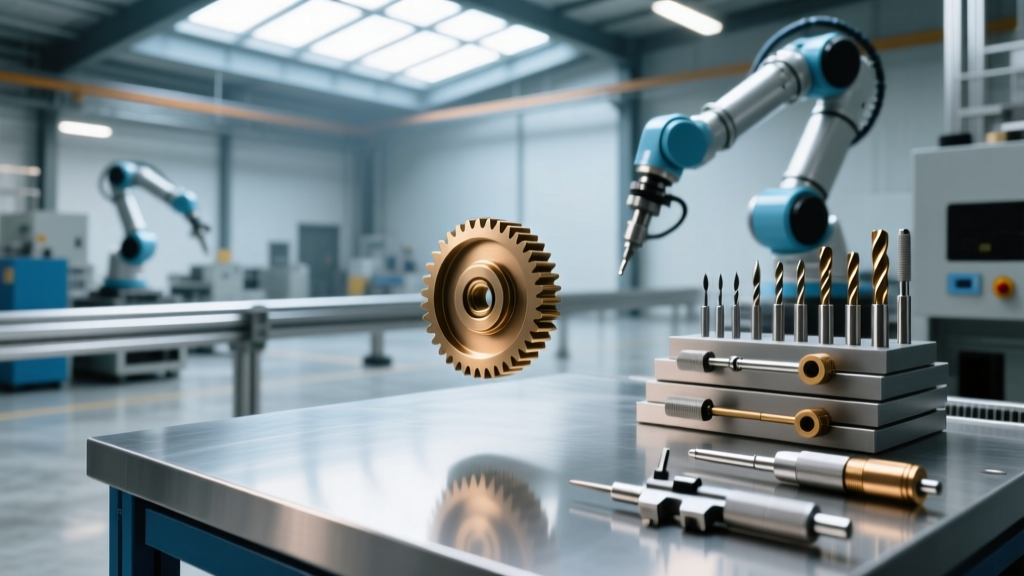
Manual assembly of diagnostic strips introduces unacceptable variability in capillary gap heights and reagent volumes. Small-scale automation relies on modular pneumatic and dispensing systems rather than monolithic rotary dials.
- Precision Dispensing: The Nordson EFD Ultimus V high-precision dispenser is essential for applying conjugate pads and buffer reagents. It utilizes a regulated air pulse system to dispense volumes down to 0.002 mL with a shot-to-shot repeatability of ±0.5%. Cost: ~$4,800 per workstation.
- Force-Monitored Snap-Fitting: Assembling top and bottom cassette halves requires exact pressure to avoid cracking brittle injection-molded features or crushing internal nitrocellulose membranes. Festo Model EL press modules paired with a piezoelectric force-displacement sensor ensure every cassette is assembled with exactly 45N of force, automatically rejecting parts that exceed the threshold due to flash or warped substrates.
"The biggest failure mode we see in early-stage IVD companies is assuming their R&D manual assembly process will scale. If you cannot measure the exact force and displacement of a cassette snap-fit, you cannot validate the manufacturing process under ISO 13485." — Lead Manufacturing Engineer, MedTech Accelerator
CapEx Breakdown: 2,500 Sq Ft Pilot Diagnostic Line
The following table outlines the realistic capital expenditure required to establish a fully compliant, small-scale manufacturing cell for lateral flow and microfluidic diagnostic cartridges in 2026.
| Equipment / Infrastructure Category | Specific Model / Spec | Est. Cost (USD) |
|---|---|---|
| Modular Cleanroom (ISO Class 7) | 800 sq ft hardwall, HEPA, HVAC | $145,000 |
| Micro-Machining CNC | Datron M8 Cubical + Chiller | $105,000 |
| Micro-SLA 3D Printer | BMF microArch P150 | $145,000 |
| Benchtop Injection Molder | WASP 3D Printer (Pellet) or LDO Mold Machine | $28,000 |
| Reagent Dispensing Array | 3x Nordson EFD Ultimus V | $14,400 |
| Automated Assembly Press | Festo EL Module + Force Sensor | $18,500 |
| Vision Metrology System | Keyence IM-8000 | $38,000 |
| Blister Packaging Sealer | Multivac C 500 (Pilot scale) | $65,000 |
| Total Estimated CapEx | $558,900 | |
Quality Control: The Hidden Cost Center
Under ISO 13485:2016 standards for medical devices, process validation and incoming/outgoing inspection are non-negotiable. For small manufacturers, traditional coordinate measuring machines (CMMs) are too slow and require highly specialized operators.
The solution is optical instant measurement. The Keyence IM-8000 series allows operators to place a molded diagnostic cassette on the glass stage, press a single button, and capture up to 99 dimensions in under 3 seconds with a repeatability of ±1.0 µm. This system automatically generates the First Article Inspection (FAI) reports required by FDA auditors, effectively replacing a $120,000/year CMM technician salary with a one-time $38,000 equipment purchase.
Sterilization and Packaging Validation
Diagnostic kits that contact blood or mucosal membranes require terminal sterilization. While startups often outsource Ethylene Oxide (EtO) or Gamma irradiation, the packaging seal integrity must be validated in-house. Small-scale blister sealers like the Multivac C 500 allow manufacturers to dial in exact temperature (typically 140°C–160°C for Tyvek/polyethylene laminates), pressure, and dwell time to achieve the required 1.5 N/15mm peel strength specified in ISO 11607-1 for sterile barrier systems.
Strategic Sourcing vs. In-House: The Decision Matrix
Not every component should be manufactured on the pilot line. Use this framework to determine what stays in-house and what gets outsourced to specialized vendors during the 5,000-unit pilot phase.
Keep In-House (Core IP)
- Microfluidic channel molding & master patterns
- Reagent formulation and precision dispensing
- Final cassette assembly and snap-fit validation
- Optical alignment of internal sensors/lasers
Outsource (Commodity/High-CapEx)
- Injection molded top/bottom housing (use rapid aluminum tooling vendors like Xometry or Protolabs)
- Nitrocellulose membrane cutting (vendor die-cutting)
- Terminal sterilization (EtO/Gamma at certified facilities)
- PCB fabrication for embedded diagnostic readers
By restricting in-house capital to the processes that directly impact diagnostic sensitivity and specificity—the true intellectual property of the device—medical diagnostic equipment manufacturers can achieve pilot-scale production readiness for under $600,000, preserving crucial runway for clinical trials and 510(k) regulatory submissions.