Startup Safety: Glass Manufacturing Machinery and Equipment Compliance
Ensure your startup meets OSHA and NFPA standards. Explore safety compliance for small-scale glass manufacturing machinery and equipment.
The Hidden Liabilities of Non-Compliant Small-Scale Glass Gear
Startups entering the artisan, architectural, or specialty glass market often prioritize production capacity and aesthetic output over regulatory compliance. When sourcing small-scale glass manufacturing machinery and equipment, founders frequently assume that benchtop fusing kilns, manual cold-working saws, and small annealing lehrs fall outside the purview of heavy industrial safety standards. This is a costly and potentially fatal misconception.
In 2026, regulatory enforcement has trickled down from heavy industrial plants to small-batch workshops. OSHA’s National Emphasis Program (NEP) on respirable crystalline silica now heavily targets artisan manufacturers, and commercial insurance carriers are strictly requiring Nationally Recognized Testing Laboratory (NRTL) marks, such as UL or ETL, on all thermal equipment before underwriting property policies.
⚠ WARNING: The Import TrapMany startups purchase small glass melting furnaces and kilns directly from overseas marketplaces to save 40% on capital expenditures. However, a "CE" mark on imported thermal equipment is often a self-certified manufacturer declaration, not a verified safety rating. If an unlisted imported furnace causes a structural fire, your commercial property insurance claim will likely be denied due to the use of non-NRTL-listed equipment.
Core Compliance Frameworks for Glass Startups
To legally and safely operate a small-scale glass production line, your equipment must satisfy three primary regulatory frameworks. Understanding these will dictate which models you should purchase and how your facility must be wired.
1. NFPA 86: Standard for Ovens and Furnaces
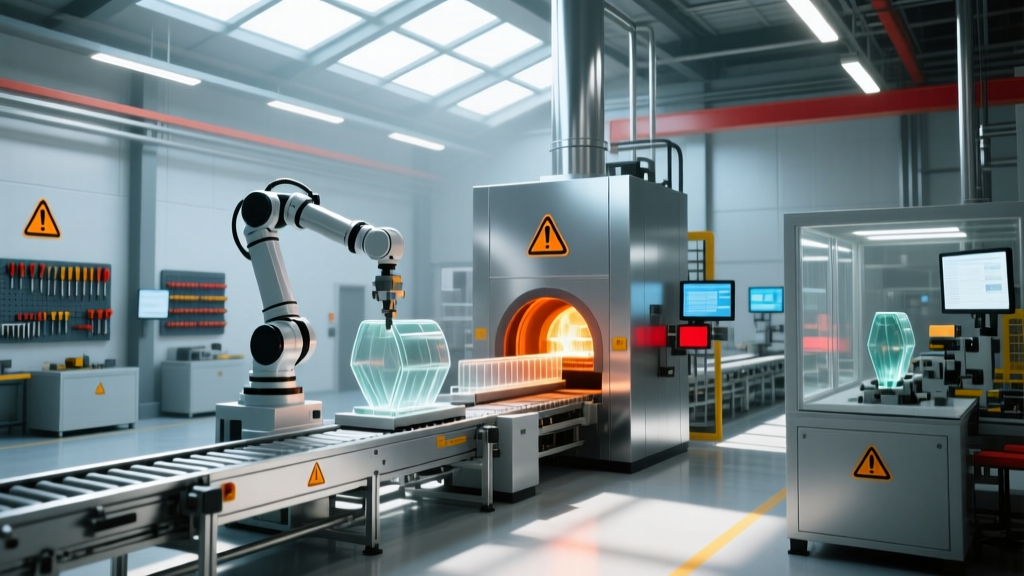
Any glass melting furnace or large-scale annealing lehr operating above 1,000°F falls under NFPA 86. For startups using gas-fired small furnaces, this standard mandates specific safety shutoff valves, combustion air proving switches, and mandatory pre-ignition purge cycles to prevent explosive gas accumulation. Even electric kilns must comply with related electrical safety standards (like UL 499) regarding high-temperature contactors and wiring insulation.
2. OSHA Silica Dust Standards (29 CFR 1910.1053)
Cold-working glass (cutting, grinding, polishing, and sandblasting) generates respirable crystalline silica. The OSHA Permissible Exposure Limit (PEL) is strictly capped at 50 micrograms per cubic meter of air (μg/m³) over an 8-hour time-weighted average. Dry cutting glass on a standard tile saw is an immediate, citable violation. Startups must invest in wet-cutting systems paired with localized surfactant injection or high-velocity Local Exhaust Ventilation (LEV).
3. ANSI Z87.1+ and Machine Guarding (29 CFR 1910.212)
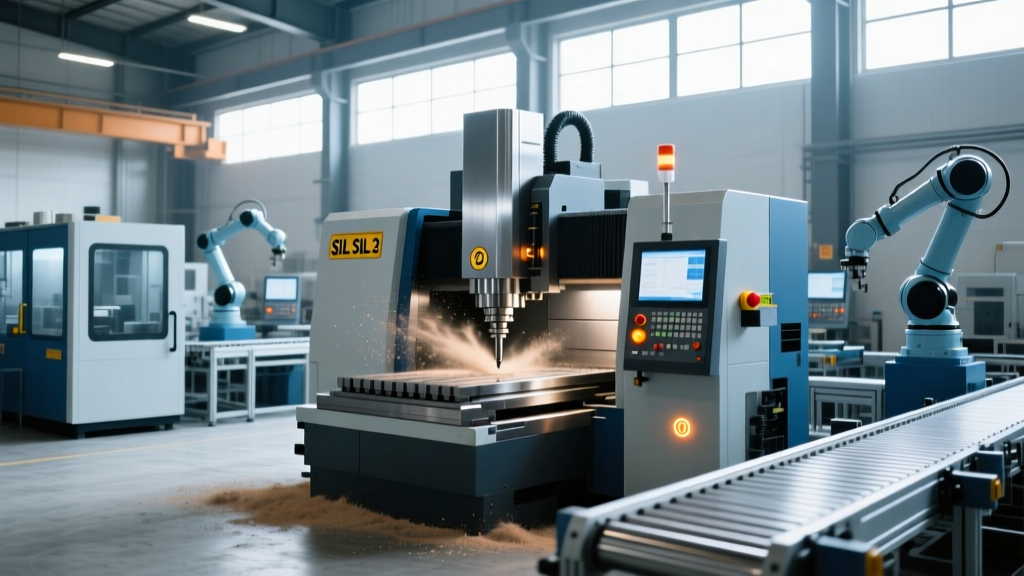
Glass fragmentation poses severe laceration and ocular hazards. OSHA’s general machine guarding requirements dictate that all diamond-blade cold saws and belt grinders must feature adjustable, transparent polycarbonate shields that prevent shard ejection without obstructing the operator’s sightline.
Equipment-Specific Safety & Buying Matrix
When outfitting a startup workshop, use this matrix to evaluate small-scale glass manufacturing machinery and equipment against mandatory safety baselines.
| Equipment Type | Startup Model Examples | Est. Cost (2026) | Mandatory Safety & Compliance Features |
|---|---|---|---|
| Benchtop Fusing Kiln | Paragon Fusion-14, Skutt GM-814 | $3,500 - $6,500 | UL-listed control box, positive-pressure door safety switch, redundant high-limit contactor. |
| Cold-Working Wet Saw | MK Diamond MK-370, Gryphon Studio Saw | $1,200 - $2,800 | Integrated GFCI plug, water flow sensor (prevents dry-cutting), polycarbonate blade guard. |
| Small Annealing Lehr | Custom batch lehrs, Jen-Ken Pro-Series | $5,000 - $12,000 | NFPA 86 compliant gas trains (if gas-fired), exterior skin temp <120°F, emergency stop (E-stop) buttons. |
| LEV Dust Extractor | Torit DF series, Ruwac wet separators | $4,500 - $9,000 | HEPA filtration (99.97% at 0.3μm), minimum 500 CFM capture velocity, spark-arrestor baffles. |
Real-World Failure Modes in Small Glass Workshops
Startups often experience equipment failures that standard consumer warranties do not cover, leading to dangerous operational hazards. Anticipating these edge cases is critical for facility safety.
- Thermocouple Drift and Runaway Kilns: Standard K-type thermocouples degrade rapidly in the high-heat, reducing atmospheres of small glass melting furnaces (above 2,200°F). If a startup relies on a single, cheap imported controller and the thermocouple fails open, the controller may read "0 degrees" and keep the heating elements engaged indefinitely, melting the kiln roof and igniting the facility. Solution: Always specify equipment with a secondary, independent high-limit controller (e.g., Honeywell UDC series) wired to a heavy-duty mechanical contactor that physically cuts power at 1,100°F.
- Wet-Saw Water Pump Cavitation: Startups often use standard sump pumps for their cold-working saws. These pumps easily clog with glass slurry, leading to cavitation and a sudden loss of water flow at the blade. Cutting dry for even 30 seconds aerosolizes lethal silica dust. Solution: Purchase saws equipped with inline water flow sensors that automatically kill power to the blade motor if water pressure drops below 15 PSI.
- GFCI Nuisance Tripping on Shared Circuits: Small workshops often plug wet saws and LEV vacuums into the same 20A branch circuit. The combined inductive load and moisture cause constant GFCI tripping, leading frustrated operators to bypass the safety ground. Solution: Dedicate a 20A GFCI-protected circuit exclusively to the wet saw, and a separate 30A circuit for the dust extractor.
Many small electric glass furnaces draw between 40A and 48A at 240V. Do not attempt to hardwire these into standard residential-style breakers. Specify a NEMA 14-50R or 14-60R receptacle installed by a licensed commercial electrician, ensuring the branch circuit wiring is rated for 75°C terminals to prevent thermal degradation of the insulation over time.
The Startup Compliance Audit Checklist
Before energizing any new small-scale glass manufacturing machinery and equipment, run this 5-point compliance audit to protect your operators and your business liability.
- Verify the NRTL Mark: Inspect the control panel for a physical UL, ETL, or CSA holographic label. Do not accept a printed "CE" or "RoHS" sticker as a substitute for North American safety certification.
- Calibrate the LEV System: Hire an industrial hygienist to perform a baseline smoke-tube capture velocity test at the grinding station. Ensure the duct transport velocity maintains a minimum of 3,500 feet per minute (FPM) to prevent silica dust from settling inside the ductwork.
- Test Emergency Stops (E-Stops): Manually trigger every E-stop button on annealing lehrs and conveyors. Verify that the machine halts within 1.5 seconds and requires a manual twist-to-release reset before power can be restored.
- Establish a PPE Matrix: Standard safety glasses are insufficient for glass chipping. Mandate ANSI Z87.1+ rated wrap-around goggles with indirect venting (to stop liquid splash and fine dust) and cut-resistant Kevlar sleeves for all manual handling operations.
- Document Preventative Maintenance: Create a digital log for weekly water-filter changes on wet saws and monthly thermocouple resistance checks on kilns. OSHA inspectors will request these logs to verify that engineering controls are actively maintained.
Investing in compliant small-scale glass manufacturing machinery and equipment from day one prevents catastrophic operational shutdowns. By prioritizing NFPA thermal standards and OSHA silica controls, startups can scale their production safely while securing favorable commercial insurance rates.