SMT Equipment Manufacturers: Safety Compliance for Startups
Navigate safety standards and compliance when sourcing from SMT equipment manufacturers. A startup guide to machine guarding, NFPA 79, and fume extraction.
The Hidden Compliance Trap for Electronics Startups
When hardware startups transition from hand-soldering prototypes to low-volume automated production, the focus is almost exclusively on throughput and component placement accuracy. Founders evaluate pick-and-place speeds, feeder capacities, and vision system resolutions. However, a critical blind spot frequently emerges during facility audits: industrial safety compliance. Small-scale manufacturing equipment for startups operates in a regulatory gray area. Because benchtop Surface Mount Technology (SMT) machines are often marketed as 'laboratory' or 'prototyping' gear, buyers mistakenly assume they are exempt from heavy industrial safety mandates. This assumption is a costly liability.
⚠️ Compliance Warning: Under OSHA's General Duty Clause, employers must provide a workplace free from recognized hazards. If a startup operator suffers a crush injury from an unguarded benchtop pick-and-place gantry, or develops respiratory issues from unvented rosin flux fumes, the company faces severe fines and voided liability insurance—regardless of the machine's 'benchtop' classification.Decoding Safety Certifications from SMT Equipment Manufacturers
When evaluating smt equipment manufacturers, startups must look beyond the marketing brochures and scrutinize the actual compliance marks on the machine's data plate. Not all certifications carry the same legal or safety weight in North American and European jurisdictions.
| Certification Mark | What It Means | Startup Risk Profile |
|---|---|---|
| CE (European Conformity) | Often a self-declaration by the manufacturer asserting compliance with EU directives (e.g., Machinery Directive 2006/42/EC). | High Risk. Many overseas manufacturers self-certify without third-party verification. OSHA does not recognize CE as proof of safety. |
| UL / cUL (Underwriters Laboratories) | Rigorous third-party testing against specific standards like UL 61010-1 (electrical equipment for measurement and control). | Low Risk. Universally accepted by local Authorities Having Jurisdiction (AHJs) and insurance inspectors in North America. |
| IEC 61010-1 | International standard for electrical safety, focusing on shock, fire, and mechanical hazards in lab/control environments. | Medium Risk. Excellent baseline, but must be verified via an NRTL (Nationally Recognized Testing Laboratory) for US facility compliance. |
Startup-Scale SMT Models and Their Safety Profiles
Tier-1 smt equipment manufacturers like ASMPT or Fuji build fully enclosed, interlocked machines that meet ISO 13849-1 Performance Level D out of the box. However, these systems cost upwards of $150,000. Startups typically rely on entry-level and mid-tier machines ranging from $14,000 to $45,000. Here is how the most popular startup models handle safety integration.
NeoDen YY1: The Open-Frame Challenge
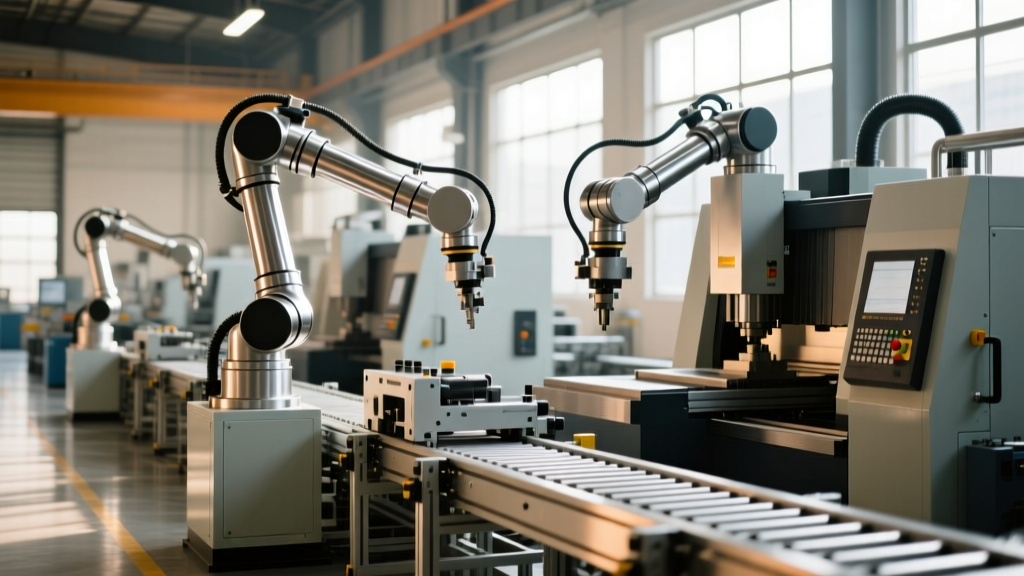
Priced around $14,500, the NeoDen YY1 is a staple for seed-stage electronics companies. It is an open-frame benchtop pick-and-place machine. The safety deficit: It lacks physical perimeter guarding and door interlocks. The high-speed gantry poses a severe pinch-point hazard. To meet OSHA 1910.212 machine guarding requirements, startups must retrofit the YY1 with external safety light curtains. Installing a pair of Omron F3SG-SR light curtains (approx. $2,200) tied to a safety relay that cuts power to the servo drivers is mandatory before the machine can legally operate on a production floor.
Neoden 4: The Enclosed Advantage
At the $38,000 to $42,000 price point, the Neoden 4 offers a fully enclosed chassis with pneumatic access doors. The safety advantage: The machine features integrated magnetic door interlocks. If an operator opens the enclosure during a placement cycle, the gantry immediately halts. Furthermore, the Neoden 4 includes internal routing for fume extraction, allowing direct connection to an external HEPA/carbon filtration unit. This drastically reduces the engineering burden on the startup's facility team.
CharmHigh H510LP4: The Mid-Tier Compromise
Costing roughly $22,000, the CharmHigh H510LP4 bridges the gap between benchtop and floor-standing models. While it features a partial enclosure, the rear maintenance panels often lack tamper-proof fasteners, and the integrated PC runs on standard commercial power supplies rather than industrial-grade isolated transformers. Startups deploying the H510LP4 must ensure the machine is connected to a GFCI-protected circuit and verify that the emergency stop (E-Stop) button utilizes a hardwired, fail-safe contactor rather than a software-triggered relay.
The NFPA 79 Imperative for Reflow Ovens
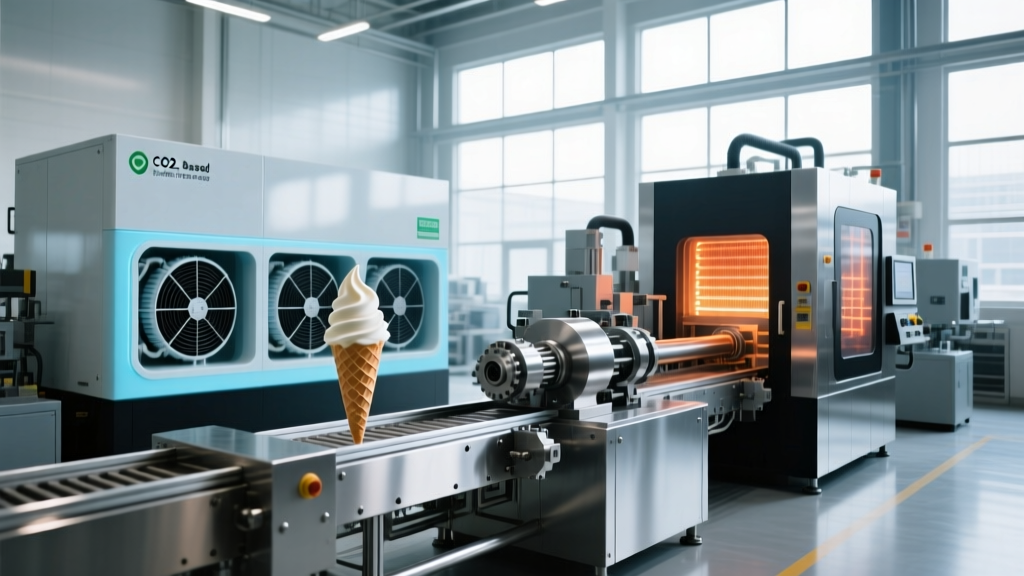
Pick-and-place machines are only half the SMT line. Startups frequently pair them with small inline reflow ovens, such as the NeoDen T-8 or T-9 (priced between $8,000 and $12,000). These ovens draw significant current (often 20A to 30A at 220V) and generate extreme heat. A common, highly dangerous startup mistake is plugging these ovens into standard NEMA 14-30 dryer outlets via adapter cables.
'Industrial machinery must be provided with a disconnecting means capable of being locked in the off position. Daisy-chaining high-draw thermal equipment through residential-style plugs violates fundamental overcurrent and disconnect protocols.' — Summary of NFPA 79 Electrical Standard for Industrial Machinery
To comply with NFPA 79, the reflow oven must be hardwired to a dedicated branch circuit featuring a lockable rotary disconnect switch mounted within sight of the machine. This ensures maintenance personnel can physically lock out the power source (LOTO) before clearing jammed PCBs or replacing heating elements.
Fume Extraction and OSHA Permissible Exposure Limits
Solder paste and liquid flux contain rosin (colophony) and various chemical activators. When subjected to the 240°C+ temperatures of a reflow oven or selective soldering iron, these materials vaporize into hazardous Volatile Organic Compounds (VOCs) and sub-micron particulates, including abietic acid and formaldehyde. Relying on the facility's general HVAC system is a direct violation of OSHA ventilation standards.
Startups must invest in localized source extraction. For a small SMT line, a unit like the BOFA AD350 (approx. $3,500) or the Hakko FA-400 (approx. $1,800) is required. These units utilize a three-stage filtration process: a pre-filter for large particulates, a HEPA filter for 0.3-micron smoke particles, and an activated carbon bed to adsorb toxic VOC gases. The extraction hood must be positioned within 6 to 8 inches of the exhaust port on the reflow oven to maintain adequate capture velocity.
A 5-Step Compliance Audit Checklist for New Production Lines
Before powering up a newly installed small-scale SMT line, facility managers must execute this compliance verification framework:
- Verify NRTL Certification: Inspect the main power panel of both the pick-and-place and reflow oven for a valid UL, cUL, or ETL mark. Reject machines displaying only a self-declared CE mark if operating in North America.
- Test E-Stop Logic: Trigger the Emergency Stop button. Verify that it physically drops the contactor, removing all motive and thermal power. Ensure the E-Stop requires a manual twist-to-release reset and does not auto-recover.
- Audit Pinch-Point Guarding: For open-frame machines, measure the distance from the safety light curtain to the nearest hazard. Ensure the safety distance complies with ISO 13855 calculations based on the machine's maximum stopping time.
- Validate Thermal Disconnects: Confirm that all reflow ovens and pre-heaters are hardwired to lockable rotary disconnects, completely eliminating the use of plug-in adapters or extension cords.
- Calibrate Fume Extraction: Use a thermal anemometer to measure the capture velocity at the reflow oven exhaust hood. Ensure airflow meets the manufacturer's specified CFM requirements to prevent VOC escape into the operator breathing zone.
Navigating safety standards when procuring small-scale manufacturing equipment requires diligence. By holding smt equipment manufacturers accountable for verifiable safety certifications and proactively addressing machine guarding and fume extraction, startups can protect their workforce, secure favorable insurance premiums, and build a scalable, compliant production foundation.