Relocation Tech Adopted by Major Fitness Equipment Manufacturers
Discover how major fitness equipment manufacturers use digital twins, LiDAR, and IoT to cut relocation downtime and align heavy CNC machinery.
The High-Stakes Environment of Fitness Manufacturing
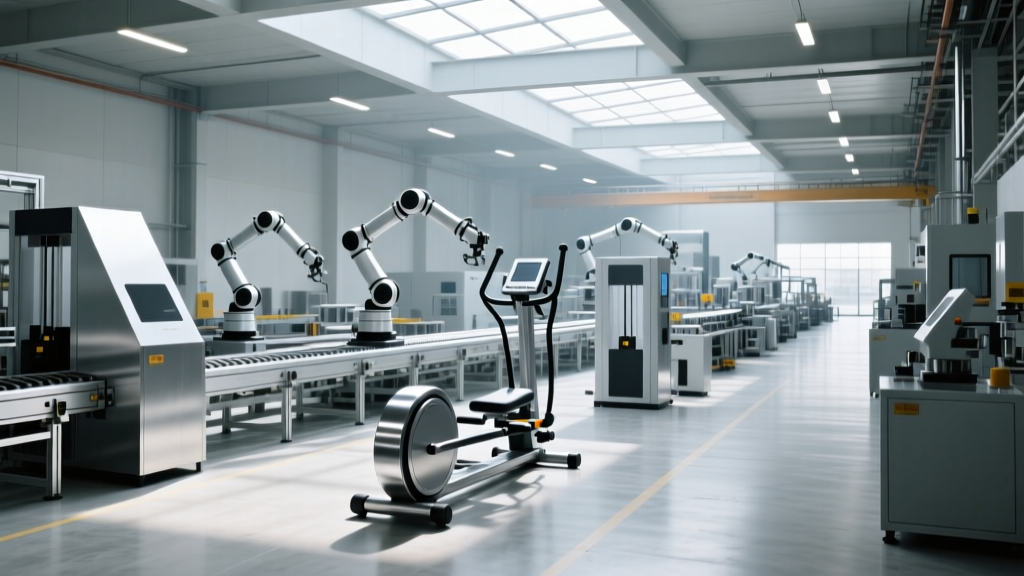
Relocating a production line is a high-risk operational maneuver. For major fitness equipment manufacturers, the stakes are uniquely compounded by the sheer mass and precision requirements of their machinery. Producing commercial-grade treadmills, elliptical cross-trainers, and selectorized weight stacks requires a hybrid factory floor: heavy 400-ton stamping presses for cast-iron weight plates sit just yards away from ultra-precise CNC fiber lasers and robotic welding cells. When these manufacturers consolidate facilities or reconfigure assembly lines to meet shifting demand, traditional millwright methods are no longer sufficient. A single misaligned machine bed can introduce microscopic burrs to elliptical tubing, causing catastrophic failures in downstream automated welding.
To mitigate these risks, the industry has pivoted toward advanced relocation technologies. By integrating LiDAR point-cloud scanning, digital twin simulations, and augmented reality (AR) rigging, major fitness equipment manufacturers are transforming equipment relocation from a disruptive bottleneck into a highly predictable, data-driven process.
Key Data Point: In high-volume fitness equipment manufacturing, unplanned downtime during a facility move costs an average of $42,000 per hour in lost production and delayed B2B gym fulfillment contracts.Pre-Move Simulation via Digital Twins and LiDAR
The most critical phase of modern equipment relocation occurs before a single wrench is turned. Forward-thinking manufacturers now mandate comprehensive 3D spatial mapping of both the origin and destination facilities. Using phase-based LiDAR scanners, such as the FARO Focus Premium, engineering teams capture millimeter-accurate point clouds of the existing factory floor.
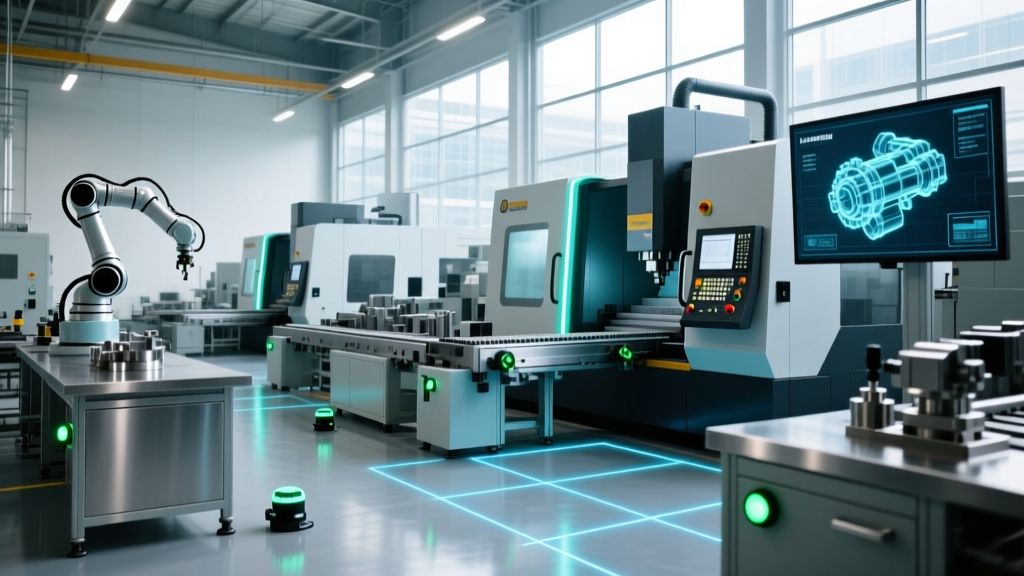
This spatial data is imported into platforms like Siemens Digital Twin Solutions to create a dynamic, physics-based replica of the production line. Relocation engineers use this digital twin to simulate the extraction paths for massive equipment. For example, moving a Trumpf TruBend press brake used for forming weight stack shrouds requires navigating tight overhead crane clearances. The digital twin calculates the exact center of gravity, required sling angles, and potential collision points with overhead HVAC ducting, allowing engineers to design custom rigging spreader bars weeks in advance.
Eliminating the 'Measure Twice' Bottleneck
Traditional relocation relies on manual tape measurements and 2D CAD layouts, which frequently omit undocumented overhead piping or floor drains. Digital twins eliminate this blind spot. By running kinematic simulations of automated guided vehicles (AGVs) and heavy forklifts within the 3D model, manufacturers can verify that a 60,000-lb Amada ENSIS fiber laser can be safely transported to its new foundation without structural modifications to the building.
Augmented Reality for Sub-Millimeter Rigging and Alignment
Once the equipment reaches the new facility, the installation phase demands extreme precision. Fitness equipment frames require flawless weld penetration to withstand thousands of hours of dynamic user loading. This means the Fanuc Arc Mate robotic welding cells that assemble these frames must be aligned to exacting tolerances.
Millwrights are now deploying AR headsets, such as the Microsoft HoloLens 2, integrated with the facility's BIM (Building Information Modeling) data. As riggers lower a 12,000-lb robotic pedestal into place, the AR headset overlays a holographic template of the anchor bolt pattern directly onto the concrete floor. This allows for real-time, hands-free micro-adjustments.
- Traditional Alignment: Relies on optical transits and piano wire; prone to human error and thermal expansion distortions.
- AR-Assisted Alignment: Provides real-time X, Y, and Z coordinate feedback down to 0.05mm, ensuring the robot's Tool Center Point (TCP) remains perfectly calibrated relative to the welding fixture.
Comparing Traditional vs. Tech-Enabled Relocation
The shift toward smart manufacturing principles, as outlined by NIST Smart Manufacturing guidelines, has fundamentally altered the economics of factory moves. The table below illustrates the operational differences between legacy methods and modern, tech-enabled installations.
| Metric | Traditional Relocation | Tech-Enabled Relocation |
|---|---|---|
| Pre-Move Planning | 2D CAD & manual site walks | LiDAR point-cloud & 3D Digital Twin |
| Alignment Tolerance | +/- 1.5mm | +/- 0.05mm via AR overlay |
| Foundation Curing | 28 days (standard concrete) | 24 hours (epoxy grout) |
| Transit Monitoring | Visual inspection upon arrival | IoT tri-axial shock logging |
| Post-Move Scrap Rate | 4% - 7% (first 48 hours) | < 0.5% (first 48 hours) |
IoT Vibration Monitoring During Heavy Transit
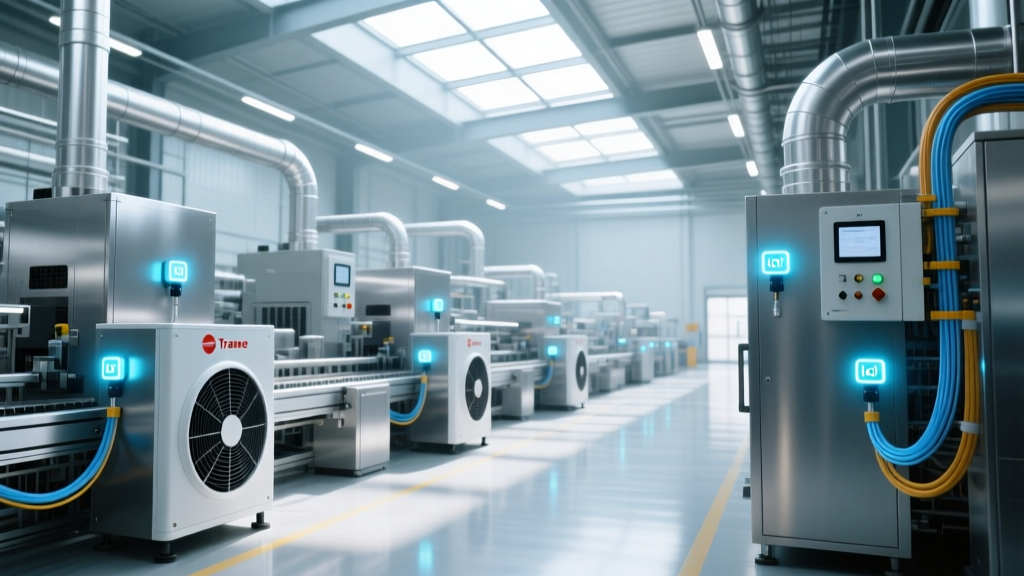
Relocating sensitive CNC machinery over public highways introduces severe vibration and shock risks. A sudden jolt from a truck hitting a pothole can misalign the harmonic drives inside a heavy-payload robot or fracture the ceramic resonators in a laser cutting head. To protect these multi-million-dollar assets, major fitness equipment manufacturers now mandate continuous IoT monitoring during transit.
Tri-axial accelerometers and gyroscopes are magnetically mounted to the machine bases. These sensors sample vibration data at 1000Hz, transmitting telemetry via cellular networks to a cloud dashboard. If the shock load exceeds the OEM's specified threshold (typically 2G for precision laser beds), the system flags the exact GPS location and timestamp of the impact. Upon arrival, installation teams know immediately that a laser tracker inspection is required before the machine is powered on, preventing catastrophic internal damage that would only manifest as poor cut quality weeks later.
Advanced Foundation Engineering and Epoxy Grouting
The heaviest machines in a fitness equipment plant are the stamping presses used to blank out steel weight plates. A 400-ton Minster press generates immense dynamic forces. Historically, relocating these presses required pouring new reinforced concrete pits, which demand up to 28 days to reach full compressive strength. This month-long delay is a critical path killer.
Warning: Never attempt to fire a heavy stamping press on partially cured standard concrete. The dynamic loading will cause micro-fracturing in the foundation, leading to permanent press misalignment and accelerated die wear.To bypass this delay, modern installations utilize high-precision, high-modulus epoxy grouts, such as Masterflow 647CP. This specialized grout is poured beneath the precision-machined base plates of the press. It achieves 10,000 PSI compressive strength in just 24 hours at standard room temperature (70°F/21°C). This allows millwrights to set, plumb, and grout the press on a Monday, and begin production stamping by Wednesday morning, effectively erasing three weeks of downtime from the project schedule.
Real-World Cost and Timeline Breakdown
While the upfront capital expenditure for technology-enabled relocation is higher, the total cost of ownership (TCO) heavily favors the smart approach. Consider a recent project involving the relocation of a 15-machine elliptical frame fabrication cell:
- Traditional Move TCO: $680,000. Includes standard rigging ($140k), transport ($75k), 28-day foundation downtime ($380k), and post-move alignment/scrap ($85k).
- Tech-Enabled Move TCO: $495,000. Includes LiDAR/Digital Twin planning ($45k), AR-assisted rigging ($160k), IoT smart transport ($90k), and epoxy grout/precision alignment ($200k).
By investing an additional $115,000 in digital planning, AR, and advanced materials upfront, the manufacturer saved $185,000 in avoided downtime and scrap, while bringing the new production line online 24 days ahead of schedule. For major fitness equipment manufacturers operating on tight margins and strict B2B delivery schedules, this technological integration is no longer optional—it is the baseline standard for operational survival.