Safety Compliance for Startup Manufacturers of Sports Equipment
Learn how startup manufacturers of sports equipment can achieve ASTM and NOCSAE compliance using small-scale manufacturing machinery and DIY testing.
The High Stakes of Compliance in Sports Gear
For startup manufacturers of sports equipment, navigating safety standards is not just a regulatory hurdle—it is a fundamental survival requirement. A single catastrophic failure of a bicycle helmet, lacrosse pad, or baseball chest protector can result in multi-million dollar liability lawsuits and immediate brand dissolution. Unlike consumer electronics where a defect means a returned product, a defect in protective sports gear can cause traumatic brain injury (TBI) or commotio cordis. Consequently, small-scale manufacturing equipment must be selected and calibrated not merely for production speed, but for the microscopic tolerances required to pass rigorous impact attenuation tests.
⚠️ Liability Warning: Producing protective headgear or torso pads without documented batch-to-batch material traceability violates the core tenets of ASTM International compliance. If a field failure occurs, the absence of resin lot tracking will be treated as gross negligence in product liability court.Navigating the Regulatory Minefield: ASTM and NOCSAE
Before purchasing a single piece of machinery, startup founders must map their specific product to the governing safety standard. The two primary bodies dictating sports gear compliance in North America are ASTM International and the National Operating Committee on Athletic Equipment (NOCSAE).
- ASTM F1447: Standard specification for helmets used in recreational bicycling or roller skating. Requires rigorous impact attenuation testing at varying temperatures and drop heights.
- NOCSAE ND002: Standard drop test method and equipment used in evaluating the performance characteristics of protective headgear (primarily football and baseball).
- ASTM F3137: Standard specification for women's lacrosse headgear, focusing on specific deformation and impact thresholds.
Official lab testing at a certified NOCSAE or ASTM facility typically costs between $3,500 and $6,000 per helmet model in 2026. Startups cannot afford to send flawed prototypes to the lab. This necessitates a micro-factory setup capable of producing lab-grade prototypes and conducting rigorous in-house pre-compliance testing.
Small-Scale Machinery for Compliance-Grade Tolerances
Achieving consistent impact attenuation requires absolute uniformity in shell thickness and foam density. Variations as small as 0.008 inches in a polycarbonate helmet shell can create stress concentrators that shatter during a 60-inch drop test.
Injection Molding: The LNS Technologies Model 150A
For low-volume production of small protective components (like buckle housings, goggle frames, or small pad shells), the LNS Technologies Model 150A benchtop injection molder (approx. $2,800) is a staple. However, processing impact-grade Polycarbonate (such as SABIC Lexan 940A) requires precise thermal management. The 150A's standard barrel heaters must be supplemented with external thermocouple feedback loops to maintain a strict 550°F melt temperature. Overheating degrades the polymer chains, drastically reducing the Izod impact strength of the final part.
CNC Machining: Haas DM-1 for Mold Making
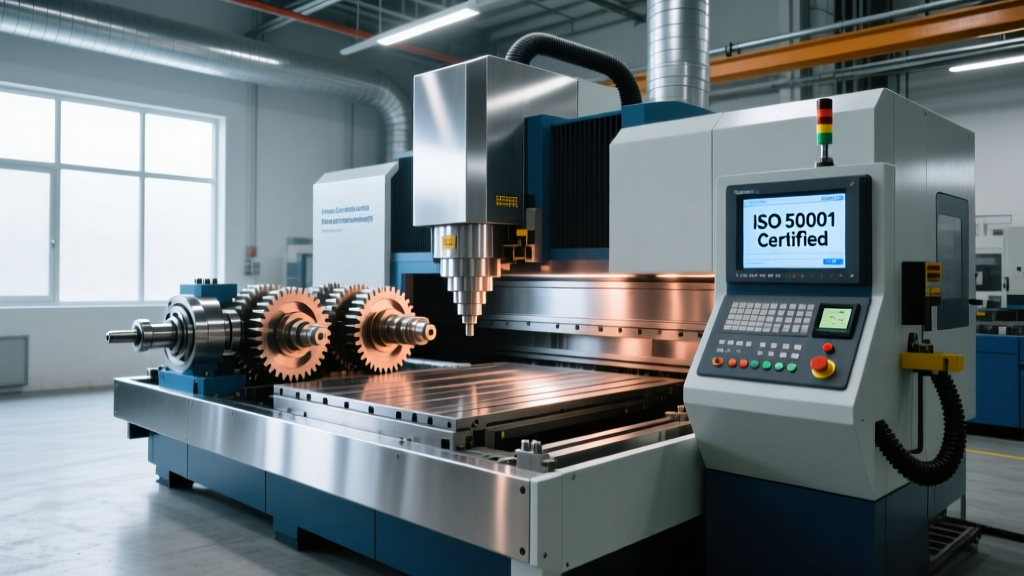
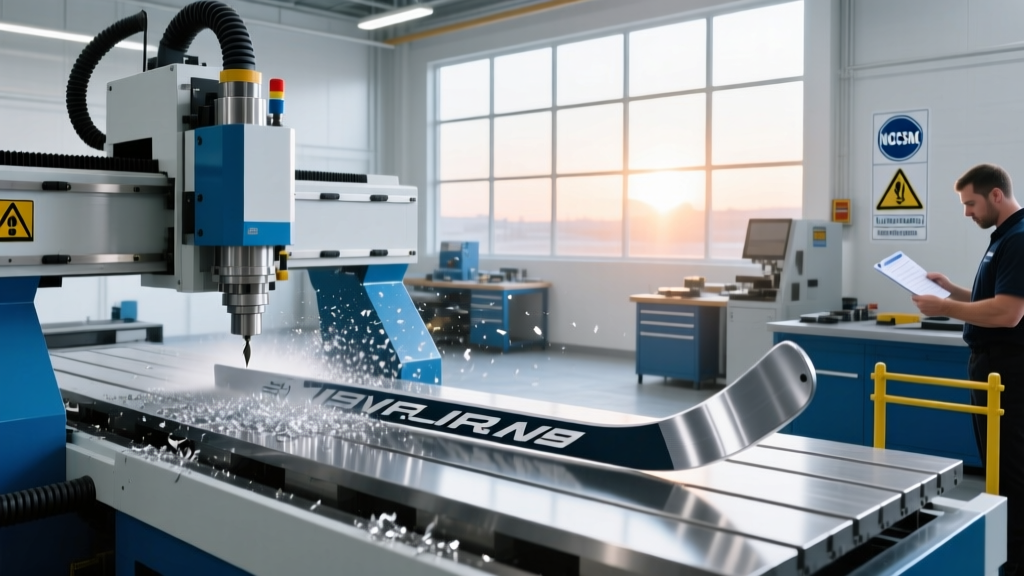
To eliminate parting-line flash—which acts as a micro-fracture point during impact testing—molds must be machined with extreme precision. The Haas DM-1 Desktop Mill (approx. $22,500) offers the necessary 6,000 RPM spindle speed and rigid tapping to machine P20 tool steel with a surface finish of 32 Ra or better. This minimizes post-machining polishing, which can inadvertently alter the critical draft angles and internal dimensions of the mold cavity.
| Equipment Type | Recommended Model | Compliance Tolerance Achievable | 2026 Est. Cost |
|---|---|---|---|
| Benchtop Injector | LNS Technologies 150A | ±0.005 in. (with custom PID temp control) | $2,800 |
| Desktop CNC Mill | Haas DM-1 | ±0.0005 in. (mold cavity accuracy) | $22,500 |
| Vacuum Former | Formech 300X | ±0.010 in. (foam shell forming) | $4,500 |
In-House Pre-Compliance Testing on a Budget
Waiting three weeks for official lab results after every design iteration will bankrupt a startup. Building an in-house guided drop-test rig allows engineers to validate impact attenuation (G-force thresholds) before committing to official certification runs.
Building a Micro-Drop Tower
A compliant drop tower requires a perfectly vertical guide rail to ensure the headform strikes the anvil at the exact prescribed angle. Startups can construct this using 80/20 T-slot aluminum extrusions (40x40mm profile) bolted to a heavy granite surface plate to prevent vibration dampening from skewing the accelerometer data.
For data acquisition, bypass expensive commercial DAQ systems. Instead, integrate an Adafruit LSM6DS33 6-DoF IMU (Inertial Measurement Unit) directly into the magnesium headform. This sensor samples at 6.6 kHz, which is more than sufficient to capture the 3-to-5 millisecond impact pulse required by ASTM F1447. Pair this with a Raspberry Pi 5 running a custom Python script to calculate the Severity Index (SI) in real-time.
💡 Pro Tip: When drop-testing EVA foam padding (like Zotefoam), ambient temperature drastically alters the material's hysteresis. Build a localized thermal chamber around your drop anvil using a Peltier cooler module to test the gear at the ASTM-mandated extreme temperatures (e.g., 120°F and -10°F) before official lab submission.Material Traceability and ISO 9001 for Micro-Factories
Compliance auditors do not just test the physical product; they audit the manufacturing process. If a startup cannot prove that Batch #42 of their shin guards used the exact same Shore A durometer TPU as the batch that passed the initial lab test, their certification is void. Implementing a lightweight ERP system like Katana MRP (approx. $349/month in 2026) is mandatory. Katana allows micro-factories to link specific resin lot numbers, machine operator IDs, and barrel temperature logs to every individual unit's serial number.
Cost Breakdown: Compliance-Ready Micro-Factory Setup
Below is a realistic capital expenditure matrix for a startup aiming to produce ASTM-compliant protective headgear and padding in batches of 50 to 500 units per month.
| Category | Item / Software | Capital Cost (USD) |
|---|---|---|
| Machining | Haas DM-1 + Tooling | $26,000 |
| Molding | LNS 150A + Custom PID Temp Controller | $3,500 |
| Forming | Formech 300X Vacuum Former | $4,500 |
| Testing Rig | 80/20 Drop Tower + LSM6DS33 DAQ + Granite Base | $4,200 |
| Software | Katana MRP (Year 1 Subscription) | $4,188 |
| Total Estimated Micro-Factory CapEx | $42,388 | |
Operator Safety and OSHA Compliance
While focusing on product safety, startups frequently neglect machine safety. The Consumer Product Safety Commission (CPSC) and OSHA hold manufacturers strictly liable for workplace injuries. Even benchtop machines require proper safeguarding. According to OSHA machine guarding standards, the LNS 150A injector must be fitted with a polycarbonate splash guard over the nozzle to prevent molten polymer burns, and the Haas DM-1 requires verified interlock switches on its enclosure doors. Skipping these $200 safety upgrades can result in OSHA fines exceeding $16,000 per violation, completely derailing a startup's runway.
Frequently Asked Questions
Can I self-certify my sports equipment for CE marking in Europe?
Generally, no. While some non-protective sports accessories can be self-certified under Category I PPE, impact-absorbing headgear and torso protectors are classified as Category II or III PPE. This requires a Module B EU-type examination by a Notified Body (like SGS or TÜV SÜD) before you can affix the CE mark and issue a Declaration of Conformity.
How often must I re-test my helmets to maintain NOCSAE compliance?
NOCSAE requires that manufacturers conduct ongoing drop testing on a statistically significant sample size from every production run. Furthermore, any change in the resin supplier, mold modification, or foam density mandates an immediate submission of the new iteration to an independent certified lab for full re-evaluation.
Does my product liability insurance cover ASTM compliance failures?
Most standard commercial general liability (CGL) policies contain exclusions for products that fail to meet recognized industry safety standards. If your internal QA logs show you knowingly shipped a batch that failed your in-house pre-compliance drop test, your insurance provider will likely deny the claim in the event of a user injury lawsuit.