Modular Line Troubleshooting & California Sales Tax Exemption Manufacturing Equipment
Learn to troubleshoot modular flexible production lines while maintaining compliance for the California sales tax exemption for manufacturing equipment.
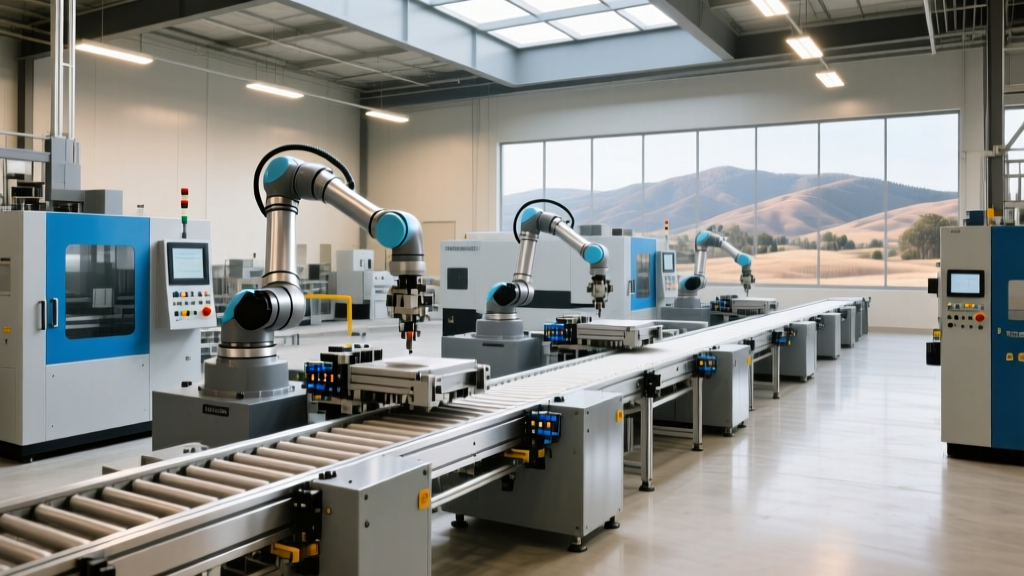
The transition to Industry 4.0 has replaced monolithic, fixed-automation conveyors with modular, plug-and-produce manufacturing skids. Systems like the Festo Modular Conveyor System (MCS) and Beckhoff XTS maglev tracks allow facility managers to reconfigure production lines in hours rather than weeks. However, when these advanced modular subsystems fail, the rapid module-swapping required to maintain uptime introduces a hidden administrative risk: inadvertently voiding or misapplying the California sales tax exemption for manufacturing equipment.
Under California Revenue and Taxation Code (RTC) Section 6377.1, qualified manufacturing equipment benefits from a partial sales and use tax exemption, reducing the state tax rate from 6.00% to 0.4125% (resulting in an effective total rate of roughly 4% to 6%, depending on local district taxes). When maintenance teams procure replacement modules for flexible production lines, classifying those purchases correctly is critical to surviving a California Department of Tax and Fee Administration (CDTFA) audit.
Diagnosing Core Modular Subsystem Failures
Before addressing tax compliance, maintenance engineers must accurately isolate the fault within the modular architecture. Flexible lines typically fail at the intersection of mechanical transport and decentralized I/O.
1. PROFINET and IO-Link Drops in Decentralized Skids
Modular skids rely on decentralized I/O blocks (e.g., Siemens SIMATIC ET 200SP or Allen-Bradley ArmorBlock) mounted directly on the extrusion framing. A common failure mode is a PROFINET communication drop caused by M12 connector degradation or internal port short circuits.
- Symptom: PLC registers a 'Station Not Found' fault; the entire modular skid halts while upstream/downstream modules continue running.
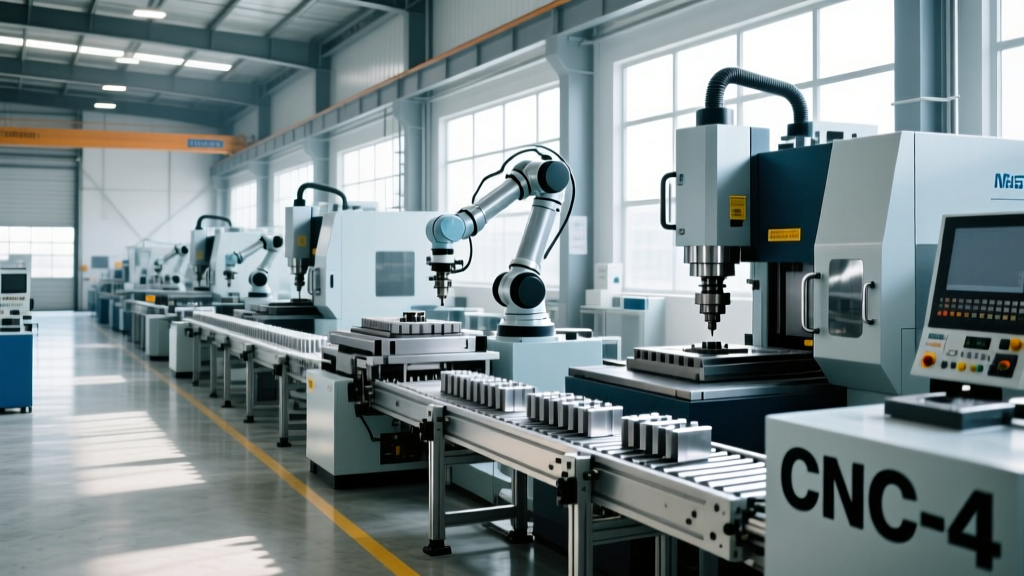
- Diagnostic Step: Use the TIA Portal or Studio 5000 network topology view to ping the IO-Link master. Check the physical M12 X-coded connectors for coolant ingress (common in CNC-tended modular cells).
- Resolution: Swap the IO-Link master module. Cost: $350 - $600.
2. Linear Motor and MagLev Conveyor Faults
Advanced flexible lines utilize linear motor technology (like the Bosch Rexroth ActiveShuttle or Beckhoff XTS) where individual movers are magnetically levitated or driven by linear synchronous motors.
- Symptom: 'Position Deviation' or 'Encoder Fault' on a specific mover or track segment.
- Diagnostic Step: Inspect the track segment's Hall effect sensors and optical encoder strips for metallic debris. Linear motors are highly sensitive to ferrous dust from upstream machining operations.
- Resolution: Clean the track segment with isopropyl alcohol and a lint-free swab. If the segment's internal drive coil is burnt out, the entire 1-meter track module must be unbolted and replaced. Cost: $8,000 - $15,000 per segment.
The CDTFA Compliance Matrix: Repair vs. Capital Expansion
To maintain the California sales tax exemption for manufacturing equipment, procurement and maintenance teams must align on how the CDTFA views modular replacements. The primary test is whether the module restores the line to its previous state or enhances its functional capacity.
| Module Replacement Type | Example Component | Avg. Cost | CDTFA Classification | Tax Exemption Action Required |
|---|---|---|---|---|
| Like-for-Like Repair | Siemens ET 200SP I/O Block | $450 | Routine Maintenance / Repair | Issue standard CDTFA-230-M (Blanket or Specific) |
| Consumable Tooling | Modular End-of-Arm Tooling (EOAT) Grippers | $1,200 | Consumable / Expendable | Qualifies for exemption; issue CDTFA-230-M |
| Capacity-Adding Skid | Adding a 2nd Inspection Vision Skid | $45,000 | Capital Improvement / Expansion | Must issue NEW, specific CDTFA-230-M tied to new asset tag |
| Software/Firmware Upgrades | PLC Logic Expansion for New Modular Recipe | $8,000 | Tangible vs. Intangible (Varies) | Custom software is generally taxable; canned software bundled with hardware may qualify |
Step-by-Step Protocol for Tax-Compliant Module Swaps
When a critical modular skid goes down, the pressure to order parts immediately often leads to bypassing tax exemption protocols, resulting in thousands of dollars in overpaid sales tax. Follow this integrated troubleshooting and procurement workflow:
- Fault Isolation & BOM Verification: Confirm the exact part number of the failed module. Ensure the replacement module is an exact OEM match. If the OEM has discontinued the part and you must buy a newer, faster-generation module, document the engineering justification to prove it is a 'forced upgrade' rather than a voluntary capacity expansion.
- Procurement & CDTFA-230-M Issuance: When issuing the Purchase Order to the vendor (e.g., Festo or Siemens), explicitly attach the CDTFA-230-M Partial Exemption Certificate. Ensure the vendor applies the reduced state rate (0.4125%) on the invoice. If the vendor charges full tax (e.g., 7.25%+), your accounts payable team must reject the invoice.
- Physical Swap & LOTO: Execute Lockout/Tagout procedures. Disconnect the modular umbilical (power, pneumatics, and PROFINET). Swap the skid module and recalibrate the kinematics via the HMI.
- Asset Tagging & Audit Trail: This is where most facilities fail. The CDTFA requires you to prove the equipment is used 'primarily' (more than 50% of the time) in manufacturing. Link the serial number of the new $15,000 linear motor segment to the original parent asset tag of the production line in your CMMS (e.g., Fiix or UpKeep). This creates an unbroken audit trail proving the new module is part of the original exempt manufacturing system.
Edge Cases that Trigger CDTFA Audits
Flexible manufacturing introduces unique operational scenarios that standard tax codes did not originally anticipate. Be prepared for these edge cases during a CDTFA audit:
The Prototyping vs. Production Dilemma
Modular lines are frequently used in R&D facilities to prototype new products before scaling to mass production. Under RTC Section 6377.1, equipment used primarily for R&D or prototyping does not qualify for the manufacturing exemption unless the prototyping is part of a continuous, integrated production cycle that results in a final product for sale. If your modular skid spends 60% of its time testing experimental alloys and 40% running production batches, the entire line loses its exemption status. Track machine utilization via SCADA timestamps to prove >50% production usage.
Leased Modular Skids
Many manufacturers now lease modular packaging skids to handle seasonal demand spikes. Leased equipment does qualify for the partial exemption, but the mechanics change. The lessor (the equipment rental company) must claim the exemption when they purchase the equipment, and the tax savings are passed on to you via reduced lease payments. Ensure your lease agreement explicitly states that the lessor is claiming the smart manufacturing equipment tax exemption under RTC 6377.1; otherwise, you will be paying full sales tax embedded in the lease rate.
'The shift to modular, plug-and-produce architecture is a massive leap for manufacturing agility, but it fragments the traditional definition of a 'single machine.' Maintenance leaders must treat every modular skid swap as both a mechanical repair and a micro-tax event.' — Industrial Automation Compliance Journal, 2026
Summary Checklist for Maintenance Managers
- Verify the failed module is a direct component of a line used >50% for manufacturing.
- Determine if the replacement is a like-for-like repair or a capacity-expanding upgrade.
- Issue the correct CDTFA-230-M certificate to the vendor before the invoice is cut.
- Log the new module's serial number into the CMMS under the parent line's asset tag.
- Retain SCADA utilization logs to defend against R&D/prototyping audit challenges.
By integrating CDTFA compliance directly into your modular troubleshooting workflow, you protect your facility's bottom line from unnecessary tax liabilities while maintaining the high-speed agility that flexible production systems demand.