Troubleshooting Modular Process Equipment Manufacturing Solutions
Expert troubleshooting guide for modular process equipment manufacturing solutions. Fix skid alignment, PROFINET drops, and quick-connect failures.
Interface Failures in Flexible Matrix Production
Deploying modular process equipment manufacturing solutions allows facilities to rapidly reconfigure production lines for varied batch sizes and product changeovers. However, the physical and digital boundaries between pre-engineered skids and the main facility infrastructure represent the highest concentration of failure points. When a modular Clean-in-Place (CIP) skid or a flexible dosing matrix is rolled into position, operators frequently encounter fluid coupling leaks, kinematic misalignment, and control system handshake timeouts. This guide details the precise mechanical and electrical troubleshooting protocols required to maintain uptime in modular flexible production environments.
Critical Safety Warning: Modular skids often retain trapped pressure in dead-leg piping after disconnect. Before troubleshooting any quick-connect fluid interface, verify zero-energy state using a calibrated bleed valve and lockout/tagout (LOTO) procedures on the upstream supply manifold.Fluid and Pneumatic Quick-Connect Degradation
The primary mechanical interface for modular liquid handling skids relies on flat-face hydraulic and pneumatic couplings, typically conforming to ISO 16028:2012 standards. These couplings are designed to minimize air inclusion and fluid spillage during hot-swapping. However, repetitive connection cycles in harsh washdown environments lead to specific failure modes that disrupt downstream process equipment.
Symptom: Cavitation and Pressure Drop in Dosing Pumps
When a modular mixing skid is connected, operators may notice the downstream twin-screw dosing pump cavitating or triggering a low-pressure alarm, despite the main supply pump reading nominal discharge pressure (e.g., 4.5 bar). This indicates a 15% to 20% pressure drop across the quick-connect interface.
Root Cause Analysis
- Particulate Scoring: Failure to cap the male and female coupling halves immediately after disconnection allows airborne particulate or washdown moisture to enter the valve body. Upon reconnection, debris scores the internal poppet valve, preventing full stroke travel and restricting flow area.
- O-Ring Extrusion: Using standard Nitrile (NBR) O-rings in high-temperature CIP applications (85°C+) causes the seal to extrude into the extrusion gap under 6 bar pressure, creating a partial blockage.
Repair and Mitigation Protocol
- Inspect and Measure: Disassemble the coupling half. Use a 10x loupe to inspect the poppet seating surface. If radial scoring exceeds 0.02 mm depth, the valve body must be replaced; lapping will not restore the seal geometry.
- Upgrade Seal Materials: Replace standard NBR O-rings with FKM (Viton) or EPDM compounds rated for 150°C continuous service, depending on the chemical compatibility of your process fluids.
- Implement Purge Carts: Mandate the use of a 10-micron offline filtration cart to flush the skid supply hoses before mating the ISO 16028 couplings. This eliminates trapped particulate introduced during storage.
Control System Handshake and PROFINET Latency
Modern process equipment manufacturing solutions rely heavily on decentralized I/O architectures. When a new modular filler unit is integrated into the flexible line, the skid's local IO-Link masters must synchronize with the main facility PLC (e.g., Allen-Bradley ControlLogix or Siemens S7-1500) via PROFINET. Handshake timeouts during this integration phase are a leading cause of startup delays.
| Symptom | Diagnostic Indicator | Root Cause | Resolution Protocol |
|---|---|---|---|
| PLC faults immediately upon skid power-up | PROFINET IRT sync error (Red SF LED on ET 200SP) | Mismatched GSDML files between the skid's IO-Link master and the main controller hardware configuration. | Export the exact GSDML file from the skid vendor's TIA Portal project and overwrite the generic device file in the main plant controller. |
| Intermittent loss of smart sensor data (e.g., Coriolis mass flow) | IO-Link master port drops to 'Data Storage Invalid' state | Parameter backup on the IO-Link master is corrupted or mismatched with the physical sensor's firmware version. | Force a 'Device Replacement' command via the master's web interface to push the correct parameter set from the PLC to the sensor. |
| Skid remains in 'Held' state despite operator start command | OPC UA tag 'StateCurrent' stuck at integer 4 | The skid's local state model does not align with the facility's overarching PackML execution model. | Review the OMAC PackML state definitions and ensure the skid's 'Resetting' state clears all local faults before accepting the 'Start' command. |
Kinematic Skid Alignment and Resonance Troubleshooting
Modular skids are typically mounted on adjustable leveling feet (such as Item D30 or Bosch Rexroth MT profiles) to allow for rapid positioning on the factory floor. However, improper leveling introduces kinematic misalignment that manifests as severe vibration when rotary equipment (e.g., centrifugal pumps or agitators) reaches operational speeds.
The Resonance Trap at 1200 RPM
A common failure scenario occurs when a modular agitation skid operates an agitator motor at 1200 RPM (20 Hz). If the natural frequency of the skid's structural frame—determined by its mass and the stiffness of the leveling mounts—also hovers near 20 Hz, the system enters mechanical resonance. This amplifies vibration amplitudes by up to 400%, leading to rapid fatigue cracking in the 316L stainless steel weldments and premature failure of the motor bearings.
Precision Alignment Procedure
Do not rely on standard bubble levels for modular skid installation. Follow this laser-based alignment protocol to ensure structural rigidity:
- Establish Co-planarity: Use a laser alignment tool (e.g., SKF TKSA 41) across all four primary mounting nodes of the skid base frame. Adjust the threaded leveling feet until the base frame co-planarity is within 0.05 mm.
- Verify Load Distribution: If the skid utilizes load cells for batch weighing, ensure the leveling feet are equipped with articulated swivel pads. Rigid pads on uneven floors will induce lateral shear forces on the load cells, causing a 2% to 5% weighing inaccuracy.
- Dampen Natural Frequency: If resonance persists despite perfect leveling, install elastomeric vibration isolation mounts (e.g., Trelleborg AV mounts) rated for the specific static load of the skid (typically 400 kg to 800 kg per corner). This shifts the system's natural frequency below 10 Hz, safely decoupling it from the 20 Hz operational excitation.
Economic Framework: Skid Component Repair vs. Replacement
Troubleshooting modular process equipment requires rapid economic decision-making. Because flexible production lines cannot afford extended downtime, maintenance managers must decide whether to rebuild a failed component on the skid or swap in a pre-fabricated replacement module. Use the following financial and operational matrix to guide your decision.
| Component Category | Typical Replacement Cost (2026) | Rebuild / Repair Cost | Decision Threshold |
|---|---|---|---|
| 316L Twin-Screw Pump Module | $14,000 - $18,500 | $2,800 - $4,200 (Seals & Bearings) | Repair if mechanical seal failure; Replace if rotor scoring exceeds 0.1 mm. |
| IO-Link Master Block (8-Port) | $650 - $900 | N/A (Solid State) | Always replace. Keep 2 spares per facility in the MRO crib. |
| Modular Heat Exchanger (Plate) | $8,500 - $12,000 | $3,500 (Gasket replacement & CIP) | Repair during planned shutdowns; Replace immediately if cross-contamination is detected. |
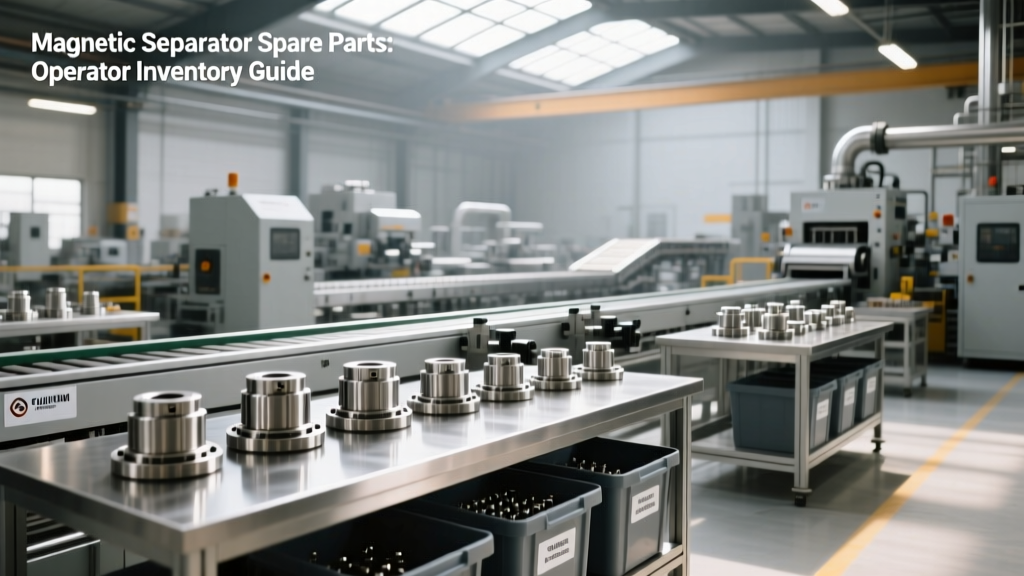
Maintaining a strategic inventory of high-wear modular sub-assemblies—specifically pump rotors, IO-Link masters, and flat-face coupling halves—reduces mean-time-to-repair (MTTR) from an average of 48 hours (waiting for OEM parts) to under 4 hours. By standardizing the physical and digital interfaces across all process equipment manufacturing solutions, facilities can fully realize the uptime benefits of flexible, modular production architectures.