Modular Production: Using a Dental Equipment Manufacturers Email List
How modular manufacturing equipment drives flexible dental production, plus strategies for leveraging a dental equipment manufacturers email list for B2B sales.
The Engineering Case for Modular Flexibility in Dental OEMs
Dental device manufacturing—ranging from titanium orthopedic implants to high-speed pneumatic surgical handpieces—demands extreme precision and rigorous adherence to ISO 13485 quality management standards. Historically, OEMs relied on fixed, hard-automated assembly lines. However, the 2026 market reality is high-mix, low-volume production. A single facility may run 14 different implant abutment SKUs on a Tuesday and switch to orthodontic bracket assemblies on Wednesday.
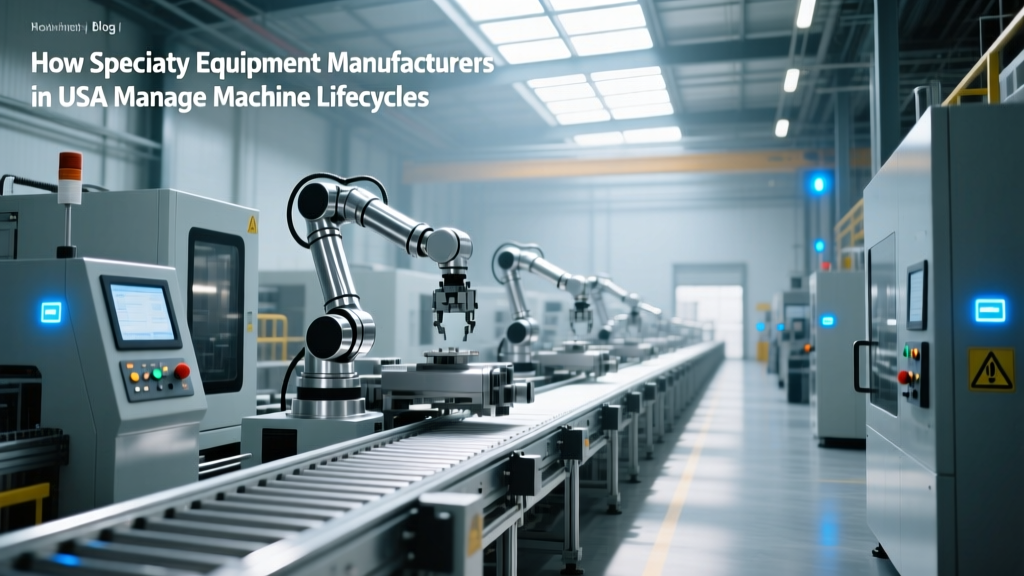
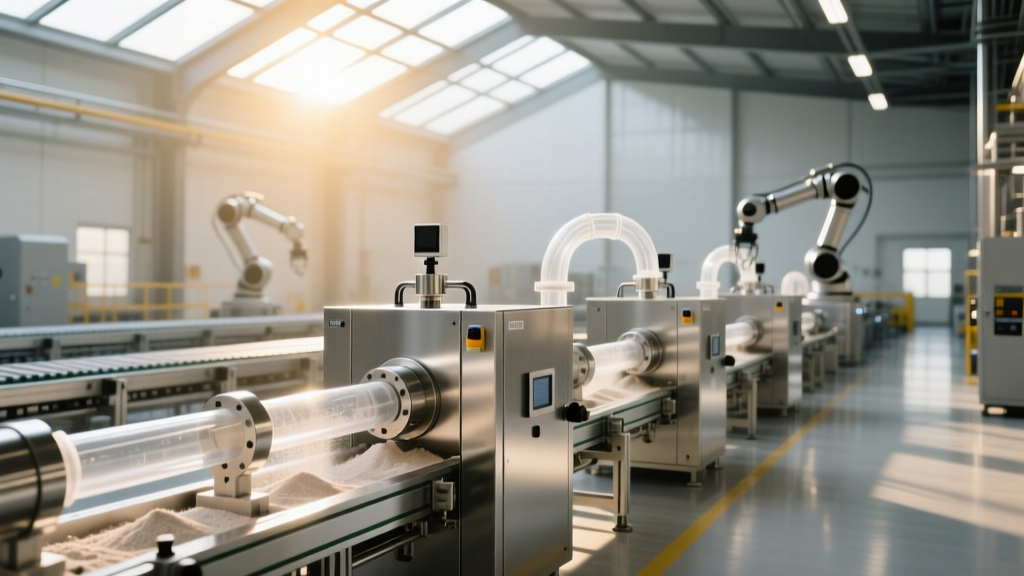
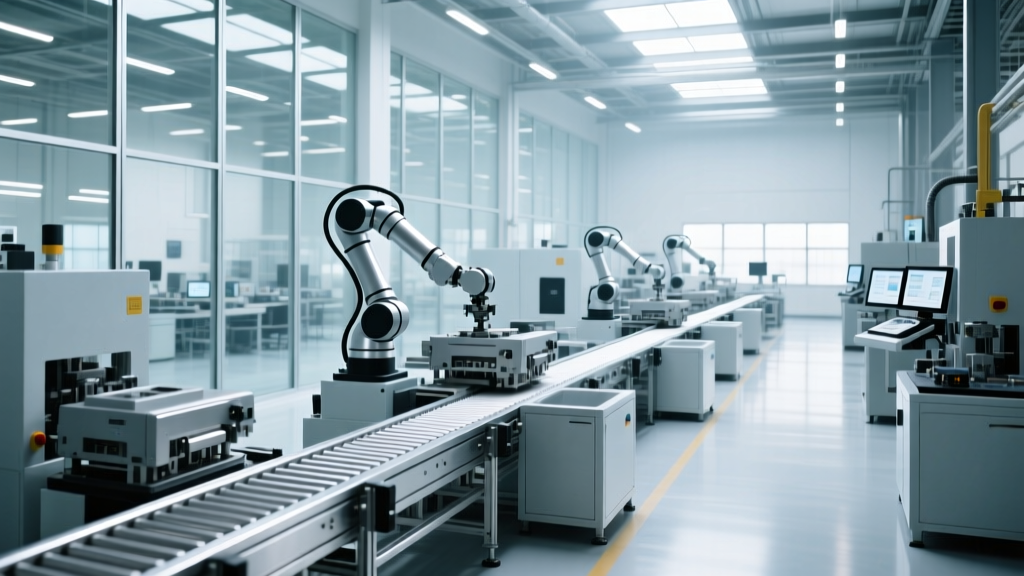
Modular manufacturing equipment solves this bottleneck. Systems utilizing linear motor transport technology (such as Bosch Rexroth's ActiveMover or Beckhoff's XPlanar) allow independent mover control, decoupling machine cycle times from physical conveyor speeds. When paired with decentralized I/O blocks like the Siemens Simatic ET 200SP and quick-release pneumatic tooling, changeover times drop from 4.5 hours to under 18 minutes.
Cleanroom Constraint Warning: Modular components in dental production must meet ISO 14644-1 Class 7 cleanroom standards. Standard lubricated chains and open belts generate particulates. Specify FDA-compliant polyurethane belting and IP65-sealed linear motors with integrated air-purge systems to prevent lubricant outgassing and ensure compliance with FDA CGMP guidelines.CapEx vs. OpEx: Financial Modeling for Flexible Lines
When pitching flexible production, machinery vendors must justify the initial premium of modular systems against long-term operational savings. Below is a comparative financial and operational model based on 2026 mid-market automation benchmarks for a 5,000 sq. ft. dental assembly cell.
| Metric | Fixed Hard-Automation | Modular Plug-and-Produce |
|---|---|---|
| Initial CapEx | $420,000 - $550,000 | $680,000 - $850,000 |
| SKU Changeover Time | 4 - 6 Hours (Requires Mechanics) | 12 - 20 Minutes (Operator-Led via HMI) |
| Footprint (Sq. Ft.) | 1,200 (Fixed Layout) | 850 (Reconfigurable U-Shape) |
| End-of-Life Salvage Value | $15,000 (Scrap Metal) | $210,000 (Modules redeployed) |
| ROI Horizon | 4.2 Years | 2.8 Years (Accelerated by OEE gains) |
B2B Outreach: Leveraging a Dental Equipment Manufacturers Email List
Building a $750,000 modular line is only half the battle; selling it requires precision targeting. Industrial automation integrators and OEM machinery builders increasingly rely on a highly segmented dental equipment manufacturers email list to reach decision-makers. However, blasting a generic brochure to a purchased list yields sub-1% open rates and zero pipeline generation. To sell complex CapEx equipment, you must apply Account-Based Marketing (ABM) principles to your outreach.
Segmentation Strategy for High-Ticket Automation Sales
Not all dental manufacturers have the same pain points. Before launching an email campaign, segment your list by company tier and production maturity:
- Tier 1 (e.g., Dentsply Sirona, Envista Holdings): Target the VP of Global Manufacturing or Director of Automation. Messaging should focus on global standardization of modular platforms, digital twin integration, and reducing cross-factory validation times.
- Tier 2 (Mid-Market Implant & Aligner Makers): Target the Plant Manager or Director of Engineering. Focus on rapid time-to-market, OEE (Overall Equipment Effectiveness) improvements, and scaling production without expanding facility footprint.
- Tier 3 (Boutique Surgical Tool Startups): Target the Founder or COO. Focus on lowering initial CapEx barriers via phased modular deployments (starting with a 3-station cell and adding modules as revenue scales).
Data Enrichment: Timing the Pitch Perfectly
An email list is only as valuable as the intent data layered on top of it. Cross-reference your dental equipment manufacturers email list with public FDA 510(k) clearance databases. If a mid-market dental OEM receives clearance for a new ultrasonic bone surgery device in Q1, they will be aggressively scaling manufacturing capacity in Q2. Triggering an automated, highly technical email sequence detailing modular cleanroom assembly cells exactly 14 days post-clearance yields significantly higher meeting-book rates than cold, calendar-based outreach.
Structuring the Email Sequence for CapEx Sales
When reaching out to engineering directors via your list, avoid marketing jargon. Use a problem-agitation-solution (PAS) framework rooted in manufacturing realities.
High-Converting Email Framework Example
Subject: Changeover bottlenecks on your new 510(k) abutment line
Body Hook: 'Noticed your recent 510(k) clearance for the Series-4 titanium abutments. Most OEMs we work with struggle with the 4-hour mechanical changeovers required to switch from standard to angled abutments on fixed conveyors.'
Technical Value Add: 'We recently deployed an IP65-rated linear motor transport system for a Class II cleanroom that reduced SKU changeovers to 14 minutes using RFID-enabled quick-release tooling.'
Call to Action: 'Open to a 15-minute screen share to review the cycle-time simulation?'
Implementation Pipeline: From Cold Email to Site Acceptance Test (SAT)
Once the initial outreach via the dental equipment manufacturers email list secures a meeting, the sales cycle transitions into a rigorous engineering validation process. Selling to medical device manufacturers requires navigating strict regulatory documentation.
- Discovery & URS (User Requirement Specification): Define exact payload weights (e.g., 250g to 2kg for dental handpieces), required cycle times (typically < 4 seconds per station), and cleanroom classifications. The URS becomes the binding technical contract.
- Digital Twin Simulation: Before cutting metal, run the modular line through 3D kinematic simulation software (like Siemens NX MCD). Share the OEE projections with the buyer's finance team to finalize CapEx approval.
- FAT (Factory Acceptance Test): The buyer visits the integrator's facility. Run 500 continuous cycles using dummy dental components. Verify decentralized I/O communication latency and emergency stop (E-Stop) response times.
- SAT & IQ/OQ/PQ Validation: After installation at the buyer's facility, execute Installation Qualification (IQ), Operational Qualification (OQ), and Performance Qualification (PQ). This step is non-negotiable for FDA compliance and triggers the final 30% payment milestone.
The Future of Dental Device Assembly
As customized dental devices—such as patient-specific 3D-printed surgical guides—become the industry standard, batch sizes will continue to shrink toward lot-size-one. Fixed automation cannot survive this shift. Modular manufacturing equipment provides the mechanical agility required, but capturing this market requires equally agile, data-driven B2B sales strategies. By intelligently leveraging a targeted dental equipment manufacturers email list and pairing it with deep technical expertise in cleanroom automation, machinery vendors can dominate the most lucrative sector of medical device manufacturing.