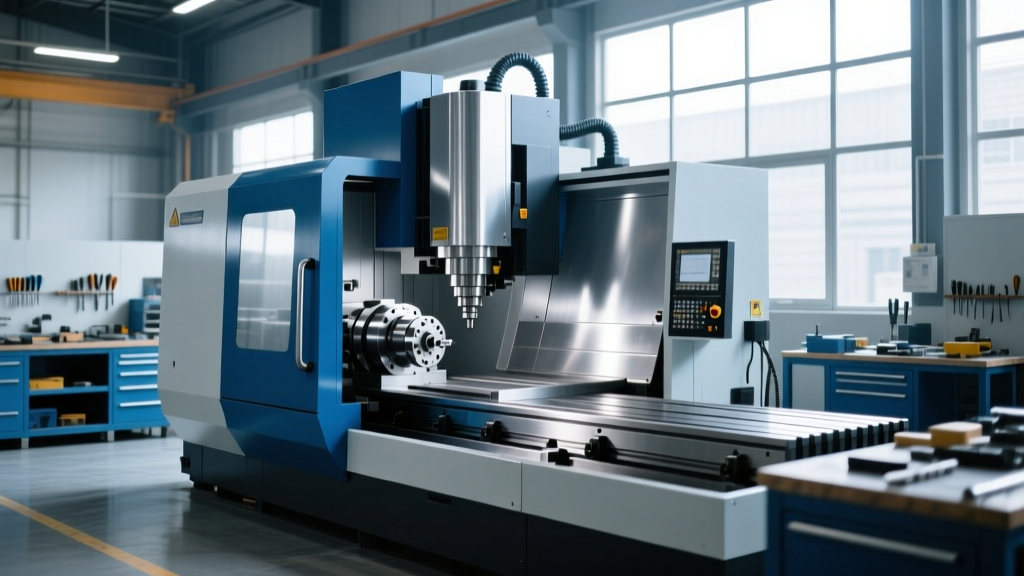
Modular Line Troubleshooting for Healthcare Equipment Manufacturers
Learn how healthcare equipment manufacturers can troubleshoot and repair modular flexible production lines to minimize downtime and maintain ISO compliance.
The High-Stakes Reality of Modular Line Downtime
When a modular production cell fails on a medical device assembly line, the cost extends far beyond mechanical downtime. For healthcare equipment manufacturers, an unplanned stoppage triggers immediate batch quarantine protocols, potentially costing $10,000 to $25,000 per hour in delayed throughput and scrapped sterile materials. Modular manufacturing equipment—such as Bosch Rexroth TS5 roller conveyors, Festo CPX automation terminals, and Siemens SIMATIC tracking systems—offers unparalleled flexibility for scaling production of diagnostic kits, orthopedic implants, and surgical instruments. However, the plug-and-play nature of these systems masks complex electromechanical interdependencies.
This guide provides advanced troubleshooting frameworks specifically engineered for the stringent regulatory environment of medical device manufacturing, addressing mechanical faults, IO-Link communication drops, and cleanroom particle degradation.
⚠️ FDA Validation Alert: Under 21 CFR Part 820, replacing a modular component (even an identical like-for-like swap) on a validated medical device line requires documented re-qualification. Never bypass Installation Qualification (IQ) and Operational Qualification (OQ) checklists to expedite a repair.Rapid Diagnostic Matrix for Modular Assembly Cells
Before dismantling a flexible production module, maintenance engineers must isolate the fault domain. Use the following matrix to map surface-level symptoms to root-cause subsystems.
| Symptom | Modular Subsystem | Probable Root Cause | Immediate Diagnostic Action |
|---|---|---|---|
| Pallet misalignment at precision press station | Bosch Rexroth TS5 Conveyor / Stop Gate | Wear on polyurethane timing belt or degraded pneumatic dampener in stop unit | Check belt tension (deflection should be <5mm at 20N); inspect dampener for micro-leaks using ultrasonic detector. |
| Intermittent IO-Link timeouts on Festo valve terminal | Festo CPX/MPA Automation Platform | EMI interference from adjacent VFDs or compromised M12 connector shielding | Route IO-Link cables min. 200mm from power lines; verify M12 pin 3 (ground) continuity. |
| RFID tag read failures at sterilization handoff | Siemens SIMATIC RF600 Reader | Antenna detuning due to metallic modular framing proximity or tag thermal degradation | Recalibrate reader threshold via SIMATIC Ident software; verify tag spacing is >15mm from aluminum extrusions. |
| Spike in ISO Class 7 airborne particle counts | Linear Guides / Rotary Indexers | Lubricant breakdown or micro-abrasion on recirculating ball bearings | Perform particle counter sniff-test directly over guide rails; switch to ISO-rated perfluoropolyether (PFPE) grease. |
Troubleshooting Servo-Driven Diverter and Transfer Modules
Flexible production lines rely heavily on servo-driven diverters to route pallets to different assembly cells based on real-time routing logic. When a diverter module (such as a Festo ELGC linear actuator) fails to seat a pallet correctly, it compromises downstream precision operations like laser welding or micro-dispensing.
Step 1: Analyze the Torque and Current Signatures
Modern servo drives record continuous current draw. A spike in holding current during the diverter's extended position usually indicates mechanical binding rather than an electrical fault. Access the drive's diagnostic buffer via the HMI. If the current exceeds 115% of the nominal rating during the dwell phase, the linear guide is likely experiencing edge-loading.
Step 2: Verify Modular Framing Orthogonality
Modular aluminum extrusions (e.g., 45x45mm profiles) can shift over time due to vibration from adjacent stamping or pressing modules. Use a digital machinist square and a calibrated dial indicator to check the perpendicularity of the diverter module against the main conveyor axis. Tolerances for medical device assembly cells demand a maximum deviation of 0.05mm over a 500mm span. If out of spec, loosen the M8 T-slot nuts (torque spec typically 25 Nm), realign using precision shims, and re-torque to 45 Nm using a calibrated torque wrench.
Resolving RFID Traceability Dropouts in Modular Handoffs
Traceability is non-negotiable for healthcare equipment manufacturers. Every sub-component of a surgical device must be tracked from raw material to final sterile packaging. Modular lines utilize RFID transponders embedded in the pallet bases, read by antennas mounted flush within the conveyor belt.
'According to ISO 13485:2016 requirements for product identification and traceability, organizations must maintain documented procedures to ensure that equipment used in manufacturing does not compromise the ability to trace devices through their lifecycle.'
The 'Ghost Pallet' Phenomenon
A common failure mode in modular flexible lines is the 'ghost pallet'—where the PLC registers a pallet arrival via a photoelectric sensor, but the RFID reader returns a null payload. This halts the line to prevent untraceable medical devices from advancing.
- Cause A: Antenna Cross-Talk. In dense modular layouts, adjacent RFID readers operating on the same frequency (e.g., UHF 860-960 MHz) can interfere. Fix: Implement time-division multiplexing (TDM) in the PLC logic, staggering the read cycles of adjacent modules by 50 milliseconds.
- Cause B: Pallet Base Warpage. Repeated sterilization or aggressive chemical washdowns can cause polycarbonate pallet bases to warp by 1-2mm, pushing the RFID tag out of the antenna's optimal focal zone. Fix: Measure pallet flatness with a feeler gauge on a granite surface plate. Replace pallets exceeding 0.5mm warpage and upgrade to high-temperature PEEK (Polyether ether ketone) pallet bases for washdown zones.
Cleanroom Degradation: Particle Generation in Moving Modules
Many modular assembly systems are deployed inside ISO Class 7 or ISO Class 8 cleanrooms to manufacture implants, catheters, and in-vitro diagnostics. Standard industrial modular equipment will rapidly fail ISO 14644-1 particulate limits due to friction-induced wear.
💡 Pro-Tip for Cleanroom Modular Repair: When replacing a worn timing belt or linear bearing inside a cleanroom modular cell, do not rely on the room's primary HEPA filtration to clear the debris. Deploy a localized portable HEPA scrubber (capable of 150 CFM) directly adjacent to the repair zone, and wipe down all adjacent aluminum extrusions with 70% IPA on low-lint polyester wipers before re-energizing the system.Diagnosing Micro-Abrasion Wear
If your continuous environmental monitoring system (EMS) flags a gradual increase in >0.5 µm particles localized to a specific modular cell, suspect the rotary indexers or cam followers. Standard lithium-based greases will outgas and aerosolize under high-speed operation. Transition all moving modular joints in the cleanroom envelope to dry-film PTFE coatings or vacuum-rated PFPE lubricants. Inspect the UHMWPE (Ultra-High-Molecular-Weight Polyethylene) wear strips on pallet guides; if you observe a chalky white residue on the guide rails, the wear strip has exceeded its lifecycle and is actively shedding micro-plastics into the environment.
Post-Repair Re-Validation Protocol for Modular Swaps
Because modular equipment allows for rapid physical swapping of entire workstations (e.g., unplugging a vision-inspection cell and rolling in an ultrasonic welding cell), healthcare equipment manufacturers must enforce strict re-validation gates. Skipping these steps risks severe FDA Form 483 observations during audits.
- Installation Qualification (IQ): Verify that the replacement module matches the exact Bill of Materials (BOM) version specified in the master validation plan. Check all utility connections (e.g., 6 bar dry compressed air, 24VDC Class 2 power) and record calibration certificates for any integrated torque drivers or force-displacement sensors.
- Operational Qualification (OQ): Run the module through its upper and lower operational limits. If the module is a heat-staking station, test the thermal controller at the extreme edges of the validated process window (e.g., 210°C and 230°C) to ensure the modular power supply can maintain temperature stability without voltage sag.
- Performance Qualification (PQ): Produce a minimum of three consecutive batches using the repaired modular cell. Perform 100% inline metrology on critical-to-quality (CTQ) dimensions. Calculate the Cpk (Process Capability Index); for medical device manufacturing, a Cpk of ≥1.33 is typically required to release the module back to full production.
Strategic Spare Parts Inventory for Flexible Lines
To minimize the mean-time-to-repair (MTTR) on flexible manufacturing lines, maintenance managers must optimize their spare parts cribs specifically for modular architectures. Do not stock entire modular assemblies; instead, stock the high-wear sub-components that cause 90% of line stops. Maintain a minimum on-hand inventory of IO-Link master modules, M12 sensor cordsets (specifically the right-angle variants prone to fatigue failure), and pre-lubricated recirculating ball bearing carriages. By treating modular equipment not as a monolithic machine, but as a matrix of standardized sub-systems, healthcare equipment manufacturers can achieve the agility required for modern medical device production without sacrificing regulatory compliance or equipment uptime.