How Mining Equipment Manufacturers Navigate CE, UL, and CSA Compliance
Discover how mining equipment manufacturers achieve CE, UL, and CSA compliance. Explore case studies, certification costs, and testing protocols.
The Fragmented Reality of Global Certification
For mining equipment manufacturers, designing a high-tonnage excavator or an underground load-haul-dump (LHD) loader is only half the engineering battle. The other half is navigating a deeply fragmented, high-stakes regulatory landscape. A machine built for the Pilbara region in Australia must meet entirely different electrical, mechanical, and explosive atmosphere directives than one deployed in the Athabasca oil sands or the deep-level gold mines of the Witwatersrand Basin. In 2026, as the global mining sector accelerates its transition toward battery-electric and autonomous fleets, the complexity of achieving CE, UL, and CSA compliance has reached unprecedented levels.
Compliance is not a final checklist applied to a finished product; it is a foundational engineering constraint. Misinterpreting the boundary between general industrial machinery standards and Hazardous Locations (HazLoc) requirements can result in failed prototype testing, months of delayed deployments, and millions in stranded R&D capital. This analysis breaks down how leading OEMs architect their machines for global certification, utilizing real-world case studies and cost matrices to illustrate the path to market.
Decoding the Core Frameworks: CE, UL, and CSA
CE Marking and the 2026 EU Machinery Regulation Transition
The CE mark is not a single standard but a declaration of conformity across multiple intersecting European Union directives. For heavy mining machinery, the foundational framework is transitioning. While the legacy Machinery Directive (2006/42/EC) governed the industry for nearly two decades, the new EU Machinery Regulation 2023/1230 becomes fully mandatory in January 2027. Throughout 2026, mining equipment manufacturers are aggressively updating their technical files to address the new regulation's stringent requirements regarding cybersecurity, artificial intelligence in autonomous haulage, and updated safety protocols for human-machine interaction.
Furthermore, underground mining equipment destined for European or international markets adopting IEC standards must comply with the ATEX Directive (2014/34/EU) for explosive atmospheres. This requires rigorous component-level and system-level testing to ensure that electrical arcing or surface temperatures cannot ignite methane or coal dust.
UL and CSA: North American Industrial & HazLoc Standards
In North America, the National Fire Protection Association (NFPA) and local electrical codes dictate compliance, verified by Nationally Recognized Testing Laboratories (NRTLs) like UL and CSA Group. Industrial control panels on surface mining equipment typically fall under UL 508A and CSA C22.2 No. 14. However, underground equipment faces the brutal scrutiny of HazLoc classifications (Class I, Division 1 / Zone 0, 1, 2) and specific regional mandates, such as the Mine Safety and Health Administration (MSHA) 30 CFR Part 18 regulations for coal mines.
WARNING: The "Self-Certification" TrapUnlike simple commercial tools, heavy mining equipment cannot be self-certified under the CE framework if it involves hazardous lifting operations, underground explosive atmospheres, or complex safety-related control systems (SRP/CS). OEMs must utilize Notified Bodies (NoBos) for ATEX Category 1 and 2 equipment. Attempting to self-certify an underground drilling rig's electrical enclosure will result in immediate rejection by mine inspectors and severe liability exposure.
Case Study: Certifying an 800V Battery-Electric Roof Bolter
To understand the practical friction of compliance, consider a recent 2026 development cycle by a Tier-2 mining OEM transitioning a diesel-powered roof bolter to an 800V DC battery-electric architecture. The machine was designed for dual-market release: North American underground coal mines (MSHA/UL) and international hard-rock mines (CE/IECEx).
The Compliance Hurdle: Thermal Runaway and Enclosure Integrity
The primary engineering challenge was the 250 kWh NMC (Nickel Manganese Cobalt) lithium-ion battery pack. Under ATEX and IECEx standards, high-energy-density batteries in explosive atmospheres cannot rely solely on "Increased Safety" (Ex e) because a thermal runaway event generates internal pressures and temperatures that exceed standard enclosure limits.
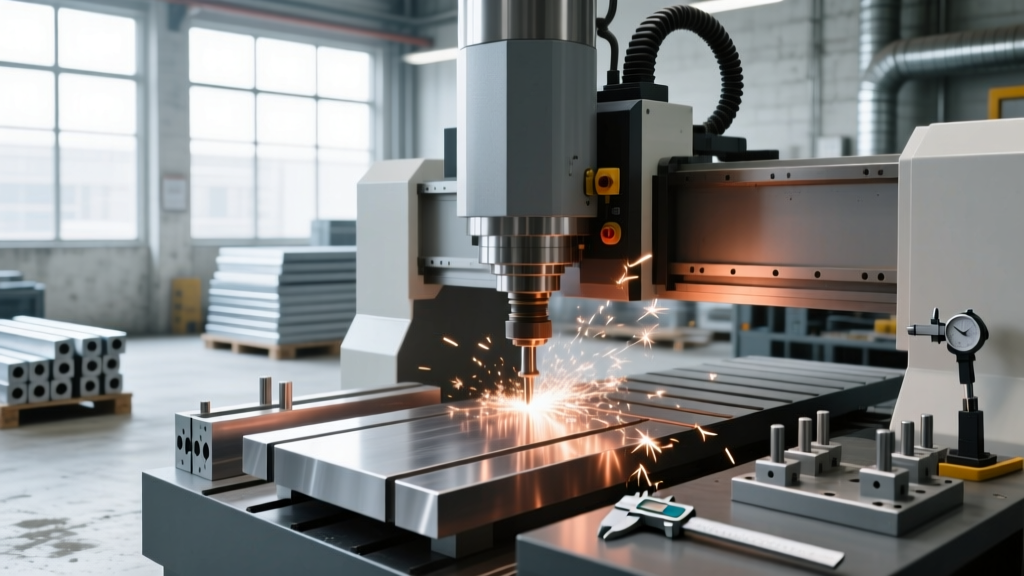
The OEM was forced to design a "Flameproof" (Ex d) enclosure. This required machining 25mm thick steel plates with precision-machined flame paths (flange gaps strictly maintained between 0.1mm and 0.4mm depending on the gas group) to ensure that any internal explosion would cool the escaping gases below the auto-ignition temperature of the surrounding methane/air mixture.
The Financial and Temporal Impact
The pivot to an Ex d enclosure added 1,400 kg to the machine's gross weight, necessitating a redesign of the boom hydraulics. More critically, the certification timeline expanded drastically. Below is the actual compliance matrix for this specific powertrain architecture.
| Certification Scheme | Typical Cost Range (2026) | Average Timeline | Primary Testing Focus |
|---|---|---|---|
| CE (Machinery & ATEX Ex d) | $85,000 - $120,000 | 12 - 16 Months | Overpressure testing, flame path verification, IP66 ingress |
| UL / CSA (HazLoc Class I, Div 1) | $65,000 - $95,000 | 9 - 14 Months | Temperature rise, short-circuit withstand, component spacing |
| IECEx (International Scheme) | $40,000 - $60,000* | 4 - 6 Months | Documentation review leveraging existing ATEX test data |
*Note: IECEx costs are significantly lower when utilizing the IECEx Accepted Test Reports from the initial ATEX/UL testing phases, highlighting the financial necessity of strategic testing sequencing.
Common Edge-Case Failure Modes in Compliance Testing
Even experienced mining equipment manufacturers encounter unexpected failures during NRTL and Notified Body testing. Recognizing these edge cases during the CAD phase prevents costly physical redesigns.
- Acoustic Vibration Loosening Cable Glands: During the IP6K9K high-pressure, high-temperature washdown testing required for surface mining equipment, enclosures frequently fail. The root cause is often not the gland itself, but the acoustic and mechanical vibration from the machine's rock-breaker or drill head loosening the locknut over 500 hours of operation, breaking the ingress seal. OEMs must specify ATEX-certified, vibration-resistant locknuts with integrated O-rings rather than standard nylon-insert locknuts.
- VFD Radiated Emissions (EMC Failures): The 2026 EU Machinery Regulation places heavy emphasis on electromagnetic compatibility (EMC). Variable Frequency Drives (VFDs) powering 250kW+ hoist motors generate massive harmonic distortion and radiated emissions. If the control panel's internal shielding and cable routing do not strictly separate high-power unshielded motor cables from low-voltage 24V DC CANbus communication lines, the machine will fail EN 55011 Class A radiated emission limits, causing autonomous safety sensors to blind out.
- Thermal Stratification in Ex e Enclosures: When designing "Increased Safety" (Ex e) junction boxes for underground conveyors, engineers often calculate the maximum temperature of the terminal blocks. However, testing labs measure the temperature of the enclosure surface. If high-current cables are routed too close to the steel wall of the enclosure without adequate thermal stand-offs, the external surface can exceed the T4 (135°C) temperature classification, resulting in an immediate test failure.
Strategic Integration Framework for OEMs
To avoid treating compliance as an afterthought, leading mining equipment manufacturers employ a "Compliance-by-Design" framework. This methodology integrates regulatory constraints directly into the Product Lifecycle Management (PLM) software.
- Define the Global Certification Matrix (Month 1): Before cutting steel, map the exact deployment regions. Determine if the machine requires MSHA Part 18 (US Coal), ATEX Category M1 (EU Underground), or general surface mining standards. This dictates the baseline enclosure and component selection.
- Pre-Select Certified Sub-Assemblies (Month 2-3): Do not design custom contactors or relays for explosive atmospheres. Utilize pre-certified Ex components (e.g., ATEX-certified intrinsically safe barriers and Ex d motor starters) listed in the IECEx or UL hazardous locations databases. This shifts the burden of component-level testing to the supplier.
- Conduct In-House Pre-Scans (Month 8): Rent or purchase near-field EMC probes and thermal imaging equipment. Perform in-house radiated emission sweeps and thermal mapping under maximum load conditions before sending the $2M prototype to the official UL or TÜV testing facility.
- Sequence Testing for Maximum Leverage (Month 12+): Always test to the most stringent standard first. For global deployments, testing to IEC 60079 (IECEx/ATEX) first allows OEMs to submit the resulting test reports to North American NRTLs for UL/CSA HazLoc certification, often bypassing redundant physical destructive testing and saving upwards of $40,000 in lab fees.
The Bottom Line for 2026
As mining operations push deeper and demand zero-emission fleets, the intersection of high-voltage battery architectures and explosive atmospheres represents the most complex compliance frontier in heavy industry. Mining equipment manufacturers that master the nuanced differences between CE, UL, and CSA frameworks—and integrate them into the earliest stages of mechanical and electrical design—will secure faster market entry, lower warranty liabilities, and a distinct competitive advantage in global tenders.