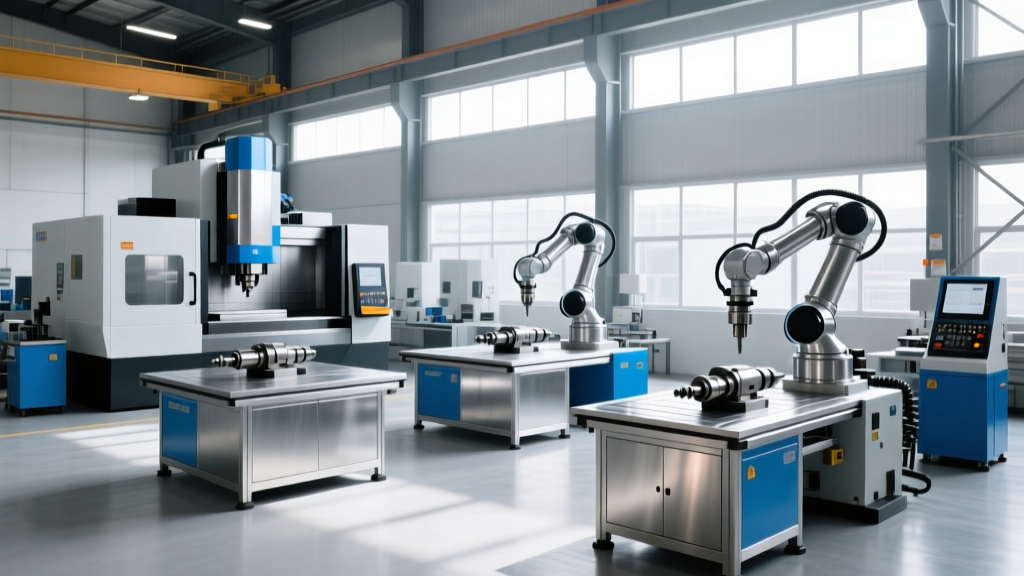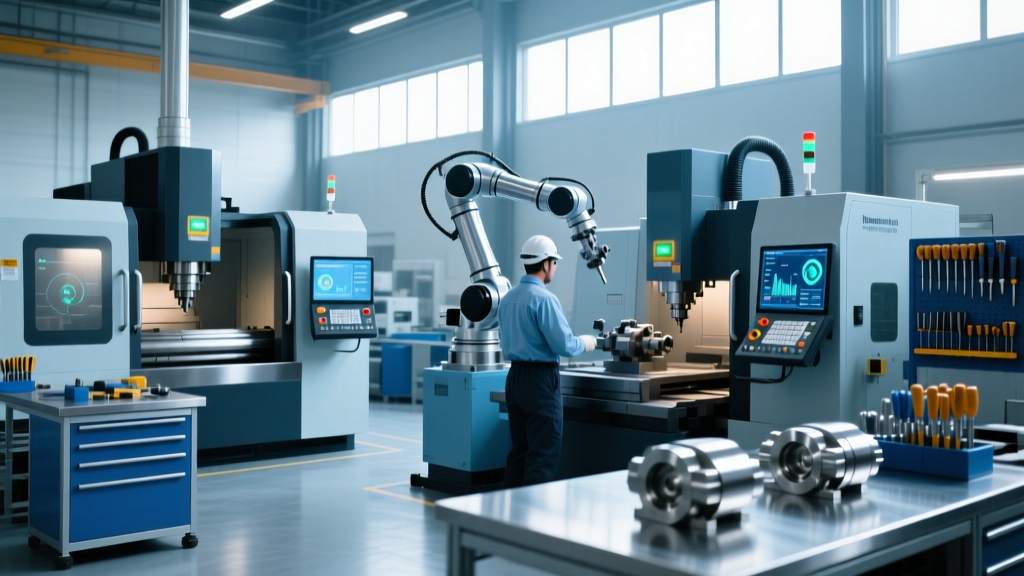
Industrial IoT Sensor Training for Medical Equipment Component Manufacturers
Discover best practices for training operators on Industrial IoT sensors in medical equipment component manufacturing to ensure compliance and uptime.
The Regulatory Imperative: FDA QMSR and IIoT Traceability
Manufacturing orthopedic implants, surgical robotics parts, or diagnostic casings requires micron-level precision. For medical equipment component manufacturers, integrating Industrial IoT (IIoT) sensors into CNC mills, injection molders, and cleanroom assembly stations is no longer optional—it is a baseline requirement for traceability. However, a $50,000 investment in smart sensors yields zero ROI if machine operators treat them as opaque 'black boxes.'
The regulatory landscape is shifting aggressively. As the FDA transitions to the Quality Management System Regulation (QMSR) in February 2026, aligning more closely with ISO 13485, the burden of proof for process validation and continuous monitoring falls heavily on digital records. According to the FDA's QSR guidelines, manufacturers must ensure that personnel are adequately trained to perform their assigned responsibilities. In an IIoT-enabled facility, this means operators must understand not just how to run the machine, but how to interpret, validate, and respond to the sensor data the machine generates.
Compliance Warning: Under 21 CFR Part 11 and the incoming QMSR, if an operator overrides an IIoT sensor alarm without documenting the root cause in the MES (Manufacturing Execution System), the entire batch can be flagged for rejection during an FDA audit. Training must heavily emphasize the legal and quality implications of digital audit trails.Core IIoT Sensor Deployments on the Medical Shop Floor
Before designing a training curriculum, floor managers must categorize the specific sensor technologies in use. Medical equipment component manufacturers typically deploy three primary categories of IIoT sensors, each requiring distinct operator competencies.
| Sensor Category | Common Models in Medical Mfg | Primary Application | Operator Training Focus |
|---|---|---|---|
| Vibration & Acoustic | Banner Engineering QM42VT, SKF Multilog | Spindle health monitoring on Swiss-type lathes machining titanium bone screws. | Recognizing baseline vs. anomaly velocity (in/s RMS) thresholds. |
| Vision & Dimensional | Cognex In-Sight 900, Keyence IV3 | Inline defect detection and micron-level tolerance verification for catheter tips. | Adjusting lighting parameters, clearing lens obstructions, and resetting false-reject counters. |
| Environmental (Cleanroom) | Sensirion SHT4x, Vaisala Indigo | Tracking humidity and temperature differentials in ISO Class 7 assembly rooms. | Understanding HVAC lag times and sensor calibration drift protocols. |
The 3-Tier Operator Training Framework
Effective training for medical manufacturing cannot be a one-time seminar. It requires a tiered, continuous competency model. Based on current industry benchmarks, training an operator on IIoT dashboards costs approximately $1,200 to $1,800 in lost production time, but prevents batch rejections that can cost upwards of $45,000 in scrapped medical-grade PEEK or titanium.
Tier 1: Dashboard Literacy and Data Entry (4 Hours)
Tier 1 focuses on basic navigation of the HMI (Human-Machine Interface) and MES integration. Operators learn how to read real-time OEE (Overall Equipment Effectiveness) dashboards, acknowledge sensor alerts, and input mandatory shift-handover notes. The critical competency here is distinguishing between a 'Warning' (sensor approaching threshold) and a 'Fault' (sensor breached threshold, machine interlocked).
Tier 2: First-Line Anomaly Troubleshooting (12 Hours)
At Tier 2, operators are trained to physically interact with the sensors. For example, if a Cognex vision sensor throws a 'Low Contrast' error, the operator must know how to safely clean the optic lens with ISO-approved cleanroom wipes without altering the focal distance. This tier includes 8 hours of shadowing a senior technician and 4 hours of simulated fault scenarios on the shop floor.
Tier 3: Predictive Maintenance Handoff (24 Hours)
Reserved for lead operators and cell managers, Tier 3 involves analyzing historical sensor trends. Operators learn to pull 30-day vibration reports from the SKF Multilog system to identify bearing degradation before it causes a catastrophic spindle crash. This aligns with the NIST guidelines for IoT device management, which emphasize securing and maintaining the integrity of data-producing edge devices.
Pro-Tip for Cleanroom Environments: Environmental sensors in ISO Class 7 and 8 cleanrooms are highly susceptible to calibration drift due to aggressive chemical sterilization (e.g., vaporized hydrogen peroxide). Train Tier 2 operators to perform weekly zero-point checks using a secondary, NIST-traceable handheld hygrometer to verify the fixed IIoT sensor's accuracy.Standard Operating Procedure: Sensor Fault Decision Tree
When an IIoT sensor triggers a machine interlock, operators often panic or attempt unauthorized resets. Medical equipment component manufacturers must implement a rigid, documented decision tree. Post this SOP physically at the workstation and digitally within the HMI help menu.
- Isolate the Alert: Read the specific IIoT error code on the HMI. Is it a network timeout (Code 400-series) or a physical threshold breach (Code 500-series)?
- Visual Inspection: If physical (e.g., vibration spike), perform a 30-second visual and auditory check of the machine spindle or actuator. Look for coolant leaks, broken tooling, or loose fixturing.
- Verify Sensor Integrity: Check the sensor cable for pinch points. In medical wire-EDM machines, cables are frequently crushed by heavy workpiece doors. Ensure the IO-Link master indicator light is solid green.
- Execute the Controlled Reset: If no physical fault is found, clear the alarm via the HMI. Crucial Step: The MES will prompt the operator to select a reason code. Selecting 'False Alarm' without supervisor biometric approval will lock the system.
- Run the First-Article Verification: After a sensor fault reset, the machine must run one test part. The operator must manually measure this part with a CMM or micrometer to ensure the sensor fault did not result in an out-of-tolerance component.
- Escalate: If the fault triggers a second time within 15 minutes, lock out the machine (LOTO) and page the predictive maintenance engineer via the integrated IIoT Andon system.
Overcoming the 'Black Box' Mentality
The most common failure mode in IIoT adoption among medical equipment component manufacturers is operator alienation. When sensors are installed by external integrators without operator input, floor staff view them as surveillance tools rather than assistive technology.
To combat this, involve Tier 2 and Tier 3 operators in the sensor commissioning phase. Allow them to define the physical mounting locations for vibration pucks so they do not interfere with workpiece loading. When operators have a hand in configuring the HMI dashboard layouts—choosing which metrics are displayed in red, yellow, or green—adoption rates increase by over 40%. Ultimately, in the highly regulated medical device sector, the operator is the final gatekeeper of quality. IIoT sensors provide the data, but a rigorously trained operator provides the context required to keep production lines running safely and compliantly.