Israel Medical Equipment Manufacturers: Production Asset Lifecycle Specs
Technical guide on how Israel medical equipment manufacturers manage production asset lifecycles, IQ/OQ/PQ matrices, and IoT telemetry under ISO 13485.
The ecosystem of Israel medical equipment manufacturers operates under a rigorous dual mandate: achieving micron-level precision for devices like neuro-stimulators, structural heart valves, and orthopedic implants, while maintaining uncompromising compliance with ISO 13485:2016 and FDA 21 CFR Part 820. Managing the lifecycle of the underlying manufacturing equipment—from 5-axis CNC mills to ISO Class 7 cleanroom injection molding presses—requires a highly technical, validation-driven approach that differs significantly from standard consumer electronics or automotive production.
Lifecycle Management Constraint: Unlike general manufacturing, where a machine can be swapped or recalibrated with minimal downtime, production assets used by Israel medical equipment manufacturers must undergo re-validation (IQ/OQ/PQ) whenever a critical component is replaced or a software patch is applied to the machine controller. This 'validation debt' fundamentally alters the total cost of ownership (TCO) and end-of-life (EOL) timelines.Core Production Assets: Technical Baselines
To understand lifecycle management in this sector, we must first define the technical specifications of the primary manufacturing assets deployed in hubs like Yokneam and Kfar Saba. The machinery must support tight tolerances (often ±0.005mm or tighter) and operate reliably in controlled environments.
5-Axis CNC & Wire EDM Specifications
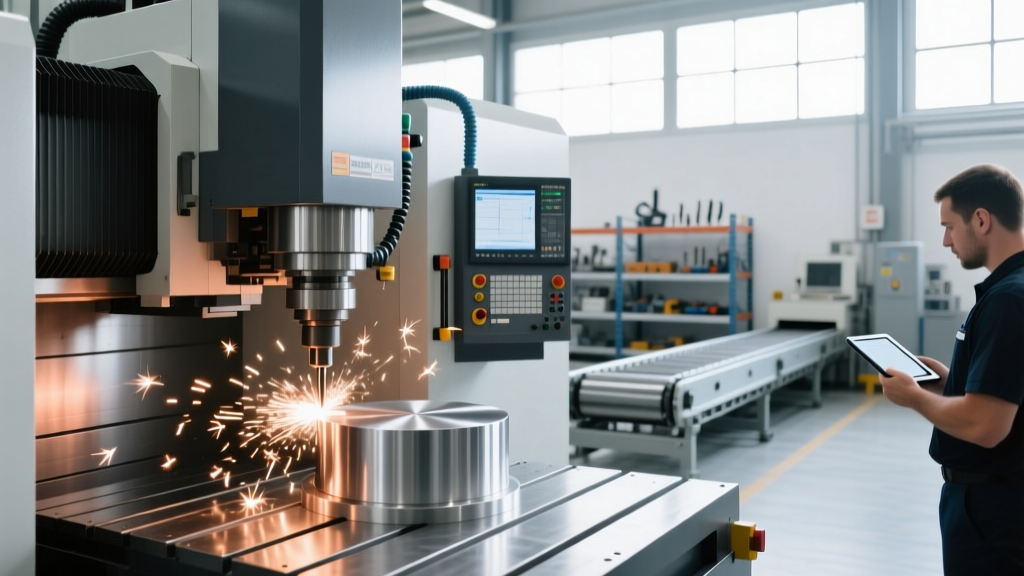
For milling titanium spinal cages or cobalt-chromium knee joints, manufacturers typically deploy machines like the DMG MORI DMU 50 3rd Generation. The lifecycle management of this asset focuses heavily on the HSK-A63 spindle (capable of 20,000 RPM) and the direct-drive torque motors. Spindle bearing degradation is the primary lifecycle limiter. For micro-machining of stent patterns, Sodick ALN400G wire EDMs are utilized, where the dielectric fluid filtration system and wire tensioner assemblies dictate the preventive maintenance (PM) schedule.
Cleanroom Injection Molding Presses
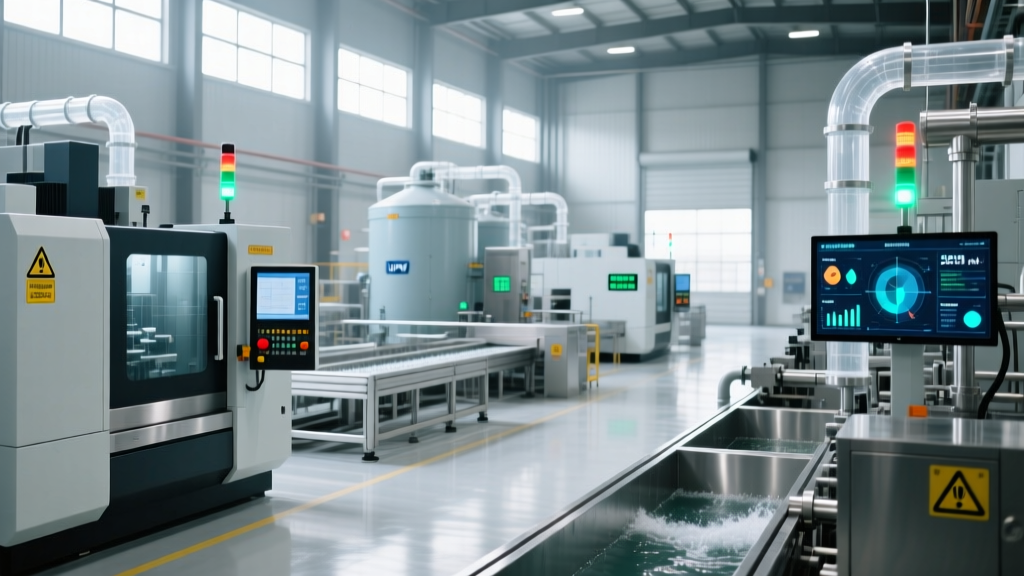
Manufacturing polymer housings for wearable insulin pumps requires all-electric, cleanroom-compatible presses such as the Arburg Allrounder 370 A. These machines eliminate hydraulic oil contamination risks. The lifecycle focus here centers on the toggle lever lubrication systems and the degradation of the plasticizing screw and barrel assembly due to abrasive medical-grade PEEK or polycarbonate resins.
The IQ/OQ/PQ Lifecycle Matrix
When a new asset is introduced, or an existing one undergoes a major lifecycle overhaul, it must pass through Installation Qualification (IQ), Operational Qualification (OQ), and Performance Qualification (PQ). Below is a representative OQ/PQ testing matrix for an Arburg Allrounder operating in an ISO Class 7 cleanroom, molding medical-grade polycarbonate.
| Lifecycle Phase | Test Parameter | Target Specification | Acceptance Criteria |
|---|---|---|---|
| OQ (Operational) | Melt Temperature Uniformity | 285°C ± 3°C | Max deviation < 2°C across 5 shots |
| OQ (Operational) | Injection Pressure Stability | 1450 bar | Pressure drop < 1.5% during hold |
| PQ (Performance) | Critical Dimension (Housing ID) | 12.500mm ± 0.02mm | Cpk ≥ 1.33 over 300 consecutive cycles |
| PQ (Performance) | Particulate Generation | ISO 14644-1 Class 7 limits | < 352,000 particles/m³ (≥0.5µm) |
According to the FDA's Current Good Manufacturing Practice (CGMP) regulations, any failure to meet these Cpk or environmental thresholds during the lifecycle triggers a formal CAPA (Corrective and Preventive Action) and requires immediate quarantine of the production lot.
Telemetry and Predictive Lifecycle Extension
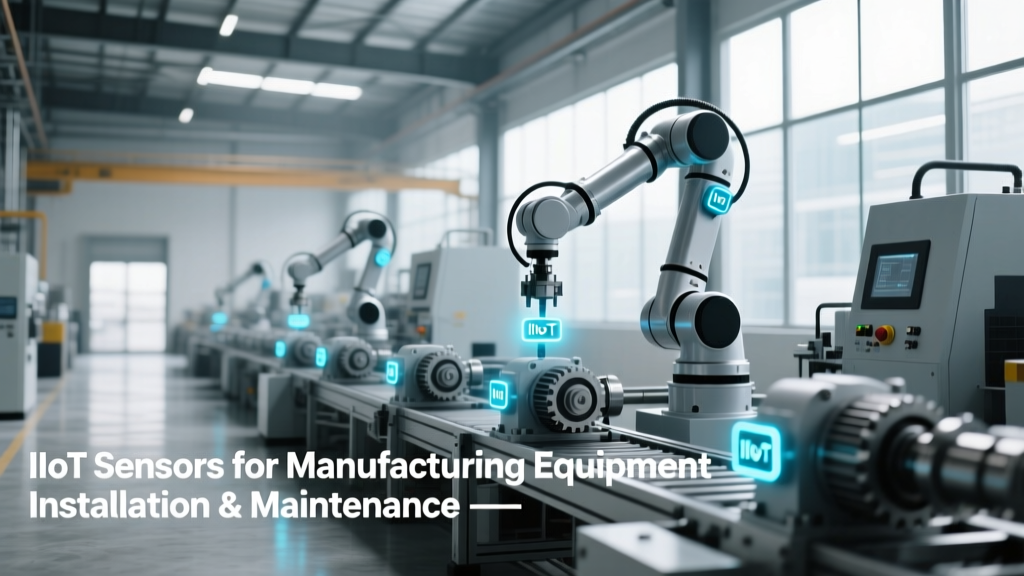
As of 2026, reactive maintenance is financially unviable for MedTech OEMs due to the aforementioned validation costs. Instead, Israel medical equipment manufacturers leverage edge-computing gateways and the MTConnect 2.4 standard to extract high-frequency telemetry directly from machine controllers (e.g., Siemens Sinumerik 840D sl or FANUC 31i-B5).
- Spindle Vibration Analysis: Accelerometers mounted on CNC spindle housings sample vibration at 10 kHz. An increase in baseline RMS velocity from 1.2 mm/s to 2.5 mm/s triggers an automated work-order for bearing inspection before catastrophic failure occurs.
- Servo Load Monitoring: Tracking the torque load on the X/Y/Z axis servo motors during rapid traverses. A 15% increase in current draw indicates way-cover degradation or linear guide rail lubrication failure.
- Thermal Drift Compensation: In cleanrooms, ambient temperature is strictly controlled to 20°C ± 0.5°C. However, internal machine heat generation causes thermal growth. Manufacturers use Renishaw NC4 non-contact tool setting systems to automatically map and compensate for Z-axis thermal expansion every 45 minutes during the machine's operational lifecycle.
Cleanroom Environmental Degradation Factors
The lifecycle of manufacturing equipment in MedTech is inextricably linked to the cleanroom environment. ISO 14644-1:2015 dictates stringent airborne particulate limits. Equipment operating in these spaces faces unique lifecycle stressors:
'HEPA filter turbulence and strict positive-pressure differentials in ISO Class 7 rooms accelerate the evaporation of way-lubricants on CNC machines. Manufacturers must specify synthetic, low-vapor-pressure lubricants (like Mobil Velocite Oil No. 6) and reduce PM intervals for auto-lube reservoirs by 30% compared to standard factory floor deployments.'
Managing the HEPA/Machine Interface
When equipment generates micro-particulates (e.g., from dry machining of PEEK polymers), local exhaust ventilation (LEV) systems must be integrated directly into the machine enclosure. The lifecycle management of the LEV includes quarterly magnehelic gauge checks to ensure static pressure differentials remain above 0.5 inches of water column, preventing particulate escape into the cleanroom envelope.
End-of-Life (EOL) and Decommissioning Protocols
Decommissioning a machine in a regulated medical manufacturing facility is not simply a matter of unplugging it and selling it at auction. The EOL phase involves strict data sanitization and environmental protocols.
- Data Archival (21 CFR Part 11): All electronic batch records, alarm histories, and audit logs stored on the machine's local HMI (Human-Machine Interface) or IPC must be extracted, cryptographically hashed, and migrated to a validated, secure server. The local drives must then be sanitized according to NIST SP 800-88 Rev. 1 guidelines (Clear, Purge, or Destroy).
- Coolant and Dielectric Disposal: Wire EDM dielectric fluids and CNC tramp-oil skimmers contain heavy metals from machined implants. These must be processed by certified hazardous waste contractors, with chain-of-custody documentation retained for the lifetime of the device plus 5 years.
- Validation Retirement: The machine's unique asset ID is formally retired in the site's Computerized Maintenance Management System (CMMS), and the associated Validation Master Plan (VMP) appendix is marked as 'Obsolete - Superseded', ensuring it cannot be accidentally referenced in future regulatory audits.
By treating manufacturing equipment not just as mechanical assets, but as validated, data-generating nodes within a regulated quality management system, Israel medical equipment manufacturers ensure both the physical longevity of their capital investments and the uninterrupted compliance of their life-saving product lines.