Industrial Shredding Equipment Manufacturer: CE, UL, and CSA Marks
How an industrial shredding equipment manufacturer achieves CE, UL, and CSA marks for heavy-duty shredders, with real-world compliance case studies.
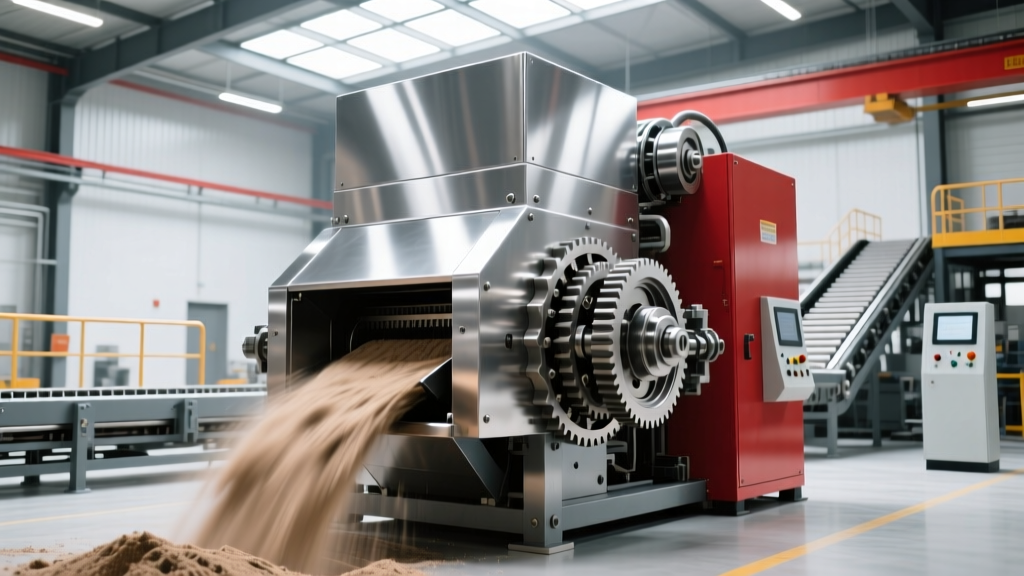
Exporting a 40-ton, 200-HP dual-shaft shear shredder requires more than robust metallurgy and high-torque gearboxes. For an industrial shredding equipment manufacturer, navigating the labyrinth of global safety certifications is often the most capital-intensive and time-consuming phase of product deployment. Whether processing municipal solid waste (MSW), reducing lithium-ion battery casings, or handling end-of-life tires, the machine's control architecture and physical guarding must satisfy distinct regional mandates.
⚠️ The Cost of Non-Compliance: Shipping a non-certified industrial shredder to North America can result in immediate impoundment by local authorities having jurisdiction (AHJs), while failing the European Machinery Directive can lead to border seizures and fines exceeding €500,000 under the EU Market Surveillance Regulation.Deconstructing the Marks: CE vs. UL vs. CSA for Shredders
Before engineering a control panel or welding a safety cage, OEMs must understand the fundamental differences between the primary global marks. The CE mark is a self-declaration (in most standard machinery cases) based on a comprehensive technical file, whereas UL and CSA require third-party testing and ongoing factory inspections.
| Feature | CE Mark (Europe) | UL Mark (USA) | CSA Mark (Canada) |
|---|---|---|---|
| Primary Directive/Standard | Machinery Directive 2006/42/EC; EN ISO 12643 | UL 60204-1; NFPA 79; UL 508A (Panels) | CSA C22.2 No. 301; CSA C22.2 No. 14 |
| Certification Model | Self-declaration (Module A) or Notified Body (Annex IV) | Third-party NRTL testing & quarterly factory audits | Third-party SCC-accredited testing & audits |
| Electrical Focus | IEC 60204-1 (Functional safety, EMC) | SCCR calculations, component recognition (UR) | Similar to UL, strict grounding/bonding rules |
| Typical Timeline | 3 to 6 months | 6 to 12 months (including field evaluations) | 6 to 12 months (often bundled with UL cULus) |
Case Study: Upgrading a 200-HP Dual-Shaft E-Waste Shredder
To illustrate the practical application of these standards, we examine a recent compliance overhaul by a mid-tier industrial shredding equipment manufacturer. The OEM designed a 200-HP (150 kW) dual-shaft shear shredder specifically for reducing lithium-ion battery casings and mixed e-waste. The machine featured a high-inertia rotor requiring dynamic braking and a 480V/60Hz power supply.
The CE Mark Challenge: Functional Safety and Guarding
For the European market, the OEM had to comply with the European Commission Machinery Directive. Because e-waste shredding generates combustible dust, the engineering team first had to rule out ATEX (explosive atmosphere) requirements by implementing inert gas purging in the cutting chamber, keeping the machine under standard Directive 2006/42/EC.
The critical hurdle was the safety interlock system. Under EN ISO 13849-1, the risk assessment dictated a Category 3 / Performance Level d (PLd) architecture for the main access doors. The OEM replaced standard mechanical limit switches with RFID-coded non-contact safety switches (Pilz PSENcode). This prevented operators from defeating the interlocks with magnets or tape—a common failure mode in high-vibration shredding environments. Furthermore, the dynamic braking circuit required a Safe Torque Off (STO) function integrated directly into the variable frequency drives (VFDs), ensuring the high-inertia rotors stopped within 4.2 seconds of an E-stop activation.
Crossing the Atlantic: UL 508A and SCCR Calculations
North American compliance shifted the focus from functional safety logic to electrical fault tolerance. According to the OSHA Nationally Recognized Testing Laboratory (NRTL) program, industrial panels must be certified by an approved body like UL or CSA. The OEM built the main control enclosure to UL 508A standards.
The most expensive and time-consuming engineering task was calculating the Short Circuit Current Rating (SCCR). A 200-HP motor at 480V draws approximately 250A of full-load current. Many industrial facilities have an available fault current of 65kA or even 100kA at the point of connection. Standard off-the-shelf motor starters and circuit breakers often only offer a 5kA to 10kA SCCR. To achieve a 100kA SCCR without spending $15,000 on custom current-limiting busbars, the OEM engineered a coordinated combination using Bussmann Low-Peak current-limiting fuses (Class J) paired with specific, tested motor contactors. This "series rating" allowed the panel to safely interrupt a massive fault without catastrophic arc flash exposure.
The Compliance Matrix: Component-Level Requirements
An industrial shredding equipment manufacturer must ensure that every sub-component inside the electrical panel and on the machine frame carries the correct regional mark. Using a CE-approved component in a UL-listed panel will immediately fail the final inspection.
| Shredder Component | Europe (CE) Requirement | North America (UL/CSA) Requirement |
|---|---|---|
| Main Drive VFD | CE Mark, EN 61800-5-1 (Safety) | UL 508C / UL Listed |
| Safety Relays / PLC | EN ISO 13849-1 Cat. 3/4 | UL 508 / UL Recognized Component (UR) |
| Hydraulic Hopper Valves | CE Mark, Pressure Equipment Directive | ASME Boiler & Pressure Vessel Code / UL |
| Control Panel Enclosure | IEC 60529 (IP Rating) | NEMA 250 (e.g., NEMA 12 or 4X) |
Financial Impact: Budgeting for Global Certification
Engineering teams often underestimate the soft costs associated with global compliance. For a heavy-duty, multi-motor industrial shredder, budget allocation must account for third-party engineering reviews, physical testing, and ongoing audit fees.
- CE Technical File Compilation & Review: $12,000 – $25,000 (Assuming no Notified Body is required under Annex IV). Includes risk assessment software licensing (e.g., SISTEMA for ISO 13849 validation) and external EMC testing for the VFD arrays.
- UL 508A Panel Listing & UL 60204-1 Machine Field Evaluation: $35,000 – $65,000 for the initial project. This includes the NRTL engineering review of the SCCR calculations, thermal scanning of the panel under full load, and the physical field evaluation (FE) label application at the OEM's facility.
- Annual Follow-Up Services (FUS): $8,000 – $15,000 per year for UL/CSA. Quarterly factory inspections to ensure the OEM is still purchasing the exact recognized components listed in the official procedure file.
"The biggest financial trap for shredder OEMs is modifying a UL-listed control panel in the field. If a technician swaps a recognized circuit breaker for a non-listed equivalent during commissioning, the entire UL mark is voided, and the facility owner assumes full legal liability for the machine's electrical safety."
Actionable Roadmap for OEM Engineering Teams
To streamline the certification process and avoid costly retrofits on the assembly floor, an industrial shredding equipment manufacturer should implement the following sequential workflow during the design phase:
- Execute ISO 12100 Risk Assessment First: Before selecting a single electrical component, complete the foundational risk assessment. Identify all crushing, shearing, and entanglement hazards specific to the shredder's feed hopper and discharge conveyor. This dictates the required Performance Level (PL) for the safety circuits.
- Specify SCCR Requirements in the RFQ: When bidding on North American projects, explicitly ask the end-user for the available fault current at the installation site. Design the UL 508A panel to exceed this number by a minimum 20% safety margin.
- Standardize on Dual-Marked Components: To avoid maintaining two separate BOMs (Bill of Materials) for global machines, source components that carry both CE and UL/CSA marks. Major automation suppliers (Siemens, Allen-Bradley, Schneider) offer extensive lines of dual-certified contactors, overloads, and safety relays.
- Pre-Wire Thermal Audits: Shredder motors experience extreme current spikes during jam-clearing and auto-reverse cycles. Conduct internal thermal imaging on the control panel under simulated load before the NRTL inspector arrives to identify undersized busbars or loose terminations.
- Maintain a Strict Procedure File: For UL/CSA compliance, the OEM must maintain a locked Procedure File. Any engineering change order (ECO) that alters a safety circuit or panel component must be submitted to the NRTL for approval before implementation on the shop floor.
Mastering CE, UL, and CSA compliance transforms a regional machinery builder into a truly global industrial shredding equipment manufacturer. By treating safety standards not as a post-production checklist, but as foundational design parameters, OEMs deliver equipment that protects operators, satisfies facility insurers, and accelerates international deployment.