How Modular Systems Are Reshaping Manufacturer Equipment Financing
Discover how modular flexible production systems disrupt traditional manufacturer equipment financing, shifting CAPEX to OPEX via EaaS models.
The Shift from Monolithic Lines to Plug-and-Produce Modules
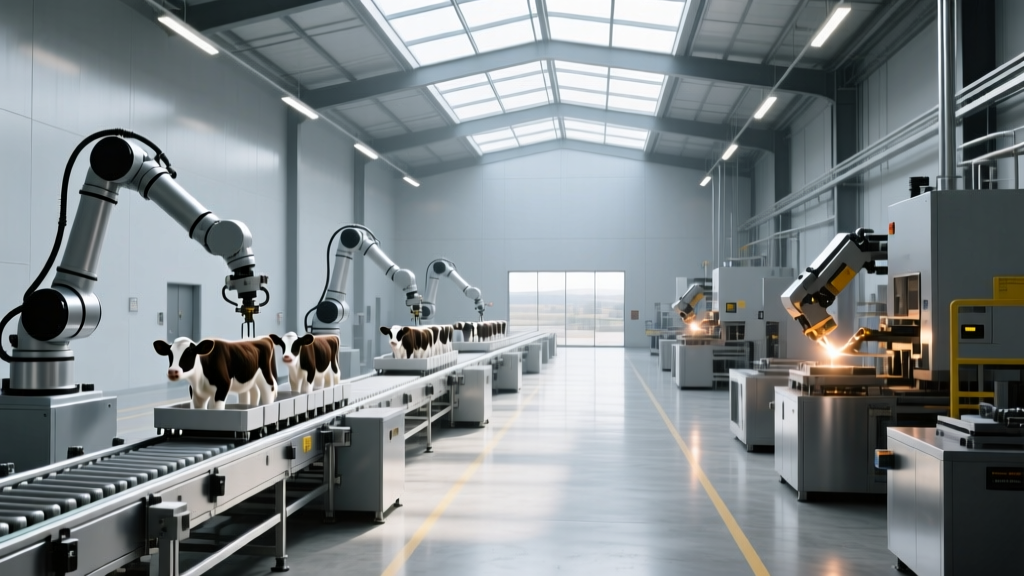
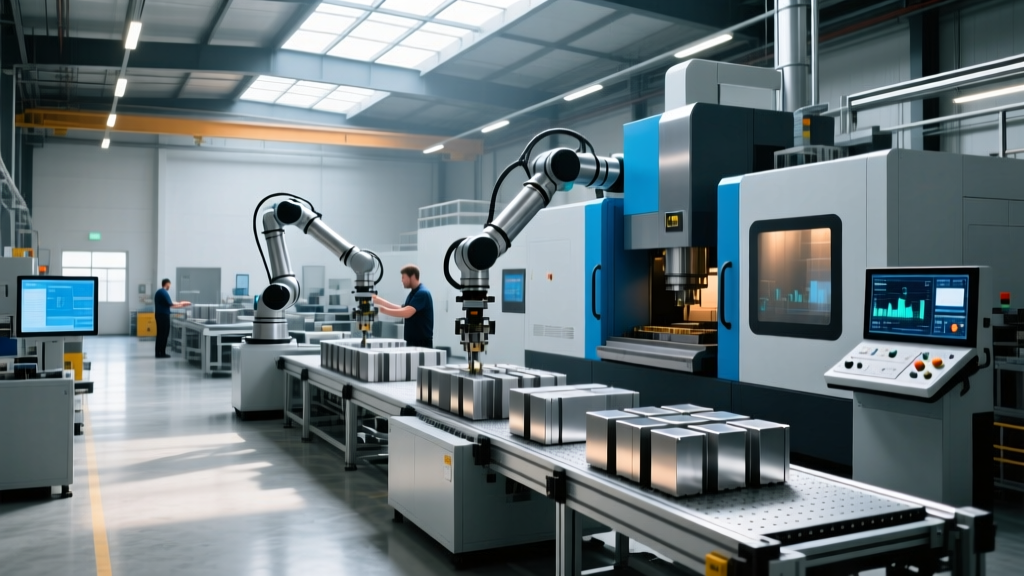
For decades, scaling manufacturing capacity meant purchasing massive, dedicated transfer lines. These monolithic systems required heavy upfront capital, took 18 to 24 months to commission, and became obsolete the moment product SKUs changed. By 2026, the industry has decisively pivoted toward Reconfigurable Manufacturing Systems (RMS) and modular 'plug-and-produce' architectures. Technologies like the Bosch Rexroth ActiveShuttle for modular material transport, KUKA ready2_pilot for rapid robotic cell deployment, and Siemens SINUMERIK ONE for decentralized CNC control allow factories to snap together independent production cells rather than building fixed lines.
Data Highlight: The CAPEX Reduction MetricAccording to data tracked by the U.S. Census Bureau Annual Survey of Manufactures, facilities transitioning from fixed automation to modular flexible cells report a 35% to 45% reduction in initial CAPEX requirements per unit of output. Instead of a single $4.5 million packaging line, manufacturers are deploying five $350,000 modular robotic palletizing cells that can be redeployed across different product families.
This fundamental shift in hardware architecture has triggered an equally massive disruption in manufacturer equipment financing. When equipment is no longer a single, bolted-down asset but a collection of swappable, intelligent modules, traditional lending models break down. Understanding how to finance modular production is now a critical competency for plant managers and CFOs alike.
Why Modular Architectures Disrupt Traditional Manufacturer Equipment Financing
Traditional equipment term loans (typically 5 to 7 years) are underwritten based on the liquidation value of the asset. If a manufacturer defaults, the bank repossesses and sells the machinery. A dedicated, fixed automation line has a predictable, albeit depreciating, secondary market value.
The Residual Value Problem for Traditional Lenders
Modular equipment introduces a severe residual value problem for traditional banks. If a factory defaults on a loan for a modular assembly cell consisting of a universal robot arm, a custom 3D-printed end-of-arm tooling (EOAT) module, and an autonomous mobile robot (AMR) base, the bank faces a nightmare. The universal arm has high resale value, but the custom EOAT is essentially scrap metal, and the AMR might be locked to a proprietary fleet management software. Because banks struggle to accurately appraise the unbundled liquidation value of modular components, they often demand higher interest rates or stricter covenants for modular setups compared to traditional monolithic machines.
Consequently, the market has shifted toward vendor-backed financing and Equipment-as-a-Service (EaaS) models, which are detailed in NIST advanced manufacturing research regarding the economics of reconfigurable systems.
| Financing Parameter | Fixed Automation (Traditional) | Modular / Flexible Cells (2026 Standard) |
|---|---|---|
| Primary Financing Vehicle | 5-7 Year Secured Term Loan | Operating Lease or EaaS Subscription |
| Underwriting Focus | Liquidation value of the entire line | Throughput metrics & module redeployment value |
| Upfront Capital Required | 10% - 20% down payment | 0% - 5% (often structured as OPEX) |
| Technology Refresh Cycle | 10-15 years (highly disruptive) | 2-3 years (swap individual modules) |
Real-World Cost Analysis: Retrofitting a Packaging Line
To understand the financial mechanics, consider a mid-sized consumer goods manufacturer retrofitting a secondary packaging line in early 2026.
- The Monolithic Approach: Purchasing a dedicated, high-speed cartoner and case packer line costs approximately $2.8 million. Financed via a traditional 60-month term loan at 8.5% interest, the monthly payment is roughly $57,400. If product packaging dimensions change in year three, the line requires a $400,000 mechanical retooling and weeks of downtime.
- The Modular Approach: Deploying four independent, collaborative robotic case-packing cells (utilizing modular Siemens PLCs and universal vision systems) costs $850,000 total. Instead of a bank loan, the manufacturer utilizes an EaaS agreement directly with the integrator. The cost is $0.04 per successfully packed case. At 1.5 million cases a month, the OPEX cost is $60,000. However, when packaging dimensions change, the manufacturer simply downloads a new kinematic profile to the robots and swaps the modular EOAT snap-fittings in four hours, at a cost of $12,000.
While the monthly outflow is similar, the modular approach completely eliminates the risk of stranded assets and shifts the financial burden from the balance sheet (CAPEX) to the income statement (OPEX), preserving the company's debt-to-equity ratio for other strategic investments.
Navigating the 2026 Tax and Depreciation Landscape for Modular Assets
The tax treatment of modular manufacturing equipment requires careful navigation, particularly regarding the phase-down of bonus depreciation. Under the Tax Cuts and Jobs Act (TCJA), bonus depreciation drops to 20% for qualified property placed in service in 2026, as outlined by the IRS guidelines on bonus depreciation.
⚠️ Warning: The 'Componentization' Audit RiskWhen financing modular systems, ensure your vendor invoices clearly separate hardware, software, and integration services. The IRS treats off-the-shelf software and hardware differently than custom integration. If a $500,000 modular cell is invoiced as a single 'turnkey system,' you may lose the ability to accelerate depreciation on the software and swappable tooling components, which can be written off much faster than the base structural framing.
Because bonus depreciation is less generous in 2026, manufacturers are leaning heavily on Section 179 expensing for modular cells. By keeping individual modular cell purchases under the Section 179 threshold, companies can immediately expense the entire cost of a new robotic welding module or modular conveyor segment in the year it is deployed, rather than depreciating it over 7 years under MACRS.
Actionable Framework: When to Finance vs. Lease Modular Cells
Use this decision matrix to determine the optimal manufacturer equipment financing strategy for your next flexible production deployment:
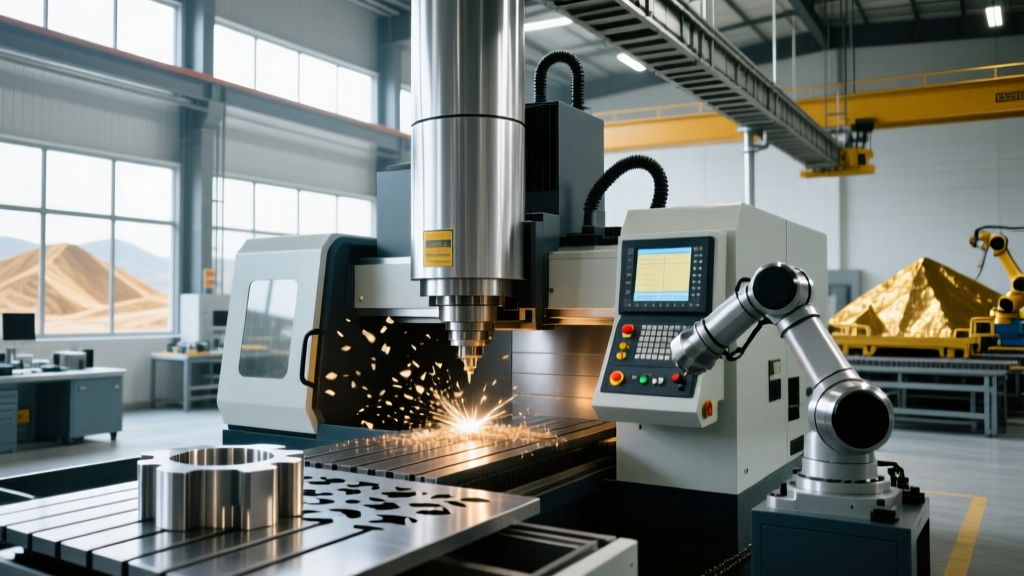
- High-Volume, Stable SKU (Core Modules): If the modular cell will run the same base process (e.g., primary CNC milling) for 5+ years, utilize a Capital Lease or Term Loan. Own the asset to capture residual value and utilize Section 179 expensing.
- High-Mix, Volatile SKU (Flexible Modules): If the cell handles end-of-arm tooling, vision systems, or AMR transport that will change every 18 months, utilize an Operating Lease or EaaS. Keep the technology refresh risk on the vendor's balance sheet.
- Surge Capacity (Temporary Modules): For seasonal spikes or short-run contract manufacturing, utilize Short-Term Equipment Rental from specialized industrial leasing firms. Do not encumber long-term credit facilities for 6-month capacity needs.
Sourcing and Vendor Lock-in Risks
The hidden cost in modular manufacturer equipment financing is vendor lock-in. A modular system is only financially viable if the modules can actually be reconfigured and reused. If a vendor utilizes proprietary communication protocols (e.g., locking a modular I/O block to a specific brand of PLC via encrypted PROFINET profiles), the 'swappable' module becomes a stranded asset the moment you switch control architectures.
Before signing any EaaS or financing agreement for flexible production equipment, mandate open-architecture compliance in the contract. Require that all modular hardware supports open standards like OPC UA and MQTT, ensuring that if the financing vendor goes bankrupt or raises rates, you can unbolt the physical modules and integrate them into a different control ecosystem without losing your capital investment. True financial flexibility in manufacturing is impossible without underlying technical interoperability.