Hotmix Asphalt Equipment Manufacturer: Batch vs Continuous Plants
Compare batch and continuous hot mix asphalt plants. Explore CapEx, RAP integration, maintenance, and 2026 case studies to choose the right equipment.
Selecting the right hotmix asphalt equipment manufacturer is a multi-million dollar capital expenditure decision that dictates your production capabilities for the next two decades. The fundamental fork in the road for any paving contractor or materials producer is choosing between a batch mix plant and a continuous (drum) mix plant. While both produce Hot Mix Asphalt (HMA) that meets state DOT specifications, their thermodynamic processes, maintenance profiles, and mix-design flexibility differ radically.
Executive Decision Framework
- Choose Batch if your contract pipeline consists of short-run municipal patches, frequent mix-design changes (e.g., switching from base course to SMA or polymer-modified surface courses daily), and high-precision aggregate proportioning.
- Choose Continuous (Drum) if your primary focus is high-volume highway corridor paving, long production runs of the same mix design, and maximizing fuel efficiency per ton of liquid asphalt binder.
The Mechanics of Batch Mix Plants: Precision Over Volume
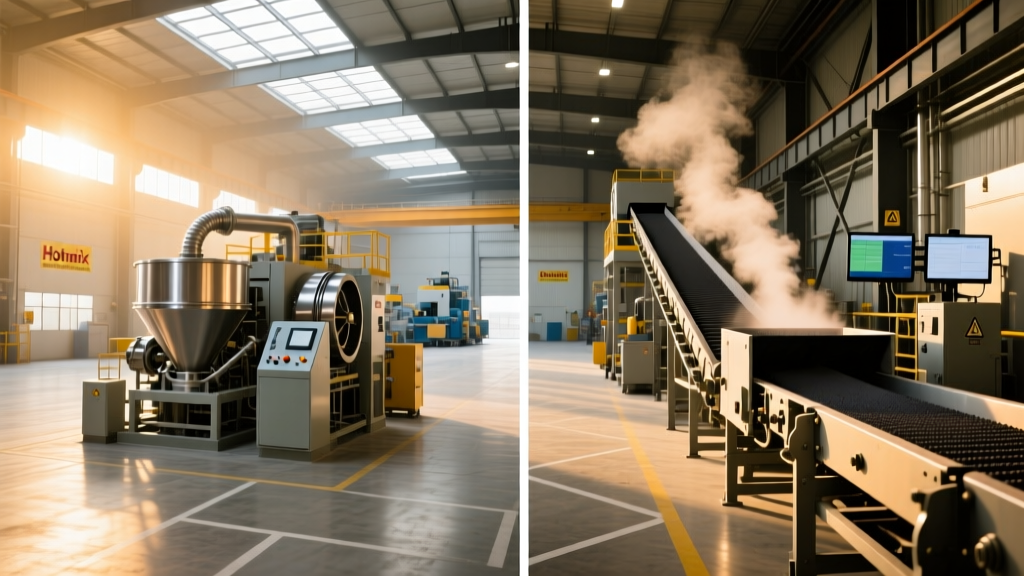
Batch plants, such as the Ammann Universal series, produce asphalt in discrete, weighed batches—typically ranging from 3 to 5 tons per cycle. The process involves drying and heating aggregates in a rotary dryer, elevating them via a hot elevator to a multi-deck vibrating screen, and then dropping them into individual hot bins based on size.
Component Breakdown and Wear Realities
The defining characteristic of a batch plant is the pugmill mixer. Aggregates, mineral filler, and liquid asphalt binder are weighed sequentially and mixed in the pugmill for a precise duration (usually 40 to 50 seconds). This mechanical mixing action ensures exceptional coating uniformity, which is critical for specialized mixes like Stone Matrix Asphalt (SMA) or Open-Graded Friction Course (OGFC).
⚠️ Maintenance Warning: Hot Elevator & Screen DecksBatch plants suffer from specific mechanical failure modes. The hot elevator chain operates in a 300°F+ environment and is subject to severe thermal expansion and abrasive wear. Furthermore, the vibrating screen decks are prone to 'blinding' (plugging) when processing high-moisture sand or high-Reclaimed Asphalt Pavement (RAP) percentages, requiring daily manual cleaning and reducing effective TPH output.
Continuous Drum Mix Plants: Volume and Thermodynamic Efficiency
Continuous plants, heavily popularized in North America by manufacturers like Astec Industries, combine the drying and mixing processes into a single rotating drum. Aggregates are weighed on a conveyor belt before entering the drum, and the liquid asphalt binder is pumped in further down the drum's length.
The Counter-Flow and Double Barrel Advantage
Modern continuous plants utilize counter-flow drum technology, where the aggregate moves in the opposite direction of the burner flame. This thermodynamic setup ensures that the aggregate reaches its peak temperature just before it contacts the asphalt binder, minimizing binder aging (oxidation). When evaluating a hotmix asphalt equipment manufacturer for a continuous plant, look for outer-drum RAP integration systems (like the Astec Double Barrel). These systems introduce RAP into an outer shell rather than the inner flame zone, allowing plants to run 40% to 50% RAP without burning off the recycled binder's volatile compounds.
Head-to-Head Comparison Matrix
| Feature | Batch Plant (e.g., Ammann HRT) | Continuous Drum (e.g., Astec X) |
|---|---|---|
| CapEx (300-400 TPH) | $3.2M - $4.5M | $2.4M - $3.5M |
| Mix Design Flexibility | High (Change in 3 minutes) | Low (Requires 30+ min transition) |
| Moisture Tolerance | High (Dryer runs independently) | Low (Latent heat of vaporization drops mix temp) |
| RAP Integration Limit | ~30% (Standard) / 60%+ (HRT) | 50% - 70% (with outer collar) |
| Fuel Consumption | ~2.8 Gallons/Ton | ~2.2 Gallons/Ton |
2026 Case Study: Municipal Patches vs. Highway Corridors
To understand the operational impact of this choice, consider a mid-sized paving contractor operating in the Midwest. In early 2026, the company needed to replace an aging 1990s-era plant and evaluated bids from top-tier manufacturers. Their contract split was 60% state highway overlays (requiring high-tonnage, consistent polymer-modified base and surface courses) and 40% municipal utility cuts (requiring small, 50-ton batches of varied mixes).
"We ran a thermodynamic model on our 2025 fuel costs. The continuous drum plant saved us $140,000 in natural gas over a 150,000-ton season. However, the transition waste when switching from a 12.5mm surface mix to a 4.75mm municipal patch mix on the drum resulted in 40 tons of off-spec material per changeover. The batch plant produces zero transition waste. For our specific 60/40 contract split, the batch plant's zero-waste profile and rapid changeover yielded a higher net margin, despite the higher initial CapEx and fuel burn."
— Plant Operations Director, Regional Paving Group
The Hidden Cost of Polymer Modified Binders (PMB)
When running SBS-modified binders (PG 76-22), continuous plants face a distinct disadvantage. The long residence time of the binder inside the hot drum can cause the polymers to degrade or cross-link excessively if the plant stops production but the drum remains hot. Batch plants introduce the PMB directly into the pugmill, where it is mixed for 45 seconds and immediately discharged, preserving the polymer's elastic properties. If your local DOT mandates high-PG binders for rut resistance, a batch plant mitigates the risk of binder degradation.
Critical Failure Modes and Maintenance Realities
When auditing a hotmix asphalt equipment manufacturer's warranty and service network, focus on these specific high-wear components based on the plant type you select.
🛑 Continuous Plant Edge Case: Moisture SpikesIf your aggregate stockpiles are uncovered and a spring rainstorm pushes the fine aggregate moisture content above 6%, a continuous drum plant will struggle. Evaporating water requires roughly 1,100 BTUs per pound. The drum burner cannot instantly compensate for this latent heat demand, resulting in a temperature drop at the silo. Batch plants isolate the drying process; the operator can simply extend the dryer cycle time without disrupting the mixing cycle downstream.
💡 Batch Plant Optimization: Pugmill Tip ClearanceFor batch plants producing SMA with cellulose fibers, pugmill tip clearance is critical. As the mixing arms and tips wear down (often losing 1/2 inch of steel over a season), the dead zone in the pugmill increases. This leads to uncoated aggregate 'balls' and uneven fiber distribution. Mandate that your manufacturer provides adjustable, replaceable tungsten-carbide tipped mixing arms to maintain a strict 1-inch clearance tolerance throughout the 2026 paving season.
Warm Mix Asphalt (WMA) and Emissions Integration
As environmental regulations tighten in 2026, the integration of Warm Mix Asphalt technologies (producing HMA at 250°F instead of 300°F) is no longer optional for top-tier producers. Both plant types support WMA, but the implementation differs. Continuous plants typically utilize foaming systems (injecting water into the binder to create micro-bubbles that reduce viscosity). Batch plants often rely on chemical additives or organic waxes dropped directly into the pugmill. When requesting quotes, ensure the manufacturer includes automated WMA dosing systems integrated into the primary PLC control house, rather than relying on manual, aftermarket retrofits which suffer from calibration drift.
Final Procurement Advice
Do not evaluate a hotmix asphalt equipment manufacturer solely on the base price of the drum or tower. Require a 'Total Installed Cost' quote that includes the 4-bin enclosed hot silos (typically $450,000+), the blue smoke collection system, the liquid asphalt terminal heaters, and the automated truck-loading ticketing software. The control system architecture—specifically its ability to integrate directly with your state DOT's real-time telemetric quality assurance portals—is often the true differentiator between a legacy manufacturer and a modern, data-driven equipment partner.