Hot Mix Asphalt Mixing Equipment Manufacturer MN: Lifecycle Analysis
Compare HMA plant lifecycle strategies. Analyze OEM vs third-party support when choosing a hot mix asphalt mixing equipment manufacturer in MN.
The Economics of HMA Plant Lifecycle Management in the Upper Midwest
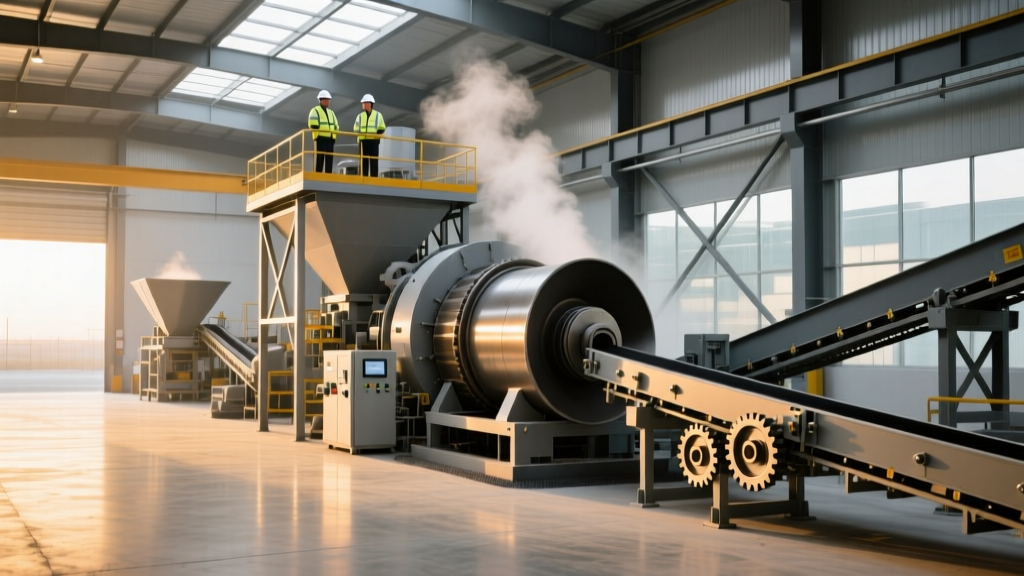
Procuring a hot mix asphalt (HMA) plant is a capital-intensive commitment, with a fully erected 400 TPH (tons per hour) counterflow drum mix facility typically costing between $3.5 million and $4.8 million. For contractors and municipal operations evaluating a hot mix asphalt mixing equipment manufacturer in MN, the initial purchase price represents only 30% to 40% of the total cost of ownership over a 20-year operational lifecycle. The remaining capital expenditure is absorbed by component wear, thermal efficiency degradation, winterization protocols, and eventual rebuild or relocation costs.
Managing this lifecycle requires a strategic choice between Original Equipment Manufacturer (OEM) service contracts, independent third-party maintenance firms, and in-house fleet management. This analysis breaks down the mechanical wear patterns of critical HMA subsystems and compares lifecycle management models to optimize long-term production yield.
Regional Variable: The MN Winterization PremiumUnlike Sunbelt operations that run 10 months a year, Minnesota HMA plants face a compressed paving season (typically May through October) and extreme thermal cycling. Equipment lifecycle models for MN-based plants must account for a 25% higher annual expenditure on liquid asphalt cement (AC) storage heating systems, steam tracing maintenance, and heavy-duty insulated enclosures to prevent pipe ruptures during sub-zero shutdowns.
Comparing Lifecycle Management Models
When selecting an equipment partner, operators must decide who will manage the plant's ongoing mechanical health. Below is a comparative matrix of the three primary lifecycle management strategies for heavy asphalt manufacturing equipment.
| Management Model | Upfront & Ongoing Costs | Downtime Risk | MN Regional Advantage |
|---|---|---|---|
| OEM Lifecycle Contract | Highest. Premium hourly rates ($180-$250/hr) plus OEM markup on parts. | Lowest. Guaranteed SLA response times and proprietary diagnostic software. | Low. OEM technicians are often dispatched from national hubs (e.g., TN, WI), causing travel delays during peak MN spring startup. |
| Third-Party Industrial Services | Moderate. Competitive labor rates ($120-$160/hr) and aftermarket part sourcing. | Moderate. Excellent mechanical skills but may lack proprietary PLC programming access. | High. Local MN heavy-millwright firms understand regional logistics and can respond to emergency burner failures within hours. |
| In-House Fleet Management | Lowest direct cost, but highest capital tied up in spare parts inventory. | Variable. Highly dependent on the retention of skilled plant mechanics. | Highest. Immediate response to drag conveyor or baghouse issues during the critical, short summer paving window. |
Critical Component Wear and Replacement Economics
To build an accurate lifecycle budget, plant managers must track the degradation curves of the three most expensive wear components: the mixing drum, the drag conveyor, and the pulse-jet baghouse.
1. Counterflow Drum and Flighting
In a 400 TPH counterflow drum, the aggregate flights and burner zone experience severe abrasion and thermal fatigue. Standard AR400 steel flighting typically requires hardfacing or replacement every 150,000 to 200,000 tons of production. Upgrading to chromium-carbide overlay (CCO) flighting increases initial capital costs by $15,000 to $25,000 but extends the lifecycle interval to over 400,000 tons. For MN plants operating at high volumes in a short season, CCO flighting prevents mid-season shutdowns that could jeopardize state highway contracts.
2. Drag Conveyor Systems
The drag conveyor moves hot mix from the drum to the silos. A standard 36-inch drag conveyor utilizing UHMW (Ultra-High-Molecular-Weight) polyethylene liners will require liner replacement every 80,000 to 120,000 tons due to the abrasive nature of basalt and quartzite aggregates common in the Upper Midwest. Transitioning to AR500 steel liners or ceramic-embedded chain flights reduces replacement frequency but increases the load on the drive motor, requiring a lifecycle analysis of energy consumption versus mechanical wear.
3. Pulse-Jet Baghouse Filtration
Emissions compliance is non-negotiable. According to the EPA's AP-42 compilation on Hot Mix Asphalt Plants, particulate emissions must be strictly controlled to meet state and federal ambient air quality standards. A mid-sized plant utilizes a baghouse with 4,000 to 6,000 square feet of cloth area. Nomex filter bags, which withstand the 250°F to 300°F exhaust temperatures, cost between $12 and $18 each. A full baghouse change-out (roughly 500 to 800 bags) costs $15,000 to $22,000 in materials alone and requires 40 to 60 man-hours of labor. Lifecycle management dictates tracking the pressure differential (magnehelic gauge); replacing bags proactively before the differential exceeds 8 inches of water column prevents catastrophic blinding and production bottlenecks.
Liquid AC Storage and Thermal Lifecycle Management
Liquid Asphalt Cement (AC) must be maintained at 290°F to 320°F for proper pumping and mixing. The lifecycle of the heating system heavily dictates overall plant efficiency.
- Direct-Fired Tanks: Lower initial cost ($40,000 - $60,000 per 20,000-gallon tank) but suffer from localized overheating, which can coke the asphalt and degrade the binder's polymer modifiers. Heater tubes require decoking every 3 to 5 years, a hazardous and expensive process.
- Thermal Oil Heating Systems: Higher upfront investment ($150,000+ for the boiler and piping loop) but provides uniform, indirect heating. Thermal oil systems drastically extend the lifecycle of the storage tanks and preserve the integrity of expensive SBS-modified binders, which are increasingly mandated by the National Asphalt Pavement Association (NAPA) guidelines for long-lasting pavement structures.
If utilizing a thermal oil system, conduct annual fluid analysis to check for oxidation and sludge buildup. Replacing degraded thermal oil costs roughly $4,000 to $6,000, but failing to do so will result in heater coil burnout, a failure that can exceed $35,000 in repairs and force a multi-day plant shutdown.
Decision Framework: Rebuild, Relocate, or Replace?
As an HMA plant approaches the 15-to-20-year mark, management must evaluate the terminal phase of the equipment lifecycle. Use the following framework to guide capital allocation:
- The 50% Rule: If the cost to rebuild the primary structural components (drum, tower, baghouse housing) exceeds 50% of the cost of a new, equivalent-capacity plant, replacement is the mathematically sound choice. Modern plants offer 15% to 20% better fuel efficiency, which translates to $40,000+ in annual natural gas savings.
- Control System Obsolescence: If the plant operates on legacy relay-logic controls or outdated PLCs (e.g., Allen-Bradley SLC 500 series) that are no longer supported by the manufacturer, the risk of a catastrophic, unfixable software failure during peak season justifies a complete plant replacement or a $150,000+ control system retrofit.
- Relocation Viability: If a plant must be moved to a new MN quarry site, factor in $150,000 to $250,000 for dismantling, oversized load freight, and re-erection. During relocation, mandate a complete mechanical audit; replacing all drag chains, elevator buckets, and burner nozzles during the teardown phase is 40% cheaper than performing the maintenance post-erection.
Ultimately, selecting the right manufacturing partner and lifecycle strategy requires looking past the initial bid sheet. By aligning maintenance protocols with the specific geographic and operational demands of the Upper Midwest, producers can maximize yield, ensure environmental compliance, and secure a dominant position in regional infrastructure bidding.