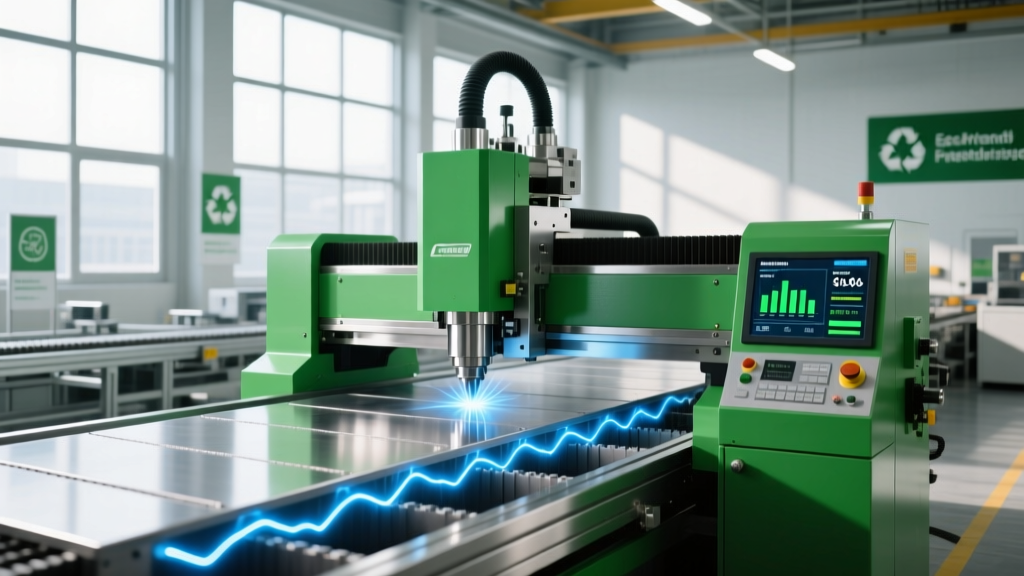
Green Ultrasonic Equipment Manufacturers: 2026 Alternatives
Compare top ultrasonic equipment manufacturers for sustainable production. Analyze energy efficiency, scrap reduction, and green alternatives for 2026.
The Shift to Solvent-Free and Low-Energy Joining
Industrial joining processes account for up to 18% of total assembly line energy consumption, with traditional thermal and adhesive methods generating significant volatile organic compound (VOC) emissions and material waste. As manufacturing facilities face stricter Scope 3 emissions reporting and rising industrial electricity rates in 2026, procurement teams are aggressively pivoting toward sustainable manufacturing equipment. Ultrasonic welding has emerged as a cornerstone of this transition. By utilizing high-frequency acoustic vibrations to create solid-state or melt-based bonds without external heat sources or chemical solvents, ultrasonic systems drastically reduce both the carbon footprint and the hazardous waste profile of production lines.
However, not all systems are engineered with the same eco-efficiency. When evaluating ultrasonic equipment manufacturers, buyers must look beyond basic cycle times and scrutinize standby power draw, piezoelectric transducer efficiency, and closed-loop amplitude control algorithms that minimize scrap rates.
Sustainability Impact Snapshot: Ultrasonic vs. Traditional Adhesives
- VOC Elimination: 100% reduction in solvent emissions, bypassing OSHA HazCom compliance costs for chemical storage.
- Energy Draw: Average ultrasonic weld consumes 0.8 to 1.2 kWh per 1,000 cycles, compared to 4.5 kWh for equivalent thermal staking.
- Material Savings: Elimination of consumable adhesives saves an average of $14,500 annually per high-volume assembly line.
Top Ultrasonic Equipment Manufacturers: Sustainability Matrix
The following matrix compares the flagship 20kHz platforms from the industry's leading ultrasonic equipment manufacturers, focusing specifically on their green technology integrations, energy management features, and baseline capital expenditure for a standard 20kHz/3.2kW stack.
| Manufacturer | Model Series | Key Eco-Feature | Standby Power | Est. Base Price (2026) |
|---|---|---|---|---|
| Emerson (Branson) | GSX-E1 | Eco-Mode Standby & Digital Generator | < 15W | $21,500 - $23,000 |
| Herrmann Ultraschall | HiQ Series | Continuous Frequency Tuning (±1Hz) | ~ 22W | $24,000 - $26,500 |
| Dukane | iQ Servo | Melt-Match Servo Actuator | ~ 18W | $22,800 - $25,000 |
| Sonics & Materials | eXt Series | High-Efficiency Piezo Stack | ~ 25W | $19,000 - $21,000 |
Deep Dive: Energy Consumption & Scrap Reduction by Brand
To achieve genuine sustainability gains, manufacturers must minimize both direct electrical consumption and indirect material waste (scrap). Here is how the top-tier manufacturers engineer their systems for environmental efficiency.
Emerson Branson (GSX Series)
Emerson’s GSX platform is engineered around a fully digital generator that eliminates the analog power losses inherent in older ultrasonic stacks. The standout sustainability feature is its proprietary Eco-Mode. During idle periods between cycles—which can account for up to 40% of a machine's operational lifespan on automated rotary dials—the GSX drops its power draw to under 15 watts. Furthermore, the GSX utilizes a closed-loop amplitude control system that maintains exact energy director melt profiles, reducing cosmetic reject rates by an average of 1.8% in high-volume medical device manufacturing.
Herrmann Ultraschall (HiQ Series)
Herrmann approaches green manufacturing through resonance optimization. Traditional ultrasonic generators waste 3% to 5% of their electrical input as heat while constantly searching for the resonant frequency of the acoustic stack. The HiQ series utilizes a continuous frequency tuning algorithm that locks the generator to the transducer's exact resonance within ±1Hz in real-time. This ensures that nearly 100% of the electrical energy is converted into mechanical vibration. For a facility running three shifts, this resonance locking saves approximately 420 kWh annually per press, while simultaneously extending the lifespan of the titanium sonotrodes by reducing localized stress heating.
Dukane (iQ Series)
Dukane’s contribution to sustainable manufacturing lies in its Melt-Match servo-driven actuator technology. Unlike standard pneumatic presses that slam the horn into the part at a fixed velocity, the iQ servo dynamically adjusts the plunge speed to match the exact melt rate of the polymer. This prevents the 'over-welding' and flash generation that leads to material waste. By trimming an average of 0.12 seconds off the cycle time through precise melt-matching, a high-volume automotive interior line producing 1.5 million parts annually saves roughly 50 hours of machine runtime and reduces compressed air consumption (used for part ejection and cooling) by 14%.
Ultrasonic vs. Alternative Green Joining Technologies
While ultrasonic welding is highly efficient, it is not the only solvent-free joining method available. Procurement engineers must weigh ultrasonic systems against alternative green technologies based on part geometry and material constraints.
Laser Transmission Welding (LTW)
LTW uses a near-infrared laser to melt a specific absorbing layer at the joint interface, requiring no physical contact or vibration.
- Pros: Zero particulate generation (ideal for cleanrooms); capable of complex 3D contours without custom-machined sonotrodes; no mechanical stress on delicate internal electronics.
- Cons: Capital equipment costs are 3x to 4x higher than ultrasonic systems ($85,000+ for a multi-axis LTW cell); requires specific laser-transmissive and laser-absorbing material pairings, limiting resin recyclability; higher baseline electrical draw for the laser diodes and cooling chillers.
UV-Curable Adhesives
Often marketed as a 'green' alternative to solvent-based glues, UV adhesives cure instantly under ultraviolet light without off-gassing.
- Pros: Excellent for bonding dissimilar materials (e.g., polycarbonate to glass) where ultrasonic welding fails; low mechanical stress.
- Cons: Requires continuous consumable purchasing (adhesives); UV curing lamps consume significant continuous electricity; introduces a chemical component to the end-of-life recycling stream, complicating the shredding and re-pelletizing of thermoplastic scrap.
Procurement Framework: Selecting an Eco-Optimized System
Choosing the right equipment requires a structured decision matrix rather than relying solely on vendor marketing claims. Follow this framework to align your joining process with your facility's sustainability targets:
- Audit Material Compatibility: Ultrasonic welding is restricted to thermoplastics. If your product requires thermosets, elastomers, or glass-to-plastic bonds, pivot to LTW or UV adhesives. For pure thermoplastic assemblies, proceed to step 2.
- Calculate Volume-to-Energy Ratios: For production volumes exceeding 100,000 parts annually, the per-part energy savings of ultrasonic welding (approx. 0.001 kWh/part) will yield a positive ROI on premium eco-generators (like the Herrmann HiQ) within 18 months. For volumes under 20,000, a standard base-tier ultrasonic stack is sufficient, as standby power savings will not offset the premium capital cost.
- Evaluate End-of-Life Recyclability: If your product is designated for closed-loop recycling (e.g., automotive battery housings), ultrasonic welding is mandatory. It creates a homogenous polymer joint that can be shredded and re-melted without contaminating the regrind with adhesives or dissimilar laser-absorbing additives.
- Demand Scrap-Rate Guarantees: When issuing RFQs to ultrasonic equipment manufacturers, require a contractual scrap-rate guarantee based on your specific resin (e.g., < 0.5% reject rate on 30% glass-filled nylon). A highly efficient generator is useless if poor acoustic stack design causes a 4% cosmetic reject rate, wasting the embodied carbon of the molded parts.
Regulatory & Compliance Drivers in 2026
The financial justification for investing in advanced ultrasonic equipment is increasingly tied to global environmental compliance. Facilities operating under ISO 50001 Energy Management Systems must demonstrate continuous improvement in energy performance metrics. Upgrading from legacy 15kHz pneumatic ultrasonic presses to modern 20kHz servo-driven digital systems provides the verifiable, metered data required for ISO 50001 annual audits.
Furthermore, the elimination of solvent-based primers and adhesives aligns directly with the principles of EPA Green Chemistry, shielding manufacturers from impending increases in hazardous waste disposal taxes and VOC emission penalties. By selecting ultrasonic equipment manufacturers that prioritize digital power management and precision melt control, production facilities secure both their environmental compliance and their long-term operational margins.
Related reading

Medical Equipment Manufacturing Industry Growth Projections: Green Tech
Agricultural Equipment Manufacturer Custom Fabrication Cost Guide 2026