Evaluate the HVAC Equipment Manufacturing Company Trane on HVAC Products
Evaluate the HVAC equipment manufacturing company Trane on HVAC products for lean workstation design, comparing modular AHUs against portable alternatives.
The Thermal Ergonomics of Lean Cellular Manufacturing
Lean manufacturing relies heavily on cellular layouts, continuous flow, and the elimination of muda (waste). However, facility engineers frequently overlook a critical component of lean workstation design: localized thermal ergonomics. When assembly cells are reconfigured during Kaizen events, traditional overhead HVAC systems fail to adapt, creating thermal dead zones that degrade worker stamina and inflate defect rates.
According to OSHA guidelines on heat exposure, indoor temperatures exceeding 80°F in high-exertion assembly tasks significantly increase the risk of heat stress and cognitive fatigue. In precision manufacturing, a 5°F increase above the optimal 72°F baseline can increase micro-assembly defect rates by up to 12%, directly impacting first-pass yield (FPY). To maintain takt time and support flexible cellular layouts, plant managers must evaluate industrial climate control not as a facility utility, but as integral lean manufacturing equipment.
Evaluating Trane’s HVAC Portfolio for Lean Workstations
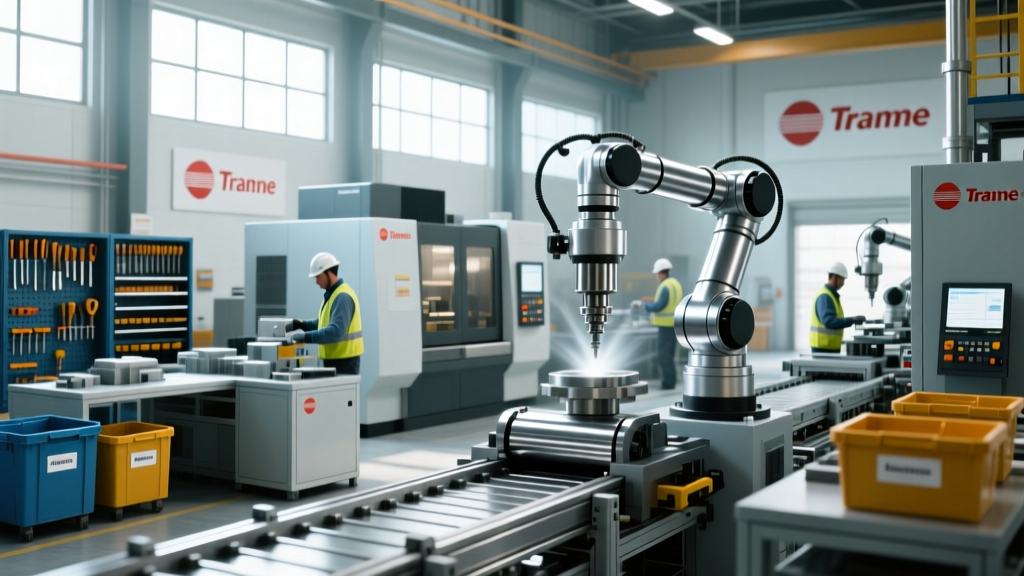
When facility planners evaluate the HVAC equipment manufacturing company Trane on HVAC products for industrial applications, the focus must shift from standard commercial comfort to modular, zone-specific climate control. Trane’s portfolio offers distinct advantages for lean environments, particularly when paired with flexible air distribution systems.
Trane M-Series Modular Air Handling Units (AHUs)
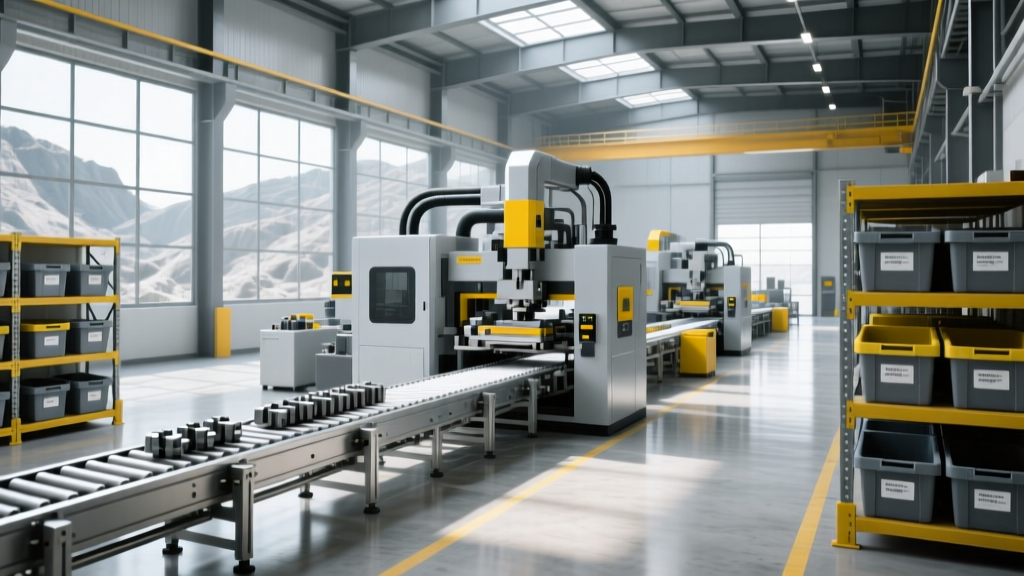
For large-scale assembly floors utilizing cellular manufacturing, Trane’s Custom Modular AHUs (M-Series) provide the foundational air movement required for lean workstations. Unlike monolithic rooftop units, M-Series units can be configured with variable frequency drives (VFDs) and specialized filtration to handle the particulate load of adjacent CNC or welding cells.
- Lean Integration: M-Series units pair optimally with fabric ductwork (e.g., DuctSox). Fabric ducting is lightweight, requires no heavy rigging, and can be detached and re-routed over new workstation layouts in under four hours during weekend Kaizen events.
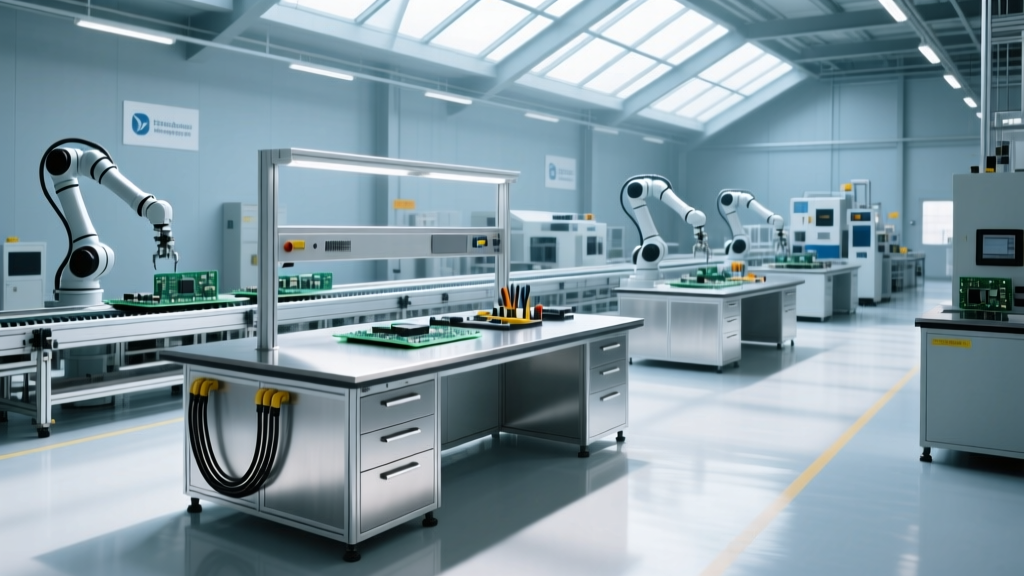
- Precision Control: Integrated desiccant wheels allow for strict humidity control (maintaining 40-50% RH), which is mandatory for IPC-A-610 compliant electronics assembly workstations to prevent electrostatic discharge (ESD) and moisture-induced solder defects.
- Cost Metric: Fully installed Trane modular AHU systems with fabric distribution typically range from $2,200 to $2,800 per ton of cooling capacity, depending on VFD and filtration specifications.
Trane Voyager V Rooftop Units (RTUs)
For smaller, single-story lean assembly plants (under 50,000 sq ft), the Trane Voyager V series (30-130 tons) offers a decentralized approach. By deploying multiple smaller Voyager units rather than one massive central plant, facilities can map HVAC zones directly to specific manufacturing value streams. If a specific product line is idled, its dedicated Voyager unit can be powered down via the Trane Connect IoT dashboard, aligning energy consumption with actual production schedules.
The 5S HVAC Integration Rule
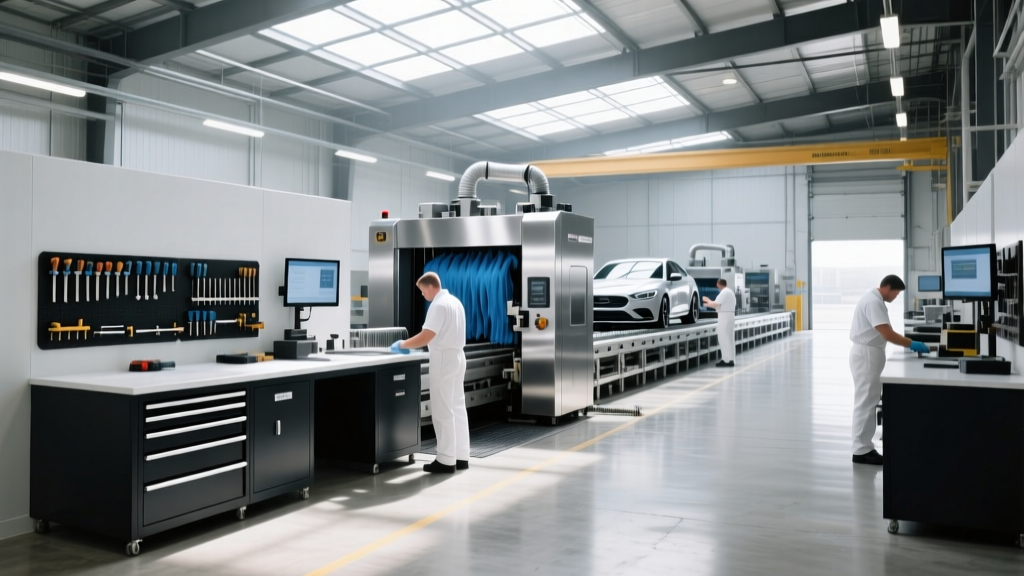
In a strict 5S (Sort, Set in order, Shine, Standardize, Sustain) environment, HVAC equipment at the workstation level must not impede visual management or material flow. Overhead rigid spiral ducting often obstructs overhead crane paths and Andon board visibility. When evaluating Trane equipment, specify low-profile VAV (Variable Air Volume) terminal units mounted above ceiling grids, or utilize floor-level displacement ventilation diffusers that keep the overhead envelope clear for lean visual management.
Trane vs. Alternatives: Lean Workstation Climate Matrix
While Trane excels in permanent, modular central systems, lean manufacturing sometimes demands hyper-localized, portable cooling for temporary cells or high-heat localized processes (e.g., manual brazing stations). Below is a comparison matrix evaluating Trane’s modular approach against leading alternatives for workstation-level climate control.
| Equipment Type | Brand / Model Example | Lean Flexibility (Kaizen Readiness) | Humidity Control | Approx. Cost | Best Lean Application |
|---|---|---|---|---|---|
| Modular AHU + Fabric Duct | Trane M-Series | High (4-hour cell relocation) | Excellent (with desiccant) | $2,200 - $2,800 / ton | Precision electronics, cleanroom-adjacent assembly |
| Portable Spot Cooler | MovinCool Classic Plus 60 | Maximum (Roll-and-plug in 15 mins) | Moderate (Standard DX coil) | ~$8,500 per 5-ton unit | Temporary Kaizen cells, heavy mechanical assembly |
| Evaporative Spot Cooler | Munters Cool-Space | High (Portable, requires water line) | Poor (Adds ambient moisture) | ~$4,000 per unit | Dry-climate welding/fabrication cells |
| VRF / VRV Zoning System | Daikin VRV IV | Low (Hard-piped refrigerant lines) | Good | $2,500+ / ton installed | Static lean cells, multi-story manufacturing |
Decision Framework: Matching HVAC to Your Lean Cell Type
Selecting the right climate control equipment requires mapping the HVAC capabilities to the specific physical and operational demands of the workstation. Use the following framework to finalize your equipment specification.
Scenario A: Precision Electronics and Medical Device Assembly
Requirement: Strict temperature (70°F ± 2°F) and humidity (45% ± 5%) control to meet ISO 13485 or IPC standards. High particulate filtration (MERV 14+).
Verdict: Trane Modular AHUs are the undisputed choice here. Portable spot coolers lack the dehumidification capacity and filtration stages required. Pair the Trane M-Series with HEPA terminal filters at the workstation drop-ceiling level to create a localized ISO Class 8 clean environment without the expense of a full cleanroom.
Scenario B: Heavy Mechanical Assembly with High Kaizen Frequency
Requirement: Workstations are rearranged quarterly. Operators perform high-exertion tasks (e.g., torqueing large bolts, lifting castings) generating high metabolic heat. Overhead cranes are in constant use, preventing overhead duct routing.
Verdict: MovinCool Portable Spot Coolers. While Trane’s systems are highly efficient, hard-piped or fabric-ducted overhead systems interfere with crane envelopes and take too long to reconfigure. A 5-ton MovinCool unit can be rolled directly adjacent to the operator, utilizing flexible 18-inch discharge ducts to aim 55°F air directly at the worker’s torso, reducing the Wet Bulb Globe Temperature (WBGT) at the micro-level without cooling the entire 30-foot high bay.
Scenario C: Large-Scale Fabrication and Welding Cells
Requirement: High sensible heat loads from welding arcs and ovens. High ventilation rates required for fume extraction (source capture).
Verdict: Trane Voyager V RTUs paired with Make-Up Air (MUA) units. Welding cells require massive exhaust volumes to pull fumes through downdraft tables. Trane’s dedicated Make-Up Air units replace this exhausted air, tempering it before it hits the workstation. Evaporative coolers (like Munters) are dangerous here, as the added humidity can cause porosity in MIG/TIG welds and accelerate rust on raw steel WIP (Work in Progress).
Total Productive Maintenance (TPM) and IoT Integration
In lean manufacturing, equipment downtime is a primary target for elimination. Total Productive Maintenance (TPM) requires that all workstation equipment, including HVAC, provides early warning of failure. According to principles outlined by the Lean Enterprise Institute, autonomous maintenance and predictive analytics are pillars of advanced lean systems.
When you evaluate the HVAC equipment manufacturing company Trane on HVAC products, their Trane Connect™ IoT platform provides a distinct TPM advantage. Sensors on Trane AHUs monitor motor vibration, refrigerant pressures, and filter pressure drops in real-time. Instead of relying on a reactive maintenance ticket when an assembly cell gets too hot (stopping production), the system triggers an Andon-style alert to the facility maintenance team when a VFD bearing shows early vibration anomalies, allowing for replacement during planned changeover times.
Calculating the ROI of Workstation-Specific Climate Control
Justifying the capital expenditure for modular Trane systems over cheaper, monolithic alternatives requires calculating the impact on direct labor and scrap rates. Consider a 50-person assembly cell operating in a high-bay facility.
- The Baseline: Ambient high-bay temperature averages 84°F in summer. Cycle time per unit is 14 minutes. FPY is 92%.
- The Intervention: Installation of Trane modular AHUs with localized fabric ducting dropping the workstation micro-climate to 74°F.
- The Result: Studies on thermal ergonomics show that reducing ambient temperature from 84°F to 74°F can improve manual dexterity and cognitive focus, reducing cycle time by up to 4% (13.4 minutes) and improving FPY to 96%.
- Financial Impact: On a $50M annual production line, a 4% scrap reduction and 4% throughput increase yields over $2.5M in recovered margin annually, paying back a $400,000 Trane modular HVAC investment in under two months.
Final Specification Directives
Do not treat facility HVAC as a separate discipline from manufacturing engineering. When drafting URS (User Requirement Specifications) for new lean workstations, mandate the following:
- Specify Displacement Ventilation: Require Trane AHUs to be configured for low-velocity displacement ventilation at the floor level of the workstation, pushing hot air and particulates upward rather than blowing them across the assembly bench.
- Demand Zoning: Integrate workstation PLCs with the Trane building automation system. If the workstation Andon light turns red (line stop), the local VAV damper should automatically throttle down by 40% to save energy until the cell resets.
- Filtration Mapping: Match the Trane filter bank specifications to the exact particulate size generated by upstream processes, preventing premature blinding of filters and maintaining static pressure at the workstation diffusers.