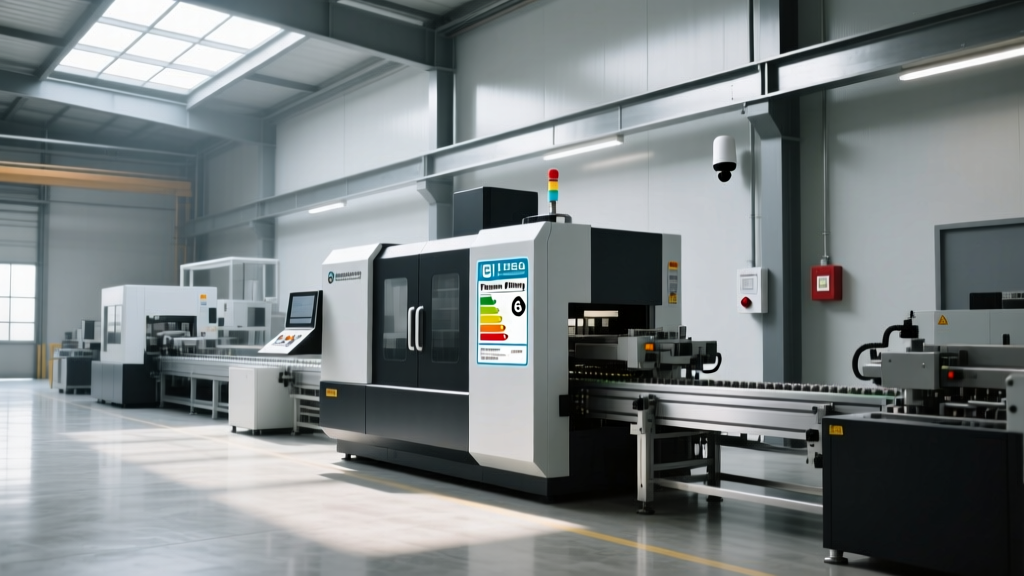
Manufacturing Equipment Energy Efficiency Ratings & Fire Detection Equipment Manufacturers
Discover how manufacturing equipment energy efficiency ratings impact facility safety and what top fire detection equipment manufacturers recommend.
The Hidden Conflict: High-Efficiency Machines and Thermal Masking
As industrial facilities upgrade their production lines to meet strict 2026 sustainability mandates, plant managers are heavily focused on manufacturing equipment energy efficiency ratings. Transitioning from standard IE2 motors to Super Premium (IE4) or Ultra Premium (IE5) efficiency classes drastically reduces baseline power consumption. However, this shift introduces a non-obvious safety vulnerability: thermal masking. High-efficiency manufacturing equipment runs significantly cooler and is often housed in heavily insulated, acoustic-dampening enclosures to minimize HVAC load. While this optimizes energy metrics, it fundamentally alters early-stage fire dynamics, forcing fire detection equipment manufacturers to engineer highly sensitive, low-parasitic-load detection systems capable of identifying anomalies in tightly sealed, thermally stable environments.
Decoding Manufacturing Equipment Energy Efficiency Ratings
To make informed procurement decisions, buyers must understand the IEC 60034-30-1 standard, which classifies motor efficiency. According to the U.S. Department of Energy, upgrading to premium efficiency models is a cornerstone of modern industrial energy strategy.
- IE3 (Premium Efficiency): The current global baseline for new industrial motors. Offers a solid ROI but generates enough residual heat for legacy point-smoke detectors to function normally.
- IE4 (Super Premium Efficiency): Reduces electrical losses by 15-20% compared to IE3. Common in 2026 CNC spindle drives and large injection molding screws. Example: A 50HP ABB M3BP IE4 motor costs approximately $4,200 (a $1,400 premium over IE2) but operates at surface temperatures 10°C to 15°C cooler.
- IE5 (Ultra Premium Efficiency): Utilizing permanent magnet or synchronous reluctance technology, IE5 motors (like the WEG W22 Magnet series) reduce losses by an additional 20% over IE4. These units run so cool that traditional thermal-overload sensors often fail to detect early-stage bearing degradation before a mechanical seizure sparks a fire.
How Leading Fire Detection Equipment Manufacturers Bridge the Gap
Recognizing the limitations of legacy detection in highly efficient, enclosed factories, top fire detection equipment manufacturers have pivoted toward aspirating and multi-spectrum technologies that integrate directly with a plant’s Energy Management System (EMS) via Modbus TCP/IP or BACnet. This integration ensures that safety systems do not introduce parasitic loads that skew the facility's carefully calculated energy efficiency ratings.
1. Aspirating Smoke Detection (ASD) for Sealed Efficiency Cabinets
Systems like the Honeywell/Xtralis VESDA-E VEA draw air samples directly from inside the insulated enclosures of IE4/IE5 drive cabinets at rates of 20 to 30 liters per minute. By sampling the air continuously, ASD detects the off-gassing of overheated wire insulation (the precursor to a VFD fire) up to four hours before visible smoke is generated. Crucially, modern ASD units draw less than 40W of continuous power, ensuring they do not negatively impact the overall energy efficiency rating of the manufacturing cell they are protecting.
2. Multi-Spectrum IR Thermal Imaging
For open-floor manufacturing equipment like high-speed stamping presses or friction-welding cells, manufacturers like Det-Tronics utilize multi-spectrum infrared (IR) flame detectors (e.g., the X3301 series). Instead of relying on ambient heat rise—which is suppressed by high-efficiency machine design—these optical sensors look for the specific ultraviolet and infrared wavelengths emitted by a nascent hydrocarbon fire, triggering suppression systems in under 50 milliseconds.
Technology Comparison Matrix: Efficiency vs. Detection Compatibility
When matching manufacturing equipment energy efficiency ratings with appropriate safety infrastructure, use the following matrix to guide your capital expenditure.
| Detection Technology | Best Suited Efficiency Class | Average Parasitic Load | Installation Cost (Est.) | Primary Failure Mode in Green Factories |
|---|---|---|---|---|
| Standard Point Photoelectric | IE2 / IE3 (Legacy) | ~2.5W per sensor | $150 - $250 per drop | Fails to penetrate IP66 thermal/acoustic enclosures. |
| Aspirating Smoke (ASD) | IE4 / IE5 (Enclosed VFDs) | 35W - 50W per unit | $18 - $25 per linear ft of pipe | Filter clogging in high-particulate machining zones. |
| Multi-Spectrum IR Flame | IE4 (Open Friction Presses) | 8W - 12W per sensor | $2,500 - $3,800 per head | Optical occlusion from automated robotic arms. |
| IoT Wireless Thermal Mesh | IE5 (Distributed Conveyor) | <1W (Battery/Harvested) | $400 - $600 per node | Signal degradation inside Faraday-cage efficiency shields. |
Step-by-Step Procurement & Integration Framework
To comply with NFPA 72 (National Fire Alarm and Signaling Code) while preserving your plant's ISO 50001 energy certification, follow this integration protocol during the equipment selection phase:
- Audit the OEM Enclosure Specs: Before signing the PO for new IE4/IE5 manufacturing equipment, request the IP rating and thermal dissipation specs of the control cabinets. If the cabinet is sealed (IP55 or higher) and relies on internal closed-loop cooling, mandate internal ASD capillary tubing as a factory-installed option.
- Calculate the Parasitic Load Budget: Work with your electrical engineer to allocate a specific wattage budget for safety sensors. If a manufacturing cell is rated for a 5% maximum auxiliary power draw to maintain its energy efficiency rating, specify ultra-low-power IoT thermal nodes (drawing <1W) rather than hardwired, continuously heated optical sensors.
- Implement EMS Cross-Polling: Modern fire detection equipment manufacturers provide APIs that allow the fire panel to read the machine's internal telemetry. Configure your EMS to trigger an ASD high-sensitivity mode only when the machine's VFD reports a load exceeding 85% capacity. This dynamic polling reduces false alarms caused by normal startup off-gassing.
- Specify Synthetic Coolant Compatibility: High-efficiency CNC machines often use advanced synthetic or semi-synthetic coolants to reduce friction and pumping energy. Ensure the selected fire detection sensors (especially optical flame detectors) are calibrated to ignore the specific vapor signature of these synthetic coolants, which can otherwise trigger false positive alarms.
The Bottom Line for 2026 Facility Upgrades
Chasing top-tier manufacturing equipment energy efficiency ratings without updating your fire detection architecture is a critical operational risk. The very features that make IE4 and IE5 machinery energy-efficient—cooler operating temperatures, synthetic lubricants, and hermetically sealed acoustic enclosures—are the exact same features that blind legacy smoke detectors. By partnering with forward-thinking fire detection equipment manufacturers and specifying aspirating or multi-spectrum technologies that draw minimal parasitic power, plant managers can achieve aggressive sustainability targets without compromising facility safety or NFPA compliance.