Energy Efficiency Ratings: Hotmix Asphalt Equipment Manufacturer MN
Evaluate energy efficiency ratings for HMA plants. Compare BTU/ton metrics, burner specs, and VFDs when selecting a hotmix asphalt equipment manufacturer MN.
The Thermodynamics of Asphalt Production: Beyond the Nameplate
Hot mix asphalt (HMA) production is fundamentally a thermodynamic exercise. The primary objective is to heat and dry virgin aggregates to precisely 300°F–330°F while coating them with asphalt binder. For facility managers and procurement teams, evaluating energy efficiency ratings is not about reading a generic ENERGY STAR label; it requires a granular analysis of BTU-per-ton consumption, thermal fluid heater insulation values, and exhaust fan variable frequency drive (VFD) curves. When sourcing heavy machinery, particularly when vetting a hotmix asphalt equipment manufacturer MN operations rely on for harsh northern climates, standard efficiency metrics fall short of capturing real-world operational costs.
⚠️ The Northern Climate Thermal Penalty: In Minnesota, aggregate stockpiles frequently endure sub-zero winter temperatures and high spring moisture content. Heating aggregate from 35°F with 6% moisture requires exponentially more energy than heating 75°F aggregate with 2% moisture. The latent heat of vaporization required to boil off that extra 4% moisture can increase dryer drum fuel consumption by up to 22%. Equipment specifications must be modeled for worst-case local thermodynamic loads, not ideal laboratory conditions.Decoding the BTU-per-Ton Matrix
The universal benchmark for HMA plant thermal efficiency is the BTU-per-ton metric. According to data published by the National Asphalt Pavement Association (NAPA), a legacy drum mix plant typically consumes between 28,000 and 32,000 BTU per ton of mix. Modern, high-efficiency configurations engineered by top-tier OEMs can reduce this footprint to 21,000–24,000 BTU per ton.
| Plant Component | Legacy Efficiency Metric | High-Efficiency Target (2026 Standard) | Primary Efficiency Driver |
|---|---|---|---|
| Dryer Drum Exhaust Temp | 280°F – 320°F | 200°F – 225°F | Combo-flight veiling patterns |
| Burner Turndown Ratio | 4:1 | 10:1 to 15:1 | Hauck Starjet / Stansteel VFD blowers |
| Thermal Fluid Heater Loss | 4% - 6% shell loss | < 1.5% shell loss | 4-inch high-density mineral wool insulation |
| Baghouse Fan Power | Fixed RPM (1.0 kW/ton) | VFD Controlled (0.65 kW/ton) | Static pressure feedback loops |
Dryer Drum Flighting: The Hidden Variable in Heat Transfer
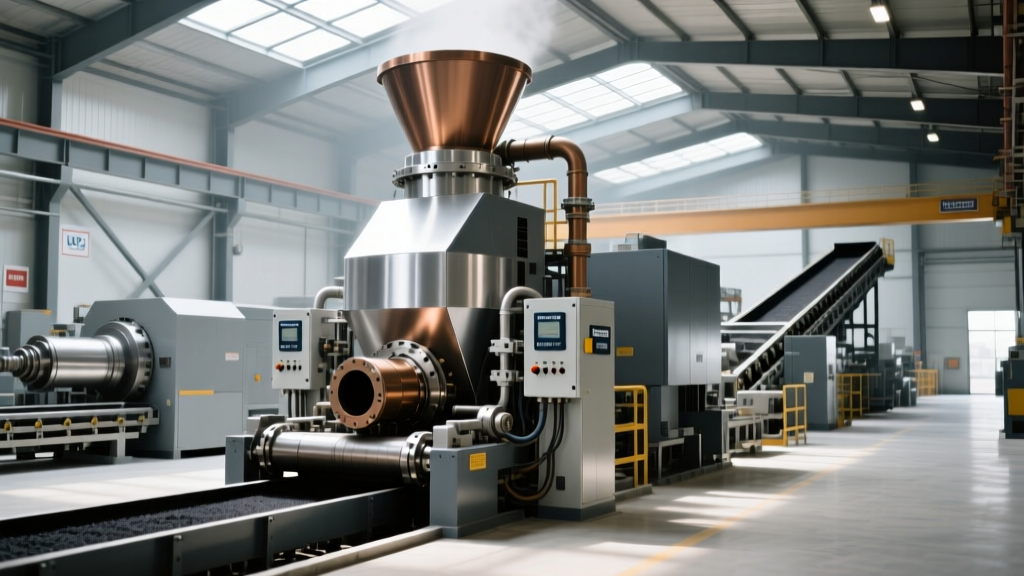
The dryer drum is the largest energy consumer in any HMA facility. Efficiency here is dictated by the internal flighting design, which dictates how the aggregate is lifted and dropped through the hot gas stream. Standard OEM drums often use basic "L-flights" or "C-flights" that create an uneven material veil, allowing hot gases to channel through the drum without transferring heat to the stone.
When requesting proposals from an equipment manufacturer, mandate combo-flight or vee-flight designs in the final third of the drum. These specialized flights create a dense, uniform "veil" of aggregate that forces the hot combustion gases to pass directly through the material curtain. This single mechanical upgrade drops exhaust stack temperatures by 50°F to 80°F, capturing thousands of dollars in otherwise wasted natural gas or #2 diesel fuel annually.
Evaluating Burner Turndown Ratios
A burner's turndown ratio defines its ability to modulate the flame size without extinguishing. A standard 4:1 turndown ratio means a 100 MMBTU/hr burner can only drop to 25 MMBTU/hr before it must cycle off and on. This cycling causes massive thermal inefficiencies and spikes in NOx emissions. Specify burners with a minimum 10:1 turndown ratio equipped with variable frequency combustion air blowers. This allows the burner to seamlessly match the exact thermal demand of wet, cold spring aggregates versus dry, warm summer stockpiles.
Electrical Efficiency: Baghouse and VFD Integration
While thermal energy dominates the conversation, electrical efficiency dictates the plant's baseline operating cost. The primary baghouse exhaust fan is typically a 200 HP to 300 HP motor running continuously. Historically, these were controlled by dampers, which is the electrical equivalent of driving a car with one foot on the gas and one on the brake.
Modern equipment selection requires closed-loop VFD integration. By installing static pressure transducers in the baghouse plenum, the VFD dynamically adjusts the fan RPM to maintain exactly 4.5 to 5.0 inches of water column (w.c.) draft at the dryer drum. According to the affinity laws of fan dynamics, reducing fan speed by just 20% yields a 49% reduction in power consumption. For a 250 HP fan running 2,000 hours a year at $0.09/kWh, this VFD upgrade alone saves over $14,000 annually in electrical costs.
"Aligning energy efficiency with emissions compliance is no longer optional in heavily regulated states. Upgrading to high-turndown burners and optimized VFD baghouses directly reduces the VOC and NOx footprints reported in state air quality permits, streamlining the renewal process."
— Reference context derived from US EPA AP-42 Chapter 11.1 (Hot Mix Asphalt Plants) emission factor guidelines.
Thermal Fluid Systems: Insulation and Pump Specs
The asphalt binder (AC) and heavy fuel oil must be maintained at precise temperatures (typically 275°F–325°F) using thermal fluid heaters. When reviewing equipment schematics, scrutinize the thermal fluid heater shell and piping insulation. Standard OEM packages often include 2-inch fiberglass or mineral wool. Specify 4-inch high-density mineral wool with aluminum jacketing for all exterior thermal fluid lines and the heater shell. This reduces radiant heat loss from 5% down to roughly 1.2%, keeping the heat in the binder rather than radiating into the control room environment.
Buyer’s Technical Checklist for OEM Evaluation
Do not rely on marketing brochures when selecting heavy manufacturing equipment. Issue the following technical questionnaire to any prospective manufacturer to verify their energy efficiency claims:
- Draperies & Veiling: Can you provide CFD (Computational Fluid Dynamics) modeling of the dryer drum flighting demonstrating a minimum 85% veiling density across the gas stream?
- Exhaust Guarantees: Will you contractually guarantee a maximum dryer exhaust temperature of 225°F at a production rate of 400 TPH with 5% incoming aggregate moisture?
- Combustion Air: Are the combustion air blowers on the main dryer burner equipped with VFDs, or are they fixed-speed with damper control?
- Baghouse Draft Control: Does the PLC control system utilize static pressure feedback to modulate the main exhaust fan VFD, or is it tied to a fixed production-rate lookup table?
- Thermal Insulation: What is the R-value and material thickness of the thermal fluid heater jacketing and all exterior hot-oil piping?
Final Procurement Strategy
Selecting the right machinery requires looking past the initial capital expenditure (CAPEX) and modeling the 10-year operational expenditure (OPEX). A high-efficiency plant configuration may carry a 6% to 9% premium on the initial invoice, but the reduction in natural gas consumption, electrical demand, and thermal fluid degradation typically yields an ROI in under 28 months. By enforcing strict BTU-per-ton guarantees and mandating modern VFD and high-turndown burner technologies, procurement teams can secure assets that remain profitable and compliant for decades.