Endoscopy Equipment Manufacturers: Contract Mfg Maintenance Criteria
How endoscopy equipment manufacturers evaluate contract manufacturing equipment selection criteria through maintenance schedules and service SLAs.
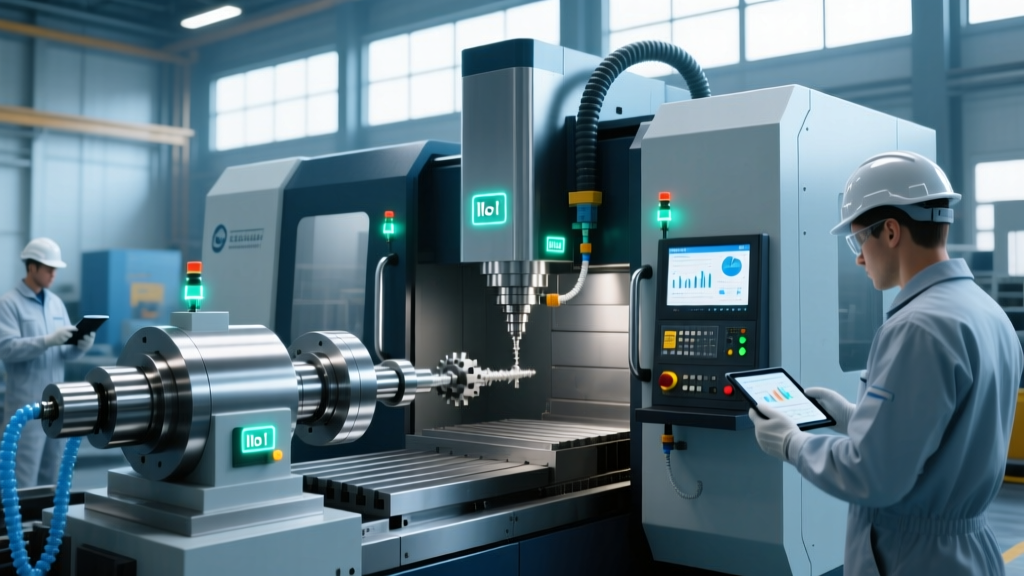
Selecting contract manufacturing (CM) equipment for endoscope production requires looking past initial capital expenditure (CapEx) to evaluate total cost of ownership (TCO). For endoscopy equipment manufacturers outsourcing production or scaling internal assembly lines, the maintenance and service schedules of manufacturing machinery dictate yield rates, regulatory compliance, and ultimate profitability. Endoscopes are complex opto-mechanical devices; a single flexible gastrointestinal endoscope contains over 100 micro-components, including fiber-optic bundles, CMOS sensors, and articulation control wires. The manufacturing equipment used to assemble these—such as micro-laser welding stations, precision adhesive dispensers, and helium leak testers—must maintain sub-micron tolerances. When evaluating CM equipment, maintenance intervals and service level agreements (SLAs) are the primary selection criteria.
The Hidden Cost of Tolerance Drift in Opto-Mechanical Assembly
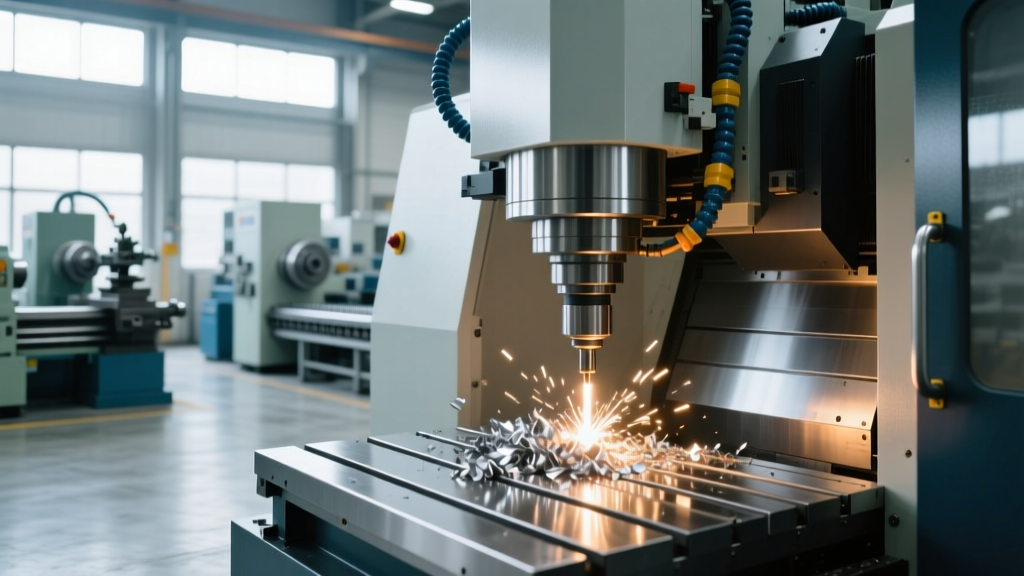
In endoscope manufacturing, deferred preventative maintenance (PM) does not just cause downtime; it causes latent field failures. Consider the micro-laser welding process used to seal the distal tip of a flexible endoscope. If a fiber laser welder (such as the TRUMPF TruWeld series) experiences thermal lensing or optical path misalignment due to skipped PM cycles, the hermetic seal of the distal tip fails. A mere 0.05mm drift in beam focus can cause micro-porosity in the 316L stainless steel or titanium housing. This leads to fluid ingress during clinical reprocessing and sterilization, resulting in catastrophic field failures and FDA recalls.
Therefore, equipment selection criteria must prioritize platforms with automated, closed-loop beam profiling and self-calibrating optics. As of 2026, modern IIoT-enabled laser systems can reduce manual PM frequency from weekly to quarterly by utilizing real-time optical coherence tomography (OCT) to monitor weld pool dynamics, automatically compensating for minor optical degradation before it impacts hermetic integrity.
Core Maintenance Metrics for Equipment Selection Criteria
When auditing a contract manufacturer's equipment portfolio, endoscopy equipment manufacturers must demand specific reliability and maintenance metrics. Relying on generic 'high reliability' claims is insufficient for ISO Class 7 cleanroom environments. Procurement engineers must evaluate the following specific data points:
- Mean Time Between Failures (MTBF): For critical subsystems like piezoelectric dispensing valves, MTBF should exceed 10,000 operating hours. Anything less indicates excessive fluid-path clogging and unacceptable PM burdens.
- Mean Time To Repair (MTTR): In cleanroom environments, MTTR must account for gowning, environmental re-certification, and tool sterilization. An MTTR of 4 hours on the factory floor often translates to 8 hours in an ISO Class 7 cleanroom.
- Machine Capability Index (Cmk): Post-maintenance Cmk must remain above 1.67 for adhesive dispensing and laser cutting. If a machine requires a 4-hour warm-up and manual calibration to achieve Cmk > 1.67 after a PM event, it is unsuitable for high-mix contract manufacturing.
PM Schedule & Calibration Cost Matrix
The following table outlines the realistic maintenance burdens for standard endoscope assembly equipment. Contract manufacturing agreements must explicitly state who bears these ongoing operational costs.
| Equipment Category | Critical Subsystem | PM Frequency | Calibration Tolerance | Est. Annual Service Cost |
|---|---|---|---|---|
| Micro-Laser Welders | Optics & Chiller Unit | Every 500 operating hours | ±0.01mm beam focus | $28,000 - $35,000 |
| Precision Adhesive Dispensers | Piezoelectric Valves & Syringe Heaters | Bi-weekly fluid path purge | ±0.005mg shot weight | $12,000 - $18,000 |
| Helium Leak Testers | Mass Spectrometer Cell | Annual certified calibration | 1.0 x 10^-8 scc/s leak rate | $8,500 - $12,000 |
| Fiber-Optic Fusion Splicers | V-Groove Stages & Electrodes | Every 1,000 splices | ±0.02µm core alignment | $6,000 - $9,000 |
Evaluating OEM Service Level Agreements (SLAs)
Not all service contracts are equal, and the baseline SLA provided by machinery OEMs is rarely sufficient for medical device contract manufacturing. When endoscopy equipment manufacturers evaluate a CM's machinery, they must verify the underlying SLAs. A standard 24-hour response time is unacceptable for a bottleneck machine like a multi-axis CNC micro-machining center used for articulation links.
Procurement criteria should mandate 4-hour onsite response SLAs for critical path equipment, coupled with guaranteed loaner equipment availability. Furthermore, the SLA must stipulate that all field service engineers (FSEs) possess current cleanroom gowning certifications. Bringing an uncertified third-party technician into an ISO Class 7 cleanroom to fix a conveyor jam can void environmental compliance, requiring a $15,000 third-party particulate re-certification audit.
⚠️ Cleanroom PM Warning: Preventative maintenance on automated assembly conveyors inside an ISO Class 7 cleanroom generates particulate matter. Equipment selection criteria must include 'cleanroom-compatible' PM kits (e.g., low-outgassing synthetic lubricants, vacuum-shrouded pneumatic actuators) to prevent line shutdowns for environmental re-certification. Always verify the machinery OEM provides ISO 14644-compliant maintenance protocols.Lifecycle Cost Analysis (LCCA) Framework
To objectively compare competing manufacturing equipment, endoscopy equipment manufacturers should apply a strict Lifecycle Cost Analysis (LCCA) framework that penalizes high-maintenance machinery. Use the following formula during the vendor selection phase:
TCO = CapEx + (Σ Annual PM Costs × Lifecycle Years) + (Unplanned Downtime Cost × Expected MTBF Failures) + (Σ Calibration & Validation Costs)
Real-World Scenario: A CM is choosing between two UV-curing stations for bonding endoscope eyepieces. Vendor A offers a $45,000 unit with manual bulb replacement and analog intensity dials. Vendor B offers a $68,000 unit with LED arrays, automated radiometer calibration, and IIoT predictive maintenance sensors. While Vendor A wins on CapEx, Vendor B's automated calibration eliminates the $4,500 bi-annual NIST-traceable radiometer validation cost and reduces unplanned curing failures (which scrap $800 worth of optical components per incident) by 95%. Over a 7-year lifecycle, Vendor B yields a 22% lower TCO.
Regulatory Alignment: 21 CFR Part 820 and ISO 13485
Maintenance schedules in medical device manufacturing are not just operational concerns; they are strict regulatory requirements. Under FDA 21 CFR Part 820 (specifically Sec. 820.72 for calibration and Sec. 820.70 for production controls), all manufacturing equipment must be maintained and calibrated at defined intervals, with traceable records. Similarly, ISO 13485:2016 mandates documented procedures for the maintenance of equipment used in the realization of the product.
When selecting contract manufacturing equipment, prioritize machinery that features automated, tamper-proof digital maintenance logs via OPC-UA or MQTT integration directly into the facility's Manufacturing Execution System (MES). Equipment that relies on manual, paper-based PM checklists creates massive audit burdens and increases the risk of FDA Form 483 observations for incomplete calibration traceability.
Vendor Audit Checklist for Maintenance Capabilities
Before finalizing a contract manufacturing equipment purchase, run the machinery OEM through this specific maintenance audit checklist:
- Spare Parts Obsolescence: Does the OEM guarantee a 10-year spare parts availability for critical wear components (e.g., laser diodes, piezoelectric valves)?
- Consumable Lock-in: Are the maintenance consumables (filters, lubricants, calibration gases) proprietary and single-sourced, or can they be sourced from validated secondary suppliers?
- Remote Diagnostics: Does the equipment support secure, remote OEM diagnostics to troubleshoot faults before dispatching an FSE, thereby reducing MTTR?
- Validation Support: Does the OEM provide pre-written Installation Qualification (IQ) and Operational Qualification (OQ) protocols specifically tied to their PM schedule?
- Training Tiers: Does the service contract include 'Train-the-Trainer' certification for the CM's internal maintenance staff to perform Tier 1 (basic) PMs without voiding the warranty?
By rigorously applying these maintenance and service schedule criteria, endoscopy equipment manufacturers can ensure their contract manufacturing partners operate with the precision, reliability, and regulatory compliance required for life-saving medical devices.