Contract Manufacturing Selection Criteria for Soft Play Equipment Manufacturers
Discover how soft play equipment manufacturers evaluate contract manufacturing machinery based on operator training, HMI usability, and safety criteria.
Contract manufacturing for indoor playgrounds and soft play structures requires a delicate balance between high-volume output and stringent safety tolerances. When soft play equipment manufacturers select primary machinery—such as CNC nesting routers for Baltic birch plywood frames or high-frequency (RF) welders for PVC-coated vinyl foam—the deciding factor is frequently the operator training curve. A machine that requires six months of specialized G-code training is a liability in an industry characterized by seasonal production spikes and high labor turnover.
The Hidden Cost of HMI Complexity in Contract Manufacturing
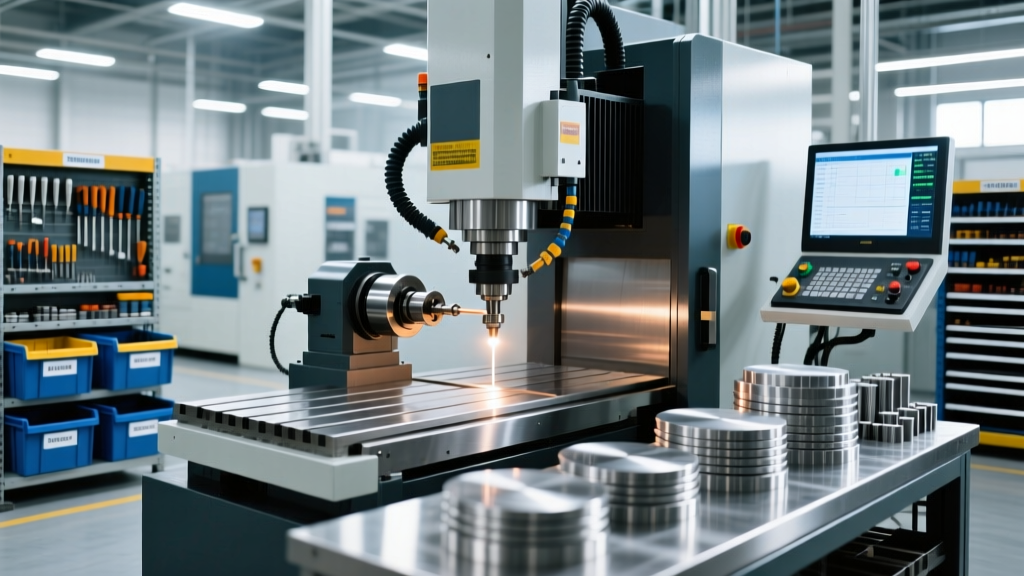
The Human-Machine Interface (HMI) is the most critical selection criterion for plant managers evaluating new contract manufacturing equipment. In soft play production, operators routinely switch between cutting 18mm plywood structural nodes and routing high-density polyurethane (PU) foam inserts. If the CNC controller requires manual G-code adjustments for tool wear compensation, the cognitive load on the operator increases exponentially, leading to higher scrap rates.
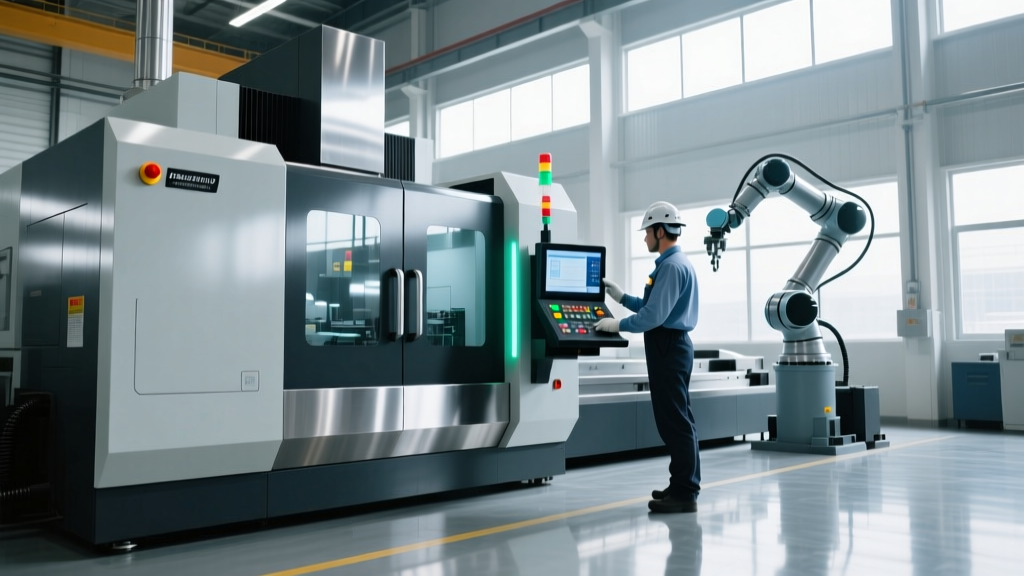
Modern equipment from manufacturers like Biesse (e.g., the Rover A series) or Homag (CentroteQ) utilizes parametric CAD/CAM plug-ins. These interfaces allow operators to load a 3D DXF file of a soft play climbing frame, automatically generating the nesting layout and vacuum pod placement. Evaluating the HMI should involve a practical "Time-to-First-Part" test. If a newly hired operator cannot safely load a 4x8-foot sheet of MDF, align the laser crosshair, and initiate a verified toolpath within 15 minutes of basic instruction, the equipment fails the contract manufacturing usability test.
Operator Insight: When auditing a machine's HMI, request the OEM to demonstrate the tool-breakage recovery sequence. In soft play manufacturing, routing dense PU foam often snaps 1/4-inch end mills. If the HMI requires a full system reboot rather than a localized Z-axis reset and tool offset entry, expect to lose 45 minutes of production per breakage event.Core Equipment Selection Matrix
The following matrix outlines the primary machinery used in soft play contract manufacturing, evaluated specifically through the lens of operator training requirements, safety interlocks, and capital investment.
| Equipment Type | Primary Function | Avg. Training Time to Competency | Critical Safety Interlocks | Typical Capital Cost (2026) |
|---|---|---|---|---|
| 3-Axis CNC Nesting Router | Cutting plywood/MDF structural frames | 40 - 60 hours (Parametric HMI) | Light curtains, vacuum mat pressure sensors | $85,000 - $140,000 |
| RF (Radio Frequency) PVC Welder | Sealing 18oz vinyl over foam inserts | 120+ hours (Requires certification) | Faraday cage shielding, dual-hand anti-tie-down | $45,000 - $75,000 |
| Vertical Foam Contour Saw | Slicing 2-inch to 6-inch PU foam blocks | 20 - 30 hours | Blade tension monitors, automated dust extraction | $25,000 - $40,000 |
| Industrial Lockstitch Station | Reinforcing high-stress vinyl seams | 80 hours (Material handling focus) | Needle guard, automated thread trimmer sensors | $8,000 - $15,000 |
Safety Interlocks, Dust Extraction, and OSHA Compliance
Operator training is inextricably linked to machine safety architecture. Soft play manufacturing generates massive amounts of particulate matter. Routing MDF and plywood creates fine wood dust, while cutting PU foam generates static-charged particulate that clings to machine rails and operator PPE. According to NIOSH guidelines on wood dust exposure, inadequate extraction not only poses respiratory hazards but also obscures operator sightlines and degrades CNC linear guide bearings.
When selecting a CNC router, plant managers must evaluate the Lockout/Tagout (LOTO) complexity of the dust extraction and vacuum systems. A 15HP vacuum pump with localized, easily accessible disconnect switches reduces LOTO training time from 4 hours to 45 minutes. Furthermore, compliance with OSHA's woodworking machinery standards (1910.213) dictates strict guarding requirements. Equipment that integrates automated, adjustable pressure guards—rather than manual spring-loaded clamps that operators frequently bypass to save time—drastically reduces the training burden regarding kickback prevention.
RF Welder Radiation and Anti-Tie-Down Training
High-frequency PVC welders present unique training hurdles. Operators must be trained not only on the thermal dynamics of melting 18oz vinyl but also on RF radiation safety. The selection criterion here is the physical design of the anti-tie-down buttons. If the OEM utilizes buttons that can be defeated with a piece of tape or a zip-tie, the machine introduces severe compliance risks. Select equipment with capacitive, palm-sensing dual-hand controls that require continuous, symmetrical pressure, eliminating the need for extensive behavioral monitoring training.
Step-by-Step Evaluation Framework for Plant Managers
To systematically evaluate contract manufacturing equipment for operator viability, implement the following four-step framework during the OEM demonstration phase:
- Map the Skill Gap: Assess your current workforce. If your floor relies on cross-trained general laborers rather than specialized machinists, immediately disqualify any equipment requiring manual G-code editing or complex macro programming.
- Audit the HMI for Error Trapping: Intentionally input incorrect tool lengths or vacuum pressure thresholds into the demo machine. A well-designed HMI will trigger a hard fault and display a plain-language corrective action. Poorly designed software will attempt to run the file, resulting in a crashed spindle.
- Calculate the "Time-to-First-Part" Metric: Measure the exact minutes from powering on the machine to the completion of the first cut cycle. In high-mix soft play manufacturing, machines that require 15 minutes of daily homing and calibration routines waste hundreds of labor hours annually.
- Assess Maintenance Accessibility: Operators are often the first line of defense for preventative maintenance. Evaluate how easily an operator can access and clean the spindle air purge lines, vacuum table filters, and RF welder Teflon blankets without requiring specialized tools.
Edge Cases: When Material Tolerances Dictate Machine Choice
The end-use environment of soft play equipment heavily influences upstream manufacturing tolerances. The CPSC Public Playground Safety Handbook (Pub 325) outlines strict parameters for entrapment hazards, requiring that gaps in playground structures either be small enough to prevent head entrapment or large enough to allow free passage. For indoor soft play modular frames, this often translates to a maximum allowable tolerance of 2mm on wooden interlocking joints.
This 2mm tolerance creates a significant edge case in equipment selection. As CNC router end mills wear down during the cutting of abrasive MDF, the physical dimensions of the cut parts drift. If the selected CNC equipment lacks automated tool wear probing (where the machine touches off a sensor to measure bit degradation and automatically adjusts the toolpath offset), operators must be trained to manually measure parts with digital calipers every 10 cycles and input manual offsets. This manual intervention not only slows production but introduces human error, potentially resulting in a batch of climbing frames that fail CPSC entrapment clearance standards during final assembly. Therefore, automated tool probing is not a luxury upgrade; it is a mandatory selection criterion to reduce operator dependency and guarantee safety compliance.
Aligning Equipment Investment with Workforce Realities
Selecting contract manufacturing equipment for soft play structures is ultimately an exercise in human factors engineering. The most advanced 5-axis CNC router or high-frequency welder is useless if the local labor pool cannot be trained to operate it safely and efficiently within a reasonable timeframe. By prioritizing parametric HMIs, automated safety interlocks, and tolerance-maintaining sensors, manufacturers can build a resilient production line that withstands labor fluctuations while consistently delivering safe, high-quality play environments.