Troubleshooting Doyle Equipment Manufacturing Cleanroom Conveyors
Expert troubleshooting guide for Doyle Equipment Manufacturing conveyors in cleanrooms. Fix particulate, outgassing, and CIP issues to meet ISO standards.
Integrating heavy-duty material handling into controlled environments requires strict adherence to cleanroom manufacturing equipment requirements. While Doyle Equipment Manufacturing is widely recognized for robust agricultural and industrial conveyors, their custom 304 and 316L stainless steel divisions produce slider bed conveyors and sanitary hoppers specifically adapted for pharmaceutical and food-grade cleanrooms. However, the transition from standard industrial floors to ISO Class 7 or ISO Class 8 environments introduces unique mechanical and environmental stressors.
When Doyle stainless steel conveyors and hoppers operate under strict HVAC laminar flow and positive pressure regimes, standard maintenance protocols are insufficient. Micro-particulate generation, lubricant outgassing, and Clean-in-Place (CIP) shadowing can trigger immediate compliance failures under FDA cGMP regulations. This guide provides advanced troubleshooting frameworks for facility engineers maintaining Doyle material handling systems in regulated cleanrooms.
Cleanroom Compliance Matrix for Doyle Material Handling
Before troubleshooting, maintenance teams must understand the baseline cleanroom manufacturing equipment requirements governing Doyle stainless steel systems. The following matrix maps critical equipment components to ISO 14644-1 and FDA compliance thresholds.
| Equipment Component | Cleanroom Requirement (ISO 7/8) | Doyle Standard Spec | Common Failure Mode |
|---|---|---|---|
| Belt Material | Non-shedding, FDA/USDA approved | Standard PVC or PU | Edge fraying generating >0.5µm particulates |
| Surface Finish | Ra ≤ 0.8 µm (316L Stainless) | #4 Dairy Finish | Electropolishing degradation trapping bioburden |
| Drive Gearbox | Zero outgassing, NSF H1 lube | Sealed Helical-Bevel | Thermal expansion breather venting oil mist |
| CIP Spray Systems | 100% internal surface coverage | Static Spray Balls | Shadowing at hopper cone transitions |
Symptom 1: Airborne Particulate Spikes at Conveyor Tail Pulleys
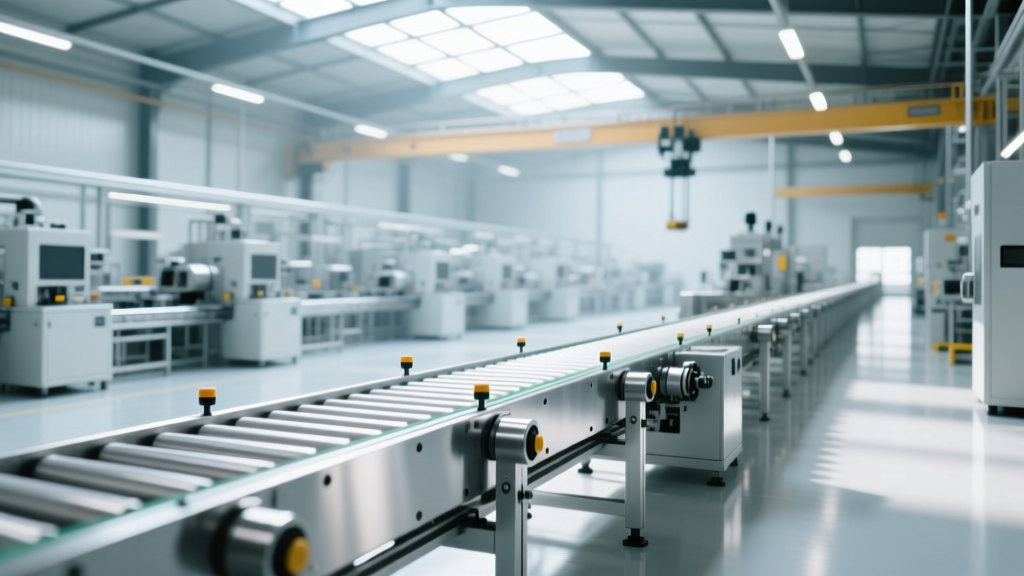
Symptom: Laser particle counters positioned near the Doyle conveyor tail pulley register spikes exceeding 352,000 particles/m³ (≥0.5µm), violating ISO Class 7 limits during standard belt operation.
Root Cause: Standard PVC or low-grade polyurethane belts shed micro-plastics when subjected to the friction of UHMW-PE (Ultra-High-Molecular-Weight Polyethylene) guide rails. Additionally, if the Doyle crown pulley is misaligned by even 0.5 degrees, the belt edge continuously scrapes the side rail, generating massive localized particulate clouds that overwhelm the room's HEPA filtration return grilles.
Step-by-Step Remediation Protocol
- Upgrade Belt Material: Remove the standard belt and install a low-particulate, sealed-edge Thermoplastic Polyurethane (TPU) belt (e.g., Habasit TPU-88 with sealed Aramide tension members). TPU generates 85% fewer wear particulates than PVC under identical friction loads.
- Recalibrate Crown Pulleys: Use a digital inclinometer to verify the Doyle drive and tail pulleys are perfectly parallel to the frame. Adjust the take-up bearings until the belt tracks centrally without contacting the UHMW guide rails. Target a maximum lateral drift of 2mm over a 10-meter run.
- Install Ionizing Air Knives: If static buildup is attracting ambient dust to the belt surface, mount an anti-static ionizing bar 50mm above the return belt to neutralize the charge before the belt reaches the scrapers.
Symptom 2: VOC and Oil Misting Near Drive Assemblies
Cleanroom environments rely on precise air exchange rates (typically 30-60 ACH for ISO 7). Introducing volatile organic compounds (VOCs) or oil mists from conveyor drive assemblies can ruin sensitive pharmaceutical batches or trigger environmental monitoring alarms.
Expert Insight: Standard SEW-Eurodrive or Nord gearmotors fitted to Doyle conveyors utilize breathers to equalize internal pressure. As the gearbox heats up during continuous operation, thermal expansion forces atomized gear oil through the breather vent, creating an invisible aerosol that contaminates the cleanroom air supply.
Gearbox Sealing and Lubrication Overhaul
To resolve outgassing and misting issues, the drive assembly must be retrofitted for hermetic cleanroom operation:
- Drain and Flush: Completely drain the factory-fill mineral oil. Flush the housing with a cleanroom-compatible solvent to remove all residual standard lubricants.
- Repack with Synthetic H1 Lubricant: Fill the gearbox to the exact sight-glass level with a synthetic, NSF H1-registered lubricant such as Klüberfood NH1 C 8-80. This specific formulation resists thermal breakdown and has an exceptionally low vapor pressure, eliminating outgassing.
- Replace the Breather: Remove the standard plastic breather cap. Replace it with a hydrophobic PTFE (Gore-Tex) membrane vent that allows pressure equalization but physically blocks oil aerosols from escaping. For the most critical ISO 5/6 zones, swap the breather for a completely sealed labyrinth seal and rely on the synthetic oil's thermal stability.
Symptom 3: CIP Validation Failures in Doyle Sanitary Hoppers
Critical Alert: Failed riboflavin swab tests on Doyle stainless steel hoppers usually indicate 'shadowing'—areas where the CIP spray ball's fluid dynamics fail to physically impact the steel surface, leaving behind active pharmaceutical ingredient (API) residue or bioburden.
Doyle custom hoppers often feature complex geometries, such as offset discharge valves or internal baffles, which disrupt the spherical spray pattern of static CIP balls. When cleanroom manufacturing equipment requirements dictate a 100% sanitary wash-down, static spray balls are frequently inadequate for vessels larger than 500 liters.
Optimizing CIP Fluid Dynamics
If your Doyle hopper is failing CIP validation, execute the following engineering controls:
- Conduct Riboflavin Mapping: Coat the entire interior of the hopper with a 0.2 g/L riboflavin solution. Run the standard CIP cycle. Illuminate the interior with a 365 nm UV blacklight. Any glowing yellow patches indicate shadowed areas requiring mechanical intervention.
- Retrofit Rotary Jet Heads: Replace static spray balls with self-rotating, gear-driven jet heads (e.g., Alfa Laval Toftejorg). These devices use the fluid pressure to rotate, blasting high-impact jets in a repeating 360-degree pattern that guarantees mechanical impingement on complex baffles and offset cones.
- Verify Flow Rates: Ensure the CIP supply pump delivers a minimum flow rate of 2.5 to 3.0 liters per minute per square meter of internal vessel surface area. Undersized pumps will cause the rotary jet heads to stall, recreating the exact shadowing issues they were meant to solve.
Preventative Maintenance Cadence (ISO 7/8 Environments)
To maintain continuous compliance with IEST recommended practices for cleanroom equipment, implement the following strict PM schedule for all Doyle stainless steel conveyors and hoppers:
- Weekly: Inspect TPU belt edges under 10x magnification for micro-fraying. Wipe down UHMW guide rails with 70% IPA to remove accumulated static dust.
- Monthly: Verify gearbox surface temperatures using an infrared thermal camera. A temperature delta of >15°C above ambient indicates internal friction or lubricant degradation, requiring immediate oil analysis.
- Quarterly: Perform a borescope inspection of the Doyle hopper CIP supply lines to ensure no biofilm is developing in the dead-legs of the stainless steel piping.
- Annually: Re-validate the Ra surface finish of all product-contact stainless steel surfaces using a portable surface profilometer. If the Ra exceeds 0.8 µm due to abrasive cleaning chemicals, schedule an on-site electropolishing service.
By treating Doyle Equipment Manufacturing systems not just as mechanical conveyors, but as integrated cleanroom environmental components, facility managers can eliminate particulate and bioburden risks, ensuring uninterrupted compliance in highly regulated manufacturing sectors.