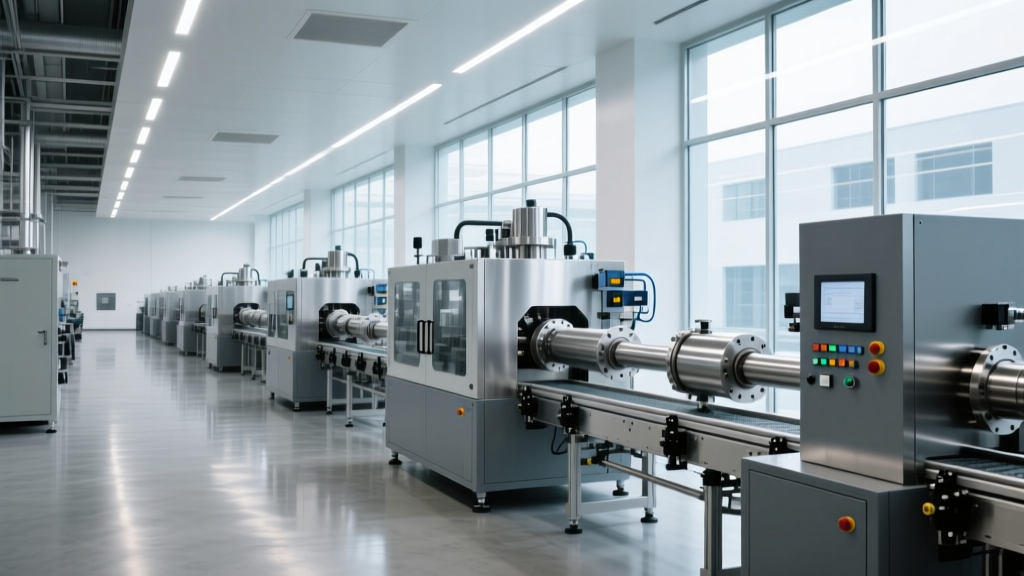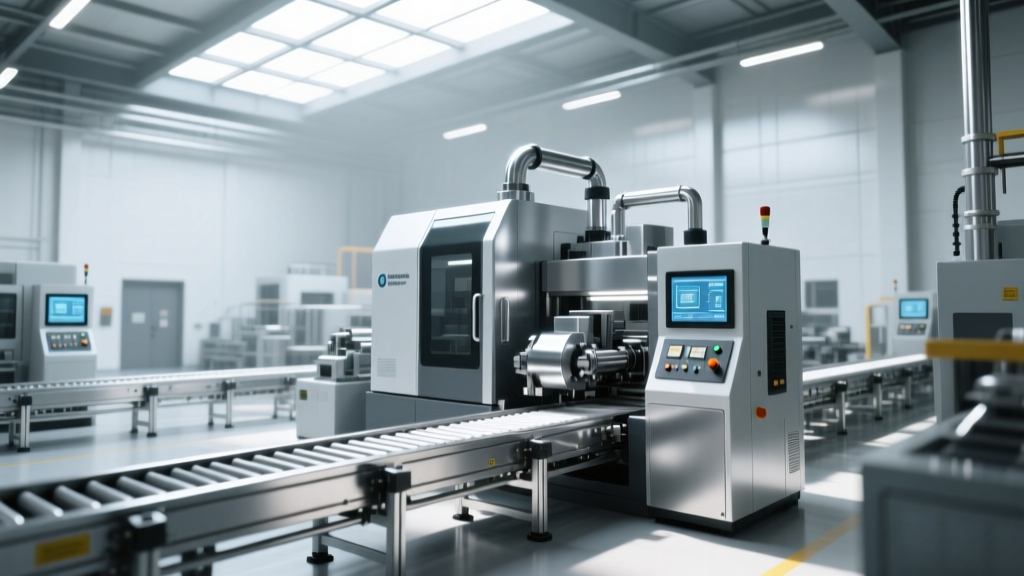
How a Cryogenic Equipment Manufacturer Scales Modular Production
Discover how a modern cryogenic equipment manufacturer uses modular designs to enable flexible, scalable, and efficient industrial production lines.
The Paradigm Shift in Cryogenic Manufacturing
Historically, integrating liquid nitrogen (LN2) or liquid carbon dioxide (LCO2) processing required massive capital expenditure and permanent facility modifications. Traditional cryogenic tunnels were welded in place, hard-piped, and structurally bound to the facility's foundation. Today, the flexibility required by modern supply chains dictates a different approach. By adopting modular manufacturing equipment principles, a specialized cryogenic equipment manufacturer can deliver plug-and-play skids that arrive pre-commissioned, tested, and ready for immediate utility connection.
This shift is not merely about mobility; it is about decoupling production capacity from real estate constraints. When a food processing plant needs to increase IQF (Individually Quick Frozen) throughput, or an aerospace supplier needs additional cryogenic shrinking capacity for turbine components, they no longer build a new wing. They roll in a standardized 20-foot or 40-foot ISO-footprint modular cryo-skid.
Anatomy of a Modular Cryogenic Skid
A true modular system is not just a machine on a steel frame; it is a fully self-contained thermodynamic ecosystem. When evaluating a unit from a top-tier cryogenic equipment manufacturer, the architecture should be divided into three distinct, interchangeable sub-modules:
1. The Pre-Cooling and Airlock Module
This section manages the ambient-to-cryogenic thermal gradient. It utilizes variable-speed centrifugal fans to circulate sub-zero vapor, pre-chilling the product to prevent thermal shock. Advanced skids use 316L austenitic stainless steel for all internal weldments. Unlike 304 stainless, 316L maintains its ductility and resists micro-fracturing during extreme thermal cycling between +20°C and -196°C (-320°F).
2. The Cryo-Blast Core Module
The heart of the system where direct LN2 injection occurs. Modern 2026 models utilize pulse-width modulated (PWM) cryogenic solenoid valves rather than mechanical needle valves. This allows the PLC to inject LN2 in micro-bursts, optimizing the latent heat of vaporization and reducing cryogen consumption from the legacy standard of 1.4 kg LN2 per kg of product down to approximately 0.85 kg/kg.
3. The Exhaust and O2 Management Manifold
As LN2 expands (1 liter of liquid yields roughly 694 liters of gas at room temperature), massive volumes of nitrogen gas must be safely vented. The modular exhaust manifold includes integrated heated vent stacks to prevent ice blockages and atmospheric dispersion hoods designed to prevent localized oxygen displacement at the floor level.
Comparison Matrix: Monolithic vs. Modular Cryogenic Infrastructure
The decision to procure modular equipment fundamentally alters the financial and operational modeling of a production facility. Below is a direct comparison based on a standard 2,000 kg/hr throughput requirement.
| Metric | Monolithic Site-Built Tunnel | Modular Skid-Mounted System |
|---|---|---|
| Capital Expenditure (CapEx) | $450,000 - $600,000 | $185,000 - $240,000 |
| Deployment Lead Time | 12 - 18 Months | 10 - 14 Weeks |
| Facility Modification | Extensive (Foundation, HVAC, structural) | Minimal (Level concrete pad, utility drops) |
| Relocation Cost | $75,000+ (Dismantling and re-welding) | $3,500 (Flatbed transport and forklift) |
| Control System Architecture | Hardwired, proprietary panels | Edge-computing enabled, Modbus TCP/IP |
Deployment Workflow: Integrating Modular Cryo-Units
While modular systems are designed for rapid deployment, integrating them into an existing production line requires strict adherence to cryogenic safety and fluid dynamics principles. Here is the standard operating procedure for facility engineers overseeing installation.
Phase 1: Utility and Spatial Mapping
Before the skid arrives, the facility must prepare the drop zone. The pad must be reinforced concrete, minimum 6 inches thick, capable of supporting 18,000 lbs of dynamic load. Crucially, the ambient room temperature must be maintained above 50°F (10°C) to prevent the exterior of the vacuum-jacketed piping from frosting over and dripping condensation onto electrical conduits.
Phase 2: Commissioning the LN2 Feed via VJ Piping
The connection between the external bulk LN2 tank and the modular skid must utilize Vacuum-Jacketed (VJ) piping. Standard foam-insulated copper or stainless lines are unacceptable for flexible modular setups due to high thermal leakage and rigid bending constraints. VJ piping features an inner and outer stainless steel wall with a high-vacuum interspace filled with multi-layer insulation (MLI). Connections to the modular skid are made using standardized cryogenic bayonet fittings, allowing for tool-free, leak-free mating in under five minutes.
⚠️ CRITICAL SAFETY WARNING: Oxygen Depletion MonitoringLiquid nitrogen expansion displaces breathable air. According to the Canadian Centre for Occupational Health and Safety (CCOHS), oxygen levels dropping below 19.5% constitute an immediate hazard. Modular skids must be integrated with dual-height O2 sensors (mounted at 18 inches and 5 feet above the floor) wired directly to the facility's main fire and gas suppression PLC, configured to trigger automatic exhaust fans and audible alarms if O2 drops below 20.5%.
Vetting a Cryogenic Equipment Manufacturer in 2026
Not all fabricators possess the metallurgical expertise or software engineering capabilities to build true modular cryogenic systems. When sourcing equipment, procurement teams must demand the following technical competencies from their cryogenic equipment manufacturer:
- ASME U-Stamp Certification: The manufacturer must hold an ASME Boiler and Pressure Vessel Code (BPVC) Section VIII, Division 1 U-Stamp. This is non-negotiable for any pressurized LN2 dosing vessels operating above 15 PSIG.
- Digital Twin & Edge Analytics: Leading manufacturers now embed edge-computing gateways (such as Siemens Industrial Edge) directly into the skid's control panel. These gateways monitor the acoustic signatures of the cryogenic solenoid valves and the thermal degradation rates of the VJ piping vacuum, predicting maintenance needs before a catastrophic loss of vacuum (LIV) occurs.
- Hygienic Design Standards: If the modular unit will be used in food, pharmaceutical, or biotech applications, the manufacturer must design to EHEDG or 3-A Sanitary Standards. This dictates specific internal corner radii (minimum 1/4 inch), continuous TIG welds ground to a 32 Ra micro-inch finish, and CIP (Clean-In-Place) spray ball integration.
"The transition to modular cryogenic architecture is fundamentally changing how we approach capacity planning. We are no longer buying machines; we are leasing thermodynamic throughput. A skid can be deployed for a seasonal agricultural freeze, then unbolted and shipped to an aerospace facility for metal treatment the following quarter."
— Director of Advanced Manufacturing Operations, Tier-1 Automotive Supplier
The Economics of Cryogen Consumption
The operational expenditure (OPEX) of a cryogenic system is dominated by the cost of the liquid gas itself. In 2026, bulk LN2 prices fluctuate between $0.45 and $0.80 per kilogram, depending on regional air separation unit (ASU) capacity and transport logistics. A poorly designed modular tunnel will waste thousands of dollars annually through inefficient nozzle placement and poor vapor retention.
When evaluating proposals, require the cryogenic equipment manufacturer to provide a guaranteed Specific Cryogen Consumption (SCC) metric, measured in kg of LN2 per kg of product cooled to the target core temperature. Advanced modular systems utilizing internal vapor recirculation and counter-flow heat exchangers can achieve an SCC of 0.75 to 0.90 for high-moisture food products, whereas legacy open-tunnel designs often exceed 1.50. Over a 5-year lifecycle processing 10,000 tons of material, this delta represents a savings of over $3.5 million in raw cryogen costs alone.
Final Integration Considerations
Modular manufacturing equipment represents the pinnacle of flexible production strategy. By partnering with a highly specialized cryogenic equipment manufacturer, facilities can bypass the traditional bottlenecks of heavy industrial construction. Ensure your engineering team focuses heavily on the peripheral integration—specifically the VJ piping networks, O2 safety interlocks, and PLC data handshakes. The skid itself is a marvel of modern thermodynamics, but its true value is only realized when seamlessly woven into the broader digital and physical fabric of your production floor.
For further reading on industrial gas applications and safety protocols, refer to the Messer Cryogenic Technology Guidelines and the Air Products Food Freezing Resource Center.