Selecting a Manufacturer of Industrial Equipment for Service Contracts
Evaluate a manufacturer of industrial equipment using maintenance schedules, SLA response times, and lifecycle support criteria for contract manufacturing.
The Financial Reality of OEM Maintenance Schedules
Contract manufacturing operates on tightly calculated margins where machine availability directly dictates profitability. When sourcing automated production lines, CNC machining centers, or high-speed packaging cells, the initial capital expenditure (CapEx) is only a fraction of the total lifecycle cost. The operational expenditure (OpEx) is heavily governed by the maintenance and service schedules mandated by the original equipment manufacturer (OEM). Selecting the right manufacturer of industrial equipment requires a rigorous, data-driven audit of their post-sale support infrastructure, preventative maintenance (PM) protocols, and Service Level Agreement (SLA) realities.
In high-volume contract manufacturing environments, unplanned downtime costs typically range from $2,500 to over $10,000 per hour, depending on the sector and production bottlenecks. Therefore, evaluating an OEM is not about finding the lowest upfront machine price; it is about minimizing Mean Time To Repair (MTTR) and maximizing Mean Time Between Failures (MTBF) through superior service architecture.
⚠️ The Software-Locked Maintenance TrapMany modern OEMs embed software locks that require a proprietary diagnostic laptop or an authorized field service engineer (FSE) to clear routine fault codes or perform basic calibration resets. Before signing a purchase order, explicitly verify which maintenance tasks are software-locked and negotiate the release of in-house maintenance access codes for Tier 1 and Tier 2 PM routines.
Decoding the Preventative Maintenance (PM) Mandate
Every manufacturer of industrial equipment provides a recommended PM schedule, but the financial burden of executing that schedule varies wildly between brands. A comprehensive evaluation must separate in-house executable tasks from OEM-mandated service calls.
In-House vs. OEM-Executed Servicing
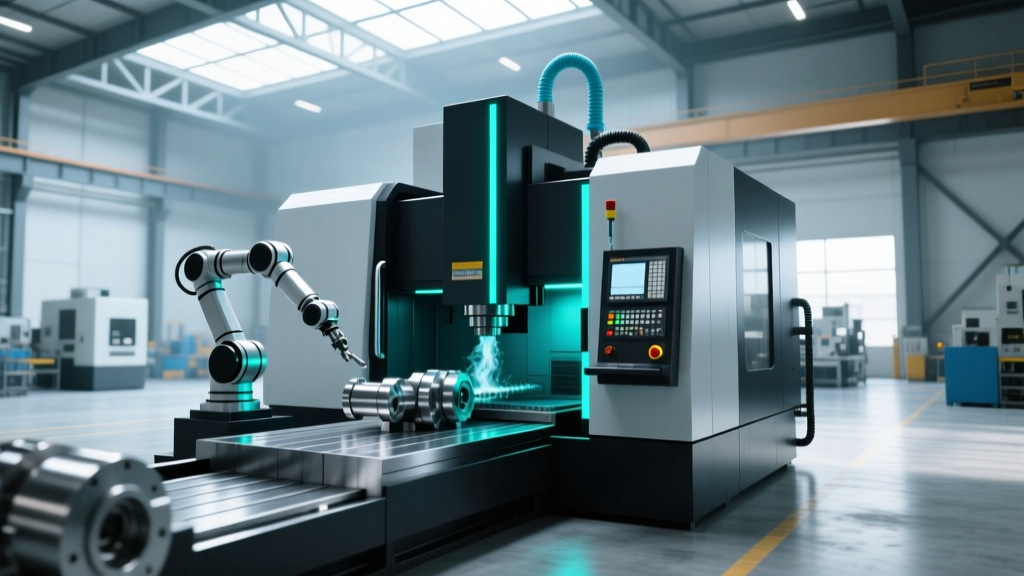
Consider a 5-axis horizontal machining center. Standard maintenance requires spindle run-out checks, ball screw regreasing, and way-lube filter replacements every 2,000 operating hours. Premium OEMs provide your internal maintenance team with the necessary alignment fixtures, digital torque wrenches, and parameter backups to execute these tasks internally at a labor cost of roughly $45 per hour. Conversely, budget-tier OEMs often mandate that their certified technicians perform these exact same procedures, charging $1,800 per day plus travel expenses, effectively inflating your annual maintenance OpEx by 300%.
Consumable and Wear Part Lock-Ins
Scrutinize the equipment’s bill of materials (BOM) for proprietary wear parts. Some OEMs utilize custom-machined linear guideways or proprietary servo motor encoders that cannot be sourced from third-party suppliers like SKF or Fanuc. This forces you into a sole-source purchasing agreement, allowing the OEM to dictate pricing and lead times for the life of the machine.
Service Infrastructure Evaluation Matrix
To systematically compare vendors, use the following matrix to grade the service infrastructure of prospective equipment suppliers. This framework moves beyond marketing claims and focuses on verifiable operational metrics.
| Evaluation Metric | Tier 1: Global Premium OEM | Tier 2: Regional Specialist | Tier 3: Budget Import / Aggregator |
|---|---|---|---|
| SLA Response Time | 4-hour remote / 24-hour on-site | 8-hour remote / 48-hour on-site | Next business day remote / 1-2 weeks on-site |
| Spare Parts Strategy | Consignment stock on your floor | Regional depot (24-hr shipping) | Shipped from overseas origin (30+ days) |
| Remote Diagnostics | Native OPC-UA edge telemetry | Proprietary closed-loop IoT gateway | Manual fault code logging via USB |
| PM Documentation | Interactive 3D CAD exploded views | Standard 2D PDF schematics | Translated, low-res manuals |
| Uptime Guarantee | Contractual 98.5% with penalties | Best-effort 95% target | No contractual uptime guarantee |
Auditing Remote Diagnostics and Predictive Telemetry
Modern contract manufacturing relies on edge computing and the OPC-UA (Open Platform Communications Unified Architecture) protocol to stream real-time telemetry data from the machine to the OEM’s cloud infrastructure. When evaluating a vendor, demand a live demonstration of their predictive maintenance dashboard.
Do not accept simple threshold-based alarms (e.g., 'Motor Overtemperature'). Instead, look for algorithmic degradation tracking. A competent OEM will monitor the current draw of a servo motor over time; as the mechanical load increases due to bearing wear, the current draw spikes microscopically. The OEM’s system should flag this anomaly and automatically ship a replacement bearing 300 operating hours before catastrophic failure occurs, seamlessly integrating into your scheduled weekend maintenance window.
'Effective asset lifecycle management requires transitioning from reactive repairs to condition-based monitoring. Aligning OEM service schedules with ISO 55001 asset management principles ensures that maintenance activities deliver maximum value relative to their cost.' — ISO 55001 Asset Management Standards
Negotiating the Service Level Agreement (SLA)
The SLA is the legal backbone of your equipment's uptime. Never accept an OEM's standard boilerplate SLA without negotiating the following specific clauses:
- Liquidated Damages for Missed SLAs: If the OEM guarantees a 24-hour on-site response for critical failures and fails to deliver, the contract must stipulate a financial penalty. A standard negotiation is a 2% credit on the annual service contract fee for every 12 hours the SLA is breached.
- Spindle and Core Component Warranties: Standard warranties often cover 'parts and labor' for 12 months. Negotiate an extended 36-month warranty specifically on high-cost, high-wear components like the main spindle, rotary tables, and primary PLC processors, prorated based on operating hours.
- Obsolescence Protection: Ensure the contract includes a clause guaranteeing the availability of replacement PCB boards and HMI screens for a minimum of 10 years. If the OEM discontinues a control board, they must provide a drop-in retrofit upgrade at no additional engineering cost.
Step-by-Step Vendor Site Audit Process
Before finalizing a multi-million dollar equipment purchase, conduct a physical and operational audit of the manufacturer's local support network. According to guidelines supported by the NIST Manufacturing Extension Partnership (MEP), continuous improvement and supply chain resilience rely on verifiable local capabilities.
- Verify Field Service Engineer (FSE) Density: Request the geographic coordinates of the FSEs assigned to your region. An OEM claiming 'national coverage' is useless if the nearest certified technician is 800 miles away. Require a dedicated FSE located within a 150-mile radius of your facility.
- Inspect the Regional Parts Depot: Do not take the OEM's word for their inventory levels. Request a generated inventory report from their regional depot specifically filtered for the model you are purchasing. Verify that high-mortality parts (servo drives, contactors, way covers) are physically in stock, not just listed in a global database.
- Evaluate the Training Infrastructure: Your internal maintenance team is your first line of defense. Audit the OEM’s training facility. Do they offer hands-on, fault-injection training on actual machine controls, or is it purely classroom-based theoretical instruction? Demand 40 hours of on-site, hands-on electrical and mechanical troubleshooting training for your lead technicians prior to machine sign-off.
Final Procurement Directive
Selecting a manufacturing partner based solely on machine cycle times and purchase price is a critical error in contract manufacturing. By enforcing strict SLA negotiations, demanding transparent PM schedules, and auditing local telemetry and parts infrastructure, you secure the operational stability required to meet stringent client delivery deadlines and protect your profit margins over the equipment's 15-to-20-year lifecycle.