Choosing a Contract Equipment Manufacturer: Maintenance Criteria
Evaluate a contract equipment manufacturer using maintenance schedules, MTBF guarantees, and service SLAs to minimize downtime and TCO.
Procurement and engineering teams often fixate on CapEx, footprint, and cycle times when sourcing custom automation. However, when partnering with a contract equipment manufacturer, the true cost of ownership is ultimately dictated by the machine's maintenance schedule and the OEM's service infrastructure. A poorly negotiated service level agreement (SLA) or a proprietary, opaque maintenance regimen can rapidly transform a high-speed production asset into a chronic bottleneck.
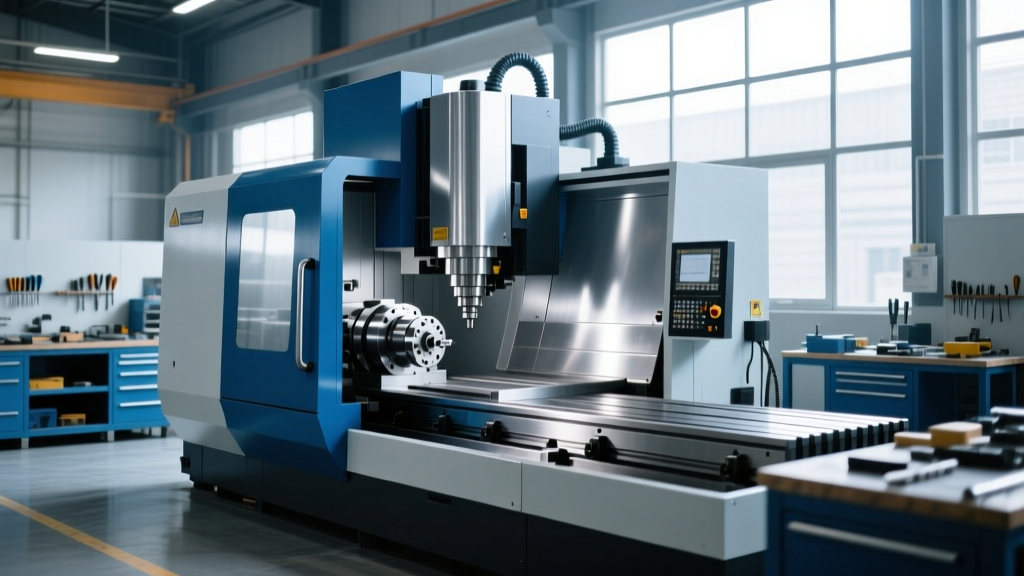
Unlike catalog equipment—such as a standard Haas VF-2 CNC mill or a Fanuc Roboshot injection molder—custom-built machinery lacks decades of field-tested reliability data. Therefore, evaluating a builder's approach to maintenance scheduling, predictive diagnostics, and spare parts logistics must be a primary selection criterion, not an afterthought.
⚠️ 2026 Downtime Cost Reality: According to current industry benchmarks, unplanned downtime in automated assembly now averages $260,000 per hour in high-value sectors like automotive and medical devices. Relying on reactive maintenance for custom-built machinery guarantees severe margin erosion.The Hidden CapEx: Why Maintenance Schedules Dictate TCO
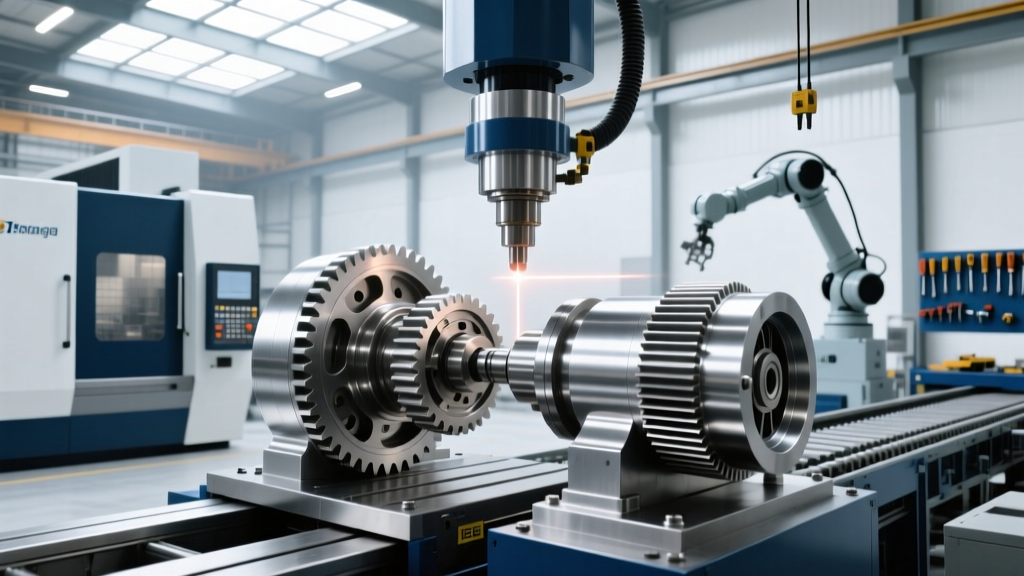
When a machine is designed from scratch, the original equipment manufacturer (OEM) determines the mean time between failures (MTBF) for every custom subsystem. If the builder utilizes proprietary linear actuators, bespoke cam-follower assemblies, or custom-wound servo motors, your maintenance team cannot simply reference standard industry manuals. You are entirely dependent on the OEM's documentation and parts supply.
Aligning with ISO 55000 Asset Management standards, modern manufacturing requires that maintenance schedules be integrated into the asset's lifecycle design. A competent contract equipment manufacturer will provide a reliability block diagram (RBD) and an ISO 14224-compliant failure modes and effects analysis (FMEA) before the machine is even built. If a prospective vendor cannot produce these documents during the quoting phase, their equipment selection criteria should be immediately disqualified.
5 Non-Negotiable Maintenance Criteria for Custom Equipment
1. MTBF and MTTR Contractual Guarantees
Do not accept vague phrases like 'industry standard reliability' in the purchase agreement. Demand specific, measurable hour metrics for critical subsystems based on your exact operational profile. For example, specify that 'custom gantry linear bearings must achieve a minimum 15,000-hour MTBF under continuous 3-shift operation with 5-micron particulate filtration.' Furthermore, mandate a Maximum Time To Repair (MTTR) of under 45 minutes for Tier-1 critical components, enforced by SLA penalty clauses.
2. Predictive Maintenance (PdM) Sensor Architecture
In 2026, edge-based vibration, acoustic, and thermal monitoring is mandatory for high-OEE production lines. Your selection criteria must require the integration of IO-Link smart sensors (such as SKF or Emerson models) and open OPC-UA protocols. This ensures that machine health data flows directly into your plant's Computerized Maintenance Management System (CMMS), rather than being trapped in a black-box OEM portal.
3. Lubrication and Calibration Autonomy
Custom gearboxes and proprietary tooling interfaces often require specialized greases or OEM-only calibration routines. This creates artificial vendor lock-in. Mandate the use of off-the-shelf tribology supplies (e.g., standard Mobilith SHC or Kluber synthetic greases) and require that all calibration parameters be accessible via the HMI without proprietary dongles or passwords.
4. Spare Parts Escrow and Kitting
Global supply chain volatility remains a reality. For highly customized components (like bespoke PLC boards or custom-machined drive shafts), require the manufacturer to hold a dedicated spare parts escrow in a regional warehouse within a 4-hour transit radius of your facility. The initial equipment purchase should include a 'first-out' critical spares kit, physically delivered alongside the machine commissioning.
5. PLC Source Code and HMI Access Rights
The most common maintenance failure in custom equipment occurs when a machine faults, and the in-house controls engineer is locked out of the logic. The contract must explicitly grant the buyer full, unencrypted source code for the PLC (e.g., Siemens S7-1500 or Allen-Bradley ControlLogix) and HMI. 'View-only' access is insufficient for root-cause troubleshooting.
Comparing OEM Service Level Agreements (SLAs)
Not all maintenance support contracts are created equal. When evaluating proposals, use this matrix to differentiate between baseline support and true enterprise-grade partnership.
| SLA Component | Standard OEM Contract | Enterprise-Grade Selection Criteria |
|---|---|---|
| Remote Diagnostics | Email/Phone support during business hours | 24/7 secure VPN tunnel with live PLC monitoring and FSE remote intervention |
| Parts Lead Time | Standard 2-4 week manufacturing lead time | Guaranteed 24-hour dispatch from regional escrow; penalty for delays |
| Preventative Maintenance | PDF manual provided at commissioning | Automated CMMS work-order generation via API based on actual machine run-hours |
| Software Updates | Paid per-incident firmware patching | Included annual security and logic optimization patches with rollback capability |
Auditing the Manufacturer’s Service Network
Technical specifications are useless if the vendor lacks the human infrastructure to support them. According to Deloitte's Smart Factory research, the integration of digital twins and remote service networks is a primary differentiator in modern manufacturing resilience. When auditing a contract equipment manufacturer, evaluate their Field Service Engineer (FSE) density. How many certified technicians are located within a 300-mile radius of your plant? What is their average first-time fix rate?
Custom machinery lacks the historical reliability data of catalog equipment. Buyers must shift the burden of proof to the builder by mandating physics-based failure modeling and digital twin validation during the design phase, ensuring the maintenance schedule is based on empirical data, not guesswork.
Step-by-Step Framework: Negotiating the Maintenance Schedule
To operationalize these criteria, engineering and procurement teams should follow this sequence during the vendor selection process:
- Define Boundary Conditions (Week 1-2): Document your plant's ambient conditions (temperature, humidity, particulate levels), shift patterns, and operator skill levels. Provide this to the OEM so the maintenance schedule is calibrated to your reality, not a sterile lab environment.
- Map the BOM to MTBF (Week 3-4): Require the vendor to submit a Bill of Materials (BOM) cross-referenced with expected MTBF for every moving part. Identify single-source components and demand dual-sourcing or local machining blueprints.
- Establish Penalty Tiers (Week 5-6): Structure the SLA with financial teeth. For instance, if MTTR exceeds 4 hours for a critical fault, the OEM forfeits 2% of the machine's final payment milestone. If spare parts escrow is depleted and not replenished within 7 days, a daily penalty applies.
- Commissioning Validation (Week 12+): Do not sign the Final Acceptance Test (FAT/SAT) until the maintenance team has successfully executed a full teardown, lubrication, and recalibration cycle using only the provided documentation and standard tools.
By embedding rigorous maintenance and service schedule criteria into the vendor selection process, manufacturers ensure that their custom automation investments deliver sustained OEE rather than becoming long-term liabilities.