Smart Cleanrooms in Medical Equipment and Supplies Manufacturing
Explore 2026 cleanroom equipment requirements for medical equipment and supplies manufacturing, featuring smart HVAC, automated gowning, and IoT sensors.
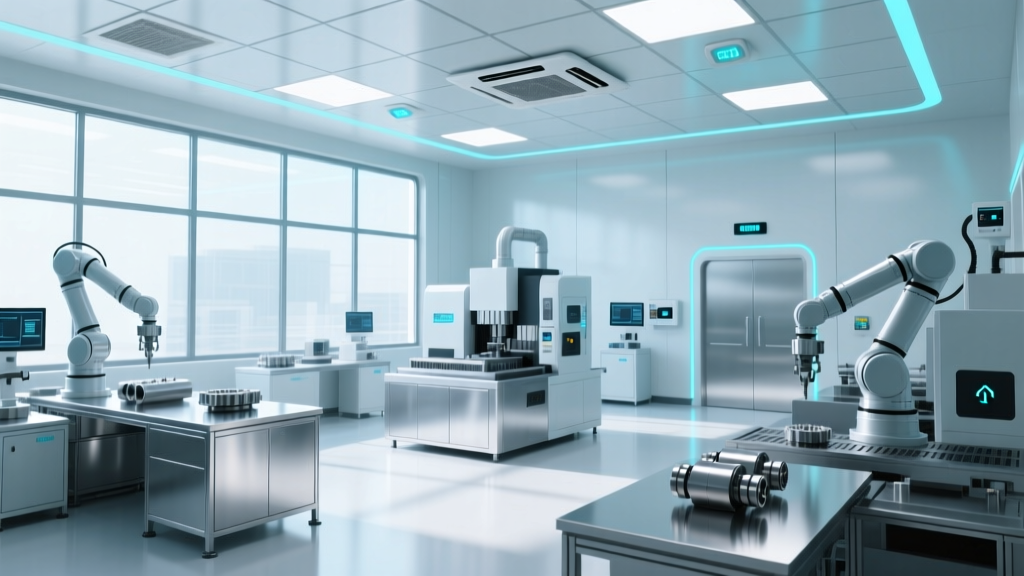
The landscape of medical equipment and supplies manufacturing has shifted dramatically from static, heavily over-pressurized environments to dynamic, IoT-enabled smart cleanrooms. As regulatory bodies tighten particulate and bioburden limits for implantable devices, diagnostic kits, and sterile consumables, facility engineers must integrate advanced computational fluid dynamics (CFD), automated decontamination, and real-time environmental monitoring systems (EMS). This guide details the exact equipment specifications, capital expenditures, and failure-mode troubleshooting required to design a compliant ISO Class 7 or 8 manufacturing suite in 2026.
Baseline Requirements: ISO 14644-1 Classifications and Airflow
Most non-implantable medical supplies (e.g., syringes, IV tubing, surgical drapes) require an ISO Class 8 environment, while critical device assembly and sterile packaging demand ISO Class 7 or higher. The baseline equipment requirement revolves around achieving specific Air Changes per Hour (ACH) and maintaining strict differential pressure cascades.
| ISO Class | Max Particles/m³ (≥0.5 µm) | Required ACH | Primary Filtration | Typical Application |
|---|---|---|---|---|
| ISO 8 | 3,530,000 | 15 - 30 | HEPA (99.99% @ 0.3µm) | Injection molding, raw material staging |
| ISO 7 | 352,000 | 30 - 60 | HEPA / ULPA | Device assembly, sterile packaging |
| ISO 5 | 3,520 | 240 - 600 (Laminar) | ULPA (99.999% @ 0.12µm) | Implantables, aseptic filling |
When manufacturing plastic medical supplies (like petri dishes or microfluidic chips) in ISO 8 environments, high ACH rates strip ambient humidity, causing severe electrostatic discharge (ESD). This attracts particulates to the product surface. Equipment requirement: Install in-line ionizing bars (e.g., Simco-Ion Pinnacle PC) directly above the mold ejection zones, and maintain strict 45% ± 5% relative humidity via the HVAC reheat coils.
Next-Generation HVAC and Computational Fluid Dynamics (CFD)
Traditional cleanrooms rely on constant air volume (CAV) systems that run at 100% capacity 24/7, leading to massive energy waste. Modern ISPE Baseline Guide recommendations now heavily favor Variable Air Volume (VAV) systems integrated with CFD modeling. By utilizing ceiling-mounted Venturi valves and return-air grilles positioned at the perimeter (rather than the center), engineers create a unidirectional 'sweep' that pushes particulates down and out, eliminating dead zones where bioburden can accumulate.
Energy Recovery and Dehumidification
Medical supply manufacturing often requires low-humidity environments to prevent moisture ingress into hygroscopic polymers. Desiccant rotor dehumidifiers are mandatory equipment. A standard 2,000 sq. ft. ISO 7 suite will require a dedicated outdoor air system (DOAS) with a silica gel desiccant wheel capable of delivering supply air at a dew point of 40°F (4.4°C), typically costing between $85,000 and $120,000 for the unit alone.
Material Transfer and VHP Decontamination Equipment
Human traffic and material ingress are the primary vectors for contamination. In 2026, manual wipe-downs of raw materials are being replaced by automated Material Airlocks (MAL) equipped with Vaporized Hydrogen Peroxide (VHP) generators.
- Interlocked Pass-Through Chambers: Must feature magnetic door interlocks and internal HEPA-filtered sweep airflow (minimum 50 CFM) to prevent cross-contamination between the CNC (controlled non-classified) and classified zones.
- VHP Generators: Units like the Bioquell Q-0 or STERIS V-PRO inject H2O2 vapor at concentrations of 700–1,200 ppm. A standard 150-cubic-foot airlock requires a 45-minute injection phase, a 60-minute dwell, and a 90-minute aeration cycle to reach the OSHA safety limit of 1 ppm before the inner door unlocks.
- Aeration Catalysts: To speed up the aeration phase, modern MALs integrate catalytic converters on the exhaust side, reducing cycle times by up to 35% and increasing material throughput.
IoT Environmental Monitoring Systems (EMS)
Compliance with FDA aseptic processing guidelines and IEST recommended practices requires continuous, unalterable data logging. Legacy systems that sample air once per hour are obsolete. Current equipment requirements dictate networked, optical particle counters with 1 CFM (cubic foot per minute) flow rates sampling continuously.
💡 Pro-Tip: Sensor Placement StrategyDo not place particle counters near the HEPA filter face. Position the isokinetic sampling probe exactly 12 inches above the critical work surface (e.g., the assembly conveyor or sterile blister-packaging line). Use 316L stainless steel probes with a bend radius no sharper than 45 degrees to prevent particle impaction and loss inside the sampling tubing.
CapEx Breakdown: 2026 Smart Cleanroom Integration
Budgeting for a modern medical supplies manufacturing cleanroom requires understanding the premium placed on smart integration. Below is an estimated equipment CapEx breakdown for a 3,000 sq. ft. ISO 7/8 hybrid facility.
| Equipment Category | Specific Technology/Brand Example | Estimated Cost Range (USD) |
|---|---|---|
| Modular Wall/Ceiling System | Flush-glazed, non-shedding epoxy-coated aluminum | $180,000 - $240,000 |
| VAV HVAC & DOAS | Desiccant dehumidification + VAV Venturi valves | $250,000 - $320,000 |
| HEPA/ULPA Fan Filter Units | 4x2 FFUs with brushless DC motors (40% ceiling coverage) | $85,000 - $110,000 |
| IoT EMS & Particle Counters | TSI or Particle Plus networked optical sensors + BMS | $45,000 - $65,000 |
| VHP Airlock Systems (x2) | Automated MAL with integrated VHP and catalysts | $90,000 - $130,000 |
Troubleshooting Common Cleanroom Failure Modes
Even with top-tier equipment, integration errors can cause validation failures. Here are three non-obvious failure modes specific to medical equipment manufacturing environments and how to resolve them.
1. HEPA Filter Bypass and Gel Testing Failures
Symptom: The room passes airborne particle counts, but fails PAO (Polyalphaolefin) aerosol leak testing at the filter perimeter.
Root Cause: The gel seal on the HEPA filter frame has degraded, or the knife-edge on the ceiling grid was not perfectly aligned during installation, creating a microscopic bypass channel.
Fix: Mandate that contractors use PAO-4 aerosol and a photometer (e.g., ATI TDA-5C) to scan every inch of the filter perimeter. If a leak is found, the gel must be surgically removed with a specialized scoop tool, the channel cleaned with isopropyl alcohol, and fresh gel injected. Never attempt to 'patch' a gel seal with silicone.
2. Differential Pressure Cascade Collapse
Symptom: The ISO 7 assembly room loses its +0.05” WC (water column) positive pressure relative to the ISO 8 gowning anteroom during shift changes.
Root Cause: Simultaneous door openings defeat the mechanical interlocks, and the VAV system response time (usually 3-5 seconds) is too slow to compensate for the sudden volumetric loss.
Fix: Install a 'vestibule' or air shower between the ISO 8 and ISO 7 zones. Alternatively, program the Building Management System (BMS) to execute a 'door-open override' that instantly commands the supply Venturi valves to 100% open and closes the return dampers the millisecond the door magnetic contact breaks.
3. Epoxy Flooring Outgassing
Symptom: Unexplained VOC (Volatile Organic Compound) spikes and a persistent chemical odor in the cleanroom three weeks after validation.
Root Cause: The facility used a standard industrial epoxy rather than a 100% solids, zero-VOC cleanroom-grade coating. The curing process in low-humidity environments can take up to 60 days, during which it off-gases amines that can contaminate sensitive optical or electronic medical devices.
Fix: Specify methyl methacrylate (MMA) or specialized 100% solids epoxy systems (e.g., Stonhard Stonclad UR) that cure fully within 24 hours and emit zero VOCs post-cure. Always require a third-party off-gassing certificate before moving sensitive manufacturing equipment into the space.