Chinese Poultry Equipment Manufacturers: Batch vs Continuous Lines
Compare batch and continuous poultry processing lines. Learn how Chinese poultry equipment manufacturers optimize throughput, costs, and ROI.
The global poultry processing sector is undergoing a massive structural shift as mid-tier producers scale operations to meet rising protein demands. As of 2026, chinese poultry equipment manufacturers have captured significant market share in emerging economies by offering modular, continuous processing lines at 40% to 60% lower capital expenditure compared to legacy European brands. However, plant managers face a critical operational decision: remain with traditional batch processing or transition to high-speed continuous manufacturing equipment. This comparison explores the technical specifications, economic thresholds, and real-world case studies of both approaches, providing a definitive framework for facility upgrades.
Core Operational Matrix: Batch vs. Continuous Systems
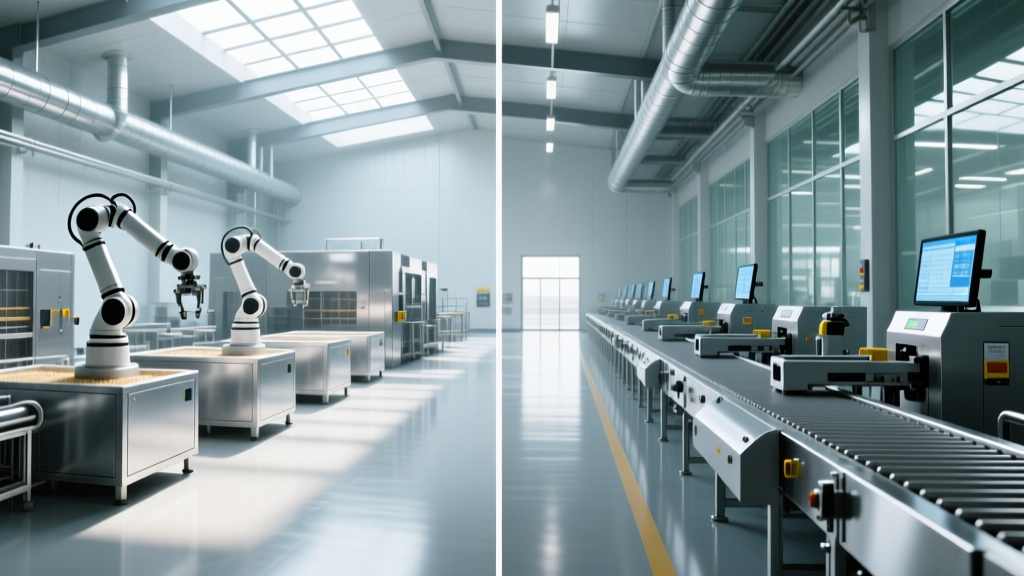
Before evaluating specific machinery, it is essential to understand the fundamental operational differences between batch and continuous processing in a poultry environment. The choice heavily dictates labor requirements, yield retention, and factory footprint.
| Parameter | Batch Processing Systems | Continuous Processing Systems |
|---|---|---|
| Throughput Capacity | 500 – 2,500 BPH (Birds Per Hour) | 4,000 – 14,000+ BPH |
| Labor Requirement | High (manual loading/unloading, sorting) | Low (automated inline transfer, monitoring) |
| CAPEX (FOB Qingdao) | $45,000 – $90,000 per stage | $180,000 – $350,000 per integrated line |
| Yield Loss / Damage | 2.5% – 4.0% (handling bruising, skin tearing) | 0.5% – 1.2% (gentle inline shackling) |
| Footprint | Compact, but requires buffer storage zones | Linear, requires long continuous floor space |
| CIP / Washdown | Manual teardown, high labor intensity | Integrated CIP, automated spray balls |
Evaluating Batch Processing Equipment
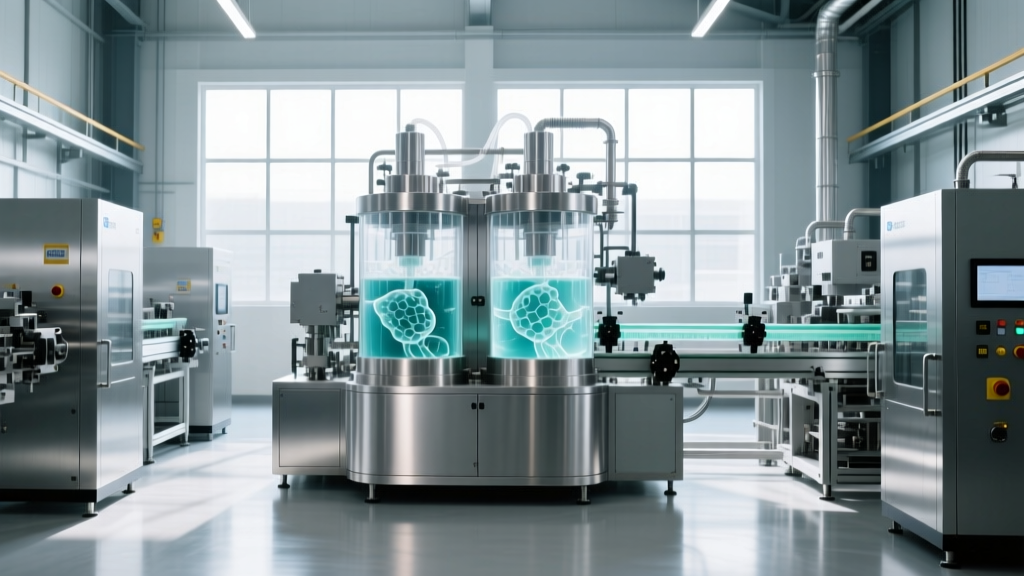
Batch processing relies on discrete, timed cycles where product is loaded into a vessel, processed, and unloaded before the next cycle begins. In poultry manufacturing, this is most commonly seen in marination, tumbling, and small-scale chilling.
Ideal Use Cases & Equipment Profiles
- Vacuum Tumblers: Essential for value-added products like marinated chicken breasts. A standard 500kg capacity Chinese-manufactured vacuum tumbler (pricing between $4,500 and $6,500) operates at variable speeds (4-12 RPM) to massage meat without generating excess heat.
- Batch Ice-Water Chillers: Used in plants processing under 2,000 BPH. Carcasses are submerged in agitated slush tanks. While capital costs are low, batch chilling suffers from cross-contamination risks and higher moisture pickup variance compared to inline alternatives.
- Kettle Fryers: Common in niche, high-bone-in product lines. Batch frying allows for precise, small-run recipe changes but creates bottlenecks due to the thermal recovery time required between batches.
The Continuous Processing Advantage
Continuous systems operate on an uninterrupted flow, utilizing overhead conveyors, screw augers, and linear belts to move product through sequential stages. According to ePoultry extension guidelines, continuous inline processing is mandatory for facilities aiming to minimize bacterial cross-contamination and maximize carcass yield.
Inline Evisceration & Spiral Freezing
Modern chinese poultry equipment manufacturers specialize in high-speed inline evisceration lines rated for 6,000 to 12,000 BPH. These systems utilize automated venting, crop-pulling, and giblet harvesting machines synchronized to the shackle line pitch (typically 6-inch or 8-inch spacing).
For thermal processing, continuous spiral freezers have replaced batch blast rooms. A dual-drum spiral freezer with a 2.5-ton/hour capacity utilizes vertical airflow and stainless steel (SUS304) mesh belts to reduce core carcass temperatures from 35°C to -18°C in under 90 minutes. The continuous nature eliminates the 'hot spots' common in batch blast rooms, ensuring uniform ice crystal formation and preserving meat texture.
'The transition from batch scalding to continuous counter-flow scalders alone can improve feather release by 14% while reducing water consumption by 30%, a critical metric for plants facing strict municipal effluent regulations.' — Industrial Poultry Processing Journal, 2025.
Case Study: 8,000 BPH Facility Upgrade in Vietnam
To illustrate the economic and operational impact of this transition, consider a 2025 facility upgrade by a mid-sized poultry integrator in Vietnam. The plant needed to scale from a 3,000 BPH semi-manual batch operation to an 8,000 BPH fully automated continuous line to fulfill new export contracts.
Equipment Sourcing & Integration
The integrator sourced the core continuous line from a Tier-1 Shandong-based Chinese OEM. The package included:
- Continuous Counter-Flow Scalding Tank: Multi-stage temperature control (52°C to 58°C) to prevent epidermal damage.
- Inline Evisceration Carousel: 8,000 BPH rated, featuring automatic crop removers and venting tools.
- Continuous Screw Chiller: 12-meter auger system with integrated chlorine dioxide dosing pumps.
Financial & Operational ROI
The total FOB cost for the Chinese continuous line was $285,000, compared to quoted prices of $520,000 from European alternatives. Including shipping, installation supervision, and local electrical integration, the total CAPEX was $340,000.
Results after 8 months of operation:
- Labor Reduction: Evisceration staff reduced from 24 manual operators to 4 line monitors.
- Yield Improvement: Carcass tearing dropped from 3.2% to 0.8%, saving an estimated $11,500 monthly in downgraded product losses.
- ROI Timeline: The system achieved full payback in 14.5 months, driven by labor savings and increased export-grade yield.
Technical Sourcing Framework for Chinese OEMs
When procuring continuous manufacturing equipment from Chinese suppliers, buyers must look beyond the sticker price. The FAO manual on poultry processing emphasizes that equipment hygiene and material integrity are paramount. Use this technical checklist during vendor negotiations:
1. Material Specifications & Welding Standards
Do not accept generic 'stainless steel' claims. Mandate SUS304 for all structural frames, guarding, and non-contact surfaces. For components exposed to high-salinity marinades, CIP (Clean-in-Place) chemicals, or high-chlorine chill water, specify SUS316L. Furthermore, require TIG welding with continuous, polished seams (Ra ≤ 0.8 µm) to prevent Listeria harborage points—a common failure mode in cheaper, spot-welded batch equipment.
2. Motor & Drive Ingress Protection
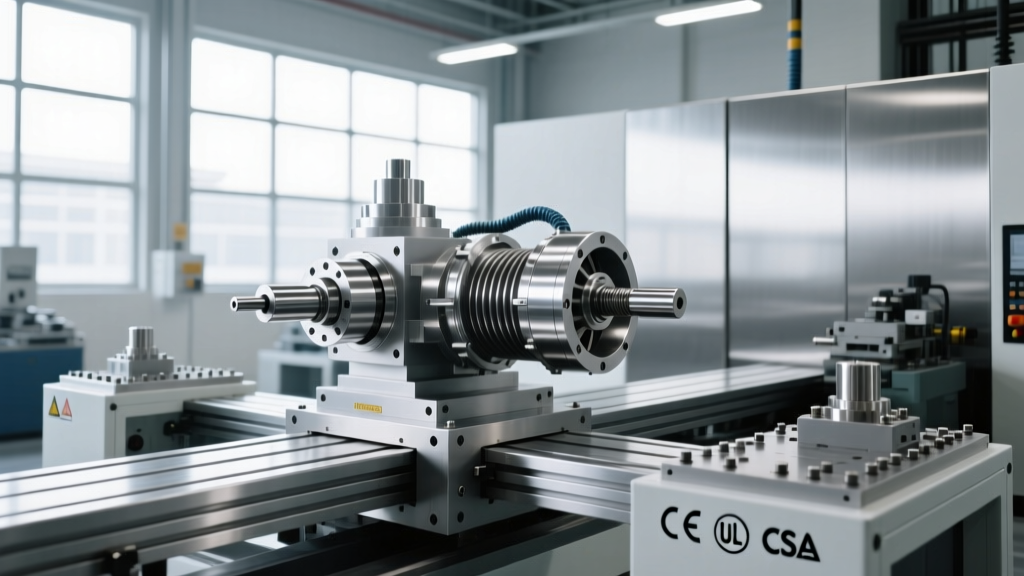
Poultry processing environments require daily high-pressure, high-temperature washdowns. Standard IP65 motors will fail within 18 months due to moisture ingress during caustic cleaning cycles. Specify IP69K-rated gearmotors. Additionally, ensure the OEM supplies motors configured for your local grid (e.g., 480V/60Hz for the Americas, or 400V/50Hz for Europe/Asia) paired with variable frequency drives (VFDs) like Siemens or Inovance for precise line-speed synchronization.
3. PLC & SCADA Integration
Modern continuous lines require centralized control. Require the Chinese manufacturer to integrate a recognized PLC platform (such as the Siemens S7-1200 or Allen-Bradley Micro850) with an open Ethernet/IP protocol. This allows your plant's existing SCADA system to monitor motor loads, track BPH throughput, and trigger automated CIP sequences without relying on proprietary, closed-loop Chinese software that may lack long-term local support.
💡 Pro Tip for Importers: Always request a Factory Acceptance Test (FAT) via live video link before the equipment is crated. Run the continuous shackle line at 110% of its rated BPH for 4 hours to check for chain stretch, gearbox overheating, and shackle pitch alignment. Catching mechanical tolerances in Shandong is infinitely cheaper than correcting them on your factory floor.Final Verdict: Making the Transition
Batch equipment retains a valid role in small-scale, highly customized, or value-added marination processes where flexibility outweighs throughput. However, for primary slaughtering, evisceration, and thermal processing, continuous manufacturing equipment is the undisputed standard for profitability and food safety. By leveraging the aggressive pricing and rapidly improving engineering standards of chinese poultry equipment manufacturers, mid-sized processors can execute continuous line upgrades that deliver European-tier performance at a fraction of the historical capital cost.