Material Handling and Lifting Equipment: Hoist & Winch Training Guide
Master vertical transport safety with our operator training guide for material handling and lifting equipment, focusing on hoist and winch best practices.
Vertical Transport Dynamics: Beyond Basic Certification
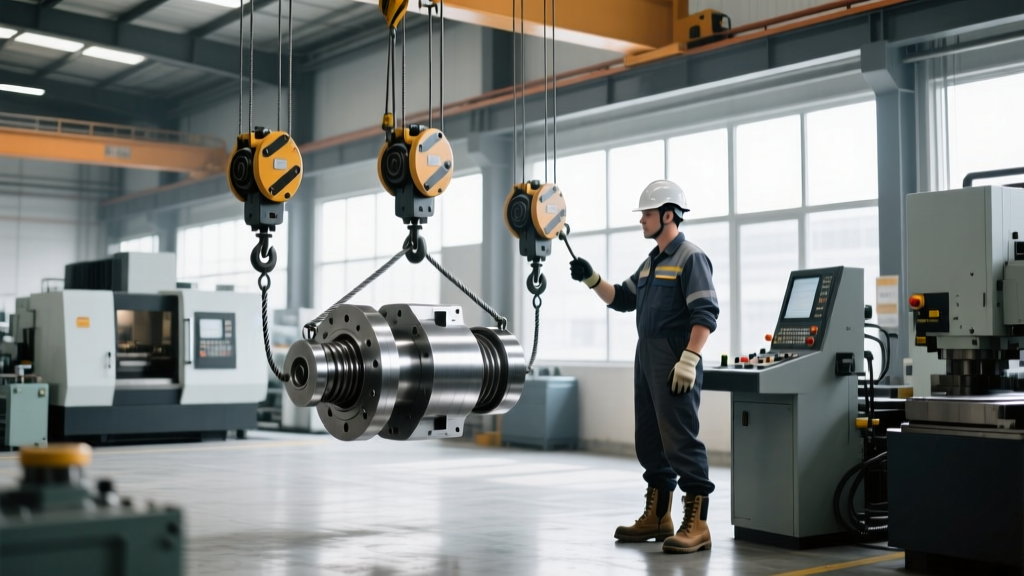
Operating material handling and lifting equipment in vertical applications requires a fundamental understanding of load physics, mechanical limitations, and strict adherence to ASME and OSHA standards. While basic certification covers elementary controls, advanced operator training must address the specific failure modes of hoist and winch systems. In 2026, the integration of synthetic rigging and variable frequency drive (VFD) hoists has altered traditional load behaviors, demanding updated inspection and operational protocols.
Vertical transport incidents rarely occur without precursor warnings. The majority of catastrophic drops stem from undetected brake degradation, improper rigging angles, or the fatal misapplication of pulling winches for vertical lifting. This guide details the exact mechanical thresholds and operational frameworks required to maintain zero-incident vertical transport environments.
Pre-Shift Inspection Protocols: Chain vs. Wire Rope
Visual inspections are insufficient for modern high-capacity hoists. Operators must perform quantitative measurements on load-bearing media before every shift. The criteria differ drastically between chain and wire rope systems.
Chain Hoist Elongation Thresholds
For alloy steel chain hoists (such as the CM 633 Lodestar or Harrington NER series), chain stretch is the primary indicator of metal fatigue and overloading. Operators must use a calibrated caliper to measure a 5-link span.
- Nominal Pitch: Measure the distance across 5 links under slight tension.
- Rejection Criteria: If elongation exceeds 5% of the original factory pitch, the entire chain assembly must be scrapped. Do not attempt to replace individual links.
- Wear Inspection: Check interlink bearing surfaces. Grooving deeper than 10% of the link diameter indicates severe internal friction wear.
Wire Rope Discard Criteria
Wire rope hoists (like the Kito ER2 or Yamaha YL series) require meticulous strand counting. According to OSHA 1910.179 standards for overhead and gantry cranes, wire rope must be immediately replaced under the following conditions:
- Six randomly distributed broken wires in one rope lay.
- Three broken wires in one strand in one rope lay.
- Evidence of 'birdcaging' (strand extrusion) or severe kinking.
- Loss of more than 1/3 of the original diameter of the outside wires due to abrasion.
When operating winch systems with telescopic or articulating booms, allowing the hook block to contact the boom tip (two-blocking) transfers the entire winch line tension to the boom structure. This routinely exceeds the structural yield strength of the boom, resulting in immediate catastrophic collapse. Modern anti-two-block (ATB) limit switches must be physically tested with a secondary line pull before every shift.
Winch vs. Hoist: The Lethal Misapplication
A pervasive and highly dangerous practice in industrial yards is using a winch for vertical lifting. While both devices utilize drums and wire/synthetic rope, their engineering paradigms are entirely distinct. Operators must understand the mechanical boundaries defined by OSHA crane and hoisting certification standards.
| Feature | Industrial Hoist (ASME B30.16) | Pulling Winch (ASME B30.7) |
|---|---|---|
| Primary Brake | Mechanical load brake (automatically engages upon power loss, holds 100%+ of rated load dynamically). | Dynamic braking via motor or manual band brake (not designed to hold suspended vertical loads indefinitely). |
| Drum Design | Grooved to prevent rope overlap; flanges extend past maximum wrap. | Smooth or lightly grooved; designed for horizontal spooling under high tension. |
| Safety Factor | Minimum 5:1 for wire rope, 4:1 for chain. | Typically 3:1 to 4:1 for horizontal pulling loads. |
| Vertical Lifting | Engineered and legally permitted for vertical suspension. | STRICTLY PROHIBITED for vertical personnel or free-suspended loads. |
If a load must be lifted vertically, a dedicated hoist with a mechanical load brake must be utilized. Winch brakes will overheat and slip under static vertical suspension, leading to dropped loads.
Load Dynamics and Rigging Angle Multipliers
When connecting the hoist hook to the load via slings, the angle of the sling legs drastically alters the tension applied to both the rigging and the hoist's upper sheave block. Operators must calculate the tension multiplier to ensure the Working Load Limit (WLL) is not exceeded. As detailed in the OSHA 1910.184 slings standard, the horizontal angle from the load is the critical metric.
Sling Tension Multiplier Matrix
| Sling Angle (from Horizontal) | Tension Multiplier | Impact on 2,000 lb Load (2-Leg Sling) |
|---|---|---|
| 90° (Vertical) | 1.000 | 1,000 lbs per leg |
| 60° | 1.155 | 1,155 lbs per leg |
| 45° | 1.414 | 1,414 lbs per leg |
| 30° | 2.000 | 2,000 lbs per leg |
| DANGER ZONE: Angles below 30° generate exponential horizontal crushing forces on the load and frequently exceed hoist block side-load tolerances. | ||
Advanced Troubleshooting: Recognizing Mechanical Failure Modes
Experienced operators do not wait for a component to snap; they listen and feel for degradation. VFD-equipped hoists mask certain mechanical sounds, requiring operators to perform specific diagnostic tests.
1. Brake Slip Diagnosis
Symptom: The load drifts downward micro-inches when the hoist is holding static, or the motor hums during a static hold.
Action: Perform a 'no-load' brake test. Raise the empty hook block 10 feet, cut main power at the disconnect (not the pendant), and measure drift over 60 seconds. Any drift indicates oil contamination on the brake disc or worn friction pads. Immediate teardown is required.
2. Planetary Gear Whine
Symptom: A high-pitched oscillating whine that changes frequency with motor RPM, common in Kito and Harrington chain hoists.
Action: This indicates inadequate lubrication in the planetary gear train or misalignment of the sun gear. Continued operation will result in gear tooth shearing and an uncontrolled load drop. Tag out the equipment and schedule a gearbox oil analysis.
3. Contactor Chattering
Symptom: Rapid clicking from the electrical panel when inching the hoist.
Action: This is typically caused by pitted contactor surfaces or low control voltage (below 90% of nominal). Pitted contactors can weld together in the 'closed' position, meaning the hoist will continue to run even if the operator releases the pendant button. Replace contactors annually in high-cycle environments.
"The transition to Dyneema SK78 synthetic ropes in industrial winching has eliminated the danger of wire rope snap-back, but it introduced new vulnerabilities. Synthetic ropes suffer from internal abrasion and UV degradation that is invisible to the naked eye. Operators must track cumulative UV exposure hours and enforce mandatory retirement schedules regardless of visual condition."
— 2026 Industrial Rigging Safety Symposium Report
Environmental Degradation and Derating Protocols
Hoist capacity plates assume standard operating conditions (ambient temperature, clean air). Operators working in extreme environments must apply manual derating factors to the equipment's WLL.
- High-Temperature Environments (Foundries, Forges): Standard alloy chains lose tensile strength above 400°F (204°C). If operating near molten metal, the WLL must be derated by 25%, and heat-treated latch hooks must be replaced with heavy-duty alloy latch hooks to prevent latch deformation.
- Corrosive Environments (Chemical Plants, Marine): Zinc-plated chains offer minimal protection. Specify stainless steel (Grade 316) chain hoists or apply a heavy-duty epoxy coating. Inspect for hydrogen embrittlement, which causes sudden, brittle fractures in high-strength steel exposed to acidic vapors.
- Side-Pulling: Hoists are designed for pure vertical tension. Side-pulling the load block forces the chain or wire rope against the guide flanges, causing rapid, asymmetric wear. If lateral movement is required, utilize a motorized trolley system rather than dragging the hook.
Mastery of vertical material transport requires treating the hoist not as a simple motorized pulley, but as a precision mechanical system bound by strict physical laws. By enforcing quantitative pre-shift inspections, respecting the mechanical boundaries between winches and hoists, and actively monitoring for acoustic and tactile failure signatures, operators can eliminate the variables that lead to catastrophic vertical drops.