CNC Horizontal Machining Center Manufacturers: 2026 Cost Analysis
Compare top CNC horizontal machining center manufacturers with our 2026 cost analysis. Break down CapEx, automation, and TCO for 400-800mm HMCs.
The True Capital Expenditure of Tier-1 vs. Tier-2 HMCs
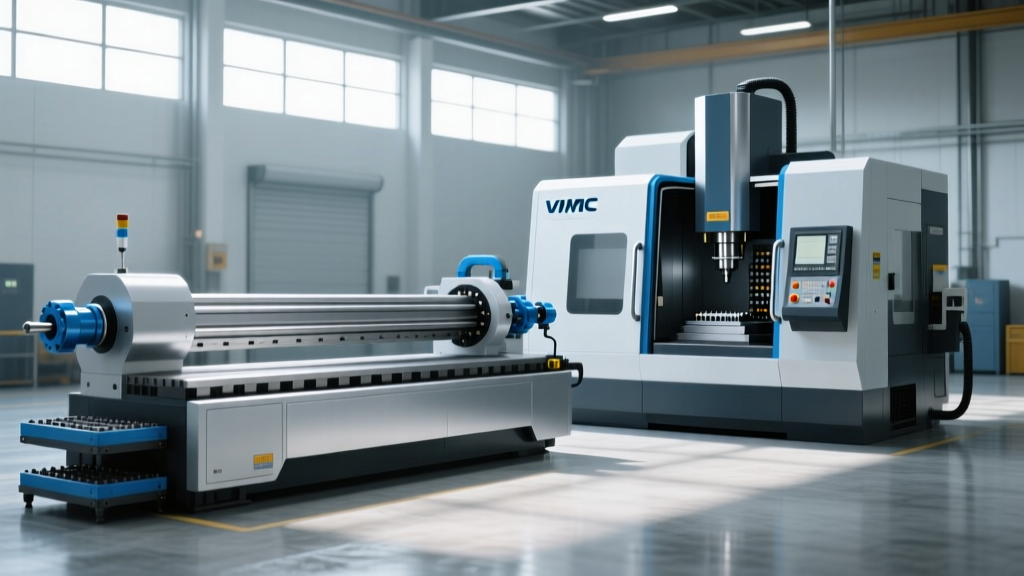
Procuring a horizontal machining center (HMC) requires moving far beyond the base machine sticker price. When evaluating cnc horizontal machining center manufacturers, buyers frequently underestimate the compounding costs of automation integration, proprietary control licensing, and long-term spindle maintenance. In 2026, the capital expenditure (CapEx) gap between Tier-1 Japanese and European builders and Tier-2 alternatives has narrowed in base pricing, but diverged sharply when configuring fully loaded production cells.
The 500mm pallet segment remains the industry workhorse for high-volume automotive, aerospace, and heavy machinery components. Below is a realistic 2026 pricing matrix comparing base machine costs against fully loaded configurations, which include a 6-pallet pool, 150-bar high-pressure coolant (HPC), through-spindle air blast, and advanced probing packages.
| Manufacturer (Model) | Base Price (Standalone) | Fully Loaded (6-Pallet + HPC) | Native Control System |
|---|---|---|---|
| Makino (a51nx) | $245,000 | $510,000 | Pro5 |
| Okuma (MA-500HIII) | $265,000 | $535,000 | OSP-P500 |
| Mazak (HCN-5000) | $235,000 | $485,000 | Mazatrol SmoothAi |
| DN Solutions (DNM 500H) | $195,000 | $390,000 | Fanuc 0i-F Plus |
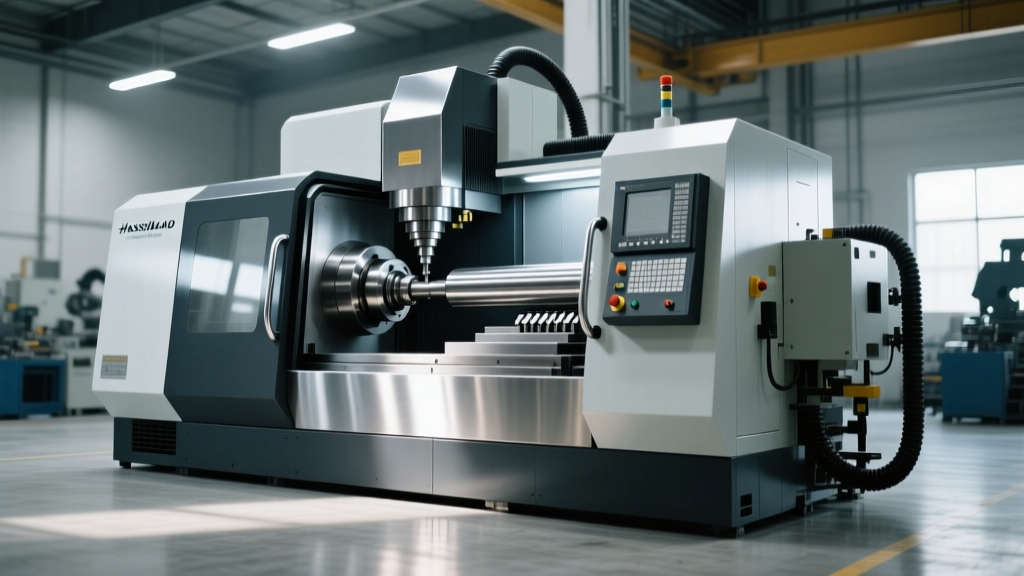
| Haas (EC-500) | $149,000 | $275,000 | Haas NGC |
According to market data tracked by The Association For Manufacturing Technology (AMT), the average transaction price for a fully tooled and automated 500mm HMC cell has increased by 14% since 2023, driven largely by the cost of integrated pallet automation and advanced thermal compensation software.
The Automation Multiplier: Budgeting for Pallet Pools
A standalone HMC operating in a typical job shop environment rarely exceeds 35% spindle utilization due to setup times, tool changes, and operator breaks. The primary financial justification for selecting premium cnc horizontal machining center manufacturers is their native integration with Flexible Manufacturing Systems (FMS) and pallet pools.
Budgeting Rule of Thumb: Expect to add $22,000 to $28,000 per additional pallet to your base automation budget. A 6-pallet Mazak Palletech or Makino MMC2 system will add roughly $140,000 to $180,000 to the machine's base price, factoring in the physical racks, rotary loaders, and centralized cell controller software licenses.When planning your budget, you must also account for the footprint and facility modifications required for these systems. A 12-pallet linear system requires a reinforced concrete foundation to maintain geometric accuracy across the rail system, often adding $15,000 to $25,000 in specialized rigging and foundation pouring costs.
Hidden Software and Control Licensing Costs
The control unit is not a one-time hardware purchase; it is a software ecosystem with distinct licensing traps. Manufacturers utilize different strategies to monetize advanced features:
- Fanuc (DN Solutions, Haas, Kitamura): Base controls often lack AICC (Advanced Intelligent Contour Control) or NURBS interpolation. Upgrading to a Fanuc 31i-B with full 5-axis simultaneous options (if utilizing a B-axis rotary table on the HMC) can add $18,000 to the initial invoice.
- Proprietary Controls (Mazatrol, Okuma OSP): These builders bundle advanced thermal stability and collision avoidance into the base price, but charge premium annual subscription fees for remote telemetry, AI-driven tool life prediction, and cloud-based CAD/CAM integration modules.
Infrastructure and Utility Requirements
Horizontal machining centers generate massive chip volumes and require robust facility infrastructure. Failing to budget for these peripheral systems is a leading cause of project delays. The Society of Manufacturing Engineers (SME) emphasizes that peripheral equipment can account for up to 25% of the total cell installation cost.
Chip Management and Coolant Filtration
Unlike vertical machining centers (VMCs) where chips fall into a localized pan, HMCs eject chips laterally at high velocities. You must budget for heavy-duty chip conveyors:
- Hinge-Belt Conveyors ($6,000 - $9,000): Suitable for aluminum and steel, but prone to jamming with stringy, gummy materials like 300-series stainless steel.
- Scraper-Type Conveyors ($12,000 - $16,000): Mandatory for titanium and high-temperature alloys. They utilize a drag-chain mechanism that prevents chip nesting and jamming.
- Coolant Filtration (HPC Systems): Running 150-bar coolant through a spindle requires a multi-stage filtration system (down to 10 microns) to prevent ceramic bearing degradation. Budget $35,000 to $55,000 for a centralized, self-cleaning drum filter system capable of handling the 200+ gallon sump capacity of a modern HMC.
Total Cost of Ownership (TCO): Spindle and Way Cover Economics
To accurately compare cnc horizontal machining center manufacturers, you must model the 10-year Total Cost of Ownership. The two most expensive mechanical failure points on an HMC are the spindle assembly and the telescopic way covers.
"In high-volume environments running 24/7, an HMC spindle will typically require a rebuild between 12,000 and 18,000 hours. The cost variance between Tier-1 proprietary rebuilds and independent spindle shops is a critical factor in long-term budgeting." — Manufacturing Extension Partnership Tooling Guidelines, NIST MEP.
Spindle Rebuild Cost Matrix
| Spindle Specification | Tier-1 OEM Rebuild Cost | Independent Shop Rebuild | Lead Time (OEM vs. Indie) |
|---|---|---|---|
| 15,000 RPM BIG-PLUS (BT40/BT50) | $22,000 - $28,000 | $9,000 - $13,000 | 6-8 Weeks / 2-3 Weeks |
| 20,000 RPM HSK-A63 | $34,000 - $42,000 | $16,000 - $20,000 | 8-12 Weeks / 4-6 Weeks |
Tier-1 manufacturers like Makino and Okuma often require that spindle replacements be performed by their certified technicians, adding $1,800 per day in labor plus travel expenses. Conversely, builders utilizing standardized, off-the-shelf spindles (like certain DN Solutions or Haas models) allow shops to utilize local, specialized spindle repair facilities, drastically reducing downtime and cost.
Way Cover Degradation
Horizontal way covers are subjected to constant chip bombardment and heavy coolant exposure. Telescopic steel covers on the X and Z axes of a 500mm HMC cost between $14,000 and $22,000 to replace. Some manufacturers offer upgraded polyurethane bellows or reinforced steel shields with integrated air-purge systems for an additional $8,000 upfront. If you are machining abrasive materials like cast iron or fiberglass composites, this upfront upgrade prevents a $20,000 replacement cost in year three.
Strategic Sourcing Framework for 2026
Selecting the right manufacturer depends entirely on your shop's utilization targets and material mix. Use this decision framework to align your budget with the correct builder tier:
- The High-Volume Aerospace Cell (75%+ Utilization): Choose Makino or Okuma. The CapEx is highest ($500k+ per cell), but their proprietary thermal stability algorithms and rigid pallet pools guarantee sub-10-micron tolerances over 72-hour unattended weekend runs. The ROI is achieved through the elimination of manual in-process probing and scrap reduction in high-value Inconel or titanium forgings.
- The Agile Job Shop (40-60% Utilization): Choose Mazak or DN Solutions. Mazak's SmoothAi control allows for incredibly fast, conversational programming at the machine, reducing setup times for high-mix, low-volume work. DN Solutions offers the best price-to-performance ratio for shops that need horizontal capacity but cannot justify a half-million-dollar automation cell.
- The Budget-Conscious Production Line: Choose Haas. While the EC-500 lacks the extreme rigidity and thermal mass of a Japanese HMC, its $275,000 fully loaded price point and universally understood NGC control make it the undisputed leader for shops machining aluminum, plastics, and mild steels where extreme cycle-time shaving is not the primary profit driver.
Ultimately, budgeting for an HMC requires treating the machine not as a standalone asset, but as the central node of a manufacturing cell. By accurately forecasting the costs of automation, high-pressure coolant infrastructure, and long-term spindle maintenance, procurement teams can avoid the severe margin erosion that occurs when hidden CapEx and TCO variables are ignored.