2026 Innovations Reshaping the Heavy Equipment Front Loader
Discover how AI, electro-hydraulics, and 400-kWh battery packs are transforming the heavy equipment front loader market in 2026. Expert tech analysis.
The architecture of the modern heavy equipment front loader has fundamentally diverged from its diesel-mechanical predecessors. As of 2026, the transition from traditional load-sensing hydraulics to software-defined, electro-hydraulic systems and high-capacity battery electric drivetrains is no longer a conceptual pilot—it is the baseline for mid-to-large class production models. Fleet managers and owner-operators are now evaluating these machines not just on breakout force and tipping load, but on thermal management efficiency, megawatt charging compatibility, and AI-driven cycle optimization.
The Electro-Hydraulic Paradigm Shift
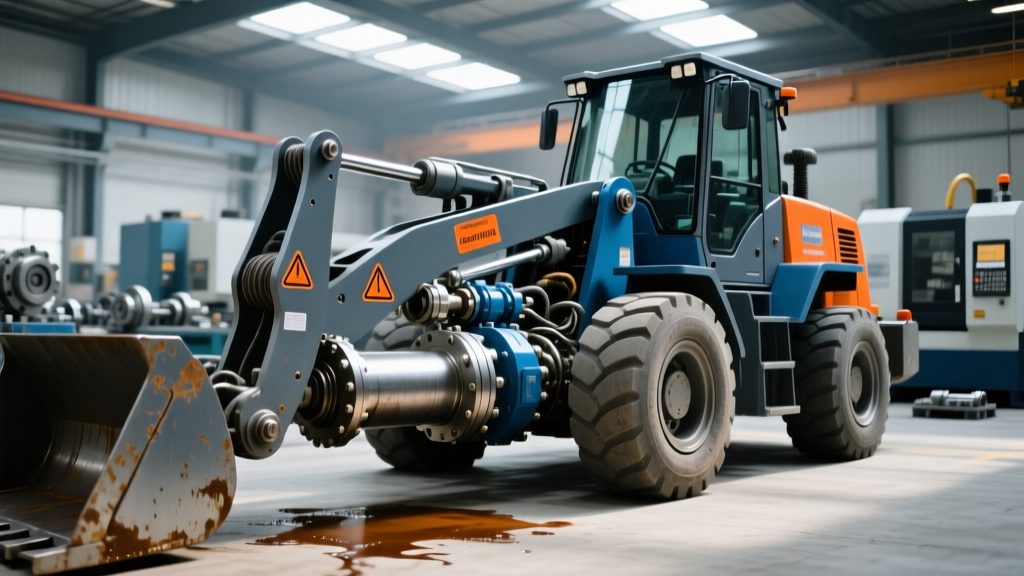
Historically, a heavy equipment front loader relied on a single, engine-driven variable displacement pump to feed multiple hydraulic circuits (steering, lift, tilt, and auxiliary). This mechanical coupling resulted in significant parasitic energy loss, as excess flow was bled off through relief valves, generating waste heat. The 2026 generation of wheel loaders eliminates this inefficiency through independent, electric motor-driven hydraulic pumps for each specific circuit.
By decoupling the hydraulic pumps from the internal combustion engine (or traction motor in BEV models), manufacturers like Caterpillar and Komatsu have reduced hydraulic energy consumption by up to 22%. Furthermore, the integration of digital electro-hydraulic proportional valves allows for micro-metering of hydraulic fluid. This means the loader's tilt and lift functions can be programmed with specific kinematic profiles, preventing the aggressive 'dump shock' that historically accelerated pin and bushing wear in the Z-bar linkage.
2026 Fleet ROI Snapshot: Class 8 (10-12 Ton) Loaders
- Energy Cost Reduction: 68% lower cost per operating hour (comparing grid-tied BEV vs. Tier 4 Final diesel at $4.10/gallon).
- Maintenance Interval Extension: Hydraulic fluid change intervals extended from 2,000 to 4,000 hours due to 35% lower average operating temperatures.
- Brake Wear: 90% reduction in mechanical brake wear via aggressive regenerative braking mapping during the reverse-and-decelerate phase of the V-cycle.
Battery Chemistries and Megawatt Charging Infrastructure
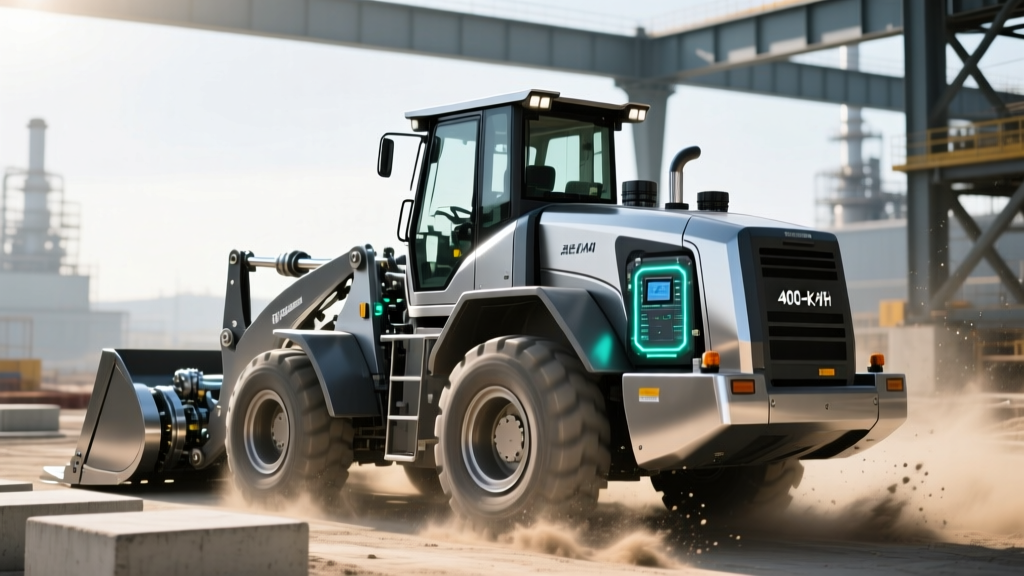
The battery electric heavy equipment front loader segment has largely standardized on Lithium Iron Phosphate (LFP) chemistry over Nickel Manganese Cobalt (NMC) for 2026 models. While LFP has a roughly 15% lower volumetric energy density, its superior thermal stability and 3,000+ cycle life make it vastly superior for the high-vibration, high-ambient-temperature environments of quarries and aggregate yards. A typical 10-ton class electric loader now utilizes a 420-kWh LFP pack, providing enough energy for 5.5 to 6 hours of continuous, high-intensity load-and-carry work.
However, the bottleneck has shifted from battery capacity to charging speed. Standard 350-kW CCS2 chargers require over 70 minutes to charge a 420-kWh pack from 20% to 80%, which disrupts multi-shift operations. The industry is actively deploying the Megawatt Charging System (MCS). According to the U.S. Department of Energy, MCS infrastructure capable of delivering 1 MW to 1.2 MW of continuous power can reduce that same 20-80% charge window to just 18 minutes. Site planners must now account for 1.5 MVA dedicated transformer capacity per charging depot to support a fleet of three to four MCS-equipped loaders.
AI-Driven Cycle Optimization and Sensor Fusion
The modern heavy equipment front loader is essentially a rolling data center. Machine learning algorithms now govern the payload weighing systems, which historically suffered from inaccuracies due to hydraulic fluid temperature fluctuations and linkage geometry variances. In 2026, solid-state strain gauges mounted directly on the lift cylinder pins feed data into an onboard neural network. This system continuously cross-references hydraulic pressure, fluid temperature, boom angle, and accelerometer data to calculate payload weight with a ±0.5% accuracy, even while the machine is traversing uneven terrain.
Volvo Construction Equipment and other OEMs have also integrated solid-state LiDAR arrays into the cab roof structure. This sensor fusion allows the loader to generate real-time volumetric maps of stockpiles. The onboard AI then calculates the optimal dig trajectory and bucket curl angle to achieve a 100% fill factor in a single pass, reducing cycle times by an average of 1.4 seconds per truck load.
2026 Powertrain Comparison Matrix
| Powertrain Type | Est. CapEx (USD) | Energy Cost / Hr | Best Application Profile |
|---|---|---|---|
| Diesel (Tier 4 Final) | $285,000 | $44.50 | Remote sites, high-mobility roading, extreme cold (< -10°F) |
| Battery Electric (BEV) | $415,000 | $13.20 | Fixed-site aggregate, indoor tunneling, noise-restricted urban zones |
| Hydrogen Fuel Cell (FCEV) | $560,000 | $61.00 | 24/7 multi-shift heavy port operations with on-site green H2 generation |
Tele-Operation and the Latency Imperative
Remote operation of the heavy equipment front loader has moved from novelty to necessity in hazardous environments like slag handling and underground mining. The critical metric for 2026 tele-operation is network latency. Operating a 12-ton loader requires sub-20 millisecond latency to maintain the operator's spatial awareness and prevent motion sickness induced by visual-haptic desynchronization. Private 5G networks operating on CBRS (Citizens Broadband Radio Service) spectrum are now standard for large-scale sites, providing the dedicated bandwidth and ultra-reliable low-latency communication (URLLC) required.
Furthermore, remote operator stations now feature active haptic feedback joysticks. When the loader's bucket teeth strike a solid rock stratum, the hydraulic pressure spike is instantly translated into resistance on the remote joystick, allowing the operator to 'feel' the dig face from a control room miles away.
Real-World Implementation Gotchas and Edge Cases
Despite the massive technological leaps, fleet managers must navigate several non-obvious edge cases when deploying next-generation loaders:
- Thermal Throttling in High Ambient Heat: When operating in ambient temperatures exceeding 105°F (40°C), the Battery Thermal Management System (BTMS) will prioritize cooling the LFP cells over traction power. This can result in a 10% to 14% temporary derate in breakout force. Sites in the American Southwest or Middle East must specify loaders with oversized liquid-cooling loops and high-capacity glycol reservoirs.
- Regenerative Braking Limitations on Inclines: While regenerative braking excels on flat ground, fully loaded loaders traveling up sustained 8% grades will quickly saturate the battery's charge acceptance rate. Operators must be trained to rely on mechanical retarders and service brakes in these specific topographical scenarios to prevent overspeed faults.
- Electro-Hydraulic Calibration Drift: Unlike mechanical linkages, digital hydraulic valves require software calibration. If a lift cylinder is replaced in the field, the new cylinder's internal friction characteristics must be mapped via the OEM's diagnostic software. Failing to run the 15-minute automated calibration routine will result in jerky boom movements and premature seal failure.
"The heavy equipment front loader is no longer just a brute-force digging tool; it is a highly calibrated cyber-physical system. The contractors who will dominate the next decade are those who treat their equipment software updates and data telemetry with the same rigor as their preventative mechanical maintenance."
Procurement decisions in 2026 must look beyond the spec sheet's static numbers. Evaluating the heavy equipment front loader requires a deep understanding of your site's electrical infrastructure, the specific thermal demands of your climate, and the digital maturity of your maintenance team. By aligning the machine's software and powertrain architecture with your exact operational profile, you can unlock unprecedented gains in both cost-per-ton and overall fleet utilization.