Is a Skid Steer Considered Heavy Equipment? Maintenance Schedules
Is a skid steer considered heavy equipment? Discover how this classification impacts OSHA rules, maintenance schedules, and service costs for top models.
The Regulatory Verdict: Is a Skid Steer Considered Heavy Equipment?
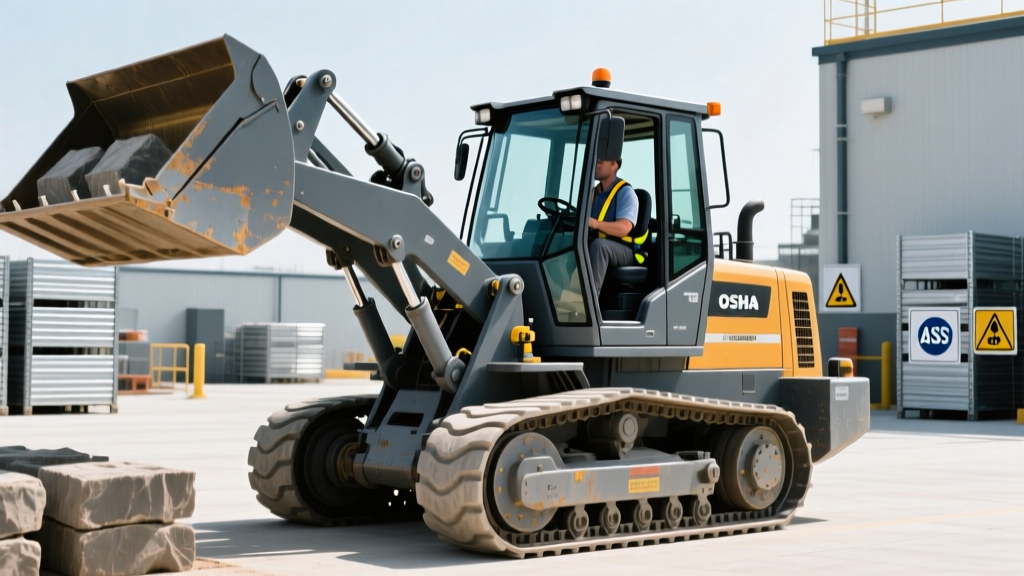
When fleet managers and site supervisors ask, 'Is a skid steer considered heavy equipment?', the answer is a definitive yes. Under the Occupational Safety and Health Administration (OSHA) guidelines, specifically within 29 CFR 1926 Subpart O, skid steer loaders are classified as heavy earthmoving equipment. Furthermore, the Association of Equipment Manufacturers (AEM) categorizes them as compact heavy machinery. This distinction is not merely semantic; it legally dictates the rigor, documentation, and frequency of your maintenance and service schedules.
Unlike light-duty utility vehicles, heavy equipment classification mandates that skid steers undergo documented daily pre-start inspections, strict adherence to manufacturer preventative maintenance (PM) intervals, and specialized fluid management protocols. Failing to treat a skid steer with the same maintenance rigor as a 20-ton excavator or a D6 bulldozer is a primary cause of catastrophic hydraulic failure and OSHA compliance violations on commercial job sites.
OSHA Compliance Warning: According to OSHA Standard 1926.600, all heavy equipment must be inspected prior to each shift. For skid steers, this legally requires checking hydraulic hoses for weeping, testing the parking brake and seat interlock switches, and verifying the operation of the lift arm lock. Maintenance logs must be kept on-site or digitally accessible for auditing.The Heavy Equipment Maintenance Matrix
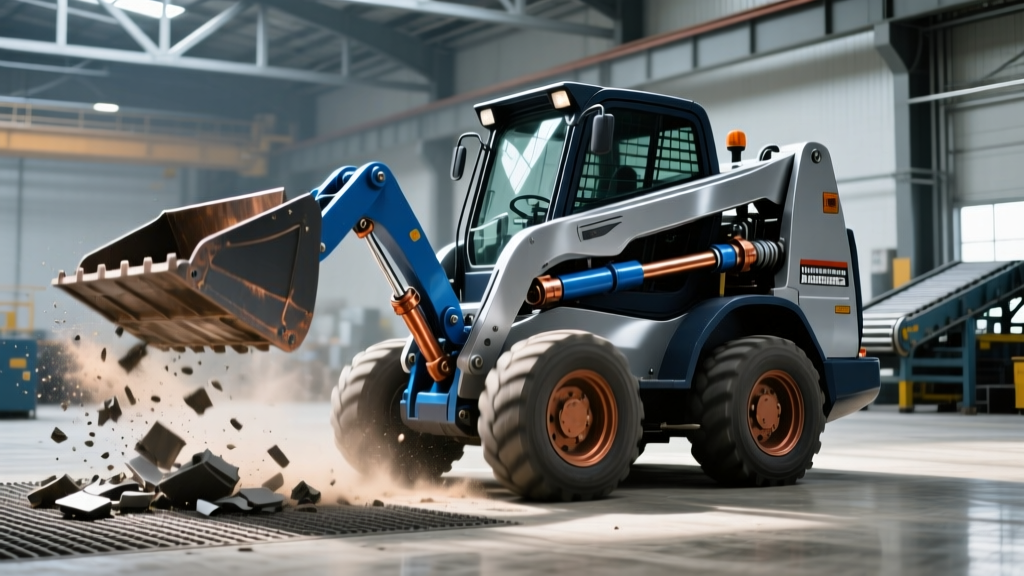
Because skid steers utilize hydraulic flow simultaneously for steering, lifting, and high-flow attachments (like mulchers or trenchers), their hydraulic systems endure thermal stress comparable to much larger wheel loaders. Below is the baseline heavy-duty service matrix for industry-standard models like the Bobcat S650 and Caterpillar 262D3.
| Service Interval | Component Focus | Required Action & Specifications |
|---|---|---|
| Daily (10 Hours) | Chassis & Loader Arms | Grease all pivot pins with NLGI #2 EP Lithium-complex grease. Check hydraulic fluid sight glass. |
| 250 Hours | Engine & Fuel System | Replace engine oil (15W-40 CK-4 for Tier 4 Final engines), primary/secondary fuel filters, and engine oil filter. |
| 500 Hours | Hydraulics & Drivetrain | Replace hydraulic case drain filters. Check drive chain tension (if chain-driven) or inspect hydrostatic motor mounts. |
| 1,000 Hours | Full System Overhaul | Complete hydraulic fluid flush (ISO VG 46), replace 10-micron hydraulic return filters, flush cooling system. |
Hydraulic System: The Heart of Skid Steer Upkeep
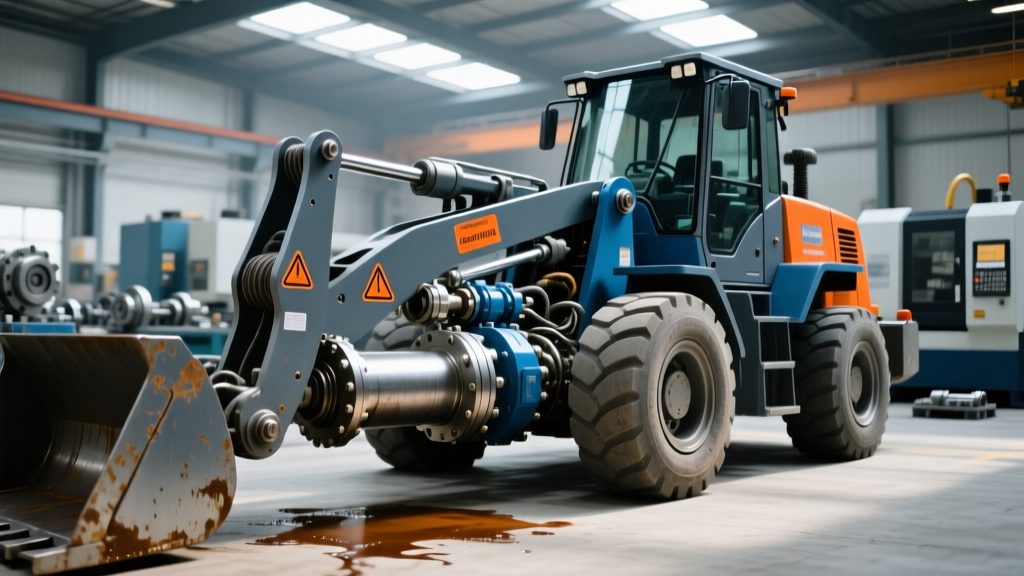
The most critical differentiator between maintaining light equipment and heavy earthmoving equipment is hydraulic system management. A skid steer does not have a dedicated mechanical steering box; it steers by skidding the tires, which requires massive, continuous hydraulic pressure from the drive pumps. This generates immense heat, leading to rapid fluid oxidation if not managed correctly.
Fluid Viscosity and Thermal Breakdown
For heavy-duty cycle skid steers operating in ambient temperatures above 85°F (29°C), standard AW32 hydraulic fluid is insufficient. You must upgrade to ISO VG 46 anti-wear hydraulic fluid. A typical mid-size frame skid steer, such as the John Deere 332G, holds approximately 24.5 gallons (92 liters) of hydraulic fluid. Running degraded fluid causes the charge pressure to drop below the required 250-300 PSI threshold, resulting in cavitation that will destroy the main gear pumps—a repair costing upwards of $3,500 in parts and labor.
- Testing Protocol: Draw a fluid sample every 500 hours. Look for ISO cleanliness codes. The target for heavy equipment hydraulics is 18/16/13 or better.
- Breather Caps: Replace standard vented hydraulic tank caps with desiccant breather caps (e.g., Donaldson or Parker brands) to prevent silica dust ingestion, which acts as lapping compound inside hydraulic valves.
Drivetrain and Undercarriage Service
The classification of a skid steer as heavy equipment also extends to its undercarriage and drivetrain. The immense torque required to break traction and turn the machine places severe shear stress on the drivetrain components.
Chain-Drive vs. Direct-Drive Maintenance
Machines utilizing a chain-drive system (common in many Bobcat and older ASV models) require strict adherence to chain case maintenance. The heavy equipment standard dictates that chain case oil (typically 80W-90 gear oil) be checked weekly. If water ingress occurs—common when operating in mud or wet clay—the oil will emulsify into a milky sludge, leading to rapid sprocket and roller chain elongation. A stretched chain will jump teeth under heavy load, instantly locking the drive system and potentially bending the loader frame.
Conversely, direct-drive or hydrostatic models (like the Caterpillar D-series) eliminate chains but require rigorous inspection of the axle housings and planetary hub final drives. Planetary hub oil must be changed every 1,000 hours using the exact manufacturer-specified synthetic gear lubricant to prevent bearing spalling.
NIOSH Safety Directive: The Centers for Disease Control and Prevention (CDC) and NIOSH Document 2009-114 explicitly link skid steer fatalities and severe injuries to bypassed maintenance—specifically, disabled seat interlock switches and worn lift arm locking mechanisms. Heavy equipment maintenance schedules must include functional testing of these safety interlocks every 250 hours.Annual Maintenance Cost Analysis (2026 Pricing)
Treating a skid steer as heavy equipment requires budgeting for commercial-grade PM costs. Below is the estimated annual maintenance cost for a skid steer operating 1,000 hours per year in severe-duty conditions (e.g., demolition, trenching, or forestry mulching).
| Maintenance Category | Estimated Annual Cost (USD) | Notes |
|---|---|---|
| Engine Fluids & Filters | $450 - $600 | Includes CK-4 oil, DEF fluid, and OEM fuel filters. |
| Hydraulic Fluids & Filters | $800 - $1,100 | Based on 25-gallon capacity and 10-micron return filters. |
| Grease & Wear Items | $250 - $400 | Bulk NLGI #2 grease, cutting edges, and bucket teeth. |
| Drivetrain & Cooling | $300 - $500 | Chain case oil, planetary hub fluid, and coolant flush. |
| Total Annual PM Budget | $1,800 - $2,600 | Excludes major component repairs and labor. |
Frequently Asked Questions
Do I need a commercial CDL to transport a skid steer on a trailer?
While the skid steer itself is classified as heavy equipment, the requirement for a Commercial Driver's License (CDL) depends on the Gross Vehicle Weight Rating (GVWR) of the tow vehicle and the combined weight of the trailer and machine. A fully loaded skid steer (e.g., a Bobcat S850 weighing over 10,000 lbs with attachments) pushed over a 26,001 lb combined GVWR threshold will trigger CDL requirements in most jurisdictions.
Can I use standard automotive oil in a skid steer diesel engine?
No. Modern skid steers utilize Tier 4 Final or Stage V diesel engines equipped with Diesel Particulate Filters (DPF) and Selective Catalytic Reduction (SCR) systems. Using standard automotive oil (like API SN) will cause high sulfated ash buildup, permanently clogging the DPF. You must use low-ash heavy-duty diesel oil meeting API CK-4 or CJ-4 specifications.
How does heavy equipment classification affect resale value?
Equipment auction houses and appraisers evaluate skid steers based on documented heavy equipment maintenance logs. A machine with verified, timestamped fluid analysis reports and OEM filter receipts will command a 15% to 20% premium at auction compared to an identical model with missing service records, as buyers view the documented machine as a lower-risk heavy asset.