Machine Tools Lathe Cost Analysis: 2026 Budget Planning Guide
Plan your 2026 machine tools lathe budget with exact cost breakdowns for CNC workholding, VDI/BMT tooling, rigging, and hidden facility expenses.
Capital Allocation for Modern Turning Centers
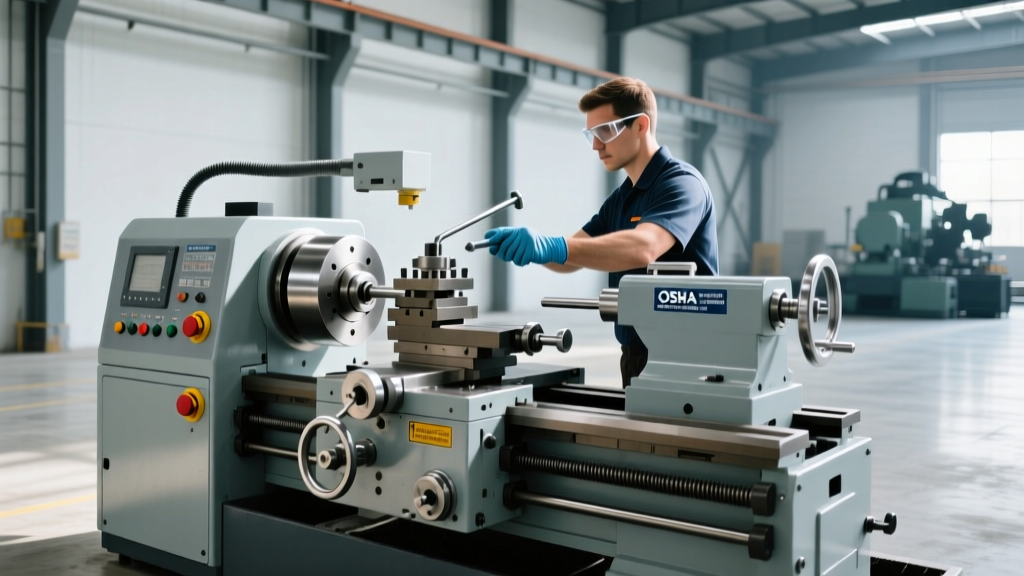
Procuring a CNC turning center requires a financial strategy that extends far beyond the base price of the machine. A common error in shop floor budgeting is allocating 90% of capital to the machine itself, leaving insufficient funds for the ecosystem required to make it productive. For a mid-sized production shop in 2026, the optimal capital allocation follows the 65/35 Rule: 65% of the total budget is dedicated to the base machine and mandatory options, while 35% is reserved for workholding, turret tooling, facility preparation, and first-quarter consumables.
2026 Baseline Budget Snapshot
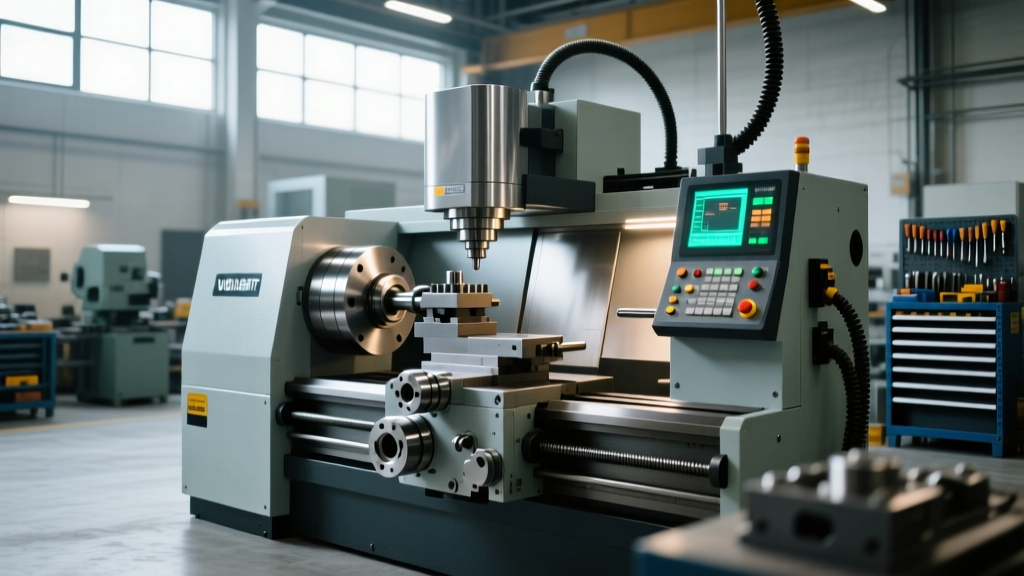
Target Machine: Mid-range CNC Lathe (e.g., Haas ST-15 or equivalent 8-inch chuck class)
Total Estimated Workcell Cost: $112,000 – $138,000
Base Machine Cost: $75,000 – $85,000
Tooling & Workholding: $22,000 – $31,000
Facility & Rigging: $15,000 – $22,000
Itemized Machine Tools Lathe Cost Breakdown
The following matrix details the real-world costs associated with outfitting a standard 2-axis CNC lathe for mixed-material production (aluminum, 304/316 stainless, and 4140 steel). Pricing reflects Q1 2026 market averages for industrial-grade components.
| Component Category | Specification / Model Example | Est. Cost (USD) | Priority |
|---|---|---|---|
| Base CNC Lathe | 8" Chuck, 12-Station Turret, 4000 RPM Spindle | $78,500 | Critical |
| Quick-Change Workholding | SMW Autoblok KNCS-N 210 or Kitagawa QJR | $6,800 | High |
| Turret Tool Holders (Static) | 12x VDI40 or BMT45 External/Internal Holders | $4,200 | Critical |
| Live Tooling (Driven) | 4x VDI40 Live Radial/Axial Holders (ER32) | $5,600 | Medium |
| Boring Bars & Turn Holders | Sandvik Coromant / Kennametal (8 holders + bars) | $3,400 | High |
| Initial Carbide Insert Inventory | 10 boxes DCMT, CCMT, WNMG, VNMG (Grade-specific) | $2,100 | Critical |
| Chip Conveyor & Coolant System | Hinged belt conveyor + High-pressure pump (300 PSI) | $8,500 | High |
| Total Estimated Tooling & Options | Excluding Facility Prep | $30,600 | - |
Workholding Economics: Standard vs. Quick-Change
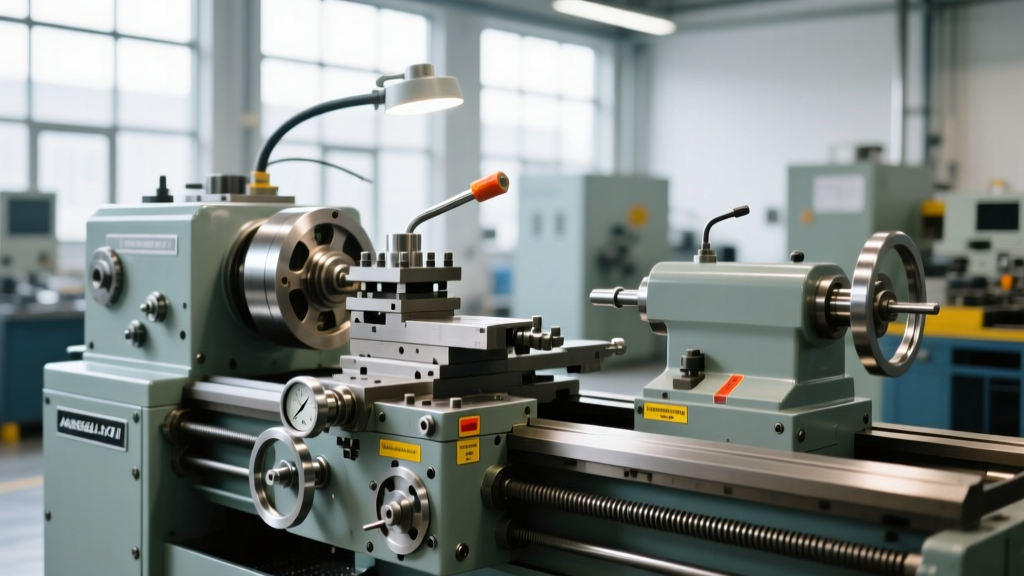
When budgeting for a machine tools lathe setup, the chuck selection dictates long-term operational margins. A standard 3-jaw hydraulic chuck (e.g., Kitagawa B-210) costs approximately $2,800. However, changing jaws on a standard chuck requires an operator to unbolt the master jaw, swap the top jaws, and re-indicate the part—a process taking 15 to 25 minutes.
Upgrading to a quick-change jaw system like the SMW Autoblok KNCS-N (approx. $6,500) allows jaw changes in under 45 seconds with repeatability within 0.0005 inches.
Calculating the Quick-Change ROI
- Time Saved per Setup: 20 minutes
- Fully Burdened Shop Rate: $145 / hour
- Savings per Setup: $48.33
- Payback Period: 76 setups (approx. 2.5 months for a high-mix job shop)
If your production schedule requires more than three setups per day, omitting quick-change workholding from your initial budget is a critical financial error.
Turret Tooling: VDI vs. BMT Coupling Systems
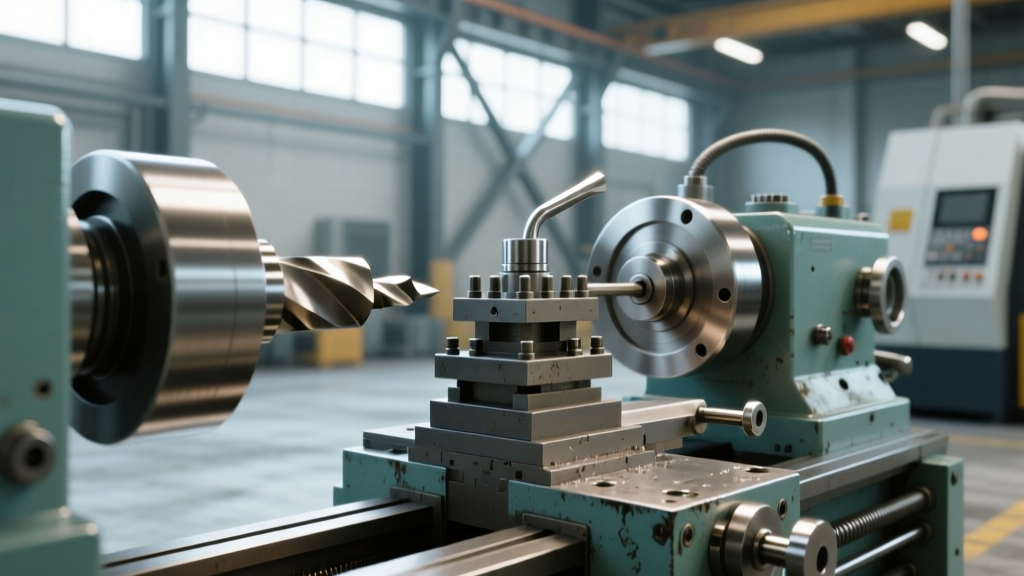
The interface between the turret and the tool holder heavily influences both the initial budget and the machining capabilities of the lathe. Most mid-range lathes offer a choice between VDI (DIN 69880) and BMT (Base Mount Tooling).
- VDI40 Tooling: Utilizes a serrated radial coupling secured by a single clamping pin. VDI holders are widely available and generally cost 30% to 40% less than BMT equivalents (averaging $220 per static holder). However, the single-point clamping mechanism limits rigidity, making VDI prone to chatter during heavy interrupted cuts or when machining high-tensile alloys like Inconel 718.
- BMT45 Tooling: Secured via four to six bolts directly into the turret face, combined with a precision locating pin. BMT holders average $380 each. The mechanical footprint provides up to 30% greater static rigidity. This allows for 15-20% higher feed rates and deeper depths of cut, drastically reducing cycle times on heavy roughing operations.
Hidden Facility and Infrastructure Costs
The physical integration of a CNC lathe into a manufacturing facility introduces capital expenditures that are frequently omitted from initial purchase orders. Referencing guidelines from the Haas Automation ST-Series installation manuals, facility prep requires strict adherence to electrical and environmental standards.
Electrical and Power Conversion
Modern CNC lathes require 240V to 480V, 3-phase power. A typical 8-inch chuck lathe draws between 30 and 45 amps under peak load. If your facility only has 1-phase 220V service, you must budget for a digital rotary phase converter. A high-quality CNC-rated phase converter (e.g., Phase Perfect) capable of delivering clean, balanced 3-phase power costs between $4,500 and $6,200. Cheap static converters will cause spindle drive alarms and void the machine warranty.
Rigging and Placement
A fully optioned CNC lathe with a chip conveyor weighs between 9,000 and 12,500 lbs. Professional rigging—including a specialized forklift or crane service, floor skates, and precision leveling using a 0.0005"/ft master level—costs between $1,800 and $3,500 locally. Always budget an additional $1,200 for a reinforced concrete pad if your existing shop floor is less than 6 inches thick, as vibration from adjacent machinery will compromise turning tolerances.
First 90 Days: Consumables and Cutting Tool Budget
According to data aggregated from the MSC Direct turning tool inventory and industry consumption rates, a newly commissioned lathe will consume cutting tools at an accelerated rate during the first 90 days as operators dial in feeds, speeds, and chip-breaking geometries.
Allocate a minimum of $3,500 specifically for first-quarter consumables. This must include:
- Carbide Inserts: Stock both PVD-coated grades for sticky materials (e.g., aluminum and superalloys) and CVD-coated grades for heavy steel roughing. Budget $12-$18 per insert for premium geometries (e.g., Sandvik Coromant or Walter).
- Boring Bars: Solid carbide anti-vibration boring bars for internal diameters (ID) under 1.0 inch cost upwards of $450 each. Standard steel shank bars will deflect and cause chatter on deep booms (over 4x diameter ratio).
- Coolant and Filtration: A 55-gallon drum of high-lubricity semi-synthetic coolant (e.g., TRIM MicroSol 585XT) costs approximately $1,800. Proper coolant concentration management (maintaining 7-9% with a refractometer) extends tool life by up to 40% and prevents machine corrosion.
Strategic Payback Framework
To justify the capital expenditure of a complete machine tools lathe workcell, shop owners must calculate the true payback period using the Spindle Hour Margin Model.
Subtract the fully burdened operator cost, machine depreciation (calculated over 7 years), tooling consumable cost per hour (approx. $4.50/hr), and facility overhead from your gross shop rate. If your net margin per spindle hour is $65, and the total workcell cost is $125,000, the machine must run billable parts for 1,923 hours to break even. At 60% spindle utilization (approx. 24 billable hours per week), the payback period is 18.5 months. Budgeting accurately on the front end prevents the need to artificially inflate shop rates on the back end to cover hidden tooling deficits.