Mastering the Lathe Machine Tool Maintenance Schedule
Optimize your engine lathe machine tool maintenance schedule with exact intervals, lubrication specs, and alignment tolerances to eliminate unplanned downtime.
Unplanned downtime on a manual or CNC engine lathe costs an average of $250 to $400 per hour in lost production, not including the $8,500 to $14,000 price tag for a cartridge spindle rebuild. A rigorously executed lathe machine tool maintenance schedule is the only barrier between profitable machining operations and catastrophic mechanical failure. Rather than relying on generic operator manuals that suggest vague 'periodic checks,' precision machine shops must implement condition-based and interval-specific service protocols.
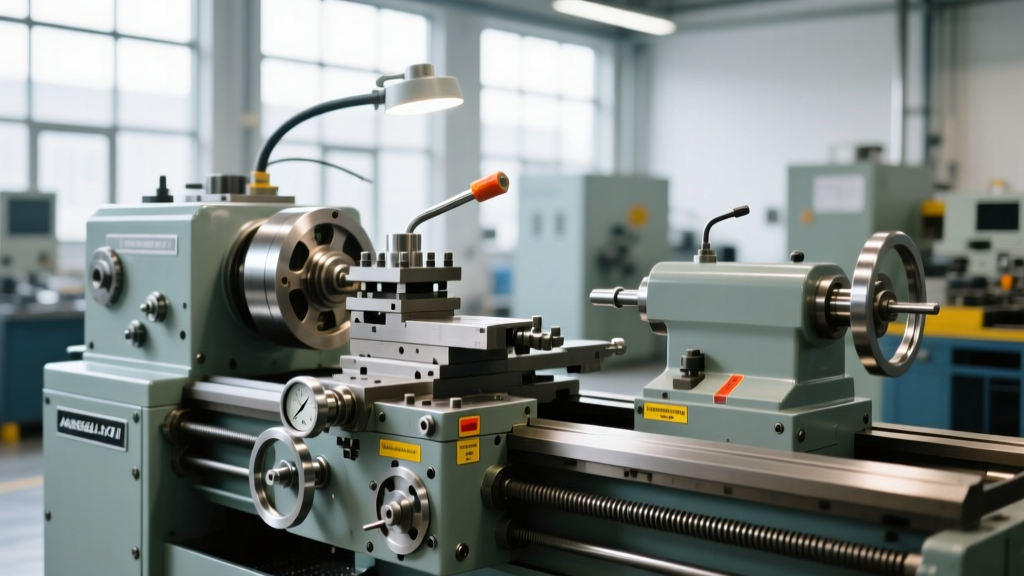
⚠️ CRITICAL WARNING: Way Lubrication StarvationThe most common cause of premature saddle wear and loss of geometric accuracy is way oil starvation. Never use standard hydraulic oil (like AW32) on lathe ways. You must use a dedicated way lubricant with tackiness additives, such as Mobil Vactra No. 2 (ISO VG 68), to prevent the oil from being wiped away by the moving carriage.
Daily Operator Checks: The First Line of Defense
Preventative maintenance begins before the spindle reaches 1,000 RPM. Operators must perform these verifications during the first 10 minutes of every shift:
- Way Lube Flow Verification: For manual lathes with one-shot lubricators, pump the handle and visually confirm that oil is weeping from the way wipers at the front and rear of the saddle. Target flow rate is 2-3 drops per minute during continuous operation.
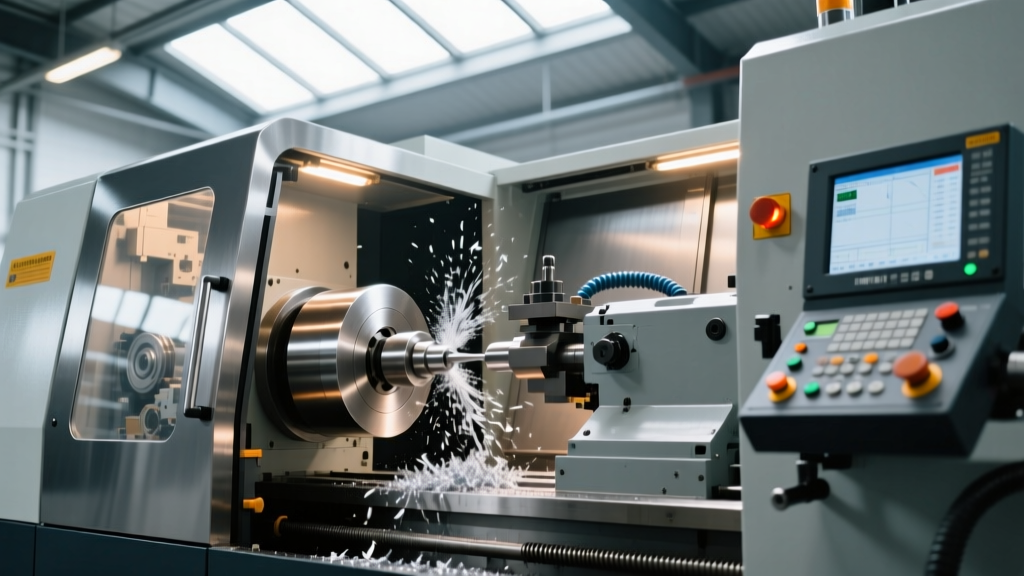
- Coolant Concentration Testing: Use an optical refractometer to check the metalworking fluid. Maintain a concentration between 5.5% and 7.0%. A drop below 5.0% invites bacterial growth and flash rusting, while exceeding 8.0% causes skin irritation and leaves sticky residues on the lathe bed.
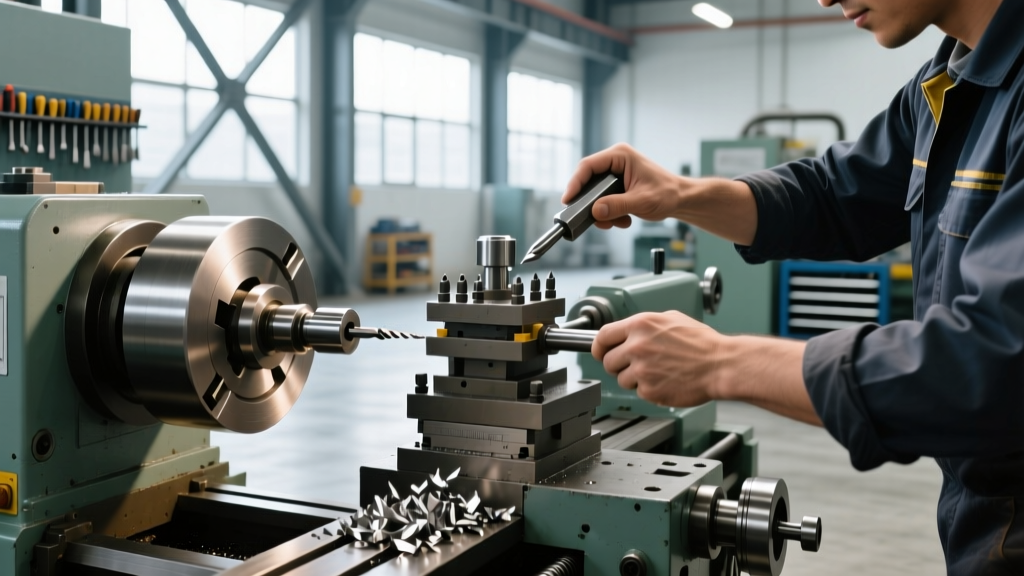
- Chip Pan and Way Wiper Inspection: Clear stringy chips from the leadscrew and feed rod. Inspect the polyurethane way wipers (typically 70A durometer). If they are torn or hardened, replace them immediately. A set of OEM wipers costs $45 to $80, whereas a saddle regrind and scrape job exceeds $3,500.
The 500-Hour Service Interval: Gearbox and Apron
At the 500-hour mark (roughly every three months in a single-shift environment), the focus shifts to the headstock gearbox and the carriage apron. The gearbox oil must be drained while warm to ensure suspended metallic particulates are evacuated.
During this interval, technicians must also check the apron clutch mechanisms. The feed clutch should engage crisply without slipping under a 0.150-inch depth of cut in 1045 carbon steel. If slipping occurs, adjust the clutch tension nut located inside the apron casting until a firm detent is felt, typically requiring a 1/8th turn clockwise.
Lubrication Specification Matrix
| Component | Lubricant Specification | Capacity / Application | Change Interval |
|---|---|---|---|
| Headstock Gearbox | ISO VG 46 (e.g., Mobil DTE Heavy Medium) | 2.5 to 4.0 Gallons (Model Dependent) | 500 Hours / 6 Months |
| Lathe Ways & Screws | ISO VG 68 Way Oil (Tackified) | Continuous via One-Shot or Metering Valve | Daily Top-Off |
| Apron Gear Train | NLGI Grade 2 Lithium Grease | Pack Bearings, Light Coat on Gears | 1,000 Hours / Annually |
Annual Teardown and Alignment Verification
Once per year, or every 2,000 operating hours, a comprehensive geometric alignment and spindle teardown is mandatory. This requires a 0.0001-inch resolution dial indicator and a precision test bar.
- Spindle Taper Cleaning: Remove the chuck and clean the internal spindle taper (e.g., L00, D1-4, or D1-6 camlock) using isopropyl alcohol and a lint-free swab. Even a 0.001-inch layer of dried coolant will cause severe TIR (Total Indicator Runout) and chatter.
- Spindle Runout Measurement: Insert a certified ground test bar into the spindle taper. Mount the dial indicator on the carriage. Measure runout at the spindle nose and 12 inches out. Acceptable tolerance for a precision engine lathe is ≤ 0.0003-inch TIR. If runout exceeds 0.0005-inch, the spindle bearings require preload adjustment.
- Bearing Preload Adjustment: For lathes utilizing Timken tapered roller bearings, loosen the spindle locknut and tighten the adjusting nut to approximately 15-20 ft-lbs while rotating the spindle by hand to seat the rollers. Back off slightly until the spindle spins freely without axial play. Secure with the locknut.
- Tailstock Alignment: Mount a test bar between centers. Indicate along the Z-axis. If the tailstock is offset, loosen the base clamping nuts and use the push-pull adjustment screws to bring the tailstock centerline into perfect coaxial alignment with the headstock.
"Neglecting coolant maintenance is effectively neglecting the entire machine. Tramp oil and anaerobic bacteria degrade the fluid's pH, which subsequently corrodes the internal coolant pump impellers and rots the way wipers from the inside out."
Troubleshooting Common Maintenance Failures
When a lathe machine tool exhibits abnormal behavior, use this diagnostic matrix to isolate the root cause before ordering expensive replacement parts.
| Symptom | Probable Cause | Corrective Action |
|---|---|---|
| Chatter at 1,200+ RPM | Loose spindle drive belt or worn spindle bearings. | Check belt deflection (target 1/2" at mid-span). Replace Gates PowerGrip belt or adjust bearing preload. |
| Tapered Turning (Z-axis) | Tailstock offset or headstock mounting bolts loose. | Realign tailstock using test bar. Torque headstock bolts to 65 ft-lbs. |
| Cross-slide Creep / Backlash | Worn acme leadscrew or loose gib strip. | Adjust cross-slide gib screws for slight drag. Replace acme nut if backlash exceeds 0.008". |
Coolant System Overhaul and Biocide Dosing
According to the NIOSH guidelines on metalworking fluids, degraded coolant poses severe respiratory and dermatological hazards to operators, in addition to destroying machine components. Every 1,000 hours, the coolant tank must be completely evacuated.
Use a tramp oil skimmer daily to remove hydraulic and way oils that leak into the pan. If the coolant develops a 'Monday morning rotten egg' smell, the pH has dropped below 8.0, indicating massive bacterial colonization. Shock the system with a broad-spectrum biocide (such as Buschem B20) at a dose of 0.15% by volume, circulate for 24 hours, and then completely flush the tank before refilling with fresh, properly proportioned semi-synthetic fluid.
Sourcing OEM vs. Aftermarket Replacement Parts
When your maintenance schedule dictates part replacement, sourcing strategy dictates your budget. For critical tolerance components—such as spindle bearings (NSK or SKF Class P4/P5) and precision ground ball screws (for CNC conversions)—always source OEM or top-tier aftermarket equivalents. As noted in the SKF bearing maintenance documentation, counterfeit or low-grade bearings exhibit premature spalling and catastrophic cage failure under high radial loads.
However, for non-critical wear items like way wipers, chip guards, and standard V-belts, high-quality aftermarket alternatives from suppliers like McMaster-Carr or MSC Industrial can reduce consumable costs by 30% to 45% without compromising machine accuracy. Always cross-reference the OEM part number with the physical dimensions (e.g., verifying the exact width and thickness of a telescoping steel way cover) before procurement.
Lockout/Tagout (LOTO) Compliance
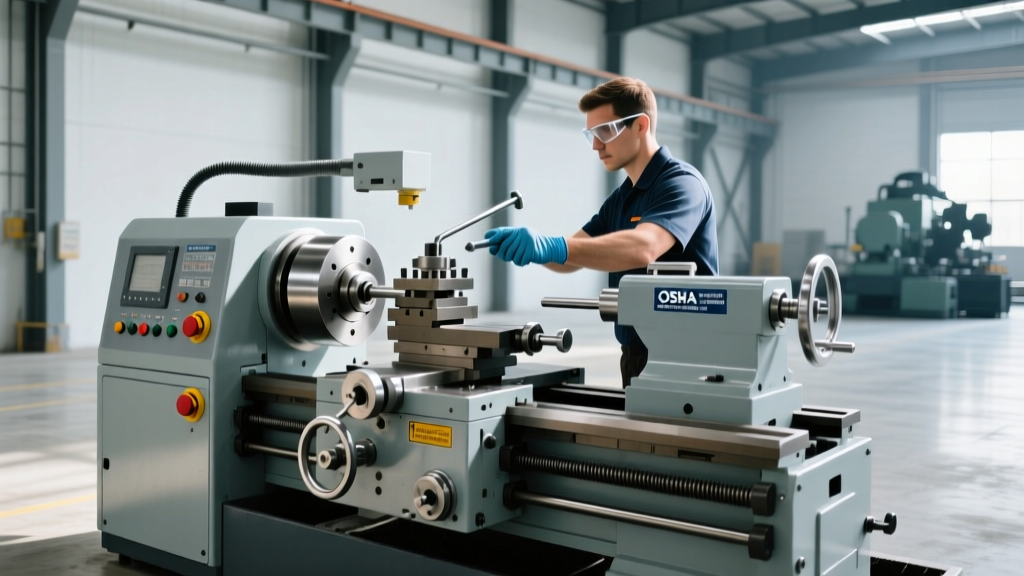
Never perform the 500-hour or annual maintenance intervals without strictly adhering to OSHA's Lockout/Tagout standard (1910.147). Disconnect the main 480V or 240V 3-phase power supply, apply a physical padlock to the breaker, and verify zero energy state by attempting to start the spindle and coolant pumps before placing your hands inside the headstock or apron castings.