Industrial Applications of the Knurling Tool of Lathe Machine
Explore real-world case studies on optimizing the knurling tool of lathe machine operations for aerospace Inconel and medical titanium components.
The Mechanics of Precision: Why Knurling Matters in Heavy Industry
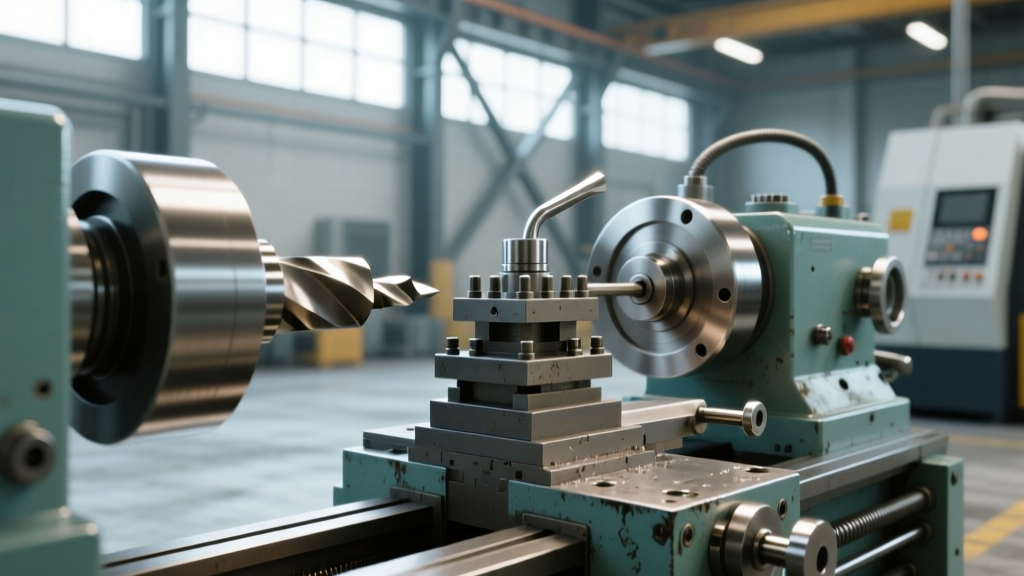
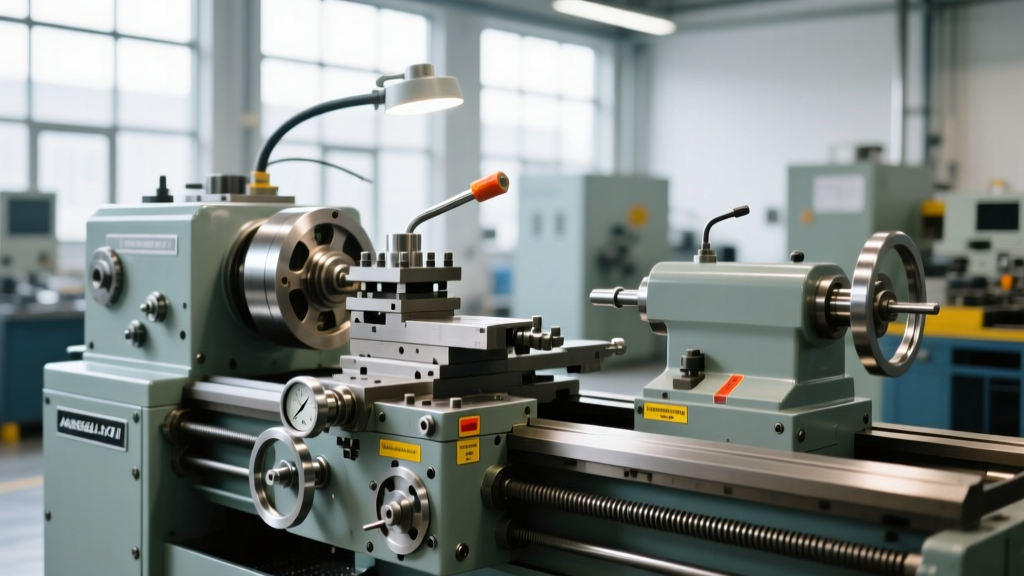
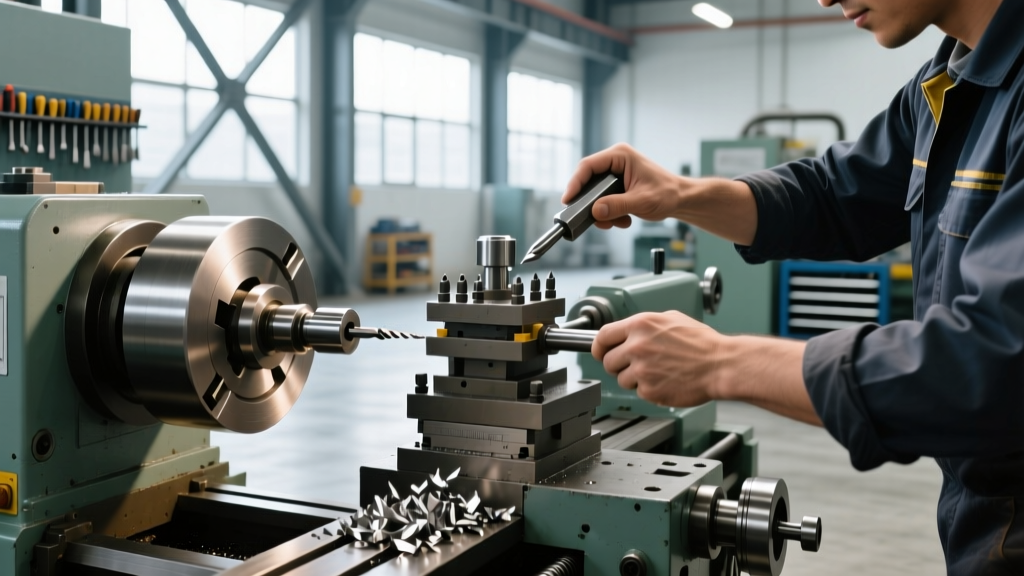
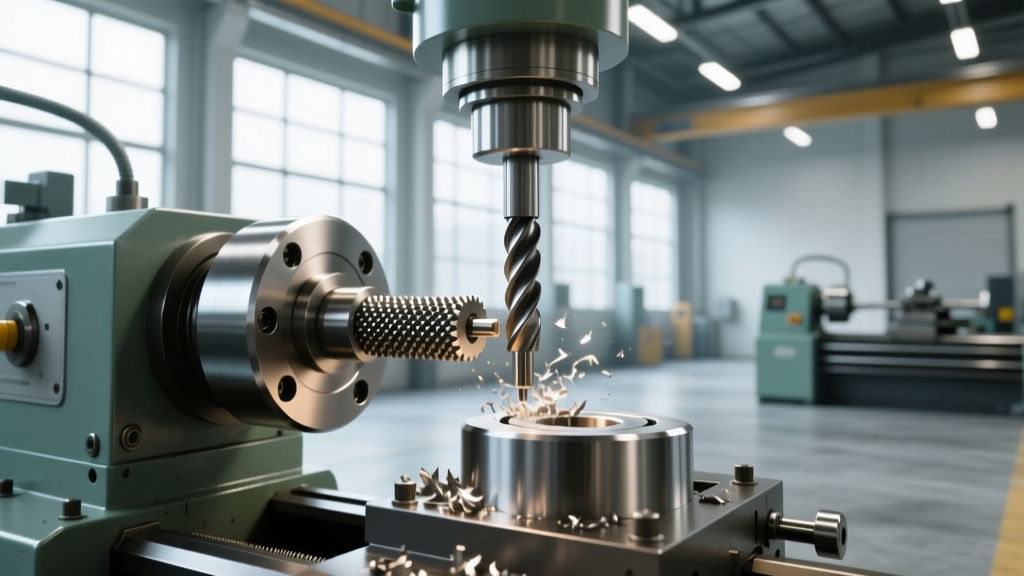
The knurling tool of lathe machine setups is frequently relegated to secondary finishing operations, yet in high-stakes manufacturing, it dictates component survivability, ergonomic safety, and mechanical interlock integrity. Knurling is a cold-forming process that displaces material to create a patterned surface. Unlike cutting operations that remove material, knurling work-hardens the surface, increasing fatigue resistance and grip coefficient. However, applying this process to advanced alloys requires precise tooling selection and parameter optimization.
Industry Standard Reference: Industrial knurling patterns and tooling geometries are governed by ANSI B94.4 (Knurls and Knurling Tools) and the international DIN 82 standard. Compliance ensures interchangeability of knurl wheels and predictable pitch diameters across global supply chains.This analysis examines two distinct industrial case studies where the selection and deployment of the knurling tool of lathe machine systems solved critical manufacturing bottlenecks in aerospace and medical device production.
Case Study 1: Aerospace Actuator Shafts (Overcoming Work Hardening)
The Challenge: Inconel 718 and Radial Deflection
A tier-one aerospace supplier faced a 22% scrap rate when knurling flight control actuator shafts machined from Inconel 718. The shafts were 0.750 inches in diameter with a 64-pitch diamond knurl requirement. The shop initially used a standard bump-style knurling tool mounted on a manual engine lathe. Bump tools exert immense radial force—often exceeding 1,500 lbs during engagement. On the slender, unsupported sections of the actuator shaft, this force caused severe deflection, resulting in a tapered knurl pattern and catastrophic double-tracking.
Furthermore, Inconel 718 work-hardens rapidly. The high radial pressure of the bump tool generated excessive heat, causing the HSS (High-Speed Steel) knurl wheels to gall and flake the workpiece surface rather than forming a clean diamond pattern.
The Solution: Scissor-Type Knurling Tool Setup
The engineering team transitioned to a scissor-type knurling tool, specifically referencing designs from Dorian Tool. A scissor tool utilizes two knurl wheels mounted on a pivoting yoke that engage the workpiece from opposite sides simultaneously. This design neutralizes radial forces, reducing net deflection on the workpiece by up to 95%. The cutting action becomes purely tangential.
To address the work-hardening issue, the shop upgraded to Cobalt-alloy (M35) knurl wheels with a TiN (Titanium Nitride) coating. The feed rate was reduced, and high-pressure flood coolant (1,200 PSI) was directed precisely at the forming zone to prevent thermal buildup.
Optimized Parameters for Inconel 718
| Material | Tool Type | Wheel Material | RPM (1" Dia) | Feed (IPR) | Coolant Strategy |
|---|---|---|---|---|---|
| 1018 Steel | Bump | Standard HSS | 300 - 350 | 0.015 - 0.020 | Soluble Oil |
| 304 Stainless | Straddle | TiN Coated | 180 - 220 | 0.010 - 0.012 | Synthetic |
| Inconel 718 | Scissor | Cobalt HSS (M35) | 120 - 150 | 0.008 - 0.010 | High-Pressure Flood |
| Ti-6Al-4V | Straddle | TiAlN Coated | 150 - 180 | 0.012 - 0.015 | Micro-emulsion |
Case Study 2: Medical Implants (Titanium Grip Patterns)
The Challenge: Galling and Surface Contamination
In the production of orthopedic surgical instruments and implantable extraction tools, Ti-6Al-4V (Grade 5 Titanium) is the material of choice due to its biocompatibility and strength-to-weight ratio. A medical device manufacturer needed to apply a 30-degree diamond knurl to the grip zones of extraction rods. The primary failure mode was galling: titanium's high chemical affinity caused microscopic welds to form between the workpiece and the knurl wheel, tearing the surface and leaving embedded tool steel particles. For medical devices, embedded ferrous contamination is an automatic FDA rejection due to corrosion and biocompatibility risks.
The Solution: Straddle Knurling and Specialized Geometry
The manufacturer adopted a straddle knurling tool configuration, utilizing two wheels mounted on a rigid C-frame that straddles the workpiece. Unlike the scissor tool, which pivots, the straddle tool offers absolute rigidity, crucial for maintaining the tight ±0.0005-inch pitch tolerances required for medical assemblies.
"When knurling titanium, the geometry of the knurl wheel's teeth is just as critical as the coating. We specify a 30-degree helix angle with a slightly radiused root to prevent stress concentrations that could lead to micro-fractures during autoclave sterilization cycles." — Senior Manufacturing Engineer, Orthopedics Division.
To eliminate galling, the shop utilized TiAlN (Titanium Aluminum Nitride) coated knurl wheels sourced from specialists like AccuTrak. The TiAlN coating provides a high oxidation temperature and a low coefficient of friction against titanium. Additionally, the lathe was programmed for a single-pass engagement; taking multiple shallow passes on titanium guarantees work-hardening and subsequent wheel failure.
Failure Mode Analysis: Troubleshooting Common Knurling Defects
Even with premium tooling, improper setup of the knurling tool of lathe machine systems leads to distinct, identifiable defects. Understanding the root cause is critical for maintaining production yields.
- Double-Tracking (Cross-Threading): The tool picks up a previous tooth path, creating a chaotic, overlapping pattern. Root Cause: Incorrect blank diameter. The circumference of the blank must be an exact multiple of the knurl pitch. Fix: Calculate the exact blank diameter using the formula:
D = (N × P) / π, where N is the number of teeth and P is the circular pitch. Turn the blank to this exact diameter before knurling. - Flaking or Tearing: Material shears off instead of displacing. Root Cause: Dull knurl wheels, insufficient coolant, or feeding too slowly, allowing the wheels to rub and work-harden the surface. Fix: Increase feed rate to 0.015 IPR minimum for steels and ensure wheels are replaced at the first sign of edge rounding.
- Tapered Pattern: The knurl is deeper on one end of the workpiece. Root Cause: The knurl tool axis is not perfectly parallel to the workpiece axis, or the tailstock is misaligned. Fix: Indicate the tool holder and align the tailstock using a test bar before production runs.
- Tool Pin Failure: The axle pin holding the knurl wheel snaps. Root Cause: Excessive feed pressure or lack of lubrication on the pin itself. Fix: Apply high-molybdenum anti-seize compound to the knurl pin during every wheel change to prevent micro-welding and shear failure.
Procurement Framework: Selecting the Right Tooling Architecture
Selecting the correct knurling tool requires balancing upfront capital expenditure against cycle time and scrap reduction. According to manufacturing data aggregated by ScienceDirect engineering resources, cold-forming processes like knurling can increase surface hardness by up to 30%, but only if the tooling maintains rigid engagement.
Cost vs. Application Matrix
| Tool Type | Avg. Cost (5/8" Shank) | Radial Force | Best Application | Limitations |
|---|---|---|---|---|
| Bump (Single Wheel) | $45 - $85 | Very High | Short, thick stock; low-carbon steels; manual lathes. | Deflects slender shafts; poor for CNC turrets. |
| Straddle (Two Wheels) | $150 - $280 | Moderate (Balanced) | Medium-length shafts; brass and aluminum; high-volume CNC. | Requires clearance behind the workpiece; wider footprint. |
| Scissor (Two Wheels) | $350 - $650 | Near Zero (Neutralized) | Slender shafts; Inconel/Titanium; Swiss-type lathes. | Higher initial cost; requires precise center-height setup. |
| CNC Form Knurling | $800 - $1,500+ | N/A (Cutting Action) | Pre-hardened steels; extremely thin-walled tubing. | Removes material (no work-hardening benefit); slow cycle times. |
Economic Impact: Tooling Costs and Cycle Time Reductions
Upgrading from a manual bump knurling setup to a CNC-integrated scissor knurling tool represents a significant capital outlay, but the ROI is rapidly realized in high-mix, high-value environments. In the aerospace case study cited above, the $450 investment in a scissor tool holder and $120 in TiN-coated Cobalt wheels eliminated the 22% scrap rate on $850 raw Inconel forgings. The break-even point was achieved in less than 14 production runs.
Furthermore, modern scissor and straddle tools allow for higher feed rates without sacrificing surface finish. By increasing the feed rate from 0.006 IPR to 0.012 IPR on 304 stainless hydraulic fittings, cycle times were reduced by 42%, directly increasing spindle utilization and overall equipment effectiveness (OEE). When specifying the knurling tool of lathe machine systems for advanced manufacturing, engineers must look beyond the initial purchase price and evaluate the total cost of ownership, factoring in scrap reduction, cycle time compression, and the elimination of secondary deburring operations.