Road Construction Equipment at the Vegas Heavy Equipment Playground
Master road construction equipment classification and operator training best practices at the Vegas Heavy Equipment Playground facility.
Navigating the Vegas Heavy Equipment Playground for Road Crews
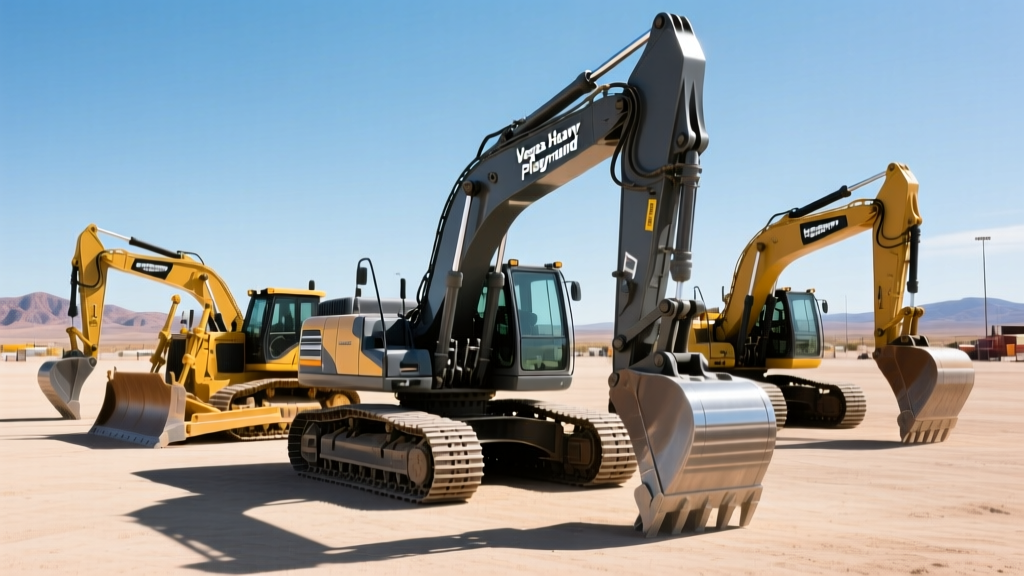
The Vegas Heavy Equipment Playground serves as a premier proving ground for heavy machinery operators and fleet managers. Located in the Mojave Desert, this expansive training and demonstration facility subjects road construction equipment to extreme thermal loads, abrasive silty soils, and continuous operational cycles. For operators transitioning from simulator environments—such as CM Labs Vortex simulators—to live seat time, understanding the precise classification and operational boundaries of roadbuilding machinery is critical.
Road construction equipment is not a monolith; it is strictly categorized by its phase in the paving lifecycle. Misclassifying equipment capabilities or deploying a machine outside its engineered phase leads to catastrophic mat failures, subgrade settling, and severe safety hazards. Below is the definitive classification framework utilized by lead operators and site superintendents.
Core Classification of Road Construction Machinery
1. Subgrade Preparation and Earthmoving
Before asphalt or concrete can be laid, the native soil must be stabilized and graded to exact tolerances. The primary workhorse here is the motor grader.
- Motor Graders (e.g., Caterpillar 150, John Deere 872): Designed for fine grading and ditching. The Cat 150 features a 14-foot moldboard and an operating weight of approximately 42,000 lbs. Operators must master articulation steering and moldboard pitch control to achieve subgrade tolerances of +/- 0.05 feet.
- Soil Stabilizers (e.g., Wirtgen WR 250): These machines mill and mix binding agents (like cement or lime) into the native soil to increase load-bearing capacity. Training focuses on precise rotor depth control and forward speed synchronization with the binder spreader truck.
2. Base Course and Material Placement
Once the subgrade is compacted, aggregate base courses are placed. This phase relies heavily on material handling and spreading equipment.
- Wheel Loaders (e.g., Komatsu WA380-8): Used for feeding hoppers and stockpiling aggregate. Operators are trained on the 'V-cycle' loading pattern to minimize fuel consumption and tire wear, which currently averages $3,200 per tire for this size class in 2026.
- Asphalt Pavers (e.g., Vögele Super 1900-3i): The heart of the paving train. This tracked paver can lay widths up to 33 feet. Operators must manage the ErgoPlus 3 operating system, balancing material flow from the augers to the screed to prevent thermal segregation.
3. Compaction and Finishing
Compaction equipment is classified by its mechanism of force application: static weight, vibratory impact, or pneumatic kneading.
- Vibratory Soil Compactors (e.g., Bomag BW 213 DH-5): Used on the aggregate base. Features a smooth drum with a vibratory mechanism operating between 28-35 Hz. Operators must match frequency and amplitude to the lift thickness (typically 8-12 inches).
- Pneumatic Tire Rollers (e.g., Bomag BW 27 RH): Ballastable from 24,000 to 63,000 lbs. The kneading action of the tires seals the asphalt mat. Best practice dictates overlapping passes by at least 6 inches and maintaining tire temperatures above 140°F to prevent asphalt pickup.
- Tandem Drum Rollers (e.g., Dynapac CC2200): Used for final finish rolling. Equipped with oscillatory or vibratory drums to achieve the required 92-94% density without crushing the aggregate.
Operator Training Matrix: Classification vs. Certification
Training at the Vegas Heavy Equipment Playground emphasizes that seat time alone does not equal competency. Operators must progress through specific certification milestones based on equipment classification. The Asphalt Institute recommends the following baseline training hours before an operator is cleared for unsupervised production work.
| Equipment Class | Primary Function | Avg 2026 Price | Required Certs / Training | Min Sim + Seat Hrs |
|---|---|---|---|---|
| Motor Grader | Fine grading, slope control | $320,000 - $380,000 | 3D Grade Control Cert | 40 Sim / 120 Seat |
| Asphalt Paver | Mat placement, screed control | $500,000 - $650,000 | Paving Operations Cert | 20 Sim / 160 Seat |
| Pneumatic Roller | Mat sealing, kneading | $220,000 - $280,000 | Compaction Tech Cert | 10 Sim / 80 Seat |
| Tandem Drum Roller | Finish rolling, density | $180,000 - $240,000 | Compaction Tech Cert | 10 Sim / 80 Seat |
Advanced Troubleshooting and Edge Cases in Road Building
Novice operators run the machines; master operators manage the physics of the materials. The following edge cases are heavily drilled into operators training on the Vegas Heavy Equipment Playground dirt and asphalt tracks.
Edge Case 1: Thermal Segregation in Asphalt Paving
The Problem: Thermal segregation occurs when cooler asphalt mixes with hotter asphalt, leading to premature raveling and pothole formation. This is often caused by the paver stopping and starting, or by material flow interruptions in the auger chamber.
The Fix: Operators must maintain a continuous paving speed, typically between 15 and 25 feet per minute. If a material truck is delayed, the paver should slow down rather than stop completely. Furthermore, operators must ensure the augers are kept at least 70% submerged in the material head at all times to maintain consistent thermal mass.
Edge Case 2: Drum Scuffing and Mat Displacement
The Problem: When a vibratory tandem drum roller makes a sharp turn on a fresh, hot asphalt mat with the vibration engaged, it will 'scuff' or tear the surface, displacing the aggregate and ruining the finish.
The Fix: Implement the 'Straight-Line Vibration' rule. Operators must disengage the vibratory mode before initiating a turn, complete the turn using static drum weight, and only re-engage vibration once the roller is tracking straight again. For tight radius turns, operators should request the use of an oscillatory drum roller, which utilizes a horizontal shearing force rather than vertical impact, eliminating scuffing risks entirely.
'The difference between a 10-year road and a 20-year road is rarely the asphalt mix itself; it is the operator's discipline in managing compaction temperatures and mat continuity.' — Senior Pavement Engineer, Federal Highway Administration
Edge Case 3: Moldboard Ballasting and Tire Slip
The Problem: When cutting hard, compacted subgrade with a motor grader, operators often experience rear tire slip, which destroys tire tread and halts production.
The Fix: Instead of simply applying more down-pressure on the moldboard, which shifts weight off the drive tires, operators must utilize the grader's articulation and wheel lean. Leaning the front wheels toward the direction of the cut (typically 15 to 20 degrees) provides lateral stability, while shifting the transmission to a lower gear increases torque multiplication without requiring excessive blade down-force.
Strategic Takeaways for Fleet Managers
Deploying road construction equipment requires matching the machine's engineered classification to the specific phase of the paving lifecycle. Utilizing training environments like the Vegas Heavy Equipment Playground ensures that operators do not just learn how to steer, but understand the thermodynamic and mechanical limits of the equipment. By enforcing strict operational protocols—such as continuous paver movement, straight-line vibration, and precise moldboard articulation—fleets can drastically reduce rework costs, extend undercarriage and tire life, and deliver infrastructure that meets rigorous 2026 density and smoothness specifications.