Proximity Sensor for Heavy Equipment: Underground Mining Alternatives
Compare radar, inductive, and ultrasonic proximity sensors for heavy equipment in underground mining. Find the right collision avoidance alternative.
The Blind Spot Crisis in Subsurface Extraction
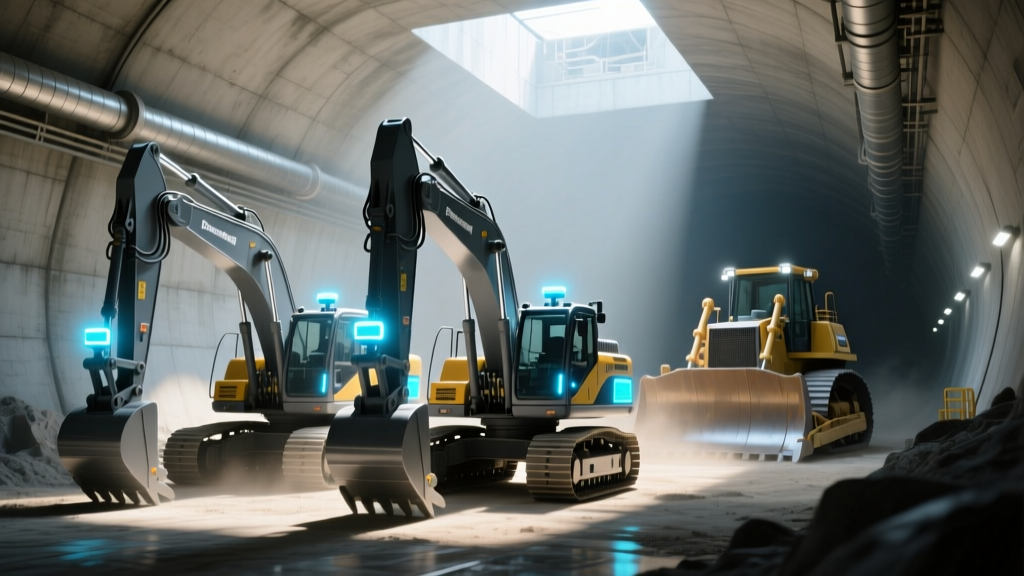
Collisions in confined underground drifts remain a leading cause of fatal incidents in subsurface extraction. When operating a 50-ton Load Haul Dumper (LHD) in a 5-meter-wide tunnel, the operator's visibility is severely compromised by articulation joints, massive engine bays, and poor lighting. Integrating a reliable proximity sensor for heavy equipment is no longer optional; it is a critical engineering control mandated by global safety bodies.
According to the National Institute for Occupational Safety and Health (NIOSH), proximity detection systems (PDS) have prevented hundreds of potential crushing and pinning fatalities over the last decade. However, selecting the correct sensor modality requires navigating a complex matrix of environmental interference, equipment kinematics, and intrinsic safety certifications. A sensor that performs flawlessly on a surface-level excavator will likely fail catastrophically in a wet, dust-choked underground decline.
Core Sensor Technologies: A Head-to-Head Comparison
Fleet managers must choose between four primary sensing modalities. Each technology interacts differently with silica dust, water mist, and electromagnetic interference (EMI) generated by high-voltage trailing cables.
| Sensor Modality | Effective Range | Environmental Immunity | Primary Weakness | Estimated Node Cost (2026) |
|---|---|---|---|---|
| 77 GHz Solid-State Radar | 1m – 40m | Impervious to dust, mud, water | Multipath reflections in narrow drifts | $3,200 – $5,500 |
| Ultra-Wideband (UWB) RFID | Up to 100m (Tag-based) | Excellent penetration through rock | Requires personnel to wear active tags | $450 – $850 (per tag) |
| 3D Solid-State LiDAR | 0.5m – 30m | High resolution, precise mapping | Blinded by heavy silica dust and fog | $8,000 – $14,000 |
| Inductive Linear Transducer | 0mm – 50mm | Unaffected by EMI or acoustics | Extremely short range (contact/near-contact) | $800 – $1,500 |
Application by Underground Equipment Type
The physical geometry and operational profile of underground mining machinery dictate which proximity sensor for heavy equipment will yield the highest safety return on investment.
Load Haul Dumpers (LHDs)
LHDs, such as the Sandvik LH517 or Cat R1700G, feature a central articulation joint. This creates a lethal "scissor" crush zone when the machine turns. Standard ultrasonic sensors fail in this zone due to constant mud buildup and high-pressure washdowns.
- Recommended Setup: 77 GHz Radar nodes mounted on the front and rear bumpers for machine-to-rock collision avoidance, paired with a UWB receiver in the cab to detect personnel tags.
- Engineering Note: Radar nodes must be angled at a minimum 3-degree downward pitch to prevent "ghosting" (false alarms caused by radar waves bouncing off the tunnel roof and reflecting back to the sensor).
Underground Haul Trucks (ADTs)
Articulated Dump Trucks operating in high-speed haulages (up to 35 km/h) generate massive dust plumes. Optical sensors like LiDAR and cameras are rendered useless within seconds of entering a dry haulage drift.
- Recommended Setup: Long-range 77 GHz Radar for forward collision warning, integrated with the machine's transmission control module to automatically throttle engine RPM and apply service brakes when an obstacle is detected within 15 meters.
- Failure Mode to Avoid: Mounting radar sensors directly behind the truck's primary exhaust stack. The thermal turbulence and soot particulate can degrade the radar dome's dielectric properties over time, reducing effective range by up to 40%.
Hydraulic Drill Jumbos
Machines like the Epiroc Boomer or Sandvik DD421 operate in highly localized, high-noise environments. Percussion drilling generates acoustic noise exceeding 110 dB, which completely blinds ultrasonic proximity sensors. Furthermore, the high-pressure water flushing used for dust suppression destroys standard IP67-rated electronics.
- Recommended Setup: Inductive linear transducers mounted directly inside the hydraulic boom cylinders to track boom extension and prevent crushing against the drift face. For personnel detection, UWB is the only viable option, as radar multipath interference in the confined drilling face causes excessive false alarms.
Fleet Manager Decision Matrix
Use this framework to specify your next PDS purchase order:
- IF your primary hazard is personnel-on-foot in high-traffic intersection drifts THEN deploy Ultra-Wideband (UWB) RFID tags + Machine-mounted receivers (Accuracy: ±10cm).
- IF your primary hazard is machine-to-machine collision in heavy silica dust THEN deploy 77 GHz Radar (Immune to dust/water, Range: up to 40m).
- IF you need to prevent boom-crush incidents on excavators or jumbos THEN deploy Inductive linear transducers on hydraulic cylinders (Fail-safe, zero latency).
Certification and Compliance: MSHA vs. ATEX
Deploying commercial off-the-shelf automotive sensors in an underground coal or hard rock mine is a severe regulatory violation. Equipment must meet strict intrinsic safety standards to prevent igniting combustible gases or coal dust.
In the United States, the Mine Safety and Health Administration (MSHA) enforces 30 CFR Part 75 and Part 76, which require proximity detection systems on continuous miners and mobile haulage equipment. Sensors must undergo rigorous testing for intrinsic safety, ensuring that even if the sensor housing is crushed or the wiring shorts out, it cannot generate a spark with sufficient energy to cause an ignition.
For international operations, sensors must carry ATEX or IECEx certifications for Zone 0 or Zone 1 hazardous areas. This requires potting the internal PCBs in specialized epoxy resins and using M12 heavy-duty connectors with positive locking mechanisms to prevent arcing during vibration.
Total Cost of Ownership (TCO) and Integration
When budgeting for a fleet-wide proximity sensor rollout, the hardware cost is only a fraction of the total expenditure. A comprehensive financial model must account for integration, maintenance, and downtime.
"The most expensive proximity sensor is the one that generates false alarms. If an LHD operator experiences three false braking events per shift due to poorly tuned radar multipath reflections, they will inevitably find a way to bypass or disable the system, rendering a $40,000 investment useless."
— Senior Mobile Equipment Engineer, Tier-1 Gold Mining Operation
Typical Per-Machine Cost Breakdown (Hard Rock LHD)
- Hardware (4x Radar Nodes, 1x UWB Receiver, 1x Cab Display): $16,500 – $24,000
- MSHA-Compliant Wiring Harnesses & Brackets: $3,500 – $5,000
- Integration Labor & Software Commissioning: $8,000 – $12,000
- Annual Calibration & Tag Replacement: $2,200 / year
- Total First-Year Cost Per Machine: $30,200 – $43,200
The 2026 Shift Toward Sensor Fusion
The industry standard is rapidly moving away from single-modality systems. Leading OEMs are now integrating sensor fusion architectures that combine 77 GHz radar with UWB and machine kinematics (GPS/IMU data). By fusing these data streams, the machine's central controller can differentiate between a stationary rock wall (radar reflection), a moving vehicle (radar doppler shift), and a mine worker (UWB tag), drastically reducing false positives while maintaining a zero-tolerance safety envelope.
When specifying a proximity sensor for heavy equipment in subsurface environments, prioritize vendors that offer open API access to the sensor data. This allows mine operators to feed collision near-miss data directly into their centralized fleet management software, transforming raw sensor pings into actionable geospatial heat maps of high-risk drift intersections.