Troubleshooting the Largest Heavy Equipment in Underground Mining
Expert troubleshooting guide for the largest heavy equipment in underground mining, covering LHDs, haul trucks, and jumbo drills with exact diagnostic steps.
The Subterranean Giants: Defining the Largest Heavy Equipment Below Ground
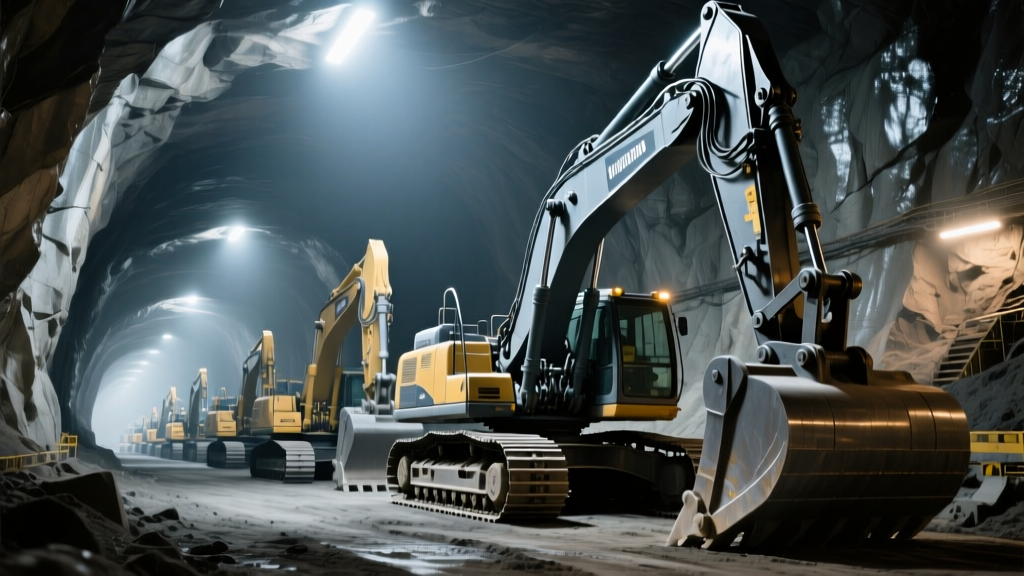
While surface mining operations deploy 400-ton haul trucks and massive draglines, the largest heavy equipment engineered for subterranean hard-rock environments faces a unique engineering paradox. These machines must deliver massive payload capacities—often exceeding 60 tonnes—while navigating 5-meter-wide drifts, 1:7 gradients, and strict subterranean emission envelopes. When a 63-tonne underground haul truck or a 50-tonne Load Haul Dump (LHD) suffers a critical failure in a decline, the operational bleed is severe, often exceeding $12,000 per hour in lost production, bottlenecked ventilation, and cascading shift delays.
Maintaining and troubleshooting the largest heavy equipment in underground mining requires moving beyond standard surface-earthmoving diagnostics. Subterranean machines operate in high-ambient-temperature, high-humidity, and heavily particulate-laden environments. This guide provides maintenance superintendents and heavy-duty mechanics with exact diagnostic pathways for the most critical failure modes found in modern underground mining giants.
⚠️ CRITICAL SAFETY WARNING: Before performing any troubleshooting on Tier 4 Final / Stage V underground equipment, ensure the machine is parked in a designated service bay with auxiliary ventilation. Active regeneration cycles can exhaust gases exceeding 600°C (1112°F), and confined-space exhaust toxicity is a primary hazard in underground workshops.Matrix: The Largest Heavy Equipment Classes in Underground Mining
Understanding the baseline specifications is critical before initiating diagnostics. The following matrix outlines the dominant large-scale equipment classes operating in 2026, their primary applications, and their most frequent high-cost failure modes.
| Equipment Class | Representative 2026 Model | Payload / Capacity | Primary High-Cost Failure Mode | Est. Component Replacement Cost (USD) |
|---|---|---|---|---|
| Underground Haul Truck | Sandvik TH663i | 63 Tonnes | DPF Thermal Runaway & Sensor Melt | $8,500 - $14,000 |
| Large LHD (Load Haul Dump) | Sandvik LH550i | 50 Tonnes | Hydrostatic Transmission Cavitation | $45,000 - $65,000 (Pump Rebuild) |
| Development Drill Rig (Jumbo) | Epiroc Boomer E2 | 2-Boom Kinematics | Hydraulic Drift & Alignment Loss | $12,000 - $18,000 (Valve Blocks) |
| Underground Concrete Sprayer | Normet MF050VC | 5000L Tank | Pneumatic Pump Seal Extrusion | $6,000 - $9,500 |
Diagnostic Pathway 1: DPF Thermal Runaway in 60+ Tonne Haulers
Underground ventilation requirements mandate strict particulate control. According to NIOSH Mining Ventilation Guidelines, diesel particulate matter (DPM) must be aggressively managed to protect miner health. To comply, the largest heavy equipment in underground mining, such as the Epiroc Minetruck MT6020 and Sandvik TH663i, utilize complex Diesel Particulate Filter (DPF) systems with active thermal regeneration.
Symptom Profile
- Engine derates to 1400 RPM (limp mode).
- Exhaust temperature warning illuminates on the operator HMI.
- Telematics (e.g., Sandvik OptiMine) reports 'Regen Inhibit' or 'Filter Plugged'.
Step-by-Step Troubleshooting Flow
- Verify Differential Pressure: Connect a diagnostic laptop to the engine ECU. Read the DPF differential pressure sensor. A clean filter reads 2–5 kPa. A reading above 25 kPa indicates severe soot loading or ash plugging.
- Inspect for Moisture Ingress: In wet development headings, water dripping from the back (roof) often pools on the exhaust system. Check the exhaust temperature sensor wiring harness. Moisture ingress causes false high-temp readings, tricking the ECU into aborting regeneration cycles.
- Check the Dosing Module (Hydrocarbon Injector): If the filter is plugged but the engine attempts to regen, the hydrocarbon doser may be clogged with carbonized diesel. Remove the doser nozzle and inspect the atomization pattern. Replace if the spray angle is less than 45 degrees.
- Edge Case - Uncommanded Regen: If the machine initiates regeneration while parked in the workshop without operator command, check the 'park brake engaged' switch circuit. A faulty microswitch in the park brake valve can trick the ECU into believing the machine is stationary and safe to regen, posing a severe fire hazard near workshop fuel stations.
Diagnostic Pathway 2: Hydrostatic Transmission Cavitation on Steep Declines
Large LHDs like the 50-tonne Sandvik LH550i or the Caterpillar R3000H (operating at its maximum envelope) rely on heavy-duty torque converters or advanced hydrostatic drives to manage immense tractive effort. When these machines descend 1:7 gradients fully loaded, the transmission acts as a massive retarder. The most catastrophic failure mode here is charge pressure loss leading to main pump cavitation.
The Physics of the Failure
During downhill retarding, the hydraulic motors drive the pumps. The charge circuit must maintain a minimum pressure (typically 22 to 25 bar) to keep the main pump swashplate lubricated and to prevent vapor bubbles from forming in the low-pressure side of the closed-loop circuit. If charge pressure drops below 18 bar, cavitation occurs. The vapor bubbles collapse against the swashplate, pitting the bronze slipper pads and destroying the pump within 40 hours of operation.
Field Diagnostics for Charge Pressure Loss
- Install Test Gauges: Attach 60-bar hydraulic test gauges to the charge pressure test ports on the main transmission valve block.
- Simulate Load: With the machine chocked and the bucket grounded, engage the transmission in 3rd gear and raise engine RPM to 1800. Charge pressure should instantly spike to 28 bar and settle at 24 bar.
- Analyze the Charge Relief Valve: If pressure stagnates at 16 bar, isolate the charge relief valve cartridge. Extract the cartridge and inspect the poppet and seat. In underground environments, fine silica dust bypassing the breathers often scores the relief valve seat, causing it to bleed pressure continuously.
- Check the Cooler Bypass: Underground ambient temperatures can exceed 35°C (95°F) in deep-level mines. If the hydraulic oil cooler is clogged with shotcrete dust, the oil viscosity drops, and the internal clearances in the charge pump leak excessively. Flush the cooler circuit and verify a minimum flow rate of 120 L/min.
'When a 50-tonne LHD loses charge pressure on a 15% decline, the operator loses dynamic braking. The machine will freewheel. Transmission cavitation isn't just a component failure; it's a critical safety system failure that requires immediate tramming lockout.'
— Senior Mobile Maintenance Superintendent, Tier-1 Gold Operation, Western Australia
Diagnostic Pathway 3: Hydraulic Drift in Multi-Boom Development Jumbos
Development jumbos, such as the Epiroc Boomer series, represent some of the most complex hydraulic systems in the subterranean fleet. When drilling 4.5-meter blast holes, boom kinematics and precise feed alignment are critical. Hydraulic drift—where the boom slowly sags under its own weight—causes misaligned holes, resulting in poor rock fragmentation and dangerous fly-rock during blasting.
Isolating the Drift Source
Mechanics frequently misdiagnose boom drift as a failed cylinder seal. In 85% of cases on modern jumbos, the cylinder seals are perfectly intact, and the failure lies in the load-holding valves (counterbalance valves).
- The 10-Minute Drift Test: Extend the boom horizontally to its maximum reach. Apply 200 bar holding pressure via the hydraulic system. Shut down the engine. Mark the boom pivot pin and the feed beam with a paint pen.
- Measure the Sag: Wait exactly 10 minutes. Measure the vertical deflection. If the drift exceeds 50mm, the system has failed the OEM tolerance test.
- Port Block Isolation: To prove the cylinder seals are good, disconnect the hydraulic hoses from the boom cylinder and cap the cylinder ports directly (bypassing the valve block). Repeat the 10-minute test. If the boom does not drift with capped ports, the cylinder seals are perfect.
- Replace the Load-Holding Valve: The drift is occurring internally within the valve block's counterbalance cartridge. Extract the cartridge. Look for a microscopic piece of brass or Teflon thread tape lodged in the check valve seat. In underground workshops, poor cleanliness standards during hose replacements are the leading cause of load-holding valve failures.
Predictive Telematics: The Future of Subterranean Troubleshooting
As the largest heavy equipment in underground mining becomes increasingly digitized, reactive troubleshooting is being replaced by predictive analytics. Modern fleets utilize onboard telematics that monitor CAN-bus data at 100Hz. By tracking parameters like hydraulic oil temperature gradients, engine blow-by pressure, and DPF soot accumulation rates, maintenance teams can schedule component replacements during planned ventilation shifts, entirely eliminating unplanned downtime in the heading.
For maintenance leaders, mastering the diagnostic nuances of these subterranean giants is not just about turning wrenches; it is about understanding the intersection of thermodynamics, fluid power, and the unforgiving constraints of the underground environment.