Underground Mining Fleet Costs & Heavy Equipment SEO Budgeting
Analyze 2026 CapEx for underground mining equipment and build a profitable heavy equipment SEO budget to drive high-ticket B2B machinery sales.
Procuring an underground mining fleet is a multi-million-dollar capital expenditure (CapEx) exercise, but acquiring the machinery is only half the financial battle for dealers and distributors. Moving this highly specialized inventory requires a sophisticated digital presence. In 2026, the intersection of fleet capital budgeting and digital marketing strategy is defined by a niche but highly lucrative discipline: heavy equipment SEO. For B2B dealers, failing to align the physical acquisition costs of underground loaders, drill rigs, and haulers with the digital cost of customer acquisition (CAC) leads to 'ghost inventory'—machines that depreciate on the lot while competitors capture high-intent search traffic.
⚠️ The Ghost Inventory Warning
An underground Load Haul Dump (LHD) loader depreciates by approximately 15% to 20% in its first year. If your digital strategy relies solely on outbound sales rather than inbound heavy equipment SEO, a $1.8M machine sitting on the lot for 14 months costs the dealership over $250,000 in lost asset value and financing overhead.
The Dual-CapEx Reality: Fleet Acquisition vs. Digital Visibility
Mining procurement officers no longer rely exclusively on trade shows and legacy print catalogs. According to industry digitalization trends, over 70% of B2B industrial buyers begin their vendor research via search engines, specifically querying long-tail technical specifications and model comparisons. Budgeting for an underground mining fleet therefore requires a dual-lens approach: evaluating the Total Cost of Ownership (TCO) of the physical assets while simultaneously forecasting the Customer Acquisition Cost (CAC) required to sell or lease them via organic search.
2026 Capital Cost Matrix: Core Underground Mining Equipment
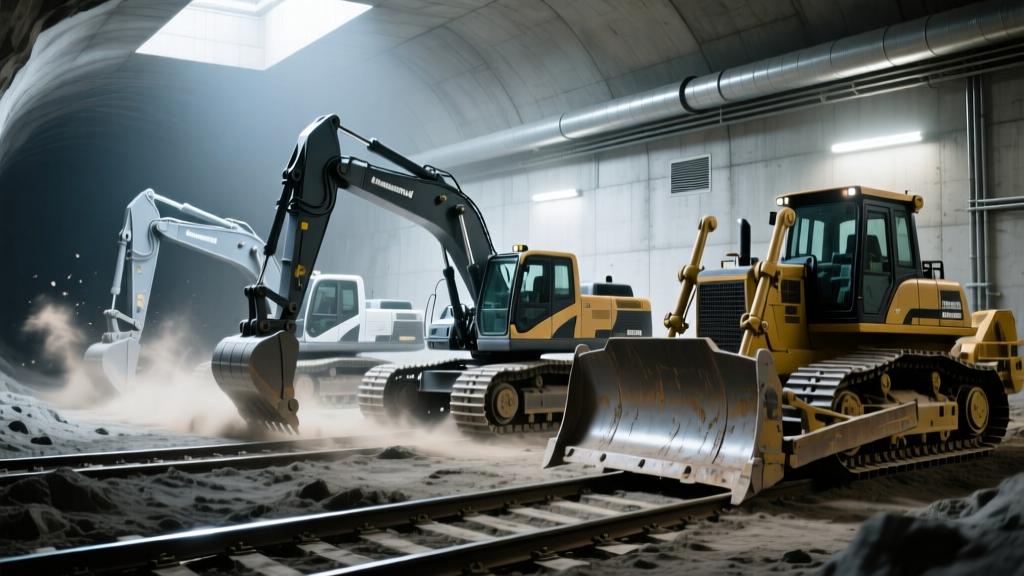
Underground mining environments impose severe constraints on equipment dimensions, emissions, and thermal output. The market has bifurcated into traditional diesel-powered workhorses and premium Battery Electric Vehicles (BEVs), which command a higher upfront CapEx but drastically reduce underground ventilation requirements. Below is the 2026 baseline CapEx matrix for core underground fleet categories.
| Equipment Category | 2026 Benchmark Model | Est. Base CapEx (USD) | Primary SEO Search Intent |
|---|---|---|---|
| BEV LHD Loader | Sandvik Artisan Z50 | $1,750,000 - $1,950,000 | Battery swap time, payload capacity |
| Diesel LHD Loader | Epiroc Minetruck MT42 B | $1,400,000 - $1,550,000 | Ventilation requirements, Tier 4 specs |
| Underground Drill Rig | Sandvik DD422i | $1,350,000 - $1,600,000 | Automation compatibility, boom reach |
| Underground Haul Truck | Cat AD60 (Articulated) | $1,100,000 - $1,250,000 | Gradeability, dump body volume |
The BEV Premium: Battery Electric vs. Diesel
The shift toward BEVs in sub-surface operations is the most significant capital variable in 2026. While a diesel-powered Epiroc underground loader might cost $350,000 less upfront than its BEV counterpart, the operational math flips underground. Diesel particulate matter requires massive, energy-intensive ventilation shafts. BEVs eliminate this, saving mines up to $1M annually in ventilation infrastructure and energy costs. Dealers must structure their heavy equipment SEO content to highlight this TCO offset, targeting mine planners searching for 'underground BEV ROI calculators' rather than just equipment spec sheets.
Decoding Heavy Equipment SEO: Budgeting for High-Ticket B2B Leads
Selling a $1.5M drill rig is not an e-commerce transaction; it is a 9-to-14-month enterprise sales cycle. Consequently, heavy equipment SEO cannot be measured by raw traffic volume. Ranking #1 for the broad term 'mining equipment' is financially useless if the traffic consists of students or hobbyists. The goal is to capture transactional and deep-informational intent from mining engineers and fleet procurement directors.
'In heavy machinery B2B sales, a single organic lead that converts to a $1.8M fleet lease justifies a year's worth of specialized SEO budget. The metric that matters is Cost Per Qualified Opportunity (CPQO), not Cost Per Click.'
For a mid-sized regional dealer or national distributor, a realistic heavy equipment SEO budget ranges from $8,000 to $15,000 per month. This investment funds technical site architecture, long-tail content engineering, and digital asset optimization (such as indexing 3D CAD files and PDF spec sheets).
The $12,000/Month Heavy Equipment SEO Allocation Framework
To capture high-intent mining procurement traffic, dealers must allocate their monthly SEO budget across four distinct pillars. Generic SEO agencies often fail here because they lack the technical vocabulary to optimize for terms like 'hydraulic drift drilling' or 'regenerative braking in LHDs'.
- Technical SEO & Schema Markup (25% | $3,000/mo): Implementing
Product,Offer, andAggregateRatingschema on machinery landing pages. This ensures that when a procurement officer searches 'Sandvik DD422i price', search engines display your inventory status, base MSRP, and financing options directly in the SERP. - Deep-Funnel Content Engineering (40% | $4,800/mo): Publishing highly technical comparison matrices, maintenance interval guides, and BEV vs. Diesel TCO case studies. This targets the 'evaluation' phase of the B2B buyer journey.
- Digital Asset Optimization (DAO) (20% | $2,400/mo): Mining engineers search for documentation. Optimizing PDF spec sheets, operator manuals, and 3D DXF files with proper metadata ensures your dealership owns the SERP real estate for technical documentation queries.
- Account-Based SEO & Link Building (15% | $1,800/mo): Earning backlinks from authoritative industry bodies, such as the NIOSH Mining Program or the Society for Mining, Metallurgy & Exploration (SME), to build domain authority specifically within the industrial and engineering sectors.
Aligning Fleet Procurement with Search Intent
The most critical mistake heavy equipment dealers make is mismatching their physical inventory procurement with digital search demand. If your market data shows a surge in organic search volume for 'zero-emission underground hauler' in the Nevada and Western Australian markets, but your CapEx budget is allocated entirely toward legacy diesel Cat AD60 trucks, you will face a severe inventory-to-intent mismatch.
Informational vs. Transactional Intent in Mining
Understanding the nuance of search intent dictates both your content strategy and your inventory financing.
- Informational Intent: Queries like 'how to reduce underground mine ventilation costs' or 'BEV battery degradation in high-heat stopes'. These require top-of-funnel whitepapers and establish your dealership as a technical consultant, not just a vendor.
- Transactional Intent: Queries like 'buy used Sandvik LH518i', 'Epiroc Boomer M2 C lease rates', or 'underground mining equipment dealers in Sudbury'. These require heavily optimized product category pages, real-time inventory feeds, and integrated CRM lead-capture forms.
By analyzing heavy equipment SEO data prior to finalizing quarterly CapEx budgets, dealership CFOs can align their physical purchasing power with proven digital demand. According to data on Sandvik's load and haul automation technologies, the integration of digital fleet management systems is now a primary search driver. Dealers who stock machines with pre-installed telemetry and auto-tramming capabilities—and optimize their SEO to highlight these specific software packages—report a 30% faster inventory turnover rate compared to those selling base-model, non-connected units.
📊 Summary Card: The 2026 Dealer Playbook
- CapEx Reality: Budget $1.3M - $1.9M per primary underground unit, factoring in the 15-20% BEV premium for future-proofing against ventilation regulations.
- SEO Investment: Allocate a minimum of $10,000/month to specialized heavy equipment SEO, focusing on technical schema and PDF asset optimization.
- Target Metric: Track Cost Per Qualified Opportunity (CPQO). A $3,000 CPA is highly profitable when the average closed deal exceeds $1.2M.
- Inventory Alignment: Use search volume data on automation and zero-emission keywords to guide physical fleet procurement, ensuring you buy what the market is actively searching for.
Ultimately, the dealerships that dominate the underground mining sector in 2026 are those that treat their digital architecture with the same rigor as their physical supply chain. Heavy equipment SEO is not a marketing afterthought; it is a critical revenue engine that dictates how fast a multi-million-dollar underground fleet moves from the manufacturer's floor to the mine's sub-surface operations.