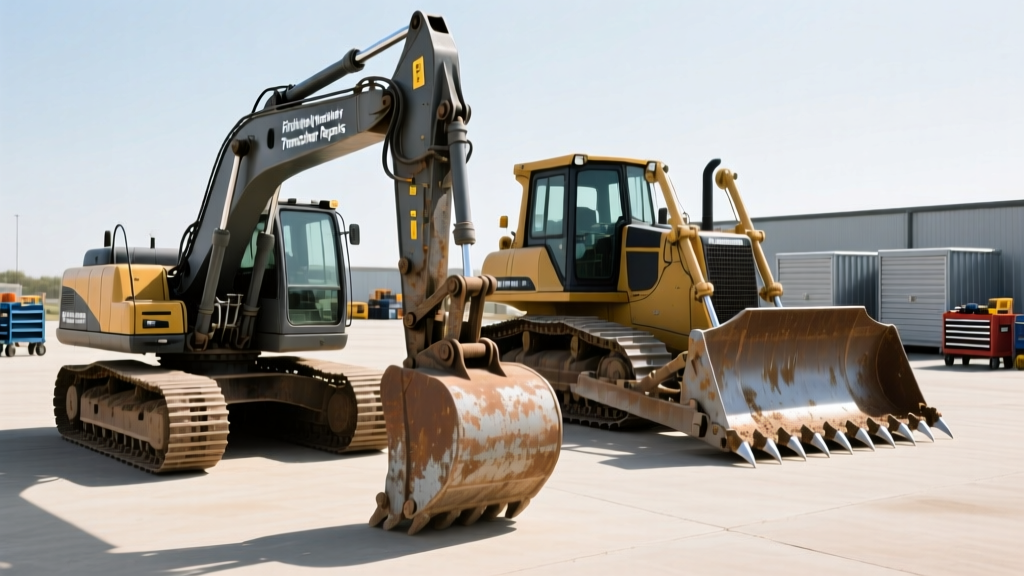
Using Pictures of Heavy Equipment to Diagnose Snow Removal Fleet Faults
Learn how to use pictures of heavy equipment to remotely diagnose snow removal fleet faults, from hydraulic leaks to plow trip-edge failures.
The Role of Visual Diagnostics in Winter Fleet Maintenance
When a municipal snow removal fleet operates during a 2 AM blizzard, sending a service truck blindly to a disabled vehicle wastes critical hours and exposes mechanics to hazardous roadside conditions. Modern fleet maintenance relies heavily on telematics, but fault codes only tell half the story. To accurately triage issues, dispatchers and remote mechanics must analyze pictures of heavy equipment sent directly from the field by operators.
Visual verification allows shops to differentiate between a minor field-adjustable fix and a catastrophic failure requiring a tow. According to the Federal Highway Administration (FHWA), optimizing winter maintenance response times directly correlates with reduced secondary accidents and lower fleet attrition rates. This guide breaks down how to interpret visual cues across four primary snow removal heavy equipment types, translating field photos into actionable repair strategies.
Dump Trucks with Snowplows: Hydraulic & A-Frame Diagnostics
The backbone of most municipal and contractor fleets is the tandem-axle dump truck (e.g., Mack Granite, Western Star 49X) equipped with a front-mounted reversible plow like the Hiniker C-Series or Blizzard 8611LP. When reviewing pictures of heavy equipment in this category, focus on the hydraulic routing and the moldboard mounting hardware.
Hydraulic Hose & Fitting Blowouts
In extreme cold (below -10°F), standard AW46 hydraulic fluid thickens, leading to pump cavitation and immediate pressure spikes. If an operator sends a photo showing amber-colored ice stalactites forming along the A-frame or near the Chelsea 280 series PTO pump, you are looking at a high-pressure hose blowout or a sheared O-ring face seal (ORFS) fitting.
⚠️ Winter Fluid Warning: Running AW46 in sub-zero temperatures will destroy a $1,400 PTO pump within 45 minutes due to cavitation. If photos confirm a cold-weather blowout, the shop must dispatch a service truck with ISO VG 15 or synthetic AW22 fluid (e.g., Shell Tellus S3 V 22) for the on-site repair and system flush.Moldboard and Trip-Edge Damage
Plows utilize a trip-edge mechanism with heavy-duty torsion springs to absorb impacts from hidden manhole covers or frost heaves. If a field photo shows the cutting edge locked in the forward (tripped) position and unable to reset, look closely at the pivot tube. Ice accumulation combined with road salt often seizes the pivot tube. Alternatively, a visible gap between the spring anchor and the moldboard skin indicates a snapped torsion spring, requiring a shop visit and a $350-$500 spring replacement.
Wheel Loaders: Snow Pusher & Drivetrain Faults
Wheel loaders like the Volvo L120H or Caterpillar 966 are deployed with massive box-style snow pushers to clear parking lots and intersection corners. The immense static load of pushing heavy, wet snow places unique stresses on the Z-bar linkage and auxiliary hydraulics.
Quick-Attach Hydraulic Bypassing
A common failure in loader snow pushers is hydraulic bypass at the quick-attach couplers. If the operator's photo shows heavy frost or ice buildup specifically localized on the male tip of the hydraulic coupler, the internal O-ring has failed or the coupler is not fully seated. This causes hot hydraulic fluid to bypass into the cold return line, instantly freezing the exterior moisture. The field fix involves using a heat gun to thaw the coupler, cleaning the flush-face tips, and replacing the O-rings (a $20 part that prevents a $2,500 hydraulic pump overhaul).
Linkage Stress Cracks
When examining photos of the loader's lift arms, direct your attention to the weld seams where the tilt cylinder mounts to the Z-bar. Wet snow weighs approximately 15-20 lbs per cubic foot. Overloading a 14-foot pusher can cause micro-fractures in the welds. A photo revealing a rust-streaked, jagged line along the weld seam indicates an active stress crack that must be gouged and re-welded in the shop before the arm catastrophically fails under load.
Motor Graders: Circle and Linkage Wear Analysis
Motor graders (e.g., Caterpillar 14M, John Deere 872GP) are essential for scraping hard-packed snow and ice down to the bare pavement. The most complex component is the circle drawbar assembly, which allows the moldboard to rotate 360 degrees.
When operators submit pictures of heavy equipment like graders, request a close-up of the circle gear and pinion. An asymmetrical gap between the bronze wear shoes and the circle rail indicates improper gib screw adjustment or severely worn wear shoes. If the photo shows more than a 1/4-inch gap on the leading edge, the grader will experience violent 'chatter' when scraping ice, destroying the cutting edge and damaging the articulation joint. Adjusting the gib screws is a 30-minute field fix; replacing the bronze wear shoes requires a crane and costs between $1,200 and $1,800.
Skid Steers: Snowblower & Auxiliary Flow Issues
Compact equipment like the Bobcat S86 is frequently paired with heavy-duty snowblowers for sidewalk and multi-use path clearing. The most frequent visual diagnostic clue for snowblower failure is ice buildup on the chute rotation gearbox.
If a photo shows the discharge chute locked in place and a solid block of ice surrounding the gearbox housing, the internal seals have failed, allowing moisture to enter the grease cavity. The immediate field protocol is to apply a penetrating de-icer and manually free the chute to prevent the hydraulic motor from dead-heading and blowing a relief valve. The long-term repair requires rebuilding the gearbox ($400-$600) and packing it with a synthetic, water-resistant marine grease.
Corrosion from Anti-Icing Brines
Modern fleets pre-wet roads with Magnesium Chloride (MgCl2) brine. This chemical is highly corrosive to electrical systems. When reviewing photos of skid steer auxiliary wiring, look for a green or white crust on the Deutsch DT connectors. This galvanic corrosion causes intermittent solenoid failures in the snowblower chute deflector. Mechanics must dispatch with electrical contact cleaner, dielectric grease, and replacement pigtails.
Diagnostic Matrix: Visual Symptoms vs. Root Causes
| Equipment Type | Visual Symptom in Photo | Root Cause | Field Fix vs. Shop Fix | Est. Repair Cost |
|---|---|---|---|---|
| Dump Truck Plow | Amber ice stalactites on A-frame | Hydraulic hose blowout (AW46 cavitation) | Field: Replace hose, flush with ISO VG 15 | $450 - $600 |
| Wheel Loader | Frost localized on male hydraulic coupler | Quick-attach bypass / O-ring failure | Field: Thaw, clean, replace O-rings | $120 - $250 |
| Motor Grader | Asymmetrical gap at circle gear rail | Worn drawbar wear shoes / loose gib screws | Field: Adjust gibs. Shop: Replace shoes | $800 - $1,800 |
| Skid Steer | Ice block around chute rotation gearbox | Failed internal seals, moisture ingress | Shop: Rebuild gearbox, repack marine grease | $400 - $600 |
Standardized Protocol for Capturing Diagnostic Photos
The quality of remote troubleshooting is entirely dependent on the quality of the images provided by the operator. Implement this 4-step protocol for all field personnel to ensure the pictures of heavy equipment are diagnostically viable:
- The Context Shot (Wide): Stand 15 feet back and capture the entire machine and attachment. This confirms the equipment type, the general operating environment, and the position of the attachment (e.g., is the plow tripped or raised?).
- The Component Shot (Medium): Move in to isolate the specific system (e.g., the hydraulic manifold, the circle drawbar, or the PTO housing).
- The Defect Shot (Macro): Fill the frame with the exact point of failure. If there is a leak, photograph the origin point, not just the puddle on the ground. If there is a crack, place a high-visibility object (like a glove or a wrench) next to it for scale.
- The Lighting Rule: Never use the camera flash when photographing snow or ice. The glare will wash out all detail and hide stress cracks or fluid leaks. Use the phone's flashlight from an off-axis angle to create shadows that highlight surface defects.
Operator Safety During Field Diagnostics
While capturing these images, operators are exposed to extreme cold and traffic hazards. The OSHA Cold Stress Guidelines mandate that employers monitor workers for signs of frostbite and hypothermia, especially when they exit the heated cab to inspect machinery. Require operators to wear high-visibility, insulated PPE and establish a strict 'engine-off, keys-in-pocket' rule before approaching any hydraulic linkage or PTO shaft to take photographs. Diagnostics must never supersede operator safety.
Frequently Asked Questions
What is the most common cause of hydraulic failure in snowplows during the first storm of the year?
The most common cause is fluid cavitation due to using summer-grade hydraulic fluid (AW46) in freezing temperatures. The fluid is too thick for the pump to draw, creating vapor bubbles that collapse and destroy the pump internals. Always verify fluid viscosity ratings during pre-season winterization.
Can thermal imaging cameras help with remote diagnostics?
Yes. Many modern fleet shops equip service supervisors with smartphone-compatible thermal imaging attachments (like the FLIR ONE). If an operator can take a thermal picture of a hydraulic manifold, a blocked valve or bypassing relief valve will appear as a distinct hot spot against the freezing ambient background, drastically reducing diagnostic time.