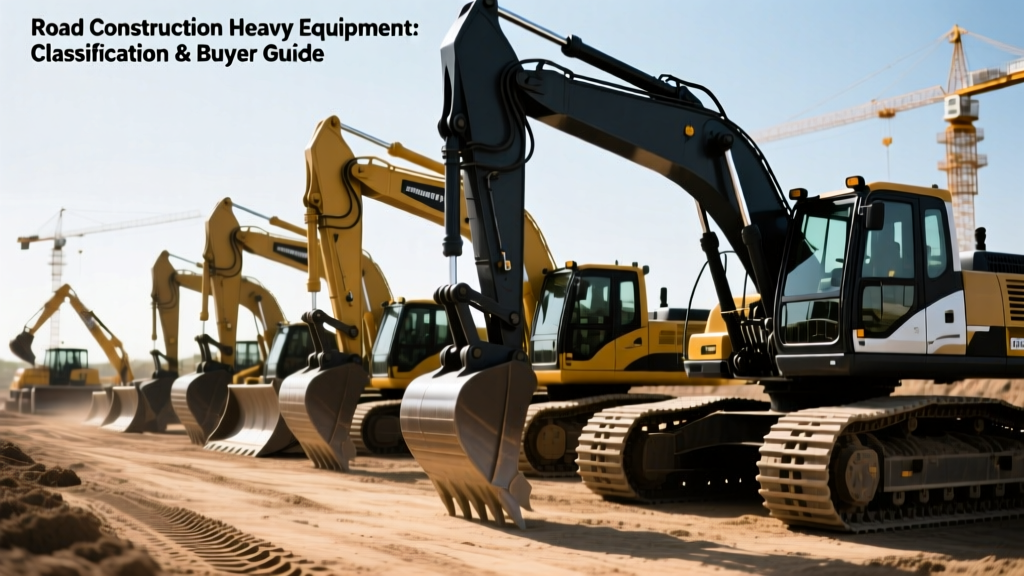
Road Construction Heavy Equipment: Classification & Buyer Guide
Master road construction heavy equipment classification. Compare earthmoving, paving, and compaction machinery with 2026 pricing, specs, and fleet frameworks.
Strategic Fleet Building: Beyond Basic Machine Categories
Selecting the right road construction heavy equipment requires matching machine capabilities to the specific phase of the paving lifecycle. A common procurement failure is over-investing in primary pavers while under-specifying base preparation and material transfer machinery, leading to premature pavement failure. Modern highway and municipal projects demand a synchronized fleet where earthmoving, milling, paving, and compaction assets operate within tight thermal and geometric tolerances.
This classification guide breaks down the essential machinery categories, providing technical specifications, 2026 market pricing, and operational frameworks to optimize your capital expenditure.
Phase 1: Subgrade & Earthmoving Classification
The longevity of any asphalt or concrete surface is dictated by the subgrade. Equipment in this class must achieve precise geometric tolerances and high-density soil compaction.
Motor Graders
Motor graders establish the crown and cross-slope of the roadbed. For high-production highway projects, 14-foot to 16-foot moldboards are standard. Models like the Caterpillar 140 or John Deere 872 feature Grade Control systems utilizing 3D GPS mastless technology, reducing staking costs and achieving millimeter-level accuracy.
- Engine Output: 180 to 250 hp (Tier 4 Final / Stage V compliant)
- Operating Weight: 38,000 to 48,000 lbs
- 2026 Price Range: $420,000 – $680,000
Soil Compactors (Padfoot/Sheepsfoot)
Cohesive soils require the penetrating force of padfoot drums. Single-drum vibratory compactors, such as the Bomag BW 219 DH-5, deliver high centrifugal forces (up to 77,000 lbs) to fracture soil clods and eliminate void spaces. Look for models with automatic vibration shutdown when the machine stops to prevent over-compaction and drum damage.
⚠️ Procurement Warning: Do not substitute smooth-drum vibratory rollers for cohesive clay subgrades. Smooth drums merely seal the surface moisture, trapping water beneath the base and guaranteeing future pothole formation and frost heave.Phase 2: Surface Rehabilitation & Base Placement
Cold Milling Machines
Before overlaying, deteriorated asphalt must be removed to restore proper drainage profiles. Half-lane (6.5 ft) and full-lane (12.5 ft) milling machines are the industry standard. The Wirtgen W 210 Fi utilizes a dual-engine concept that reduces fuel consumption by up to 30% during low-load transport while maintaining high torque for deep cuts (up to 13 inches).
Buyer Insight: Factor in the cost of replacement cutting teeth and flighting. A single full-lane milling drum can consume 80 to 120 tungsten carbide teeth per day in highly abrasive, aged asphalt.
Material Transfer Vehicles (MTVs)
MTVs are the most critical, yet frequently omitted, link in the paving chain. When hot mix asphalt (HMA) is dumped directly from a truck into a paver, temperature differentials cause thermal segregation. MTVs like the Roadtec SB-2500 receive the mix, re-blend it via an auger system, and feed it continuously to the paver.
According to Federal Highway Administration (FHWA) Pavement Technology guidelines, eliminating thermal segregation can extend pavement lifespan by 20% to 30%. Continuous paving via an MTV eliminates the stop-start motion that creates transverse bumps (washboarding) on the final surface.
Phase 3: Paving & Compaction Machinery
Asphalt Pavers: Track vs. Wheel Undercarriage
Choosing between track and wheel pavers dictates your machine's footprint and tractive effort. Commercial pavers (e.g., Volvo P5320) are highly mobile, while heavy highway pavers (e.g., Caterpillar AP1055) rely on tracks.
| Feature | Wheeled Pavers | Tracked Pavers |
|---|---|---|
| Ground Pressure (PSI) | High (25-40 PSI) | Low (6-12 PSI) |
| Subgrade Impact | Can rut soft bases | Floats over soft bases |
| Mobility | High (Self-propelled between sites) | Low (Requires transport) |
| Best Application | Commercial, municipal, patching | Highway, wide-lane, soft subgrades |
| 2026 Base Cost | $350,000 – $500,000 | $550,000 – $900,000+ |
Compaction: The Pneumatic vs. Vibratory Matrix
Achieving the required 92% to 96% density (per AASHTO standards) requires a specific rolling pattern. Modern fleets utilize a three-tier compaction approach:
- Breakdown Rolling: High-frequency vibratory steel-drum rollers (e.g., Volvo DD120C) seated directly behind the paver screed to achieve initial density before the mix cools below 230°F (110°C).
- Intermediate Rolling: Pneumatic-tired rollers. The kneading action of the rubber tires seals the surface voids. Modern models feature automatic tire heating systems to prevent HMA pickup (sticking).
- Finish Rolling: Static steel-drum tandem rollers to eliminate tire marks and ensure a smooth ride quality (IRI score optimization).
The 2026 Fleet Procurement Framework
When evaluating road construction heavy equipment, buyers must look beyond the initial invoice price. The Association of Equipment Manufacturers (AEM) emphasizes that total cost of ownership (TCO) is heavily influenced by telematics integration and emissions compliance.
Step-by-Step Evaluation Protocol
1. Verify Emissions Tiering: Ensure all new diesel assets meet EPA Tier 4 Final or EU Stage V standards. Non-compliant machines face severe operational restrictions in municipal and state-funded DOT contracts.2. Audit Telematics Architecture: Require factory-installed telematics (e.g., Cat Connect, Volvo CareTrack). These systems monitor idle times, fuel burn rates, and hydraulic pressures, allowing fleet managers to predict pump failures before they halt a critical paving sequence.
3. Assess Screed Heating Tech: For pavers, specify electric screed heating over diesel. Electric systems maintain uniform screed temperatures, preventing asphalt tearing at the edges, and eliminate the fire hazard and fuel consumption of diesel burners.
Safety and Operator Ergonomics
Heavy machinery procurement must align with stringent site safety protocols. The OSHA Heavy Equipment Safety Standards mandate strict visibility and backup alarm requirements. When spec'ing rollers and pavers, prioritize models with 360-degree camera systems, radar-based proximity detection, and pressurized, ROPS/FOPS-certified cabs equipped with HEPA filtration to protect operators from silica dust and asphalt fumes.
Final Procurement Verdict
Building a road construction fleet is an exercise in thermal and geometric synchronization. Allocate 40% of your capital toward base preparation and material transfer (graders, MTVs), as these machines dictate the structural integrity of the final product. Reserve 60% for high-production pavers and intelligent compaction rollers equipped with continuous density mapping sensors. By classifying your equipment needs against the specific lifecycle phases of the pavement, you eliminate bottlenecks, reduce material waste, and secure long-term DOT contract viability.