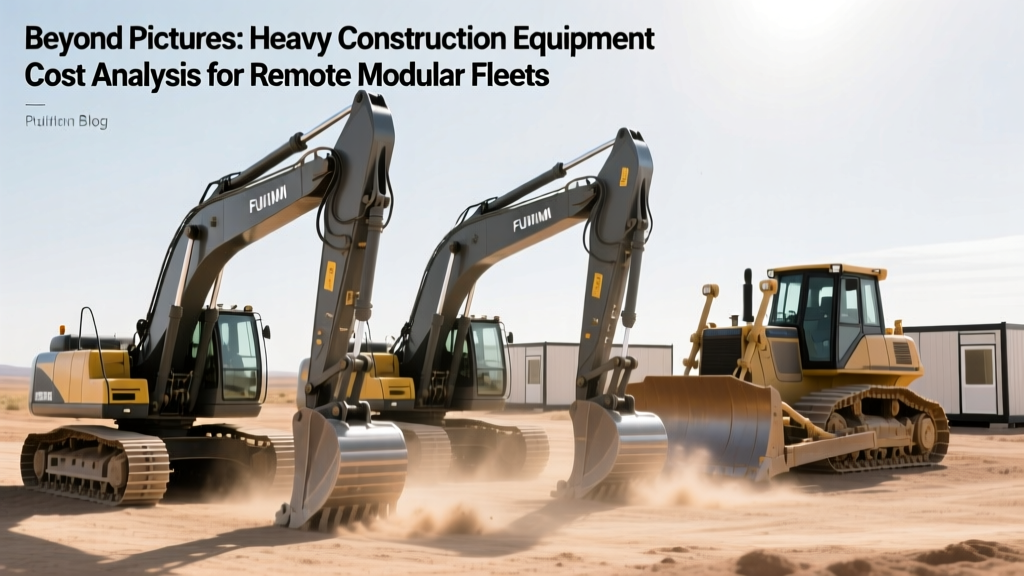
Beyond Pictures: Heavy Construction Equipment Cost Analysis for Remote Modular Fleets
Analyze the true CapEx and OpEx of modular and remote-controlled heavy equipment. Discover 5-year TCO models, telemetry costs, and ROI frameworks.
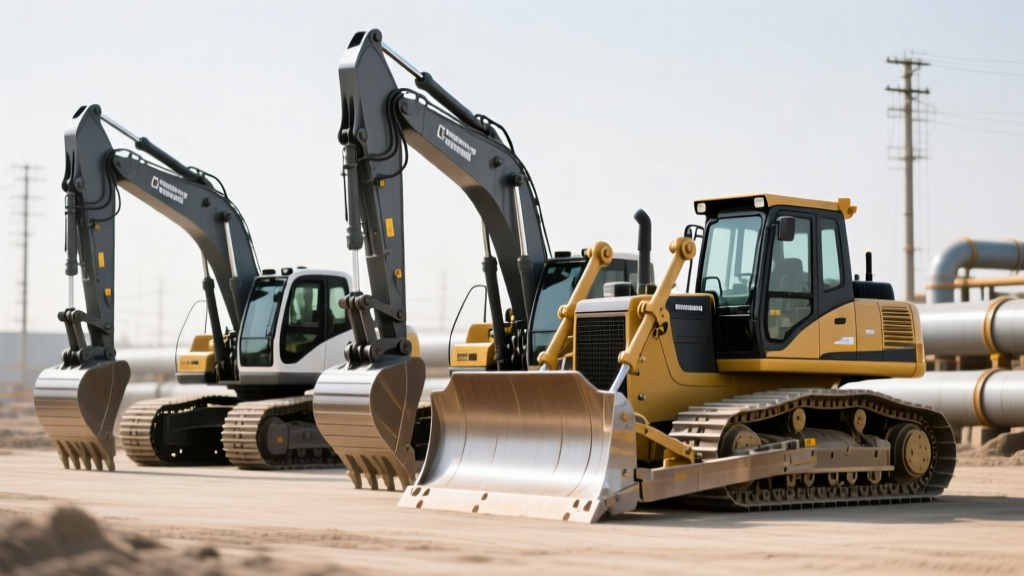
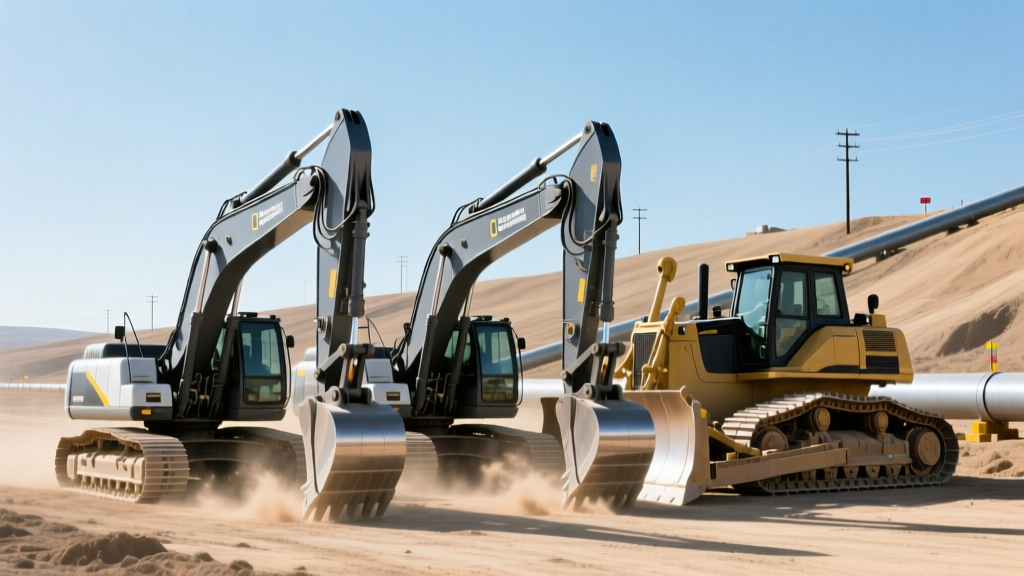
When evaluating pictures of heavy construction equipment for 2026 fleet modernization, the visual appeal of cab-less, remote-controlled modular rigs is obvious. Trade show brochures and digital galleries frequently showcase these futuristic machines operating seamlessly in hazardous zones. However, transitioning from visual inspiration to financial execution requires a forensic approach to budget planning. Remote-controlled and modular heavy equipment fundamentally alters both Capital Expenditure (CapEx) and Operational Expenditure (OpEx) models, introducing new line items for telemetry, edge computing, and specialized maintenance while simultaneously eliminating others like cab climate control and hazard pay.
Executive CapEx Summary: Remote & Modular Assets
- Base Modular Demolition Robot (10-15 ton class): $165,000 – $195,000
- Teleoperation Retrofit Kit (20-ton excavator): $55,000 – $85,000
- Heavy-Duty Modular Quick-Coupler Hydraulics: $12,000 – $18,000
- Private 5G Edge Node (Site Telemetry): $14,500 per unit
The Capital Expenditure Reality: Purpose-Built vs. Retrofit
The first major budgetary decision in acquiring remote-controlled heavy machinery is choosing between purpose-built modular units and teleoperation retrofits for existing iron. Purpose-built modular machines, such as the Brokk 110 or Husqvarna DXR series, are engineered from the ground up without cabs, optimizing their center of gravity and allowing for modular attachment swapping (breakers, crushers, augers). The upfront cost for a mid-tier modular demolition robot ranges from $165,000 to $195,000. This premium reflects the integrated high-pressure hydraulic systems required to power diverse modular attachments simultaneously.
Conversely, teleoperation retrofits—such as those offered by Built Robotics or similar autonomous/remote tech firms—allow fleets to convert standard manned excavators (e.g., a CAT 320 or Komatsu PC210) into remote-controlled assets. The hardware and sensor suite for a retrofit typically costs between $55,000 and $85,000. While the initial CapEx is lower than buying a purpose-built modular rig, retrofitting introduces structural compromises. The machine still carries the dead weight of a cab, and the modular attachment swapping capabilities are limited by the host machine's original auxiliary hydraulic flow rates.
Budgeting for Modular Attachment Ecosystems
A common budgeting failure is underestimating the cost of the modular attachment ecosystem. A remote-controlled base unit is only as profitable as the attachments it can cycle through. Procuring a heavy-duty hydraulic quick-coupler system ($12,000–$18,000) is mandatory. Furthermore, intelligent attachments with integrated telemetry (e.g., smart crushers that auto-adjust jaw pressure based on material density) add $25,000 to $40,000 per implement. Fleet managers must allocate at least 30% of the base unit's CapEx specifically for the modular attachment inventory to realize the machine's full utilization potential.
5-Year Total Cost of Ownership (TCO) Matrix
To understand the long-term financial impact, we must compare a traditional manned 20-ton excavator against a teleoperated modular equivalent over a standard 5-year (10,000-hour) lifecycle. The data below reflects 2026 market rates for labor, insurance, and energy.
| Cost Category (5-Year) | Traditional Manned Excavator | Teleoperated Modular Rig | Variance |
|---|---|---|---|
| Base Machine / Retrofit CapEx | $285,000 | $355,000 | +$70,000 |
| Operator Labor (10k hrs @ $45/hr fully burdened) | $450,000 | $450,000 | $0 |
| Hazard Pay & Specialized PPE Allowances | $65,000 | $0 | -$65,000 |
| Workers Comp & Liability Insurance Premiums | $82,000 | $58,000 | -$24,000 |
| Telemetry, 5G Network & Edge Compute OpEx | $0 | $48,000 | +$48,000 |
| Cab HVAC & Suspension Seat Maintenance | $14,000 | $0 | -$14,000 |
| Net 5-Year TCO Differential | +$15,000 (Savings) |
While the teleoperated modular rig commands a higher initial purchase price and incurs ongoing network costs, the elimination of hazard pay, reductions in insurance premiums, and the removal of cab-specific maintenance result in a net savings over the machine's lifecycle. Furthermore, this matrix does not quantify the revenue gained from zero downtime due to operator heat exhaustion or toxic fume exposure limits.
The Hidden IT Budget: Telemetry and Edge Computing
The most frequent point of budget failure for remote-controlled heavy equipment is the underestimation of IT and network infrastructure. Remote operation requires ultra-low latency (<20 milliseconds) for high-definition stereoscopic video feedback and haptic joystick response. Relying on public cellular networks on active construction sites is financially and operationally reckless due to signal degradation from moving steel and earthworks.
Fleets must budget for private 5G Customer Premises Equipment (CPE) and localized edge computing servers. A standard private 5G node capable of covering a 50-acre site costs approximately $14,500 in hardware, plus $2,500 annually for localized software licensing and security patches. According to NIST's robotics and automation frameworks, ensuring deterministic network latency in unstructured environments requires edge processing to handle sensor fusion locally before transmitting control signals. Budgeting an initial $45,000 for site-wide IT deployment, and $12,000 annually for IT maintenance, is mandatory for reliable remote operation.
Decision Framework: When to Deploy Remote Modular Assets
Not every earthmoving or demolition task justifies the premium of remote-controlled modular equipment. Use the following financial and operational decision matrix to determine procurement viability:
- Scenario A: High-Risk Demolition & Trenching. If the project involves structural demolition, confined space trenching, or hazmat remediation, deploy remote modular units immediately. OSHA's demolition safety guidelines mandate strict exposure limits and structural shoring protocols that drastically slow down manned operations. Removing the operator from the drop zone eliminates the need for extensive shoring and cuts project timelines by up to 35%, easily offsetting the equipment premium.
- Scenario B: High-Volume, Low-Risk Earthmoving. If the task is standard bulk excavation or grading in an open, stable environment, stick to traditional manned equipment or semi-autonomous grade-assist systems. The CapEx of full teleoperation and private 5G networks will not yield an ROI in low-hazard environments where standard labor rates apply.
- Scenario C: Multi-Tool Precision Work. If a single machine must swap between a hydraulic breaker, a concrete crusher, and a grapple within the same shift, invest in purpose-built modular robots. The quick-coupler efficiency and remote-controlled precision hydraulics reduce attachment swap times from 15 minutes to under 3 minutes, keeping the asset billable.
"The true ROI of remote-controlled heavy equipment isn't found in replacing the operator's salary; it's found in the 18% to 22% reduction in fleet liability insurance and the ability to run machines continuously in environments that would legally require human rotation every two hours."
Actionable Procurement Strategy for 2026
To integrate modular and remote-controlled equipment without destabilizing cash flow, fleet managers should adopt a phased procurement strategy. Begin by retrofitting two existing mid-life excavators (years 3-4 of their lifecycle) with teleoperation kits. This limits initial CapEx exposure to roughly $140,000 while allowing the operations team to establish the private 5G network infrastructure and train remote operators on the company's existing iron.
Once the IT infrastructure is proven and operator latency-complaints are resolved, transition to purchasing purpose-built modular demolition robots for specialized hazardous contracts. Ensure that all procurement contracts include a minimum 3-year SLA for telemetry hardware replacement and edge-server software updates, shifting the burden of network obsolescence back to the OEM. By aligning the acquisition of remote modular assets strictly with high-hazard, high-attachment-cycle projects, fleets can secure the financial benefits of automation without subsidizing idle technology on standard dirt-moving sites.