Heavy Equipment Glass Compliance for Railroad Maintenance Machinery
Explore FRA and AREMA safety standards for heavy equipment glass on railroad maintenance machinery, including hi-rail excavators and tampers.
Railroad maintenance environments subject operator cabs to extreme ballistic and vibrational hazards. Flying ballast, steel sparks from rail grinders, and the aerodynamic shockwaves of adjacent high-speed freight traffic dictate that the heavy equipment glass installed on railway maintenance-of-way (MOW) machinery must vastly exceed standard earthmoving specifications. As of 2026, Federal Railroad Administration (FRA) enforcement of cab integrity standards for roadway maintenance machines has intensified, making precise compliance with glazing, mesh guarding, and sealant specifications a critical operational priority for fleet managers.
⚠️ COMPLIANCE WARNING: Operating a roadway maintenance machine with non-compliant cab glazing on active rail corridors violates 49 CFR Part 214 - Roadway Worker Protection. FRA inspectors routinely issue out-of-service orders for cabs exhibiting glass delamination, compromised polyurethane seals, or missing wire mesh guards, resulting in project delays exceeding $15,000 per day in track-time penalties.Regulatory Framework: FRA, AREMA, and ANSI Standards
Standard construction machinery glazing is governed by ANSI/SAE Z26.1, which focuses primarily on optical clarity and basic impact resistance. However, railroad maintenance equipment operates under a dual-jurisdiction framework. The American Railway Engineering and Maintenance-of-Way Association (AREMA) provides the engineering baseline for trackside forces, while the FRA enforces the survivability of the operator cab.
For hi-rail excavators and self-propelled MOW vehicles, the cab must withstand a localized impact of a 2-pound (0.9 kg) irregular rock traveling at 45 mph (72 km/h) without spalling or penetrating the inner plane. Furthermore, OSHA 1926.601 Motor Vehicles mandates that all glass must be safety glazing, but rail-specific internal corporate safety plans (such as those enforced by BNSF and Union Pacific) typically require an additional layer of ballistic mesh or polycarbonate shielding for the front-facing windshield.
Material Science: Sizing Heavy Equipment Glass for Rail
Procurement teams frequently make the costly mistake of ordering standard Polyvinyl Butyral (PVB) laminated glass for MOW fleets. While PVB is sufficient for highway excavators, the high-frequency vibration of rail equipment causes PVB interlayers to shear and delaminate within 18 to 24 months.
| Glazing Specification | Interlayer / Material | Impact Rating | Avg. Cost (Front Pane) | Rail Suitability |
|---|---|---|---|---|
| Standard Laminated | 0.060" PVB | ANSI Z26.1 (Basic) | $450 - $700 | Fail (Delamination risk) |
| Rail-Spec Laminated | 0.090" SentryGlas (Ionomer) | FRA Part 229 / 214 | $1,800 - $2,400 | Pass (High vibration) |
| Polycarbonate Shield | 0.5" Lexan Margard (Hardcoat) | Ballistic / FOPS | $2,800 - $3,500 | Pass (Adjacent track debris) |
| Wire Mesh Guard | 0.25" Welded Steel Wire | SAE J1356 / EN 12663 | $900 - $1,200 | Mandatory (Tunnel/Clearance) |
The industry standard for 2026 rail compliance is ionomer interlayer glass (such as SentryGlas). Ionomer is five times stiffer than PVB and maintains structural integrity even when shattered, preventing the glass pane from bowing inward and striking the operator during a high-mass ballast strike.
Application by Railroad Maintenance Equipment Type
Hi-Rail Excavators (e.g., Caterpillar M323F)
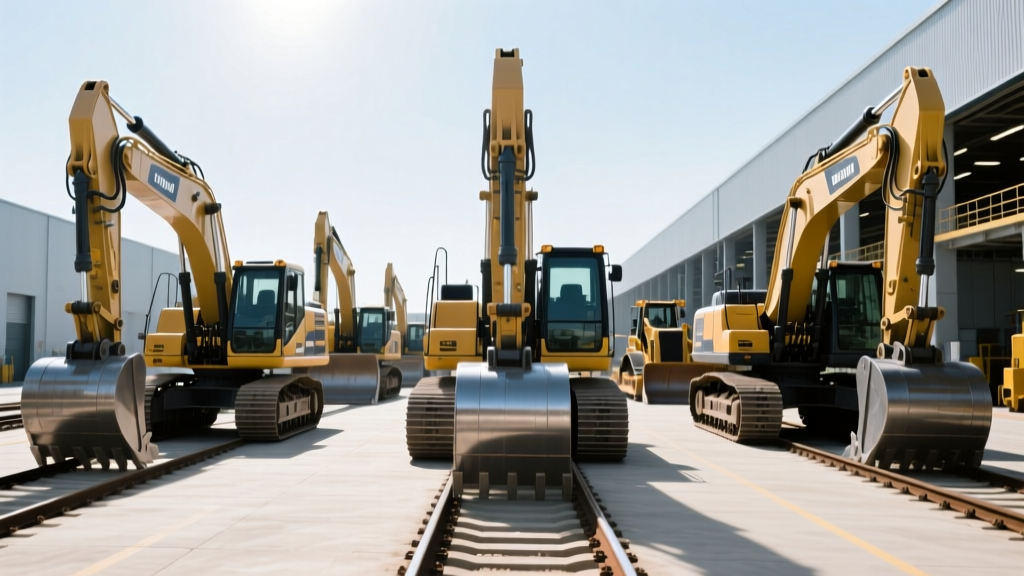
Hi-rail excavators perform ditching, crossing replacement, and bridge timbering. The primary hazard to heavy equipment glass on these units is flying debris from hydraulic breaker attachments and adjacent track traffic. Fleet specifications for the Cat M323F deployed on Class I railroads require a dual-pane setup: a primary 0.75-inch ionomer laminated windshield, backed by a 0.5-inch hard-coated polycarbonate secondary shield. The hard-coat (Margard) is essential; without it, airborne quartz dust from ballast will scour the polycarbonate, reducing optical clarity to unsafe levels within 400 operating hours.
Ballast Tampers (e.g., Plasser & Theurer 09-3X Dynamic Tamping Express)
Tampers do not face the same ballistic threats as excavators, but they generate extreme localized vibration. The tamping banks operate at frequencies between 35 Hz and 50 Hz, transmitting harmonic resonance directly into the cab chassis. Standard tempered glass is strictly prohibited on tampers; the high-frequency vibration induces micro-fractures along the glass edges, leading to spontaneous shattering. Rail-spec heavy equipment glass for tampers must be laminated and mounted using a high-modulus polyurethane sealant (e.g., SikaTack PRO) with a minimum 24-hour cure time before the machine is cleared for rail deployment.
Rail Grinders and Milling Machines
Grinders operate at high speeds, showering the cab in incandescent steel sparks (exceeding 2,500°F). Standard laminated glass will suffer thermal shock, and PVB interlayers will melt and bubble if a spark cluster lodges in the window frame. Grinders require specialized ceramic-fritted edge glass combined with exterior pneumatic spark-deflection shields. Operators must ensure the deflection shields are purged with compressed air daily to prevent spark buildup that could transfer heat to the glass perimeter.
💡 PROCUREMENT TIP: When ordering replacement heavy equipment glass for MOW vehicles, always specify the exact rail-gauge clearance profile. Standard construction cabs often feature protruding rubber gaskets that exceed the 12-foot lateral clearance limit required for tight tunnel and platform clearances on Northeast Corridor and legacy mountain routes. Specify flush-mounted, structural silicone glazing (SSG) to maintain the kinematic envelope.Sealant Degradation and Cab Pressurization
Modern railroad maintenance cabs are positively pressurized with HEPA filtration to protect operators from silica dust and diesel particulate matter. The integrity of this pressurization relies entirely on the glass-to-frame seal. UV exposure combined with the lateral sway of rail travel (up to 2 inches of lateral cab lean on curved, elevated tracks) causes standard EPDM rubber gaskets to compress and fail.
Compliance requires the use of structural silicone or two-part polyurethane adhesives. Maintenance teams must perform an annual ultrasonic leak test on all cab glazing. Any cab that fails to maintain a minimum positive pressure of 0.15 inches of water column (w.c.) must be grounded until the heavy equipment glass is re-seated and re-sealed.
Daily Pre-Shift Glazing Inspection Protocol
To satisfy FRA roadway worker protection requirements and internal Class I railroad safety audits, operators must execute the following inspection checklist before taking a machine out of the siding:
- Visual Delamination Check: Inspect the perimeter of all laminated panes for milky discoloration or bubbling, indicating moisture ingress and interlayer failure.
- Mesh Guard Tension: Verify that wire mesh guards are secured with all quick-release pins engaged. A loose mesh guard vibrating against the glass will act as an abrasive, destroying the outer glass ply.
- Sealant Adhesion Test: Apply moderate thumb pressure to the polyurethane sealant bead. It must exhibit firm elastomeric resistance, not mushiness or separation from the steel frame.
- Polycarbonate Scouring: If secondary polycarbonate shields are installed, check for deep abrasion grooves. Shields with optical distortion exceeding 5% must be swapped out at the next siding stop.
- Hardware Torque: Check the mounting bolts for FOPS/ROPS mesh frames using a calibrated torque wrench; rail vibration routinely backs out standard hex bolts if nylon-insert locknuts are not utilized.
Specifying, maintaining, and inspecting heavy equipment glass for railroad maintenance machinery is not a passive procurement task. It requires a rigorous understanding of vibrational harmonics, ballistic impact metrics, and federal clearance envelopes. By standardizing on ionomer interlayers, hard-coated polycarbonates, and structural polyurethane mounting, fleet managers can eliminate cab-integrity citations and ensure operator survivability in the unforgiving railway right-of-way.