Heavy Equipment Technician Salary: Pipeline Maintenance Schedules
Explore utility and pipeline equipment maintenance schedules and how specialized sideboom and pipelayer service impacts heavy equipment technician salary.
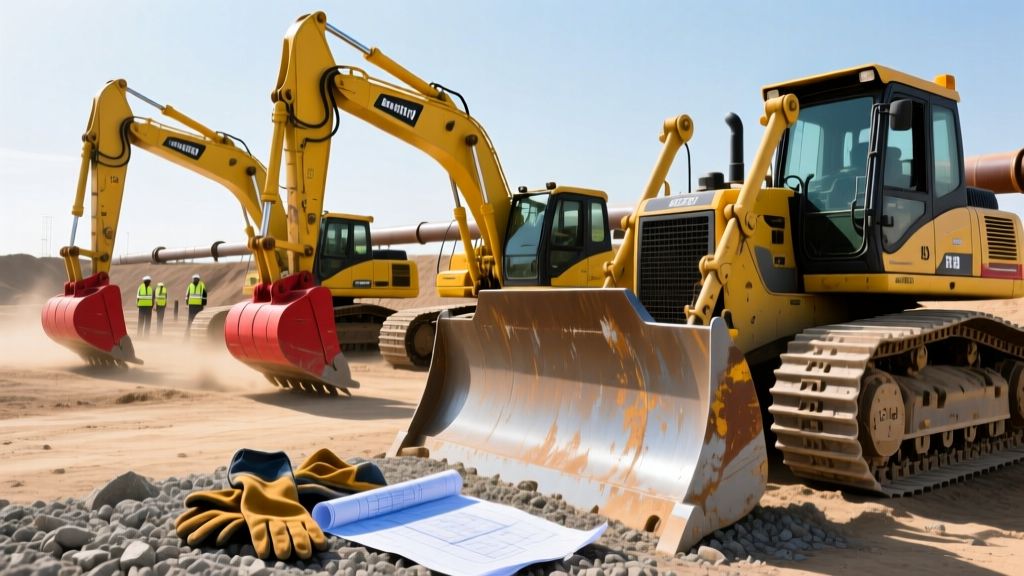
Pipeline and utility construction demands continuous operation in abrasive, high-grade, and often remote environments. The machinery deployed on these rights-of-way (ROW)—including sidebooms, pipelayers, and continuous trenchers—endures dynamic stress profiles that general earthmoving equipment rarely encounters. This extreme operational reality dictates rigorous, non-negotiable maintenance schedules and directly drives the premium placed on a specialized heavy equipment technician salary within the energy and utility sectors.
The Unique Toll of Pipeline Construction on Heavy Machinery
Unlike static mining operations or localized commercial building sites, pipeline construction relies on a "spread"—a continuous, synchronized line of equipment moving miles per week across uneven terrain. When a critical asset like a CRC-Evans bending machine or a Caterpillar 583T pipelayer goes down, the entire spread halts. With pipeline laydown costs frequently exceeding $10,000 per hour in delayed contractor fees and idle crew wages, preventive maintenance is not just a mechanical best practice; it is a vital economic safeguard.
High-Stress Assets: Pipelayers and Sidebooms
Sidebooms (tractors modified with side-mounted booms for lifting and lowering pipe) operate under severe off-center load dynamics. A Cat 583T or similar large pipelayer routinely lifts 20,000 to 40,000 pounds of steel pipe while traversing 30-degree lateral slopes. This creates immense torsional stress on the mainframe, accelerated wear on the undercarriage track links, and extreme fatigue on the boom hoist cables. Technicians maintaining these machines must possess specialized knowledge of load dynamics, rigging geometry, and high-pressure hydraulic counterweight systems that standard construction mechanics rarely encounter.
Mandatory Service Schedules for Pipeline Fleets
Standard OEM maintenance intervals are often insufficient for pipeline equipment operating in highly abrasive soil (such as limestone or shale trenches). Fleet managers typically compress service intervals by 20% to 30% to account for environmental contamination and continuous high-load cycling.
| Interval | Target Component | Service Action | Pipeline-Specific Requirement |
|---|---|---|---|
| Daily (Pre-Start) | Boom Hoist & Rigging | Visual inspection of cables, sheaves, and pins. | Check for 'bird-caging' or broken wires on the main hoist cable. Sideboom dynamic swinging loads accelerate internal wire fatigue. |
| 250-Hour | Undercarriage & Tracks | Track tension adjustment and roller frame inspection. | Maintain strict 1.5-inch to 2.0-inch sag specification. Over-tensioning on steep ROW grades causes rapid idler and sprocket failure. |
| 500-Hour | Hydraulic Systems | Fluid sampling, filter replacement, and cylinder drift test. | Target ISO 18/16/13 cleanliness code. Pipe bending machines are highly sensitive to valve spool scoring from silica contamination. |
| 1000-Hour | Counterweight & Mainframe | Magnetic particle inspection (MPI) and torque verification. | Test counterweight holding valves and inspect mainframe welds for micro-fractures caused by continuous torsional twisting on slopes. |
Decoding the Heavy Equipment Technician Salary in Utilities
The complexity of maintaining specialized pipeline assets creates a distinct tier in the compensation structure for diesel and hydraulic mechanics. While general construction mechanics handle standard excavators and wheel loaders, pipeline technicians must troubleshoot proprietary pipe-handling software, calibrated bending dies, and complex load-moment indicator (LMI) systems.
2026 Compensation Snapshot: Pipeline vs. General Construction
- General Heavy Equipment Technician: $65,000 – $85,000 base salary.
- Pipeline / Sideboom Specialist: $105,000 – $140,000 base salary.
- Total Compensation (with Per Diem & OT): Pipeline techs working on active spreads frequently exceed $165,000 annually due to 60-hour workweeks and tax-free travel stipends.
According to the Bureau of Labor Statistics, the top 10% of heavy vehicle and mobile equipment technicians earn upwards of $98,000, a threshold routinely surpassed by specialized pipeline mechanics working in the Permian Basin or on major interstate transmission projects.
The premium paid to these technicians reflects the cost of their specialized diagnostic skills. A technician who can recalibrate a CRC-Evans PB16 bending machine's hydraulic sequencing valves in a muddy trench at 2:00 AM saves the contractor hundreds of thousands of dollars in delayed laydown penalties.
Critical Failure Modes in Utility Earthmoving
Understanding why pipeline equipment fails is what separates a $70,000 mechanic from a $130,000 pipeline specialist. The following edge cases are notorious in utility construction:
Sideboom Counterweight Cylinder Drift
Sidebooms utilize massive hydraulic counterweights to balance the pipe load. If the hydraulic holding valve (counterbalance valve) fails or internal cylinder seals bypass, the counterweight can drift downward. On a flat surface, this is a maintenance issue; on a 25-degree lateral slope, a shifting center of gravity results in a catastrophic machine tip-over. Specialists perform weekly volumetric drift tests using calibrated flow meters to detect internal seal degradation before it manifests as visible movement.
Continuous Trencher Chain Tensioning
Heavy-duty trenchers, like the Tesmec TRS 100, utilize massive digging chains to cut through solid rock. These chains operate under 40,000+ pounds of breakout force. A common failure mode is improper track and chain tensioning by inexperienced operators, which leads to accelerated sprocket wear and catastrophic chain snapping. Pipeline technicians must regularly measure chain elongation (stretch) using calipers, replacing the chain segments once elongation exceeds 3% of the original pitch length to prevent catastrophic kinetic energy releases.
"In pipeline construction, you aren't just fixing broken iron; you are managing risk on a moving job site. The safety regulations enforced by OSHA regarding heavy equipment maintenance and grounding near high-voltage utility corridors require technicians to be part mechanic, part safety auditor."
Certifications That Maximize Earning Potential
Technicians looking to break into the top tier of the heavy equipment technician salary bracket in the utility sector must move beyond standard OEM engine certifications. The most lucrative pipeline fleet managers look for the following credentials:
- API (American Petroleum Institute) Standards Familiarity: Understanding the API specifications for pipe handling ensures the technician knows why certain boom pads and sling configurations are mandated, preventing machine damage during lifts.
- Advanced Hydraulics & Electro-Hydraulics: Modern pipelayers rely on CAN bus networks to manage load-moment limits. Certifications in mobile electronics and CAN bus diagnostics (e.g., from the Association of Equipment Manufacturers or specialized mobile electronics institutes) are highly prized.
- Rigging and NCCCO Familiarity: While technicians do not necessarily operate the cranes, understanding the National Commission for the Certification of Crane Operators standards for wire rope inspection and load testing allows techs to legally sign off on daily lifting gear inspections.
Frequently Asked Questions: Pipeline Tech Careers
Do pipeline equipment technicians have to travel constantly?
Yes, the nature of pipeline construction means the job site moves. Technicians are typically deployed to the "spread" and live in local hotels or specialized man-camps, receiving a daily per diem (often $150–$200/day tax-free) to cover food and incidentals. This travel requirement is a primary driver of the elevated total compensation packages.
What is the most expensive maintenance mistake made on pipelayers?
Ignoring the boom hoist cable equalizer sheaves. If a sheave bearing seizes, it creates a flat spot on the wire rope as the heavy pipe load drags the locked cable across the steel. This single failure can necessitate a $15,000+ main hoist cable replacement and cause unplanned downtime that costs the spread exponentially more in lost production.
How does union vs. non-union affect pipeline technician pay?
Union technicians (often affiliated with the IUOE - International Union of Operating Engineers) generally enjoy higher guaranteed hourly rates, robust pension structures, and strict overtime enforcement on major interstate pipeline projects. Non-union fleet maintenance roles may offer higher base salaries but often lack the same per diem structures and guaranteed overtime hours during peak laying seasons.