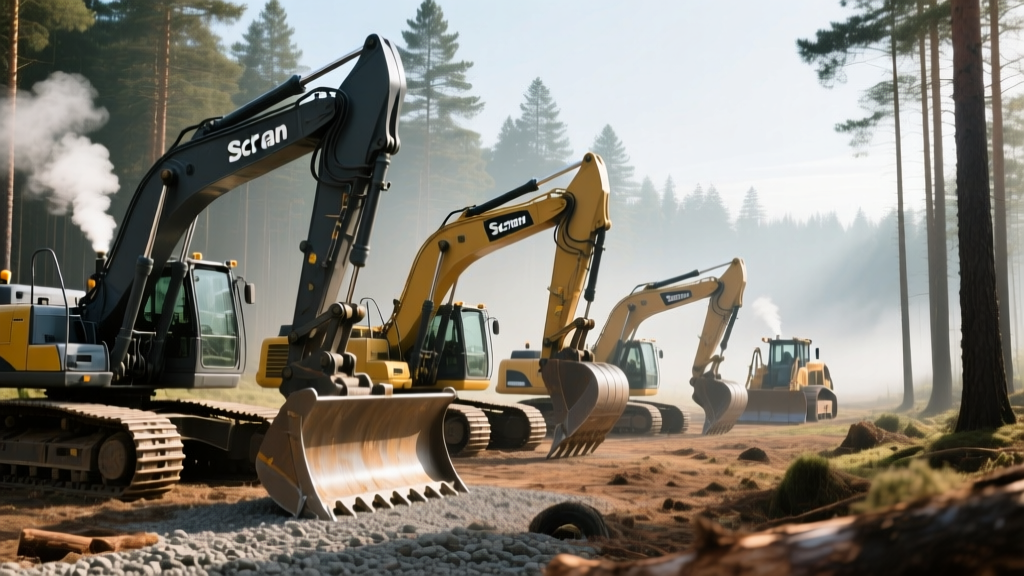
Pan Scraper Heavy Equipment Operator Training for Forestry Logging
Master pan scraper heavy equipment operation in forestry. Learn best practices for logging road construction, landing prep, and stump clearing.
The Unique Demands of Forestry Earthmoving
Deploying pan scraper heavy equipment in a timber harvest zone presents a radically different set of challenges compared to standard highway or commercial site preparation. Forestry environments are characterized by hidden subsurface obstacles (taproots, buried stumps, glacial erratics), highly variable soil moisture, and strict environmental regulations regarding sediment control. For operators and fleet managers, understanding how to adapt scraper operations to logging road construction and landing preparation is critical for maintaining production rates and avoiding catastrophic machine damage.
Unlike clean borrow pits, forest soils are heavily bound by decaying organic matter and root matrices. When a scraper bowl engages this terrain, the cutting edge does not simply slice through dirt; it must shear through dense root networks while navigating uneven, slash-covered ground. This requires specialized operator training, specific machine configurations, and rigorous daily maintenance protocols.
Environmental Compliance Alert: Forestry earthmoving is heavily regulated to protect watersheds and aquatic habitats. Before engaging the bowl, operators must verify that all silt fences, straw wattles, and culvert installations are in place. Violating buffer zones near stream crossings can result in immediate work stoppages and severe fines under state forest practices acts, such as those enforced by the Washington State Department of Natural Resources.Machine Selection: Open Bowl vs. Elevating Scrapers in Timber
Choosing the right configuration for your pan scraper heavy equipment is the first critical decision in a logging operation. While elevating scrapers offer the advantage of self-loading, they are highly vulnerable in freshly logged, stump-heavy environments.
| Scraper Type | Example Model | Heaped Capacity | Best Forestry Application | Primary Limitation |
|---|---|---|---|---|
| Open Bowl (Twin Engine) | Caterpillar 627G | 15.3 cu yd | Primary logging road cuts, steep grades (up to 20%) | Requires a push dozer (e.g., Cat D8) for loading |
| Open Bowl (Single Engine) | Caterpillar 637G | 27.2 cu yd | Large-scale landing preparation, valley floor fills | Poor traction in soft, wet forest loam without push assist |
| Elevating Scraper | Caterpillar 627G (Elevating) | 15.3 cu yd | Clean borrow hauling, secondary road maintenance | Elevator flights jam easily on roots >6 inches thick |
Expert Directive: For primary logging road construction in mature timber, always specify open-bowl, twin-engine scrapers. The twin-engine configuration (such as the Cat 627G) provides the necessary tractive effort to push through soft, slash-covered topsoil without relying entirely on a push dozer, though a push dozer is still recommended for hardpan layers.
Operator Training: Loading Techniques in Root-Bound Soils
Loading a scraper in a forest environment requires abandoning standard 'shuttle' or 'constant-speed' loading techniques. The root mat requires a more aggressive, deliberate approach to prevent the bowl from riding up and over the material.
- The Drop-Down Method: Approach the cut with the bowl raised. Drop the bowl aggressively just before the cut face to fracture the topsoil and root mat. This sudden impact helps break the surface tension of the root network.
- Short-Stroke Cycling: Instead of holding the bowl down for a continuous 50-foot pull, use short, aggressive strokes. Drop the bowl, pull 10 to 15 feet, raise slightly to allow the cut material to roll back into the bowl, and drop again. This prevents the root mat from acting as a ramp that pushes the scraper upward.
- Cutting Edge Angle Management: Maintain a slight positive rake (tip down) when engaging heavy root zones. If the edge is pitched back (tip up), it will glide over the roots and scalp the surface without achieving depth.
- Push-Dozer Coordination: The scraper operator must communicate with the push dozer operator via radio. In forestry, the dozer should push from the center of the scraper pushblock to avoid slipping off into hidden slash piles. The dozer should apply maximum torque until the scraper reaches 75% capacity, then ease off to allow the scraper to accelerate and close the apron.
Undercarriage, Tire, and Cutting Edge Maintenance
The abrasive and puncture-heavy nature of logging sites demands extreme vigilance regarding ground engaging tools (GET) and running gear. A single hidden stump or discarded logging chain can destroy an unprotected scraper tire in seconds.
'In forestry applications, we mandate foam-filled tires on all scrapers working within the primary harvest zone. The upfront cost is roughly $2,500 to $3,500 per tire for a 33.25-29 size, but it eliminates the $8,000 replacement cost and 12-hour downtime associated with a sidewall puncture from a sheared stump.' — Fleet Maintenance Director, Pacific Northwest Logging Contractor.
Cutting Edge Selection for Forest Soils
Forest soils vary wildly from soft alluvial loam to highly abrasive glacial till mixed with river rock. Standard hard steel edges will wash out in less than 40 hours in rocky glacial till.
- Standard Hard Steel (3/4-inch): Suitable for pure organic topsoil and clay. Cost-effective but requires rotation every 3-4 days in rocky conditions.
- Tungsten Carbide Impregnated Edges: Essential for glacial till and rocky forest ridges. These edges cost 3x to 4x more than standard steel but offer up to 500% longer wear life, maintaining the critical edge profile needed to shear roots cleanly.
- Segmented Edge Systems: Highly recommended for forestry. If a scraper strikes a buried granite boulder, a segmented system allows the operator to replace a single broken corner or center section rather than swapping the entire 10-foot edge.
Safety Protocols on Steep-Grade Logging Roads
Logging roads frequently feature 12% to 20% grades, sharp switchbacks, and limited sightlines due to dense standing timber. Operating pan scraper heavy equipment on these inclines requires strict adherence to safety frameworks outlined by OSHA Logging Operations standards and heavy equipment best practices.
Retarder Management on Descents: Never rely solely on service brakes when descending a loaded logging road grade. Engage the automatic retarder system and select a gear that limits engine RPM to 1,800-2,000. Overheating service brakes on a 15% downgrade with a 40-ton payload will result in total brake fade and a runaway machine.Blind Spot and Brush Mitigation
Dense forest brush can obscure the scraper's rear-view mirrors and camera systems. Before reversing, operators must:
- Sound the backup alarm for a minimum of 5 seconds before engaging reverse.
- Utilize a designated ground spotter when backing up near active felling zones or landing edges.
- Ensure all rear-facing LED work lights are free of mud and sap buildup, which severely limits camera visibility at night or during heavy fog.
Operator Certification and Continuous Training
Transitioning an operator from commercial dirtmoving to forestry requires a minimum of 40 hours of supervised field training. This training must focus heavily on subsurface hazard identification, reading the topography for natural drainage, and understanding the environmental impact of soil compaction on future timber regeneration. For comprehensive industry guidelines on machine deployment in timber zones, fleet managers should consult the Caterpillar Forestry Industry resources and local state forestry extension programs.
Frequently Asked Questions
Can a scraper be used to clear stumps?
No. Pan scrapers are designed for earthmoving, not stump pulling. Attempting to use the scraper bowl to pry out large stumps will bend the apron cylinders, crack the pushblock, and severely damage the cutting edge. Stumps must be excavated by an excavator or pushed out by a dozer with a root rake before the scraper enters the cut zone.
How does slash (tree debris) affect scraper operations?
Slash left on the ground can wrap around scraper axles and hitch points, damaging hydraulic lines and brake hoses. Operators must perform a 15-minute 'slash walk' at the end of every shift to clear debris from the hitch joint, rear axle pivots, and cylinder rods.
What is the maximum safe operating slope for a loaded scraper in forestry?
While twin-engine scrapers can technically climb 20% grades, sustained operation on logging roads should be limited to 15% maximum to prevent transmission overheating and ensure safe braking distances on loose, gravel-covered forest surfaces.