Lowboy Trailer for Heavy Equipment: Earthmoving Transport Fixes
Troubleshoot hydraulic ramp failures, track securing issues, and weight distribution when loading earthmoving equipment on a lowboy trailer for heavy equipment.
Application-Specific Geometry: How Earthmoving Types Dictate Lowboy Loading
Transporting earthmoving machinery is not a one-size-fits-all operation. The physical design of earthmoving equipment is strictly dictated by its field application, which directly impacts how it interacts with a lowboy trailer for heavy equipment. Failing to account for application-specific geometry is the leading cause of deck stress fractures, ramp hinge failures, and transit instability.
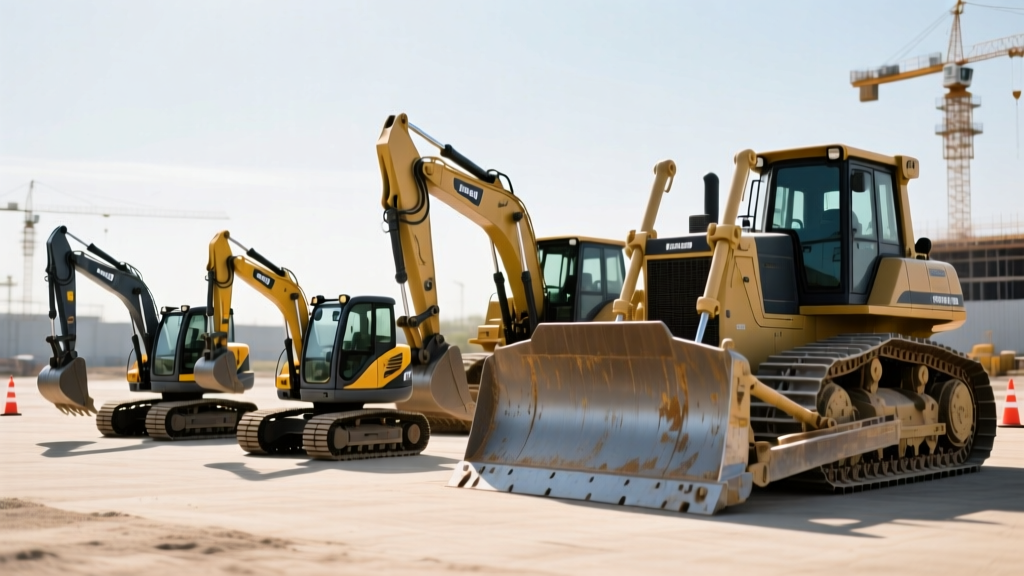
Earthmoving equipment generally falls into four primary categories, each presenting unique loading and transport troubleshooting challenges:
- Excavators (Digging & Trenching): Designed with massive rear counterweights to balance digging forces. This creates a severe rear-heavy Center of Gravity (CG). When driving up ramp inclines, the rear-heavy bias can cause the tracks to lose traction or the lowboy deck to experience localized point-loading near the rear axles.
- Bulldozers (Grading & Pushing): Featuring heavy front blades and low ground clearance. The primary troubleshooting issue is gooseneck clearance. If the dozer's blade is not fully raised and locked, it will strike the lowboy gooseneck during loading, damaging both the blade hydraulics and the trailer structure.
- Wheel Loaders (Material Handling): Articulated steering and high-mounted cabs result in a high CG and significant lateral sway. Troubleshooting transport sway requires verifying that the articulation lock pin is fully engaged and that the parking brake is set, as reliance on transmission locks alone will destroy the loader's drivetrain during transit.
- Motor Graders (Fine Grading): Characterized by extreme length (often exceeding 35 feet) and a long wheelbase. The main issue is overhang and bridge law compliance. Troubleshooting grader transport requires precise placement over the trailer's rear axles to avoid exceeding legal weight-per-axle limits.
| Earthmoving Type | Primary Application | CG Bias | Lowboy Loading Risk & Troubleshooting Focus |
|---|---|---|---|
| Excavator (e.g., Cat 320) | Trenching, Mass Excavation | Rear-Heavy | Ramp pivot stress; rear deck point-loading. |
| Bulldozer (e.g., Cat D6) | Pushing, Rough Grading | Front-Heavy | Gooseneck strike; low ground clearance hang-ups. |
| Wheel Loader (e.g., WA320) | Truck Loading, Stockpiling | High / Central | Lateral sway; articulation joint stress. |
| Motor Grader (e.g., 14M) | Fine Grading, Sloping | Distributed / Long | Rear overhang; bridge law axle weight violations. |
Troubleshooting Hydraulic Ramp & Wetline Failures
Modern lowboy trailers rely on Power Take-Off (PTO) wetline systems to actuate hydraulic ramps and folding goosenecks. When ramps fail to deploy, lift unevenly, or drift downward under the weight of a 45,000 lb excavator, the issue almost always traces back to hydraulic pressure anomalies or mechanical binding.
Step-by-Step Diagnostic Flow for Ramp Cylinder Drift
If your lowboy ramps deploy but slowly drift downward while supporting an earthmover, follow this diagnostic sequence:
- Check the Pilot-Operated Check Valves: Located directly on the ramp cylinders, these valves lock fluid in place. If they are contaminated with metal shavings from a failing pump, they will not seat properly. Remove, clean with solvent, and inspect the poppet seats.
- Test for Cylinder Bypass (Internal Leak): Disconnect the return hose from the ram. If hydraulic fluid weeps from the cylinder port while under load, the internal piston seals are blown. This requires a complete cylinder rebuild kit (typically $400-$800 per cylinder for heavy-duty 4-inch bore rams).
- Inspect the Relief Valve: A sticking relief valve in the truck's PTO wetline control box will bleed pressure back to the reservoir. Hook up a 5,000 PSI gauge to the pressure line. Standard operating pressure should be 2,500 to 3,000 PSI. If it drops below 2,000 PSI without the lever being engaged, rebuild the control valve.
Never force a hydraulic ramp down by driving a bulldozer onto it while the PTO is disengaged. This causes fluid cavitation and will blow the cylinder seals instantly. Always engage the truck PTO and use the control valves to lower ramps smoothly.
Cargo Securement: Chain Grade Math for Earthmovers
Securing earthmoving equipment requires strict adherence to the FMCSA Cargo Securement Regulations. The aggregate Working Load Limit (WLL) of all tie-downs must equal at least 50% of the equipment's total weight. However, field operators frequently make the mistake of using Grade 43 (Test Chain) or improperly rated binders, leading to catastrophic failures and severe fines during CVSA North American Standard Inspections.
For a standard 45,000 lb excavator, you need a minimum aggregate WLL of 22,500 lbs. Using four tie-downs means each chain and binder assembly must possess a WLL of at least 5,625 lbs.
| Chain Grade & Size | Working Load Limit (WLL) | Application Suitability |
|---|---|---|
| Grade 70 - 3/8 inch | 6,600 lbs | Minimum standard for mid-size excavators and dozers. |
| Grade 70 - 1/2 inch | 11,300 lbs | Required for large wheel loaders and heavy dozers (e.g., Cat D8). |
| Grade 80 - 3/8 inch | 8,800 lbs | Superior fatigue resistance; ideal for high-vibration transit. |
"Transporting heavy earthmoving machinery on public highways demands rigorous securement protocols. Operators must verify that all chain binders are rated to match or exceed the chain's WLL, and that tracks or tires are blocked to prevent longitudinal shifting." - OSHA Construction Safety Standards
Track vs. Tire Securing Techniques
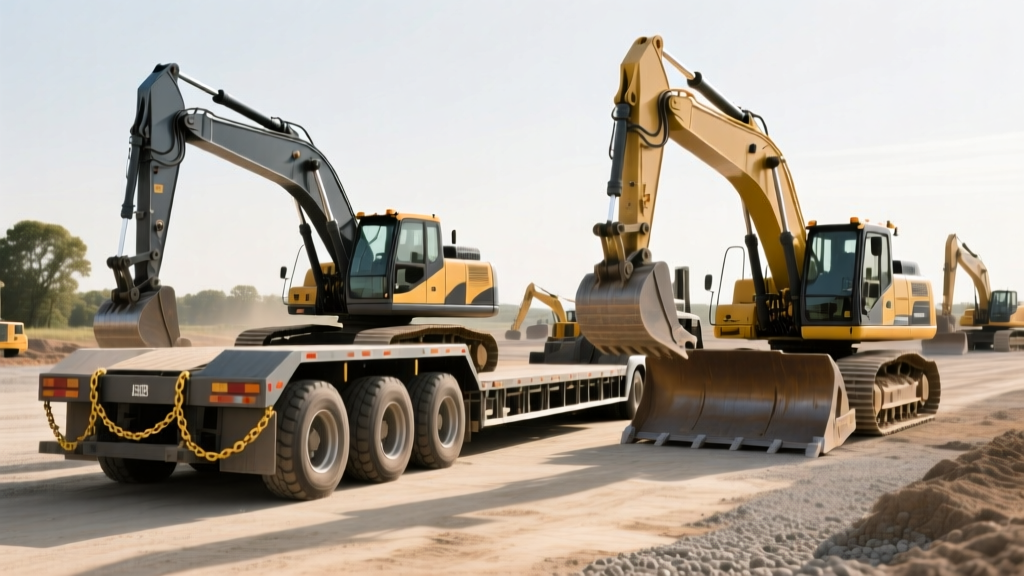
When securing tracked equipment like excavators and dozers, chains must be routed through the track links or wrapped around the idler/sprocket, pulling at a 45-degree angle to the deck to prevent both lateral and longitudinal movement. Never secure a track by simply hooking the bucket or blade; the hydraulic cylinders will drift, releasing tension on the chains. For wheeled earthmovers like motor graders, use specialized tire chocks bolted to the Apitong hardwood deck, combined with axle-strapping or tire-hugging chains to protect the rubber from chain abrasion.
Suspension and Deck Stress Troubleshooting
The deck and suspension of a lowboy trailer for heavy equipment endure immense dynamic loads. Earthmoving machines with steel tracks generate severe vibrational frequencies that can fatigue trailer components.
Apitong Hardwood Deck Maintenance
Most heavy-duty lowboys utilize Apitong (Keruing) hardwood for the deck due to its high density and natural rot resistance. However, the steel tracks of a bulldozer will eventually crush the wood grain, leading to splintering and moisture intrusion. Troubleshooting Fix: Inspect the deck boards for compression cracking every 90 days. If a board shows more than 1/4 inch of deflection under a 10,000 lb point load, it must be replaced. When replacing, use hot-dipped galvanized carriage bolts and pre-drill holes to prevent the dense Apitong wood from splitting during installation.
Air Ride vs. Mechanical Spring Suspension
For transporting sensitive earthmoving equipment with complex onboard electronics (like modern GPS-guided motor graders), air ride suspension is preferred over mechanical leaf springs. Troubleshooting Air Leaks: If the trailer sags on one side after loading an excavator, the issue is rarely the air bag itself. Check the height control valves and the quick-connect fittings at the gladhands. A common failure point is the accumulation of moisture in the air lines freezing the height control valve diaphragm during winter transport. Install an automated air dryer purge valve on the truck's compressor to eliminate this issue.
By aligning your loading procedures with the specific application geometry of the earthmoving equipment, maintaining your PTO wetline hydraulics, and strictly calculating your chain WLL, you can eliminate the most common transport failures and ensure compliant, safe hauling operations.