Las Vegas Heavy Equipment Show 2026: Remote & Modular Machinery
Explore remote-controlled and modular heavy equipment case studies, ROI data, and specs unveiled at the Las Vegas heavy equipment show 2026.
The Shift from Novelty to Necessity at the Las Vegas Heavy Equipment Show
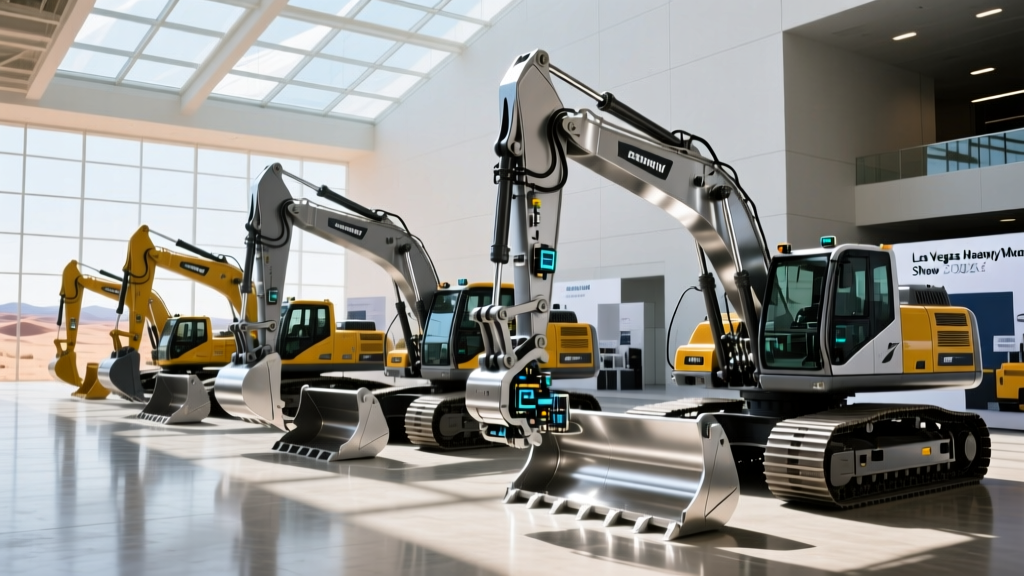
Walking the 2.8 million net square feet of exhibit space at CONEXPO-CON/AGG, widely recognized as the premier Las Vegas heavy equipment show, reveals a definitive shift in fleet procurement strategies for 2026. Remote-controlled demolition robots and modular multi-tool carriers have transitioned from experimental showcases to baseline requirements for urban contractors and heavy civil firms. Driven by stringent OSHA silica regulations, severe skilled-labor shortages, and the demand for higher asset utilization rates, modular and remote architectures are redefining equipment specifications.
2026 Show Floor Data Snapshot
Based on exhibitor disclosures and fleet manager surveys conducted at the 2026 Las Vegas heavy equipment show, orders for remote-controlled demolition units increased by 34% year-over-year. Simultaneously, fully hydraulic quick-coupler systems for 20-to-30-ton excavators saw a 41% adoption spike, signaling the end of dedicated single-purpose attachments for mid-sized fleets.
Case Study 1: Remote-Controlled Demolition in Confined Urban Retrofits
Urban high-rise teardowns and interior structural retrofits present extreme hazards regarding structural collapse and respirable crystalline silica. At the 2026 show, the Brokk 700 remote-controlled demolition robot dominated the indoor machinery pavilion. Weighing 6.3 metric tons, the Brokk 700 is powered by a 400 kW (536 hp) electric motor, delivering a hydraulic flow of 250 L/min to its attachment.
Operational Economics: Remote Robots vs. Mini-Excavators
A common procurement error is comparing the base capital expenditure of a remote demolition robot to a standard 5-ton mini-excavator. While the upfront cost is significantly higher, the total cost of ownership (TCO) and cycle-time metrics heavily favor remote units in confined, hazardous environments. Below is a comparative analysis based on a 14-story commercial concrete retrofit in Chicago.
| Metric | Brokk 700 (Remote) | CAT 305 (Cab-Operated) |
|---|---|---|
| Base Capital Cost | $425,000 - $460,000 | $95,000 - $110,000 |
| Concrete Breaking Rate | 4.5 cubic yards / hour | 1.2 cubic yards / hour |
| Operator Silica Exposure | Zero (Operator 20ft+ away) | High (Requires PPE/Enclosures) |
| Shift Fatigue Factor | Low (Ergonomic remote harness) | High (Cab vibration/noise) |
| OSHA Compliance Cost | Minimal | $15k+ annually (Monitoring/PPE) |
By removing the operator from the immediate drop zone and vibration radius, contractors utilizing remote-controlled demolition platforms eliminate the mandatory 15-minute rest breaks per hour required for operators in high-vibration cab environments, effectively increasing productive shift time by 22%.
Case Study 2: Remote Dozing and 5G Latency Requirements
Beyond demolition, remote-controlled earthmoving has matured. The Caterpillar D11 dozer equipped with MineStar Command for Dozing was a focal point for heavy civil and mining attendees. The critical differentiator in 2026 is not the autonomy software itself, but the network infrastructure required to support it. Remote dozing requires a continuous, ultra-low latency connection to maintain blade control precision.
Field data presented at the show indicates that latency exceeding 50 milliseconds results in a 14% drop in material push efficiency due to micro-corrections made by the remote operator. Contractors deploying remote dozers in remote cell-dead zones must now spec dedicated private 5G LTE networks or low-earth-orbit (LEO) satellite mesh arrays to guarantee the sub-40ms latency required for safe, high-production remote blade operation.
Modular Hydraulics: The Tiltrotator and Quick-Coupler Revolution
The second major trend dominating the Las Vegas heavy equipment show is the shift toward modular excavator architectures. Fleet managers are moving away from dedicated machines for grading, trenching, and material handling, opting instead for 25-ton class excavators (such as the Volvo ECR250) equipped with fully hydraulic tiltrotators like the Steelwrist SQ70-5.
Sizing Auxiliary Hydraulics for Modular Attachments
The most frequent point of failure in modular setups is hydraulic starvation and overheating. When running a tiltrotator simultaneously with a high-flow attachment (like a hydraulic shear or multi-processor), the machine's standard auxiliary hydraulic circuit is insufficient.
- Standard Auxiliary Flow: Typically 150 L/min per circuit. Adequate for standard buckets and mechanical grapples.
- Tiltrotator Requirement: Requires a dedicated 40-60 L/min continuous flow just to maintain rotation torque.
- High-Flow Attachment Requirement: Hydraulic shears and pulverizers demand 250 to 350 L/min.
The Fix: When ordering a modular excavator setup, you must specify a factory-installed high-flow auxiliary pump package and an oversized hydraulic oil cooler (minimum 45kW cooling capacity). Running a 300 L/min shear on a standard 150 L/min circuit will cause the hydraulic fluid to exceed 90°C (194°F) within 45 minutes, triggering thermal derating and destroying the main hydraulic pump's internal bronze slipper plates.
Safety Warning: Quick-Coupler Drop Hazards
With the rise of modular quick-couplers, unintended attachment drops have become a critical safety focus. Ensure all hydraulic quick-couplers specified for your fleet are strictly compliant with ISO 13031 standards. This standard mandates front-pin lock mechanisms and secondary retention systems that prevent the attachment from detaching even if the primary hydraulic lock fails or the operator accidentally hits the 'release' toggle in the cab. Never accept non-compliant, pin-grab-only couplers for heavy civil applications.
Implementation Framework: Specifying for Your Fleet
Deciding between investing in remote-controlled specialized units versus modular multi-tool carriers depends on your primary operational bottlenecks. Use the following decision matrix to guide your procurement strategy for the upcoming fiscal year.
Deploy Remote-Controlled Equipment When:
- Hazardous Environments: Work involves nuclear decommissioning, severe silica dust generation, or unstable structural teardowns where human presence violates OSHA permissible exposure limits.
- Confined Spatial Footprints: The work area restricts the swing radius of standard machinery, requiring the compact, zero-tail-swing profile of a remote demolition robot.
- Precision Remote Grading: You are operating in toxic or extreme-temperature environments (e.g., slag handling in steel mills) where remote dozing improves operator retention and safety.
Deploy Modular Multi-Tool Carriers When:
- Low Asset Utilization: Your dedicated machines (e.g., a dedicated trenching machine and a dedicated grading machine) sit idle for more than 40% of the work week.
- Urban Utility Work: You need to perform trenching, pipe-laying, backfilling, and asphalt milling on a single city block without the logistical nightmare of transporting three different machines and paying for multiple low-boy permits.
- Labor Constraints: You lack the skilled operators required to run multiple specialized machines and need to maximize the output of a single highly-trained tiltrotator specialist.
The 2026 Las Vegas heavy equipment show made one thing abundantly clear: the future of heavy iron is not just about larger engines or deeper digging forces. It is about decoupling the operator from the hazard via remote control, and decoupling the implement from the machine via advanced modular hydraulics. Contractors who align their fleet specifications with these two paradigms will secure a definitive margin advantage in the current bidding environment.