Heavy Equipment RC Toys: Agriculture vs Construction Safety
Compare agricultural and construction safety standards using high-fidelity heavy equipment RC toys for OSHA and ASABE compliance training.
The Divergence of Safety Standards: ASABE vs. OSHA
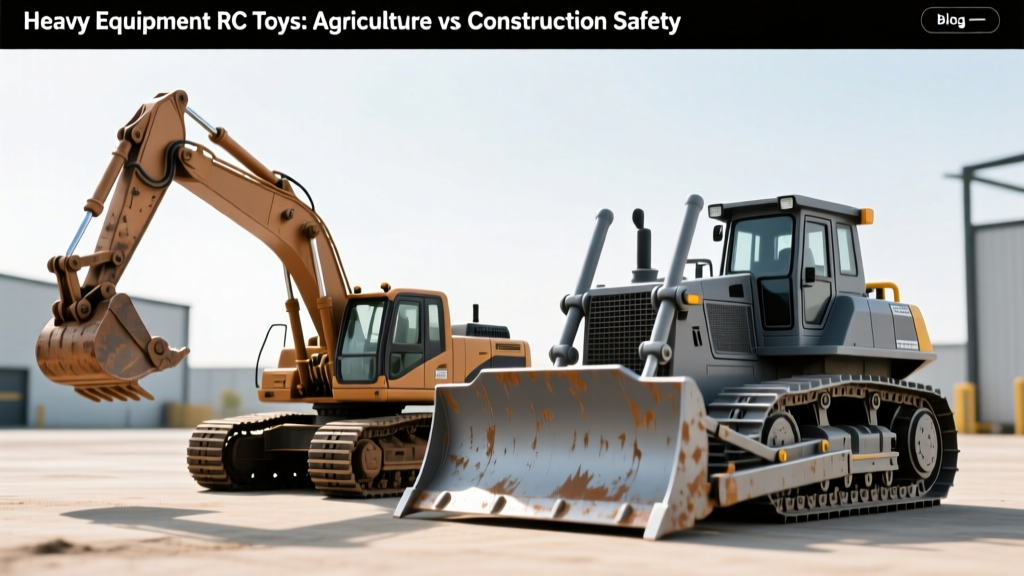
Fatalities and severe injuries in heavy machinery operations stem from predictable physical hazards: blind spots, kinetic energy transfer, and structural collapse. Safety officers increasingly rely on high-fidelity heavy equipment rc toys—specifically 1:14 and 1:16 scale metal-hydraulic models—to conduct hazard simulations without risking human life. These scale models possess the mass, momentum, and functional mechanics required to demonstrate compliance failures in real-time.
Agricultural machinery operates under the American Society of Agricultural and Biological Engineers (ASABE) standards, prioritizing rollover and entanglement prevention. Construction equipment falls under the Occupational Safety and Health Administration (OSHA) 1926 standards, focusing on crush zones, trenching, and overhead hazards.
| Hazard Category | Agriculture (ASABE Focus) | Construction (OSHA Focus) | RC Scale Simulation Method |
|---|---|---|---|
| Kinetic/Entanglement | PTO Shaft Shielding (S604) | Pinch Points & Tracks (Subpart O) | Functional 1:14 drivelines with exposed vs. shielded shafts |
| Overturn/Crush | ROPS & Seatbelts (S318.18) | FOPS & Tipping Axes (Subpart N) | Weighted RC chassis on inclined ramps to test center-of-gravity limits |
| Environmental Collapse | Silo/Grain Bin Engulfment | Trench Cave-ins (Subpart P) | RC excavators interacting with scaled soil/aggregate spoil piles |
| Visibility/Blind Spots | Implement Rear-View Blind Zones | Swing Radius & Back-up Alarms | First-person view (FPV) cameras mounted on RC cabs to map blind zones |
Simulating Agricultural Hazards: PTO and Rollover Physics
Agricultural safety compliance heavily targets the Power Take-Off (PTO) shaft and Rollover Protective Structures (ROPS). A standard 540 RPM PTO shaft rotates 9 times per second; at 1000 RPM, it rotates 16.6 times per second. Entanglement happens faster than human reaction time.
⚠️ Compliance Warning: PTO Entanglement ZonesAccording to Ohio State University Extension data, a loose sleeve or shoelace can wrap around an unshielded 540 RPM PTO shaft in under 0.5 seconds. When conducting safety briefings, safety officers use 1:16 scale RC tractors equipped with functional, motorized PTO stubs. By feeding a standardized cotton swatch (simulating loose clothing) into the rotating shaft, trainers visually demonstrate the immediate retraction force, proving why ASABE S604 mandates master shields and implement input driveline guards.
For rollover training, custom-built 1:14 scale RC tractors weighing between 12 and 18 pounds are driven onto variable-incline ramps. Because these heavy equipment rc toys feature accurate weight distribution and metal chassis components, they replicate the exact center-of-gravity shift that causes real-world side rollovers on 15-degree slopes, reinforcing the necessity of ASABE S318.18 compliant ROPS and operator restraint systems.
Construction Compliance: Blind Spots, Swing Radii, and Trenching
Construction safety revolves around spatial awareness and ground stability. OSHA's trenching and excavation standards mandate that spoil piles must be kept at least 2 feet back from the edge of a trench to prevent surcharge loads and cave-ins.
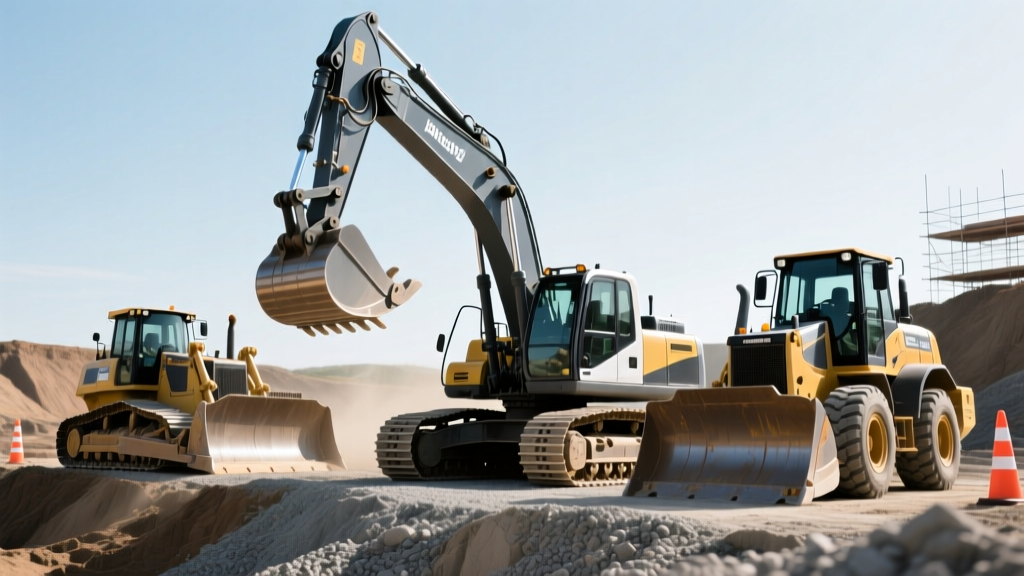
📊 Data Highlight: RC Excavator Momentum & Strike ForceA 1:14 scale metal-tracked RC excavator (such as the HuiNa 1580 series) weighs approximately 45 lbs when fully ballasted. When the upper carriage swings at maximum RPM, the bucket tip generates enough kinetic energy to shatter a standard clay brick. This physical reality allows safety managers to map the exact swing radius hazard zone on a job site floor using chalk, demonstrating why OSHA requires physical barricades, not just caution tape, around excavator tail-swing paths.
Furthermore, OSHA's agricultural and general earthmoving guidelines require functional backup alarms. High-end RC models are frequently retrofitted with 105-decibel piezoelectric buzzers wired to the reverse-throttle channel. During site-specific orientations, trainers use these models to demonstrate the acoustic shadow effect created by nearby structures or material stacks, proving why spotters are mandatory even when alarms are operational.
Procurement Guide: Sourcing Compliance-Grade RC Models
Standard plastic toys lack the mass, hydraulic pressure, and material fidelity required for accurate safety demonstrations. Compliance officers must procure hobby-grade or industrial-grade scale models.
- Entry-Level Demonstration (HuiNa 1580 Series / 1:14 Scale): Priced between $400 and $650. Features metal tracks, functional hydraulic pumps (capable of lifting 2-3 kg), and realistic articulation. Ideal for mapping swing radii and demonstrating track pinch-points.
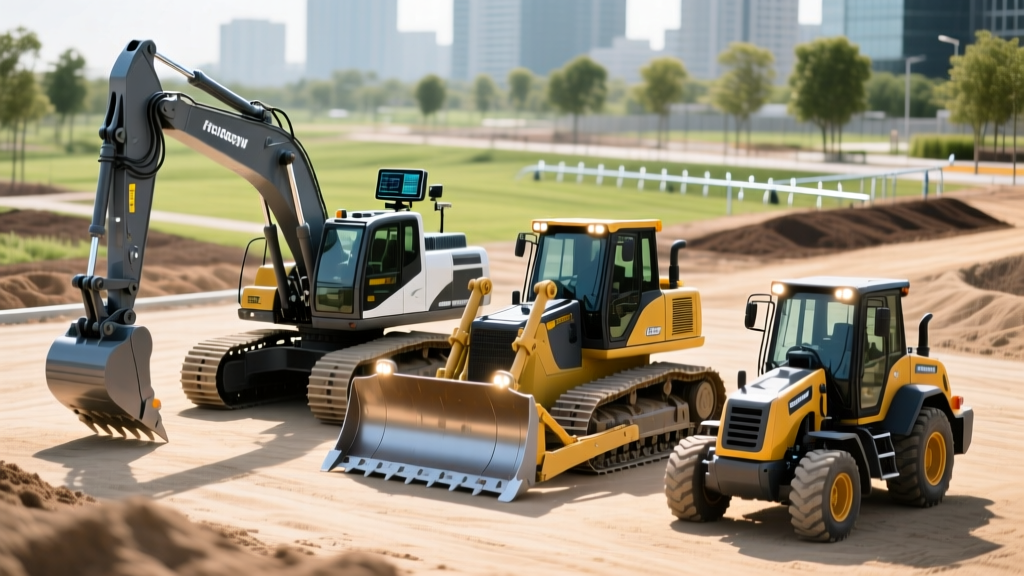
- Professional Training Grade (Lesu Custom Hydraulics / 1:14 Scale): Priced from $2,200 to $4,500+. These models feature multi-channel proportional hydraulics, steel grousers, and accurate cab geometry. Used for advanced blind-spot mapping using FPV camera integration and precise trench-spoil pile setback demonstrations.
- Agricultural Specific (Custom 3D-Printed / Tamiya Kits): Priced $800 to $1,500. Often requires aftermarket modification to add functional 3-point hitches and motorized PTO stubs. Essential for demonstrating implement hitching crush zones and PTO entanglement.
Step-by-Step: Integrating RC Models into Toolbox Talks
To move beyond passive video watching, integrate heavy equipment rc toys into your weekly safety briefings using this structured framework:
- Site Replication: Build a 4x4 foot sandbox or use a taped-off concrete area that replicates the specific job site's topography and obstacles.
- Assign the Operator: Hand the RC transmitter to a crew member who does not normally operate heavy equipment. This simulates the lack of situational awareness common in green operators or ground workers entering a machine zone.
- Execute the Failure Scenario: Drive the RC model into a simulated hazard (e.g., collapsing a scaled trench wall by placing the tracks too close to the lip, or swinging the counterweight into a scaled scaffolding model).
- Measure the Aftermath: Use tape measures to show the exact distance the soil collapsed or the swing radius extended. Compare this physical data directly to OSHA or ASABE minimum clearance requirements.
- Document the Briefing: Record the RC simulation on video. Attach the clip to the digital sign-in sheet for the toolbox talk to provide auditable proof of interactive safety training.
Frequently Asked Questions
Can standard hobby RC toys be used for OSHA compliance training?
No. Toys weighing under 5 lbs with plastic tracks cannot accurately demonstrate momentum, surcharge loads, or crush hazards. OSHA and ASABE training requires models with proportional hydraulics and metal components that mimic the physics of full-scale machinery.
Do safety officers need a drone license to use FPV cameras on RC equipment?
No. FPV (First Person View) cameras mounted directly onto heavy equipment rc toys for the purpose of mapping blind spots on the ground do not fall under FAA Part 107 drone regulations, as they are not aircraft. However, the video feed is highly effective for showing ground workers exactly what the operator cannot see.
How do RC models demonstrate hydraulic injection injuries?
While RC models operate at lower hydraulic pressures (typically 50-150 PSI compared to 3,000-5,000 PSI on full-scale machines), trainers use pressurized water syringes attached to the RC hydraulic lines to demonstrate the pinhole leak effect. This safely illustrates why workers must never use their hands to check for hydraulic leaks on actual equipment.