Heavy Duty Lifting Equipment vs. Dedicated Snow Removal Fleet
Compare heavy duty lifting equipment like telehandlers against dedicated wheel loaders for municipal snow removal. Analyze TCO, hydraulics, and specs.
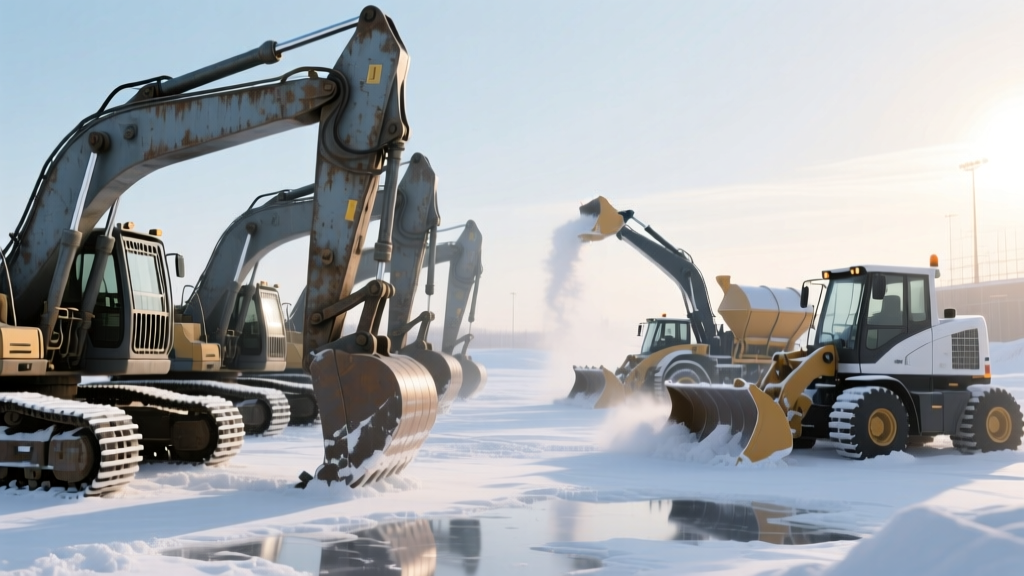
Municipal and commercial fleet managers face a capital expenditure crossroad when procuring machinery for winter operations. The traditional route involves purchasing dedicated wheel loaders and motor graders. However, the versatility of modern heavy duty lifting equipment—specifically large-format telehandlers and rough-terrain forklifts—presents a compelling multi-season alternative. This analysis dissects the mechanical, hydraulic, and financial realities of deploying heavy duty lifting equipment for snow removal versus maintaining a dedicated winter fleet.
The Procurement Dilemma: Multi-Season Lifting vs. Dedicated Snow Fleet
Historically, municipalities maintained separate fleets for summer material handling and winter snow clearance. With 2026 municipal procurement budgets under intense scrutiny, fleet consolidation has become a priority. Heavy duty lifting equipment, such as the JCB 540-170 Telehandler or the Manitou MHT 10180 rough-terrain forklift, offers year-round utility. In the summer, these machines handle palletized salt, aggregate, and pipe laying; in the winter, they are fitted with snow pushers, V-plows, or blowers.
However, substituting dedicated snow removal heavy equipment (like the Caterpillar 950 GC or Volvo L90H wheel loaders) with multi-purpose lifting equipment introduces severe mechanical trade-offs. The decision hinges on three critical engineering factors: auxiliary hydraulic flow, linkage breakout force, and front-axle oscillation limits.
Hydraulic Flow: The Hidden Bottleneck in Heavy Duty Lifting Equipment
The most frequent point of failure when adapting heavy duty lifting equipment for snow removal is inadequate auxiliary hydraulic flow. Commercial snow blowers, such as the Larue D75 or Wausau 84-inch models, require continuous high-flow hydraulics to maintain impeller RPM under heavy, wet snow loads.
⚠️ Hydraulic Flow Warning: A standard 72-inch commercial snow blower requires a minimum of 30 to 45 GPM (gallons per minute) at 3,000 PSI. Most standard heavy duty lifting equipment telehandlers natively output only 18 to 24 GPM. Running a high-demand blower on standard flow will result in immediate impeller stalling and severe hydraulic pump cavitation.To bridge this gap, fleet managers must specify factory-installed high-flow auxiliary packages or utilize aftermarket retrofits. A factory high-flow kit on a JCB or Manitou telehandler typically adds $9,500 to $14,000 to the initial purchase price. Even with high-flow options, telehandlers often struggle to match the 50+ GPM dual-pump systems found on dedicated wheel loaders like the John Deere 624L, which can simultaneously power a snow blower and operate the steering and boom functions without power diversion.
Breakout Force and Linkage Geometry
Clearing hard-packed snow banks and ice ridges at the end of driveways or intersection medians requires immense breakout force. The mechanical linkage of the machine dictates its effectiveness in these scenarios.
Z-Bar vs. Parallel Lift Kinematics
Dedicated wheel loaders utilize a Z-bar linkage system. This geometry is engineered to multiply hydraulic cylinder force, delivering massive breakout forces at the bucket edge. For example, the Cat 950 GC generates approximately 36,600 lbs of breakout force. When equipped with an Arctic Sectional Snowplow (which relies on independent moldboard sections to trip over obstacles), the Z-bar linkage provides the necessary downward pressure and shock absorption to scrape pavement clean without damaging the plow or the machine's front frame.
Conversely, heavy duty lifting equipment relies on parallel lift kinematics. Telehandlers are designed to keep a load level as the boom extends, prioritizing load stability over curling force. A large telehandler typically maxes out at 12,000 to 15,000 lbs of bucket breakout force. When a telehandler attempts to back-drag a snow bank or push through a hardened ice ridge, the parallel linkage lacks the mechanical leverage to curl the bucket, resulting in the machine simply spinning its tires or lifting its rear axle.
Head-to-Head Fleet Comparison Matrix
| Specification | Heavy Duty Lifting Equipment (Telehandler) | Dedicated Snow Equipment (Wheel Loader) |
|---|---|---|
| Base Price Range (2026) | $145,000 - $185,000 | $210,000 - $275,000 |
| Auxiliary Hydraulic Flow | 20 GPM (Std) / 38 GPM (High-Flow Option) | 45 - 60 GPM (Factory High-Flow) |
| Breakout Force | 12,000 - 15,000 lbs | 35,000 - 42,000 lbs |
| Attachment Swap Time | 3-5 Minutes (Manual Pin Lock) | 45 Seconds (Hydraulic Quick-Coupler) |
| Center of Gravity (Loaded) | High (Rearward Shift when Boom Raised) | Low (Optimized for Front-End Load) |
| 5-Year Resale Value Retention | 55% - 60% | 65% - 72% |
Total Cost of Ownership (TCO) and Depreciation Realities
While the initial capital outlay for a telehandler is roughly $60,000 to $80,000 less than a comparably sized wheel loader, the TCO equation shifts when factoring in attachment costs and depreciation. Dedicated wheel loaders hold their value significantly better in the secondary market due to their universal application in aggregate, logging, and heavy civil construction.
Furthermore, heavy duty lifting equipment suffers from accelerated undercarriage and boom wear when subjected to the lateral shock loads of snow plowing. According to fleet maintenance data aggregated by the Federal Highway Administration's Winter Maintenance Program, lateral stress on steering cylinders and tie-rods increases by up to 40% when pushing wide containment plows. Telehandlers, with their extended wheelbases and rigid front axles, transfer this lateral shock directly into the chassis and boom pivot pins, leading to premature slop in the telescopic boom sections—a repair that routinely exceeds $12,000.
Operator Safety and Visibility Constraints
Visibility during heavy snow squalls is a primary safety metric. The CDC's National Institute for Occupational Safety and Health (NIOSH) emphasizes that heavy equipment operator fatigue and restricted sightlines are leading contributors to winter maintenance accidents.
Wheel loaders feature low-profile engine hoods and expansive front glass, providing a direct line of sight to the moldboard edge. Telehandlers, particularly when the boom is elevated to clear deep windrows or load snow into dump trucks, suffer from significant blind spots caused by the boom structure itself. Operating a telehandler in reverse while dragging a snow pusher requires heavy reliance on camera systems, which are frequently obscured by blowing snow and road salt spray.
Decision Framework: Fleet Allocation Strategy
Determining whether to integrate heavy duty lifting equipment into your winter operations or invest in dedicated machinery requires an objective assessment of your operational profile. Use the following framework to guide your procurement strategy:
Deploy Heavy Duty Lifting Equipment (Telehandlers/Forklifts) If:
- Primary Task is Snow Relocation, Not Plowing: Your operation involves lifting and loading snow into trucks using a snow bucket, rather than high-speed highway plowing.
- Space Constraints are Severe: You are clearing tight commercial loading docks, multi-level parking garages, or narrow industrial yards where the compact footprint and zero-tail-swing of a telehandler outmaneuver a full-size wheel loader.
- Utilization Rates Demand Multi-Season Use: The machine will be used for masonry, pipe laying, or material handling for at least 1,500 hours outside of the winter season, justifying the capital expenditure through year-round ROI.
Invest in Dedicated Snow Removal Heavy Equipment (Wheel Loaders) If:
- High-Speed Highway or Arterial Plowing: The machine will be equipped with a 12-foot to 14-foot reversible V-plow or containment plow and operated at speeds exceeding 25 MPH.
- High-Flow Blower Operations: Your primary method of snow removal involves operating 84-inch or larger commercial snow blowers requiring 45+ GPM of continuous hydraulic flow.
- Severe Shock Loading: The machine will routinely back-drag intersections, break through frozen curb lines, and endure high-impact lateral stress from heavy, wet spring snow banks.
Ultimately, heavy duty lifting equipment serves as a highly capable supplementary asset for localized, low-speed snow management and loading. However, for primary route clearance and high-production snow blowing, the mechanical superiority, hydraulic capacity, and structural durability of dedicated wheel loaders remain the undisputed industry standard.